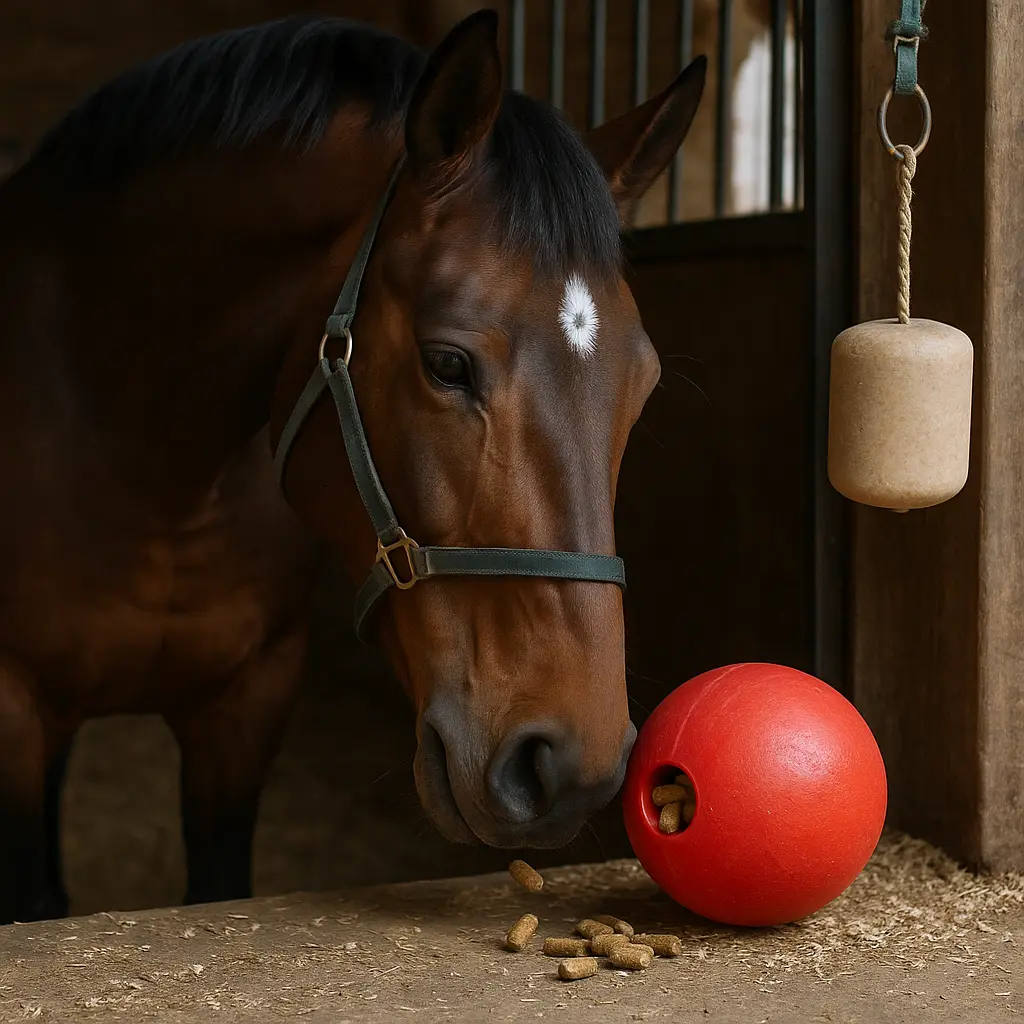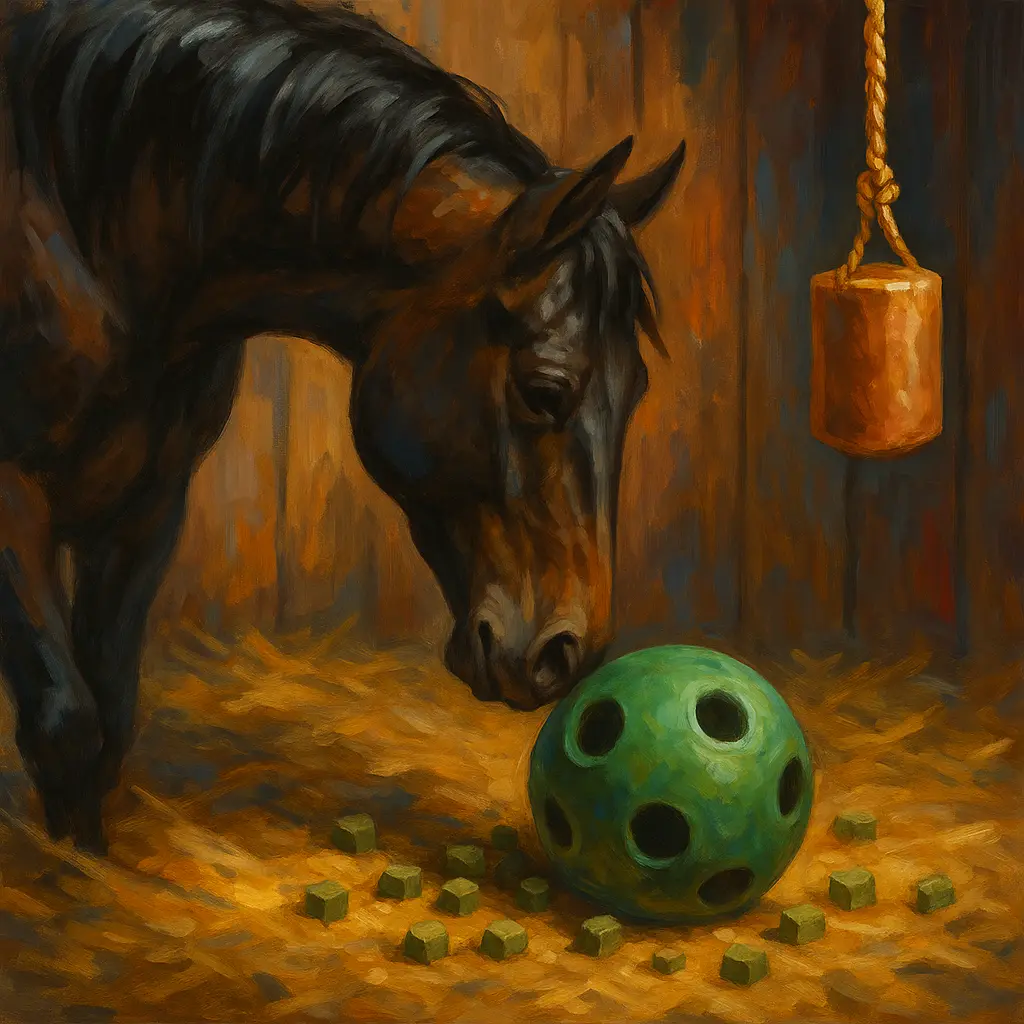
Does your horse demolish a treat ball in minutes, or lose interest altogether? With the right fillings and a smart set‑up, you can turn snack time into a slow, satisfying challenge that keeps stabled horses occupied without overloading them with sugar.
Key takeaway: For the longest‑lasting, waistline‑friendly treat ball sessions, use firm, low‑sugar fibre nuggets or pellets, set a small dispensing hole, and offer short, supervised sessions as part of the daily forage allowance.
What makes a treat ball last?
Treat balls last longest when they’re filled with firm, low‑sugar fibre nuggets and set to release sparingly through a small opening. Longevity is shaped by what you put inside, the ball’s settings, where you use it, and how your horse interacts with it.
Think of a treat ball as a slow-feeding puzzle. Firm, evenly sized pellets roll and rattle, releasing a few pieces at a time, while sticky or crumbly mixes empty quickly and make a mess. A smaller dispensing hole increases the “work per reward,” stretching engagement. Using the ball on a clean, flat surface (like rubber matting) prevents feed loss in bedding, and short, focused sessions keep motivation high without turning the ball into a calorie dump. Horses vary, too: keen problem‑solvers often need a tighter setting than calmer types.
- Filling firmness: Compact fibre nuggets keep their shape and trickle out slowly.
- Piece size consistency: Even sizes dispense predictably, preventing rapid emptying.
- Hole size: Smaller openings make each reward take more effort.
- Surface: Flat, non-bedded areas reduce waste and keep the game going.
- Horse behaviour: Enthusiastic rollers need tighter settings than gentle nudgers.
Used this way, treat balls do double duty: they reduce boredom and encourage a more natural “trickle” feeding rhythm, supporting gut health while your horse works for their rewards.
Best fillings for longevity (and waistlines)
Choose low‑sugar, low‑starch fibre pellets or fibre nuggets (such as alfalfa or grass pellets and Baileys Fibre Plus Nuggets) for the best longevity. These hold their shape, roll well, and don’t spike calories or sugars.
Fibre‑first fillings keep horses engaged without the fizz. Alfalfa and grass pellets are concentrated fibre in a tidy, nugget‑like form, so they meter out slowly. Many UK owners rate fibre nuggets (such as Baileys Fibre Plus Nuggets) for consistent size and durability, especially for good doers and horses on controlled diets. By contrast, sticky mixes and sweet molasses‑based treats tend to clump, smear inside the ball, and empty fast.
Good options to consider:
- Fibre pellets: Alfalfa or grass pellets for a low‑sugar, slow‑release fill.
- Fibre nuggets: Products like Baileys Fibre Plus Nuggets for shape consistency and low sugar.
- Pre‑made licks for holders: Likit refills (Apple, Banana, Carrot, Mint, Molasses) for long‑lasting hanging enrichment.
Quick tip: Avoid raw veg in treat balls. Carrot chunks often lodge in the opening and stop the flow, frustrating your horse and defeating the point.
Browse boredom‑busting refills and chews in our carefully curated range of horse treats and licks. At Just Horse Riders, we recommend starting with a single, fibre‑only filling so you can tune the hole size accurately before experimenting with mixes.
Set-up and use for maximum duration
Offer treat balls in short, supervised sessions and fine‑tune the hole size so only a few pieces drop with each nudge. Start easier to build confidence, then tighten the setting to stretch each session.
Follow this simple set‑up:
- Measure the portion: Deduct your treat‑ball feed from the day’s ration so calories stay on track. Use fibre‑only fillings to keep sugar low.
- Start on an easy setting: Begin with a slightly larger hole so your horse learns the “push and reward” pattern quickly.
- Dial in the difficulty: Gradually reduce the opening until only a small handful dispenses over several minutes of active rolling.
- Choose the right surface: Use a clean, flat area (yard, rubber-matted bay) so pieces don’t disappear into bedding.
- Keep sessions focused: Offer the ball during set “enrichment windows” rather than leaving it down all day. This keeps interest high and lets you monitor intake.
- Mix it up: Rotate the treat ball with other enrichment (different licks, double‑netted hay, stable mirrors) to prevent boredom with the toy itself.
Pro tip: If your horse is a powerful roller, reduce the hole further or use smaller, harder pellets so each push still yields only one or two pieces.
Looking for a durable ball or stable toy? Explore trusted options from our Shires range, chosen for everyday yard practicality.
DIY hanging treats that last
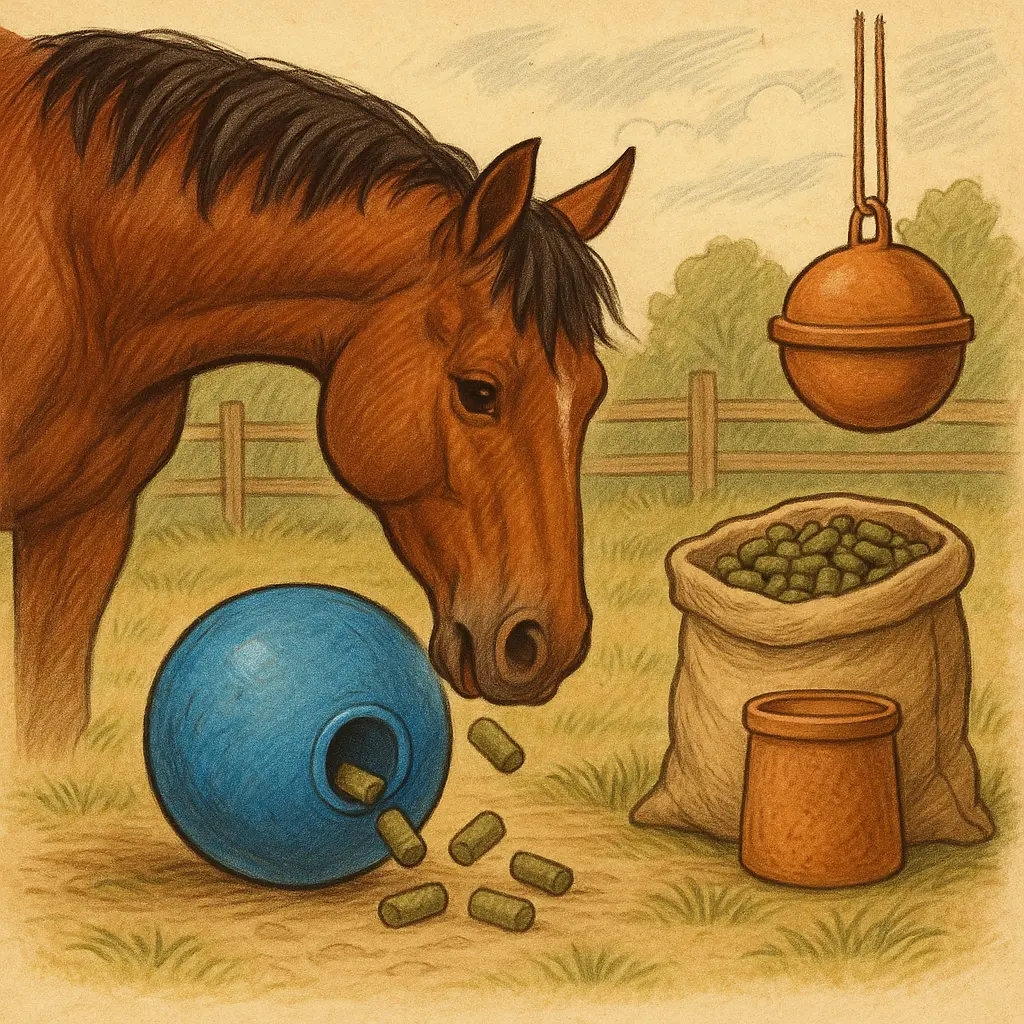
No‑bake molasses‑based hanging treats keep up to seven days in an airtight container and last longer when they’re well set and fibre‑rich. The key is a firm texture that doesn’t crumble or smear.
A simple approach is to bind dry ingredients (chaff, oats, unmolassed beet shreds) with just enough molasses to hold shape, then chill to set before hanging. For a lower‑sugar twist, use mashed banana or unsweetened applesauce as the binder and allow plenty of chilling time for firmness. Shape into discs or bars with a central hole and hang at about wither height so your horse can lick and nibble without neck strain.
Tips for longer‑lasting DIY licks:
- Keep them small and firm: Thicker isn’t always better; a compact, well‑set treat resists rapid consumption.
- Chill thoroughly: Cooling or brief refrigeration helps the treat set hard enough to withstand eager nibbling.
- Balance the mix: Add extra fibre (chaff or pellets crushed slightly) to reduce stickiness and slow intake.
- Match the diet: For horses on restricted sugars, favour banana/applesauce binders over molasses and pair with fibre‑only ingredients.
Remember to rotate flavours (mint, apple, ginger) to keep interest high, and always introduce new recipes in small amounts to be sure they suit your horse.
Managing calories and laminitis risk
For good doers and laminitis‑prone horses, stick to low‑sugar, low‑starch fillings and count treat‑ball feed towards the daily forage allowance. Fibre‑only pellets and fibre nuggets support slow chewing without unnecessary sugar.
Keep a simple framework:
- Fibre first: Use alfalfa/grass pellets or fibre nuggets; avoid sticky, sweet mixes.
- Total ration control: Weigh or measure what goes in the ball and deduct it from the day’s forage plan.
- Monitor body condition: Check weight and fat coverage regularly; adjust treat‑ball frequency accordingly.
- Use salt and simple licks: Where appropriate, salt‑only or plain mineral licks offer engagement without sugar spikes.
At Just Horse Riders, we often suggest starting with a single‑ingredient fibre pellet so you can clearly see how the treat ball affects intake. For horses needing extra nutritional support, browse our targeted horse supplements and care to complement a fibre‑led approach.
A winter boredom‑busting plan
During wet, windy UK winters, pair treat balls with varied forage, short turnout windows, and regular exercise to prevent stable boredom. A simple, repeatable routine beats one “miracle” toy every time.
Build your plan around three pillars:
- Forage variety: Use double‑netted hay, small‑mesh nets, and scatter‑fed straw or chaff portions to encourage natural foraging behaviours.
- Movement opportunities: Even brief turnout breaks or in‑hand walking can reset mood and digestion when fields are waterlogged.
- Structured enrichment: Rotate the treat ball with licks and puzzle feeders so the novelty stays fresh across the week.
When the weather bites, comfort matters. Check your rugging so your horse stays relaxed and ready to play rather than hunching against the cold. If you’re braving showers between storms, our winter turnout rugs keep horses dry outside, while breathable stable rugs help maintain comfort inside. For exercise days, supportive protection from our horse boots and bandages range helps you ride or lunge with confidence.
Quick tip: Schedule the treat ball after a short stretch or hand‑walk. A few minutes of movement primes attention and often leads to calmer, more methodical play.
Troubleshooting and safety
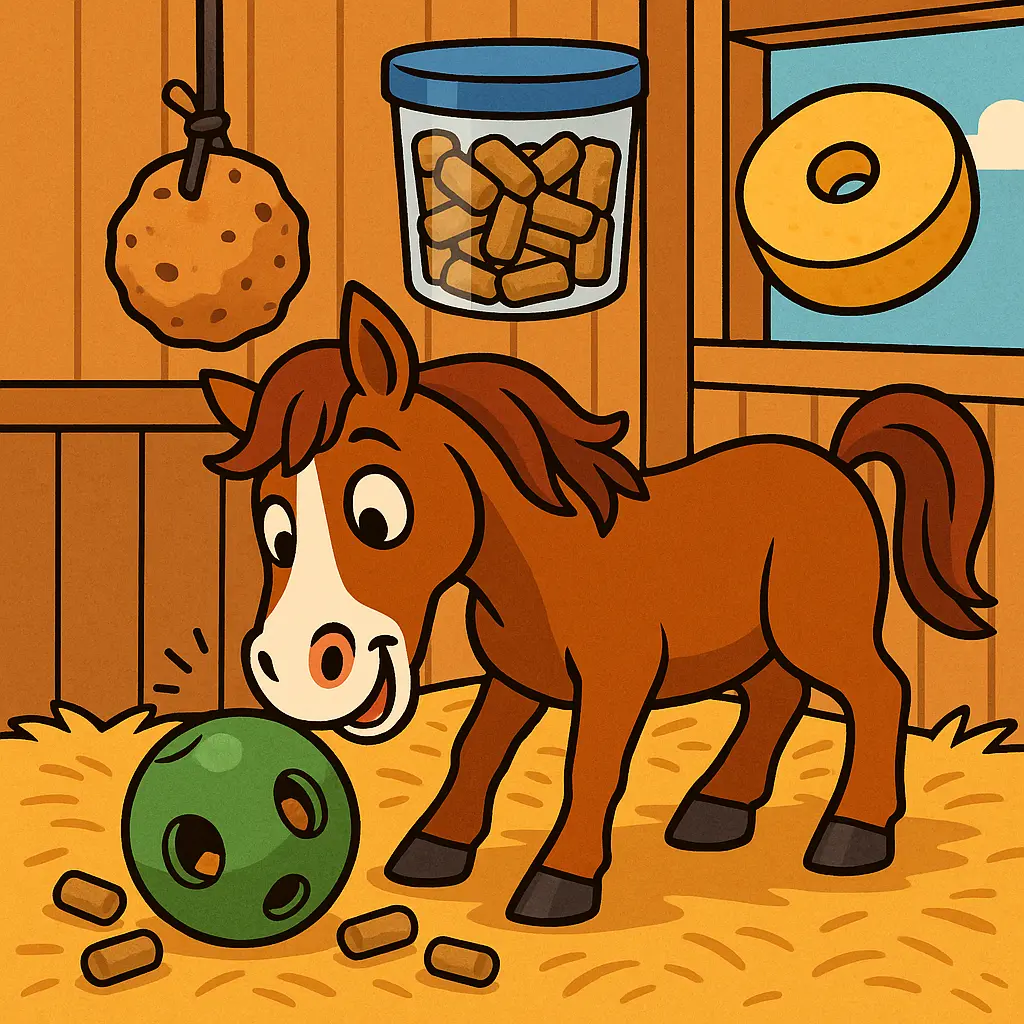
Supervise new users, keep the toy clean, and avoid jamming ingredients like raw carrots to keep sessions safe and enjoyable. A little tuning solves most problems quickly.
- Empties too fast: Use firmer, smaller pellets and reduce the hole size so only a couple of pieces drop with each push.
- Nothing comes out: Open the hole slightly and check for obstructions; avoid irregular chunks that wedge in the opening.
- Mess in the bedding: Move sessions to a matted area or the yard so rewards don’t disappear into shavings.
- Horse loses interest: Start easier so rewards come quickly, then tighten the setting over a few sessions. Rotate fillings and toys to revive curiosity.
- Over‑arousal or frustration: Shorten sessions, loosen the setting, and choose a quieter time of day; remove the ball if behaviour remains tense.
- Hygiene: Rinse and dry the ball regularly so dust and residue don’t reduce flow or flavour appeal.
When you want to refresh your enrichment kit or stock up on low‑sugar fillers, you’ll find a wide choice of UK‑favourite options in our treats collection. Looking for something fun to gift your yard bestie or pony‑mad child? Explore seasonal boredom‑busters and bundles in our equestrian gifts.
FAQs
How long should a treat ball last?
It depends on the filling, hole size, surface, and how vigorously your horse plays. To stretch sessions, use firm fibre pellets or nuggets and a small opening so only a few pieces fall with each nudge.
Which fillings make a treat ball last the longest?
Low‑sugar, low‑starch fibre options like alfalfa or grass pellets and fibre nuggets (e.g., Baileys Fibre Plus Nuggets) hold their shape and dispense slowly. Avoid sticky mixes that clump or smear.
Are molasses‑based treats suitable for all horses?
No. Horses on restricted diets, good doers, and those with metabolic concerns are better served by low‑sugar fibre fillings or simple salt/mineral licks. Keep sweet treats occasional and portioned.
Can I freeze fillings to make them last longer?
For treat balls, stick to dry pellets or nuggets. Moisture changes from freezing can cause crumbling, leading to rapid emptying and residue inside the toy. Save chilling for firming homemade hanging treats instead.
How often should I offer a treat ball?
Use it as a planned enrichment session rather than leaving it out continuously. Adjust frequency to your horse’s calorie needs, and always deduct what’s fed through the ball from the daily ration.
What if my horse doesn’t “get” the treat ball?
Prime with a small handful of a familiar fibre feed, start with an easier hole setting, and demonstrate movement by gently rolling it so a few pieces fall out. Tighten the setting once your horse is confidently engaged.
How do I clean and maintain a treat ball?
Rinse with warm water, let it dry completely, and check the opening for wear or residue. Clean more frequently if you’ve used sticky fillings or the ball is used outdoors.
With the right fillings and a thoughtful routine, your horse’s treat ball becomes more than a toy: it’s a reliable, low‑sugar way to enrich stable time, encourage trickle feeding, and brighten those long UK winter days. If you need help choosing fillings or toys, our team is here to help — and our ranges of treats, turnout rugs, stable rugs, horse boots and bandages, and supplements make it easy to build a complete boredom‑busting plan.