

How to Ensure Your Horses are Cared for When You Can't Be There
For horse owners, ensuring the well-being of your equine companions when you're away can be a source of anxiety. Horses require consistent care, attention, and a safe environment—factors that can be challenging to guarantee in your absence. Fortunately, with careful planning and informed decisions, you can ensure your horses remain healthy, comfortable, and happy even when you cannot be there personally.

Plan Ahead: Preparation Is Key
Before you leave, invest time in preparing your horses’ environment and documentation:
- Create Detailed Care Instructions: Provide clear, written directions about feeding schedules, medication, turnout routines, tack preferences, and any behavioral quirks. For instance, some horses may react adversely to certain stimuli, such as a gelding that becomes reactive around delivery trucks—information that helps caretakers manage stress and avoid accidents[3].
- Stock Up on Supplies: Ensure there is an ample quantity of feed, hay, bedding, vitamins, supplements, and any medications your horses require.
- Routine Maintenance: Check that fencing, water systems, and stalls are secure and functioning properly. Horses accustomed to living outside or having easy access to shelters and water are better positioned to cope independently[2].
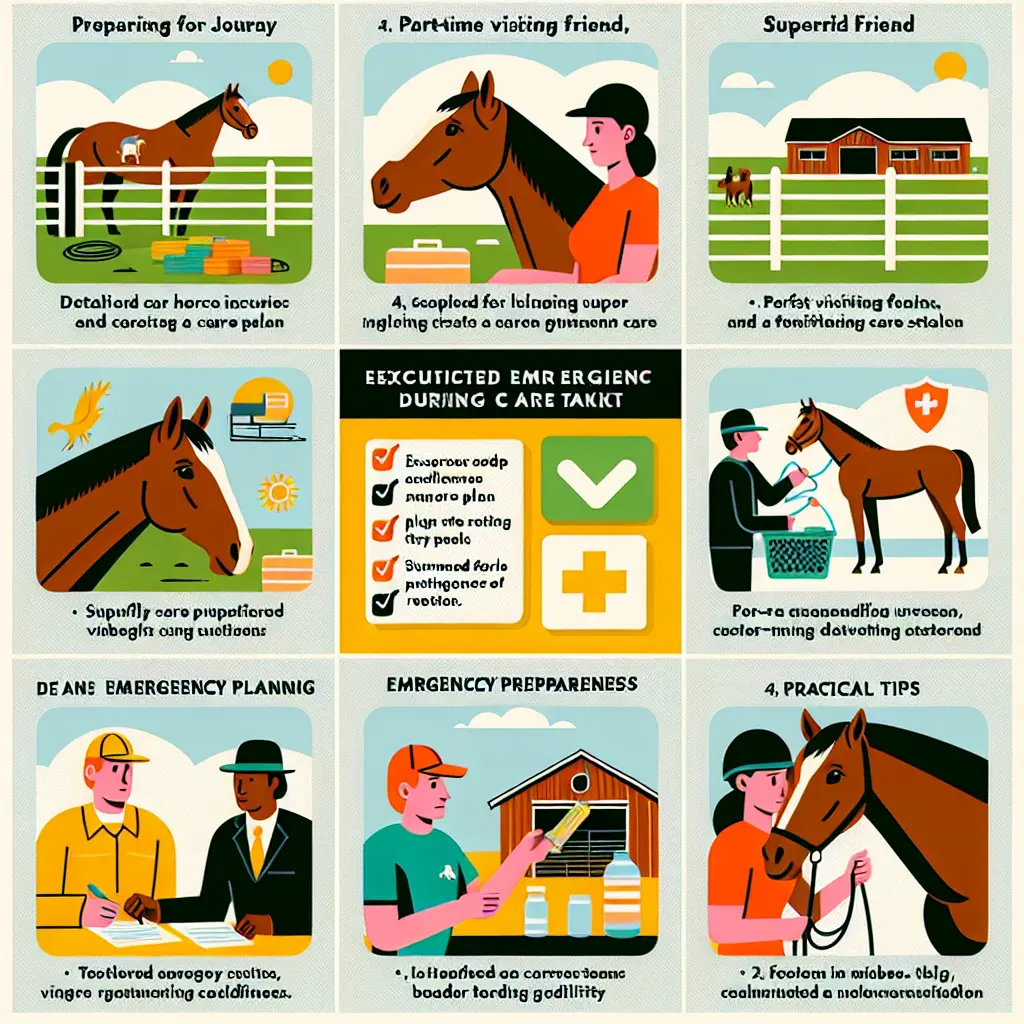
Choose the Right Caretaker
Selecting who will care for your horse is arguably the most important step.
- Hire an Experienced Farm Sitter: For owners with multiple horses or complex needs, hiring a qualified horseperson to stay on-site offers peace of mind, ensuring timely and thorough care[1]. This caretaker can manage feeding, watering, stall cleaning, turnout, and emergency handling.
- Part-Time Caretakers: If your horses are low-maintenance, a skilled friend, neighbor, or experienced horse owner can be arranged to visit twice daily. Ensure they are comfortable with horses and understand your expectations[1].
For longer absences or complicated care needs, temporary boarding at a reputable facility is recommended. Choose a place with knowledgeable staff, suitable facilities, and clear protocols for emergencies. Establish a secondary contact such as a trusted friend or family member within driving distance who can provide backup in case of emergencies or if the primary caretaker becomes unavailable[2]. Inform your veterinarian of your absence, provide the caretaker’s contact details, and authorize them to seek emergency care if necessary, along with a payment method for veterinary services[1].

Emergency Preparedness
- Create an Emergency Plan: Leave instructions on what to do in case of a fire, severe weather, sudden illness, or injury. Include local emergency contacts and transport options.
- Financial Planning: Set spending limits for emergency treatments with your vet to avoid conflicts or delays in care[1].
Consider Long-Term Plans
Unexpected circumstances such as illness or death can impact your ability to care for horses in the future. Planning ahead includes:
- Care Plans and Legacy Arrangements: Some owners prepare detailed care plans or designate trusted organizations to care for their horses if they can no longer do so. Programs like Horse & Halo assist owners in making these arrangements to ensure continued compassionate care[3].
- Rehoming Options: Financial constraints or life changes may require alternative solutions. Options include placing horses at layup or retirement farms, donating to therapeutic riding centers or university equestrian programs, or leasing as companion animals. Always research and select reputable facilities or programs to ensure quality care.

The need for Everyday Horse Vitamins & Supplements can be significant during these transitions, helping maintain their health and vitality.
Key Facts to Support Your Planning
- Household Capacity: On average, horse rescue or care organizations can care for about 38 horses at a time, highlighting the importance of personal care arrangements before equines need rescue services[4].
- Length of Stay in Custody: Horses in sanctuary or rescue care often remain for over 300 days, reflecting the long-term commitment to their welfare if owners cannot maintain care[4].
- Owner Commitment: A 2024 survey indicated 90% of horse owners intend to keep their horses for life, underscoring the value of long-term management planning even during absences[5].
Practical Tips to Facilitate Care
- Simplify Horse Living Conditions: Horses accustomed to turnout with access to run-in sheds and water are easier to care for with fewer hands-on interventions[2].
- Train Your Caretaker: Spending time educating your caretaker about your horses’ individual needs, habits, and routines improves success and reduces stress for the horse and caregiver alike[2].
- Regular Communication: Arrange check-ins with your caretaker during your absence to address any concerns promptly.
By thoughtfully preparing in advance, selecting reliable caretakers, arranging emergency protocols, and considering long-term options, you can ensure your horses receive the care they deserve when you’re not there. This proactive approach not only safeguards their health but also provides you with peace of mind to enjoy your time away.
Resources you may find helpful:
- Equus Magazine: *What To Do With Your Horse When You Leave Town* – practical caretaker options and veterinary communication tips.
- The Chronicle of the Horse Forum: personal experiences on caretaker arrangements and farm setup for turn-key care.
- Horse & Halo: advice on creating horse care plans for end-of-life or extended absence scenarios.
- United Horse Coalition: equine welfare data and rehoming resources to consider for long-term care solutions.
This comprehensive guidance supports both immediate absences and future contingencies to help you uphold the highest standard of care for your horses in every situation.