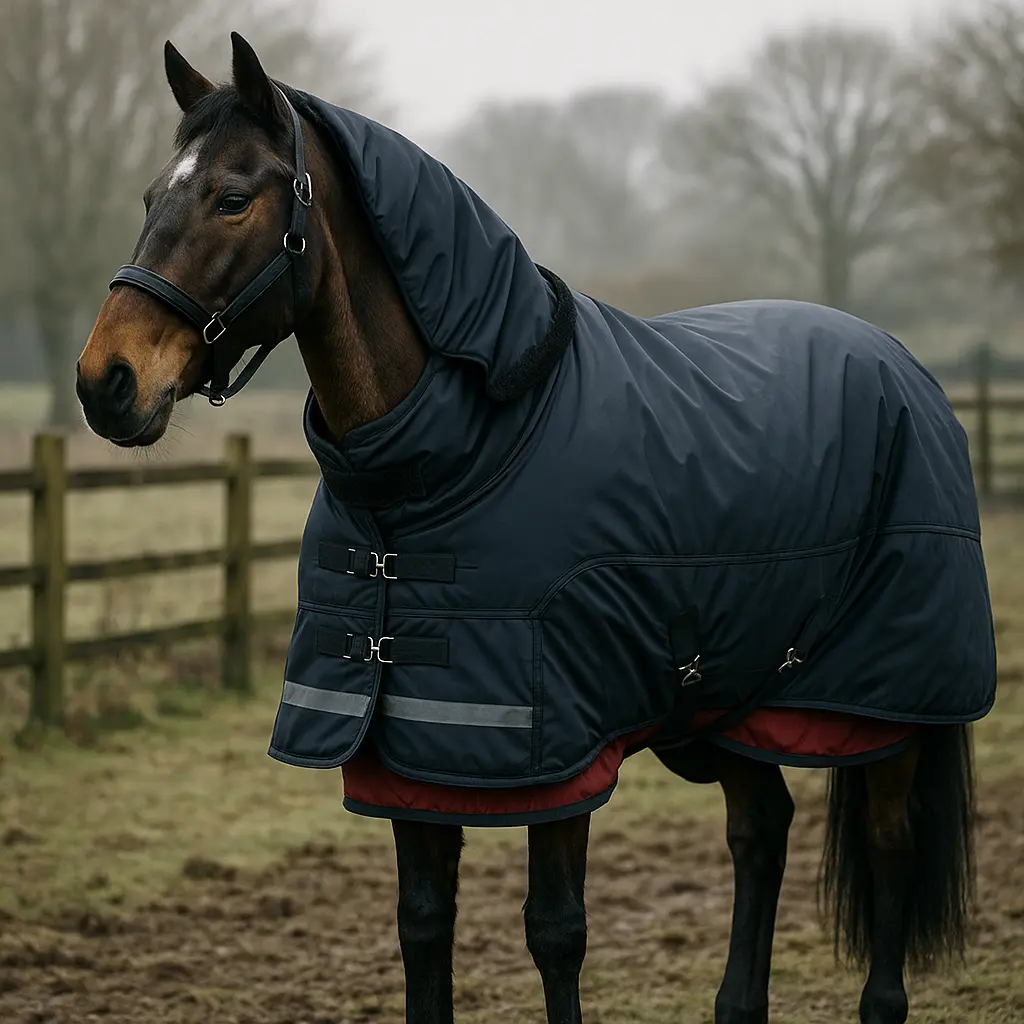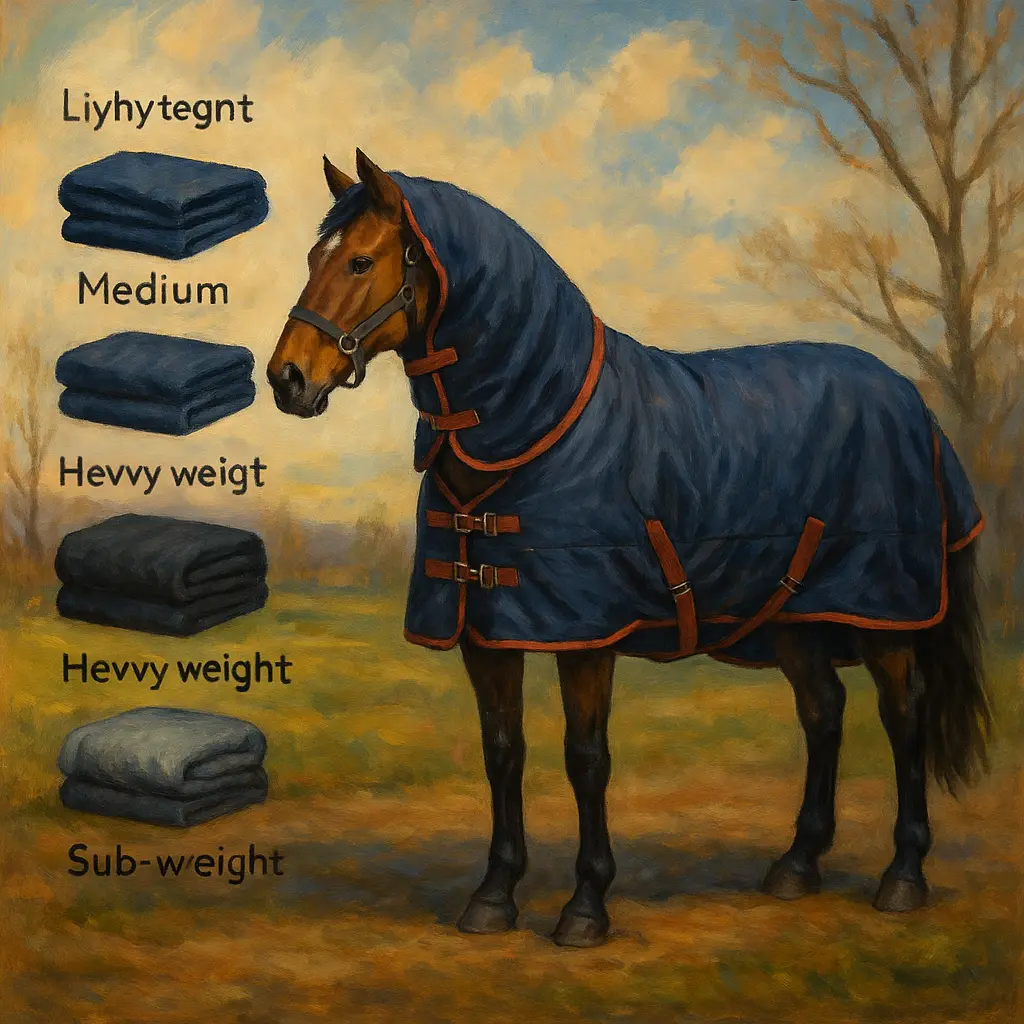
Got an Irish clip on your horse and wondering exactly what to rug, when, and how much? Here’s a clear, UK‑specific plan that keeps clipped horses comfortable through rain, wind and sudden cold snaps—without overheating or a wardrobe full of rugs.
Key takeaway: For UK winters, most Irish‑clipped horses need a 150–250g medium turnout between 5–10°C, step up to 250g+ with a neck cover from 0–5°C, and add a 100–200g liner in sub‑zero spells. Above 10–12°C (especially if it’s wet), a lightweight 0–150g turnout is usually enough.
What is an Irish clip and why it changes your rugging plan?
An Irish clip removes the coat from the front of the shoulders, belly and lower half of the neck on a diagonal from under the jaw to behind the girth area, leaving the back, hindquarters and legs hairy.
Because an Irish clip exposes large heat‑loss areas (chest, lower neck, belly), you’ll need more insulation there than for an unclipped horse, but generally less than a full clip. It’s a brilliant compromise for horses in regular work that still live out, because they keep natural protection over the back, quarters and legs. Most horses are clipped every 3–6 weeks through winter to keep coats manageable; plan rug adjustments around fresh clips and cold snaps so you don’t chase the weather.
Exact rug weights for Irish‑clipped horses by temperature
Use lightweight 0–150g above about 10–12°C (especially if it’s wet or windy), medium 150–250g between 5–10°C, and heavyweight 250g+ with a neck cover from 0–5°C; in sub‑zero conditions add a 100–200g liner under a heavyweight rug.
Here’s how to dial it in for UK turnouts:
- 15°C and above: Often no rug for clipped horses turned out if dry and sheltered; assess wind and rain. Freshly clipped or fine‑skinned types may still want a 0–50g sheet.
- 10–12°C, especially wet/windy: Lightweight turnout (0–150g) prevents chills from rain without over‑insulating.
- 5–10°C: Medium turnout (150–250g) is the everyday winter choice for most Irish‑clipped horses.
- 0–5°C: Heavyweight (250g+) with a neck cover to protect exposed lower neck and chest.
- Below 0°C: Heavyweight with a 100–200g liner (total 350–450g). Keep the neck covered.
- Below –10°C: Heavyweight (250–500g total) with neck cover and liners; monitor closely at turnout and overnight.
Remember individual variation: some horses “run hot” and cope in lighter weights, while finer types or those recently clipped run colder. As top grooms remind us:
“Some horses run warm and never need as heavy a blanket. Others may grow a coat faster and require a thicker blanket to prevent it from coming in so fast.” — Thiemann, via Dressage Today
Quick tip: Always check under the rug at the shoulder and girth line. Warm skin, no sweat and no shivering means you’re in the right zone.
How to layer rugs the smart UK way
Keep one quality waterproof outer turnout plus two liners (100g and 200g) and add a neck cover when needed; this setup handles most UK weather swings without buying multiple full‑weight rugs.
With changeable British weather, layering beats swapping whole rugs every other day. Start light and build warmth as needed:
- Base: A cotton or fleece sheet (especially on stabled horses) to manage moisture and keep coats smooth.
- Mid: 100–200g liner for flexible warmth.
- Top: A durable turnout appropriate to the weather and your field conditions.
Pro tip: Our customers often keep one robust outer from ranges like WeatherBeeta rugs and liners or Shires turnout rugs and adjust liners daily. It’s quicker, cleaner and more cost‑effective than juggling four separate turnouts.
“Davies generally starts out with horses wearing a cotton sheet, then adds a midweight blanket on top and, further into the winter, a heavyweight rug… He is a proponent of layering.” — Davies, via Dressage Today
Stable vs turnout liners: Stable sheets and stable liners aren’t waterproof; keep them for box rest or under a stable rug. Use turnout‑specific liners or integrated systems under waterproof outers for the field.
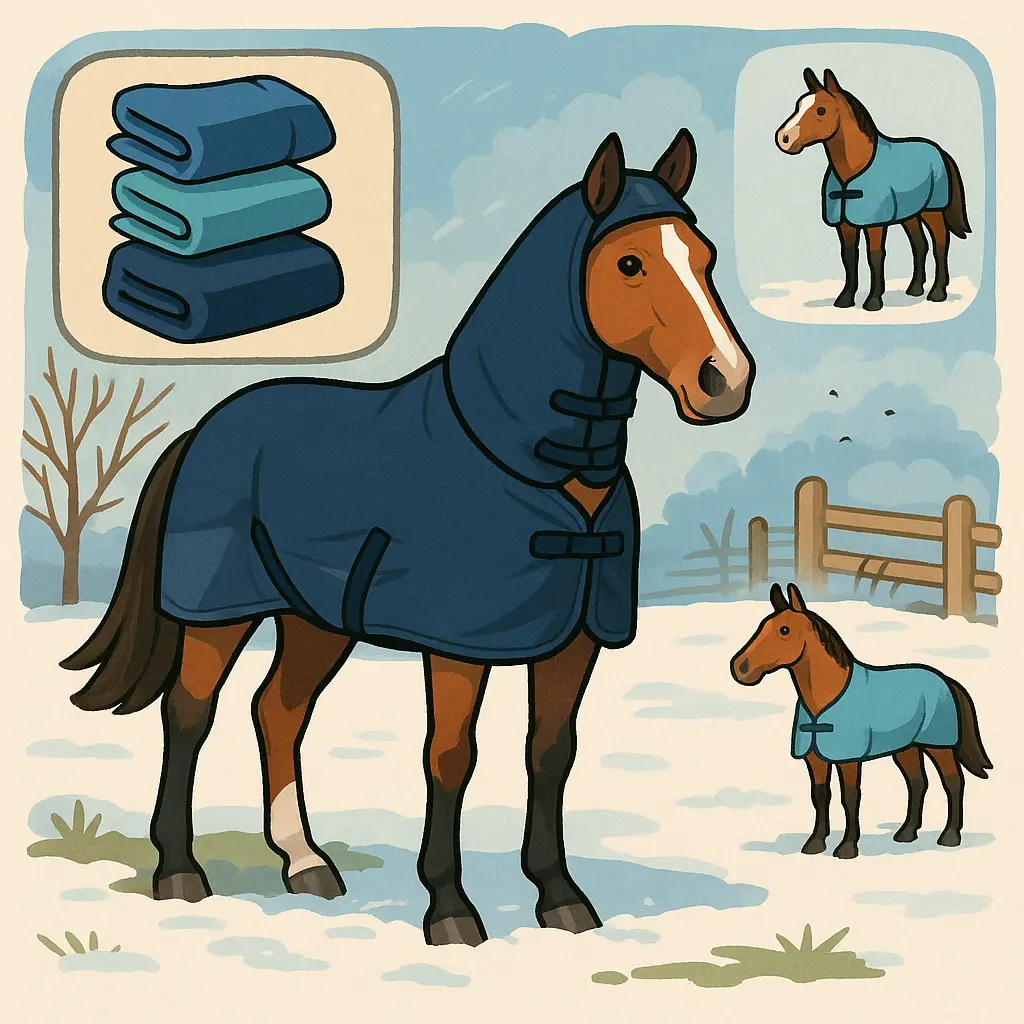
Neck covers: when to use them and how to protect the mane
Add a neck cover straight after clipping and keep it on with medium and heavyweight setups through the coldest weeks; remove or swap it regularly to protect the mane from rubbing.
Fresh Irish clips expose the lower neck and major vessels to wind chill. A well‑fitted neck cover prevents heat loss and helps keep muscles warm before work. However, continuous use can thin the mane. Rotate neck covers, brush and detangle manes daily, and consider silky neck liners on sensitive horses.
“Use neck covers on freshly clipped horses… but avoid prolonged use to prevent mane rubbing.” — summary of pro guidance via Dressage Today
Quick tip: Keep neck attachments clean and correctly adjusted; too tight causes friction, too loose slips and rubs.
Turnout vs stable: matching rug weights to where your horse is
Turnout rugs top out around 400–500g total for clipped horses, while stable rugs can run 100–550g depending on your barn’s temperature and ventilation.
Outdoors, waterproofing and wind‑resistance matter as much as weight, so invest first in a high‑quality outer turnout. Indoors, there’s no windchill, but draughty sheds and open barns can feel as cold as the field; stabled Irish‑clipped horses in a UK cold snap often wear a 100g sheet plus a 200–350g stable rug overnight. If your stables are well‑insulated and horses are kept in groups (which share warmth), you may step down a layer. Always check ears, armpits and flanks at last checks.
Explore our curated ranges for both environments:
- Durable, waterproof outers across winter weights: winter turnout rugs
- Cosy box wear for night and rest days: heavyweight stable rugs and liners
Adjust for workload, condition and the sudden cold snap
Start with the lightest suitable rug for the temperature, then add layers if needed—this avoids overheating after work and lets you fine‑tune for your horse’s metabolism and body condition.
Workload matters: horses in regular, sweaty work need more clipping and often appreciate lighter rugs straight after exercise to prevent post‑work overheating. As you cool them down and the coat dries, re‑apply the planned layers. In cold spells, clipped horses burn more calories to stay warm; underrugging can quickly lead to weight loss and tight backs.
Signs you need to change something:
- Underrugged: shivering, tucked‑up abdomen, cold ears and shoulders, weight loss over a week.
- Overrugged: sweating at rest, damp coat under rug, lethargy, heat rash or scurf.
“You have to know your horse, see them as an individual and know what’s best for them.” — Davies, via Dressage Today
Pro tip: In the UK, forecast lows often arrive overnight. If the evening is 8–9°C but the forecast low is 1–2°C with wind, switch up a layer at evening checks so you’re not catching up at 6am with a cold horse.
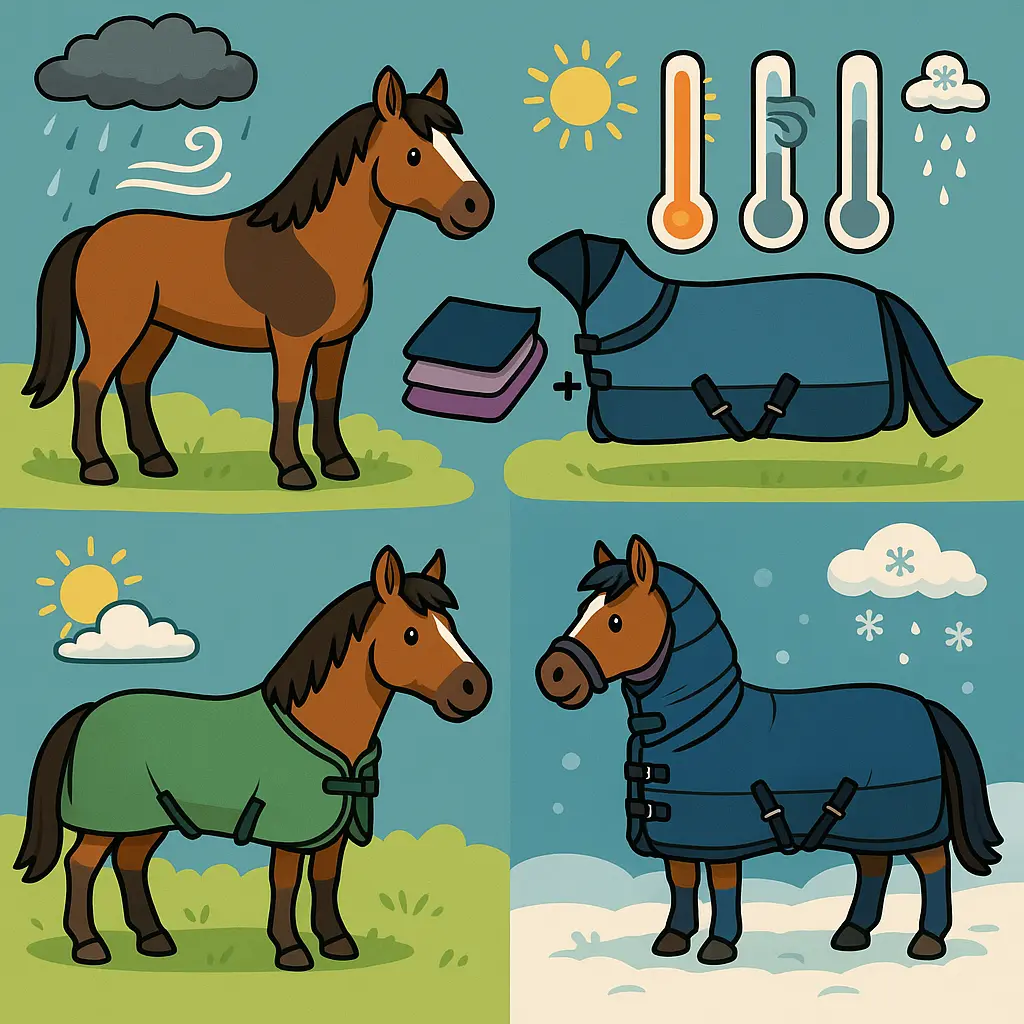
A simple weekly routine for Irish‑clipped horses
Swap or wash base sheets weekly, check skin daily, and trim or re‑clip every 3–6 weeks; feed to match the extra calories burned in cold weather.
Moisture management: A thin cotton or fleece base under the rug system wicks sweat and keeps the coat flat. Replace or wash this layer at least weekly—more often if it’s damp—to prevent scurf and to protect your outer rug’s breathability.
Skin and fit checks: Lift the rug daily to check shoulders, withers and girth line. Look for rubs, scurf, or dampness. Adjust surcingles so you can slide a hand flat underneath; too loose flaps and chills, too tight restricts movement.
Clipping cadence: Most horses hold an Irish clip neatly for 3–6 weeks. Re‑clip before coats get long to maintain quick drying after work and predictable rugging. In the UK, avoid clipping after late February as daylight increases—coats naturally lighten and late clips can work against spring coat change.
Nutrition: Cold weather increases energy needs. Keep weight steady with ad‑lib forage and add calories where necessary. Many owners bolster condition with targeted nutrition—browse our horse condition and coat supplements to support topline and recovery through winter work.
Quick tip: For safety on dark hacks during winter, pop a vest or leg bands from our rider hi‑vis collection over your outer layers.
Recommended kit from Just Horse Riders
Here’s a streamlined kit list that covers almost every UK winter scenario for an Irish‑clipped horse:
- One quality waterproof outer: Choose a tough, breathable rug from our turnout rug selection, with detachable neck for flexibility.
- Liners: A 100g and a 200g liner let you create 100–450g total warmth as the temperature drops. Many systems from WeatherBeeta and Shires integrate cleanly with their outers.
- Base sheets: Cotton or fleece sheets to manage moisture under stable rugs, swapped or washed weekly; see our stable rug range for layering ideas.
- Clipping and care: Keep blades sharp and coats healthy with tools in our grooming and clipping kit.
If your horse lives out through harsher spells, you may keep both a medium and a heavyweight outer on hand (e.g., 200g and 300g) and still use liners for sub‑zero nights. For value buys and last‑minute size swaps, check the turnout rugs and our seasonal offers in the Secret Tack Room.
FAQs
How many layers does an Irish‑clipped horse need in winter?
Most will wear 2–3 layers in colder spells: a base cotton or fleece sheet, a mid‑layer (100–200g liner or mid‑weight rug), and a heavyweight outer. In milder weather, one or two layers often suffice.
When should I fit a neck cover on an Irish‑clipped horse?
Right after clipping, and keep it on with medium and heavyweight setups—especially from 0–5°C and below. Remove periodically to prevent mane rubbing and to groom the crest.
Is a lightweight turnout enough at 10–12°C if it’s raining?
Yes. A 0–150g lightweight turnout usually protects an Irish‑clipped horse from chill at 10–12°C in rain and wind without overheating.
What should I use below freezing?
A heavyweight (250g+) with a neck cover, adding a 100–200g liner as needed. In severe cold (–10°C and below), total weights of 350–500g are typical for clipped horses—monitor closely.
Do I need different rugs for turnout and the stable?
Yes. Turnout rugs are waterproof and wind‑resistant; stable rugs are for indoor use and can run from 100–550g. Match the weight to your barn’s temperature and ventilation.
How often should I re‑clip an Irish clip?
Every 3–6 weeks through winter keeps the clip neat and drying times short. Try not to clip after late February as daylight triggers the spring coat.
How do I tell if I’ve over‑ or under‑rugged?
Over‑rugged horses sweat at rest and feel damp underneath. Under‑rugged horses shiver, feel cold at the shoulder and flank, and can look tucked up. Adjust one layer at a time and recheck in an hour.
At Just Horse Riders, we recommend starting light for the conditions, adding warmth in layers, and checking under the rug daily. If you need help choosing sizes or systems, our team is on hand—and our ranges of winter turnout rugs and stable rugs cover every budget and brand preference.