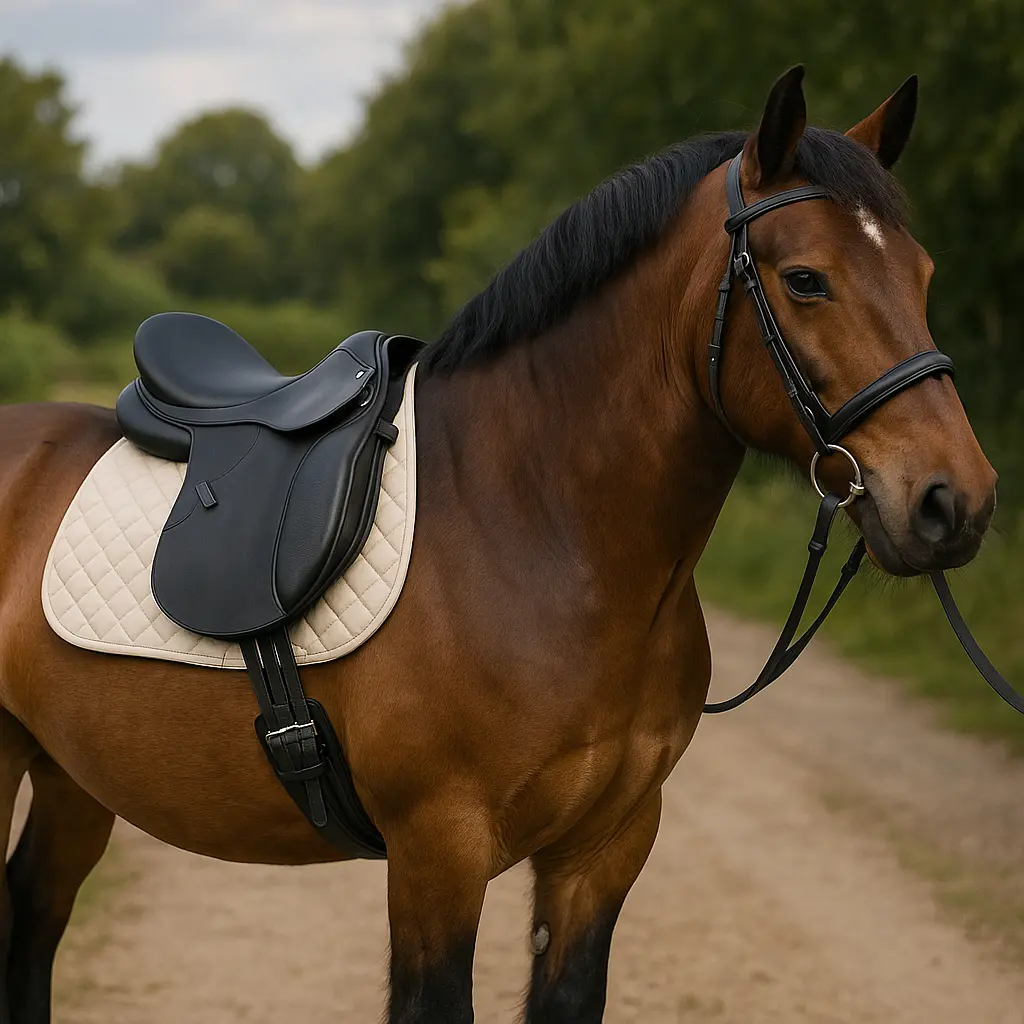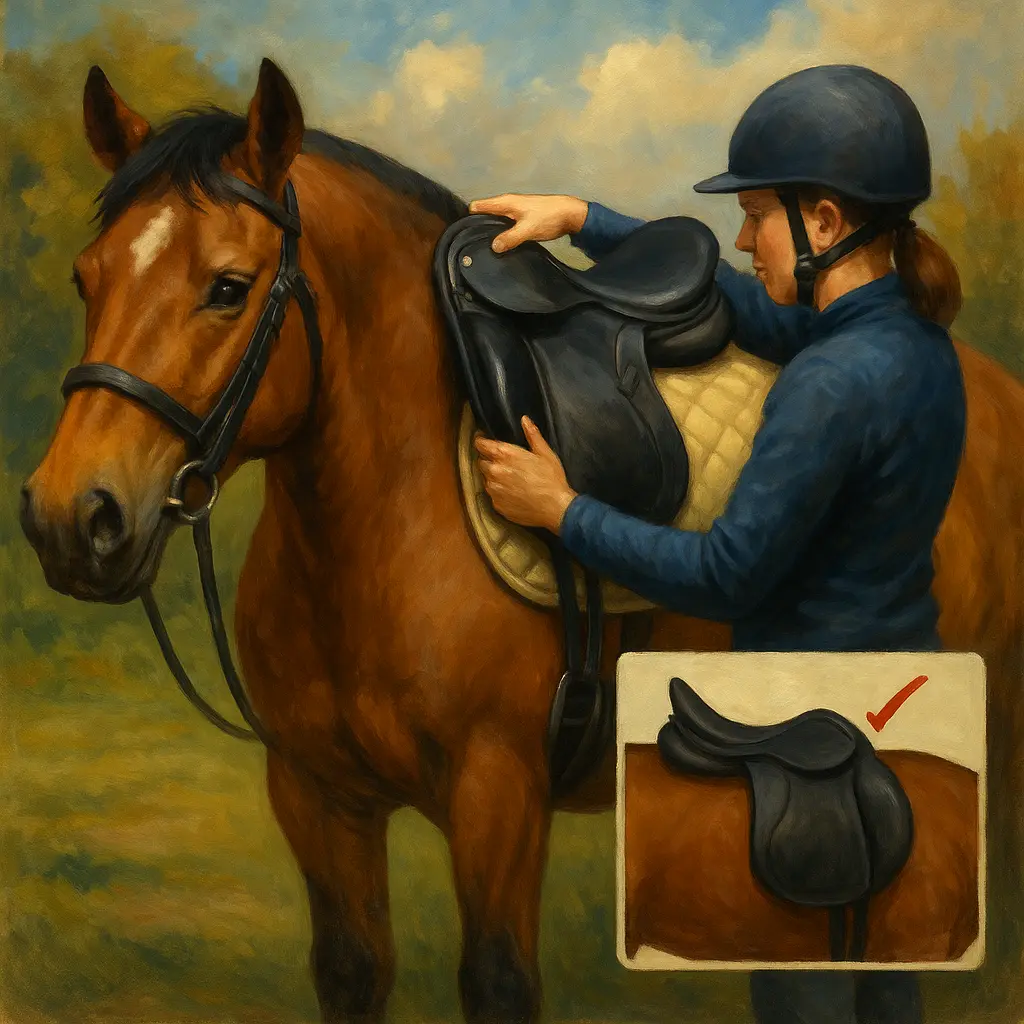
Your wide, flat-backed cob is built for power and comfort — but only if the saddle lets them move freely. The right model will sit low and stable, stay straight in canter, and keep your hips happy on long hacks.
Key takeaway: Choose a wide-tree, flat-panel saddle with a wide spinal channel, matched precisely to your horse’s shoulder angle 2–3 inches behind the scapula, and test the twist for your own hip comfort before you buy.
What makes a saddle work on wide, flat backs?
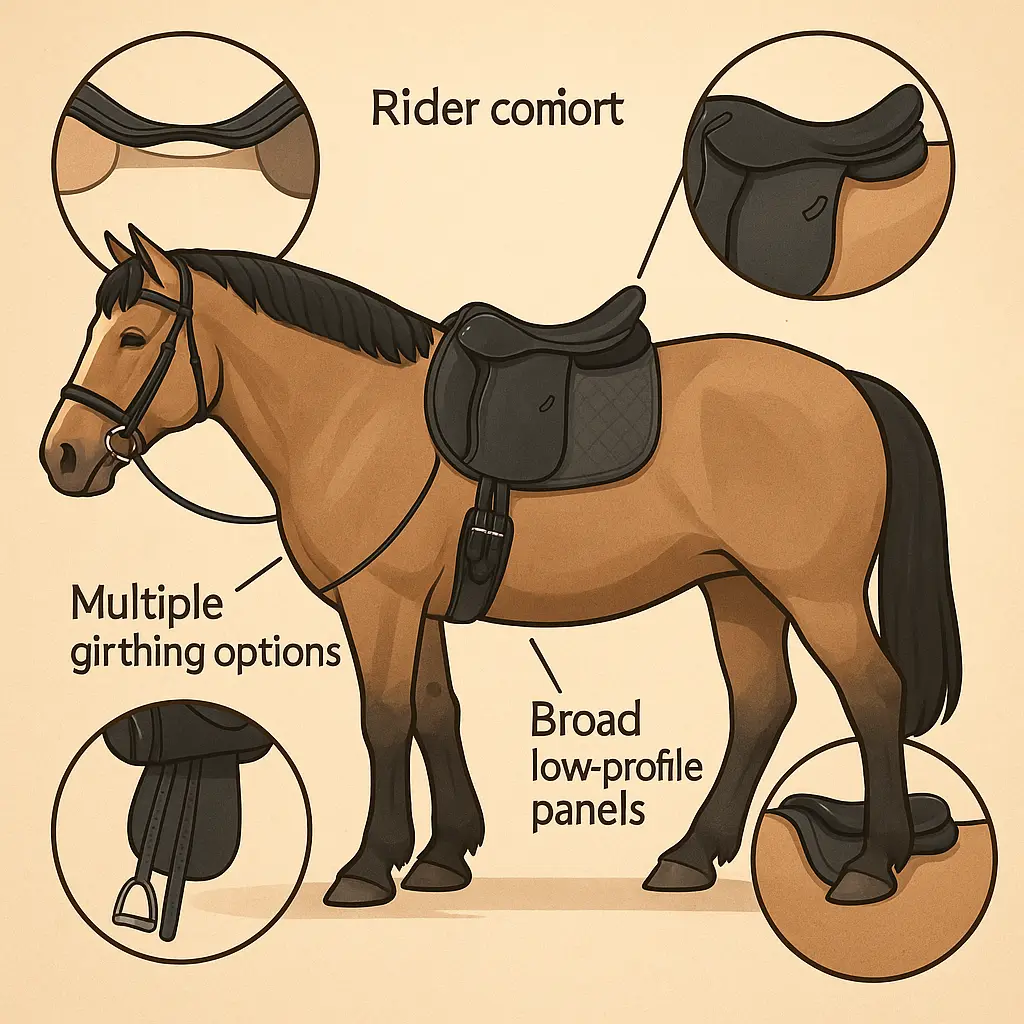
The best saddles for wide, flat-backed horses combine a wide, flatter tree, broad wool-flocked panels, and a wide channel that clears the spine while aligning the tree angle to the shoulder 2–3 inches behind the scapula. This lets the shoulder rotate freely and keeps the saddle stable on a low-withered back.
On broad, low-withered breeds common in the UK — cobs, Connemaras and Haflingers — the wrong tree shape or narrow panel spacing quickly pinches or perches. According to Horsemanship Saddlery (UK), you must match the tree angle to the horse’s shoulder angle and ensure there’s sufficient width between the panels; a “wide” tree with narrow panel spacing still restricts shoulder rotation. Prioritise a wide channel for spinal clearance and wool-flocked panels that can be adjusted to your horse’s flat contours over time.
Adjustable gullet systems help you fine-tune width as the horse changes across the year, but they’re not a licence to fudge fit. As UK saddle fitter Cindy Buzzard cautions in Equus, padding up a too-wide saddle is no more comfortable than riding in one that’s too narrow.
Which UK-friendly saddles should you try first?
Start with cob- and wide-specific designs like the Thorowgood T4 Cob GP (Broadback), Bates Wide All Purpose, Thorowgood T4 Cob MGX, Wintec 2000 Wide AP, SMART Saddles, and low-profile “Supercob” GP types.
Here are proven options and why they work on flat backs:
- Thorowgood T4 Cob GP (Broadback) — Built for low withers and broad backs with a changeable gullet, movable blocks, and four girthing options for stability; UK-made. The extra girthing choices help stop the saddle sliding forwards or sideways on a round ribcage. Source: Equus Magazine.
- Bates Wide All Purpose — Adjustable from 1XW–4XW to cater for super-wide natives, and available in a 16-inch seat for short-backed horses that can’t take a long panel. Source: The Saddle Bank.
- Thorowgood T4 Cob MGX — Uses adjustable gullet plates (N to XXW), wool-flocked panels and adjustable knee/thigh blocks; typically in 17" and 17.5" seats, suiting many adult riders on compact backs. Source: The Saddle Bank.
- Wintec 2000 Wide All Purpose — Known for a generous channel and adjustable gullet; the synthetic build is durable and easy to maintain in UK wet weather. Source: The Saddle Bank.
- SMART Saddles — Flexible, low-profile base panels are designed for wide, flat or short backs with little/no wither, giving close contact without perching. Source: SMART Saddles UK.
- “Supercob” GP types — Flatter trees, shallower seats and smaller rear gussets sit down on super-flat backs and reduce roll. Source: Stephanie Bloom, UK saddle fitter.
UK riders on Horse & Hound also report that Duett’s flat, wide trees stay put on Haflingers and cobs in canter on varied terrain. Whatever you shortlist, test multiple “wide” saddles — panel width and channel shape vary more than labels suggest.
Quick tip: Short-backed natives often go best in 16–17.5" seats. The Bates Wide AP is available in 16", while Thorowgood Cob models typically offer 17" and 17.5" — a safer length on compact loins. Source: The Saddle Bank.
How do you stay comfortable on a very wide horse?
Choose a saddle with a wide enough tree for the horse but a seat built to give you a narrower-feel twist, protecting your hips without compromising fit. Focus on overall seat shape and support rather than chasing a “narrow” tree.
Riding a barrel-shaped cob can make you feel “pulled apart” if the twist is too wide for your pelvis. Master saddler Jochen Schleese explains:
“The twist is absolutely instrumental in combatting the feel of being ‘pulled apart’ at the hips... You can still have a tree built for a wider-backed horse while still accommodating the needs of the rider with a narrow twist.” — Jochen Schleese
That doesn’t mean forcing a narrow-twist tree onto a broad back. As UK riders note on Horse & Hound, putting a narrow-twist tree on a wide horse is never recommended; work with the seat build and block configuration that suit you while keeping the tree and panels right for the horse. Also remember Schleese’s reminder that very wide twists can be uncomfortable for some riders — factor your anatomy into the trial list and sit in each model before booking a ridden trial.
How do you fit a saddle correctly on a flat-backed cob?
Match the tree angle to the shoulder 2–3 inches behind the scapula, ensure broad panel contact with a wide, even channel, and then test in motion to confirm stability and freedom through the shoulder.
Use this step-by-step fitting approach based on UK guidance:
- Place and align — Position the saddle 2–3 inches behind the shoulder blade so the tree sits where the shoulder can rotate beneath it. Source: Horsemanship Saddlery (UK).
- Check tree and panel geometry — The tree angle must mirror the horse’s shoulder angle; panels should be broad enough that the weight is spread and shoulder rotation is not blocked. Compare multiple “wide” saddles — some still have narrow panel spacing.
- Confirm spinal clearance — You want a genuinely wide channel over the thoracic spine, with even daylight and no bridging along the back. Wool-flocked panels are easier to tailor to flat backs. Source: The Saddle Bank.
- Use girthing options — On round ribcages, rear point or balance straps (as found on cob models like the Thorowgood T4 Cob GP) can transform stability.
- Ride to decide — Walk, trot, canter and include circles, transitions and small slopes. Watch for lateral slip, saddle roll, creeping forwards, tail swishing, hollowing or reluctance to step under — especially on flat-backed natives.
- Avoid the “pad it up” myth — Do not buy too wide and stuff shims underneath. As saddle fitter Cindy Buzzard warns:
“The idea that it’s OK to fit a saddle too wide and then pad it up is erroneous. It’s just as uncomfortable on the horse as a saddle that’s too narrow.” — Equus Magazine
Pro tip: Book a qualified saddle fitter (in the UK, look for Society of Master Saddlers–qualified fitters) and ask them to bring multiple cob-specific trees. Photo and video the ridden trial to compare stability and your own position.
How often should you re-check fit in the UK?
Reassess saddle fit seasonally in the UK because winter weight gain and spring/summer muscle development can change width and back shape. Low-withered natives are especially prone to shape-shifting under rugs and on varied turnout.
UK winters with more stabling and rugs often add a little fat under the saddle; spring brings more work and topline changes. As UK fitter Stephanie Bloom notes, flat-backed horses like many Connemaras need low-profile trees (e.g., Supercob GP), and those contours can alter with management across the year. Source: Stephanie Bloom.
Hacking in wet, uneven conditions typical of UK lanes and bridleways increases the need for shoulder freedom and stability. Use wide channels and panel contact to prevent tipping on cambers; test in canter on both reins. For safety on the roads and fields, make sure you’re kitted out with hi-vis for riders, a correctly fitted riding helmet, supportive riding boots and grippy jodhpurs or breeches so you can concentrate on the feel under the saddle, not your footing in the stirrups.
Quick tip: After a long, wet hack, check sweat patterns and hair rubs under the panels. Uneven sweat, dry spots under pressure points, or ruffled hair where the saddle moved all signal you need an adjustment.
What are the biggest saddle-fitting mistakes on wide backs?
The most common mistakes are padding up a too-wide saddle, forcing a narrow-twist tree onto a broad back, ignoring panel width and channel clearance, and choosing a seat that’s too long for a short back.
- Padding up a too-wide tree — This creates instability and concentrated pressure; it’s as uncomfortable as a too-narrow fit. Source: Equus.
- Chasing a “super-narrow twist” on a broad horse — Instead, pick a wide, flat tree for the horse and a seat build that narrows the feel for the rider. Sources: Schleese, Horse & Hound.
- Overlooking panel width and channel — A “W” stamped on the headplate doesn’t guarantee panel spacing. Compare each model’s panel footprint and channel clearance. Source: Horsemanship Saddlery (UK).
- Over-seating a short back — Going up a seat size to fit the rider can overload the lumbar region on compact natives. Use models offering 16–17.5" seats on wide trees (e.g., Bates Wide AP at 16", Thorowgood Cob at 17/17.5"). Source: The Saddle Bank.
- Skipping the ridden test — Slipping in canter or on hills often won’t show up on the yard. Always ride before deciding.
Pro tip: Keep a simple log of fit checks, rider feel, sweat marks and any behaviour changes every 8–12 weeks. It will help your fitter track patterns and adjust flocking before problems appear.
What’s the best way to test saddles before you buy?
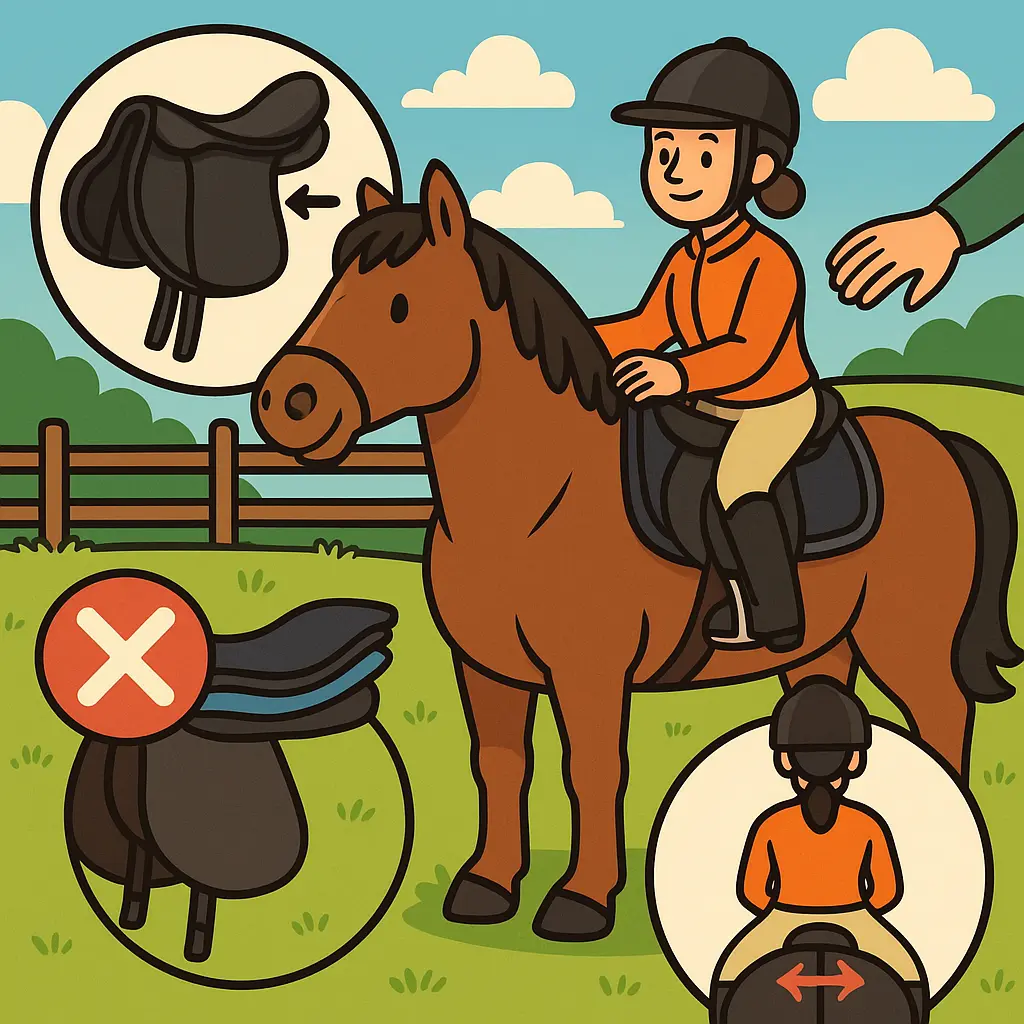
Always ride in walk, trot and canter, use different girthing options, and assess straightness, wither clearance, sweat patterns and your own hip comfort before committing. Bring video, take notes, and compare more than one “wide” model.
Use this practical, UK-ready checklist:
- Prep your horse — Groom thoroughly so hair lies flat and sweat marks are readable; a clean coat gives clearer feedback. Stock up on yard essentials from our grooming collection.
- Start with static checks — Tree angle to shoulder, panel contact along the back, channel width, wither and spine clearance.
- Test girthing options — On flat backs, point and balance straps can transform stability (e.g., Thorowgood Cob GP’s four girthing options).
- Ride the patterns that expose problems — Circles, transitions, light seat in canter, shallow hillwork, and a few minutes on cambered tracks to assess lateral slip.
- Assess rider comfort — Does the twist feel supportive or are your hips being prised apart? Try models that offer a narrower-feel seat on a wide tree.
- Check aftercare signs — Look at sweat marks (even and symmetrical), hair rubs, saddle movement, and how the horse steps off after untacking.
- Confirm adjustability — Prefer changeable gullets (e.g., N–XXW on Thorowgood T4 Cob MGX; 1XW–4XW on Bates Wide AP) and wool-flocked panels for future tweaks.
- Plan seasonal reviews — Book refits in late autumn and late spring as weight and work patterns shift in the UK.
At Just Horse Riders, we recommend trialling in your usual hacking kit so nothing else changes. That means your regular helmet, supportive boots, and grippy breeches if you’re the rider — plus leg protection for your horse from our boots and bandages range when you head onto lanes or bridleways. In winter, pair this with appropriate turnout rugs and visible layers from our hi-vis collection so you can concentrate fully on feel and fit.
Quick tip: Bring a friend to film from behind at trot and canter; subtle one-sided slip is far easier to spot on video than from the saddle.
FAQs
Will a narrow-twist saddle work on my wide, flat-backed cob?
No. A narrow-twist tree mismatches a broad back and can cause resistance and pain. Instead, choose a tree built for wide horses and a seat that gives you a narrower-feel twist. Sources: Schleese; Horse & Hound.
How do I stop my saddle slipping on a flat-backed horse?
Pick models with broad panels and multiple girthing options (e.g., Thorowgood T4 Cob GP) and test stability in canter and on cambers. UK riders also report success with Duett on very flat natives. Check flocking balance and channel width too. Sources: Equus; Horse & Hound.
Can I pad a too-wide saddle to make it fit?
No. Padding up a too-wide saddle is as uncomfortable for the horse as a too-narrow fit. Fix the tree width and flocking instead. Source: Equus.
What seat sizes suit short-backed UK natives?
Most short-backed cobs and Connemaras go best in 16–17.5". The Bates Wide AP offers a 16" option for compact horses, while Thorowgood Cob models often suit riders in 17"–17.5". Source: The Saddle Bank.
Which features matter most for comfort on wide backs?
A wide, flat tree; broad wool-flocked panels; a wide spinal channel; and a seat that supports the rider without over-widening the twist. Source: Horsemanship Saddlery (UK).
Are synthetic saddles a good idea for UK weather?
Yes. Models like the Wintec 2000 Wide AP are durable, easy to clean and resist the mud and rain common in UK hacking. Source: The Saddle Bank.
How often should I check fit on a flat-backed horse?
Seasonally — at least twice a year — as winter weight and spring/summer muscle changes affect width and back shape. Source: Stephanie Bloom.
Ready to put this into practice? Shortlist two or three cob-specific models, book a professional fitting, and ride the tests that reveal the truth. Keep your hacking kit safe and sorted with our hi-vis, reliable helmets and supportive boots, then enjoy the difference a correctly fitted saddle makes — freer shoulders, straighter canter, happier horse.