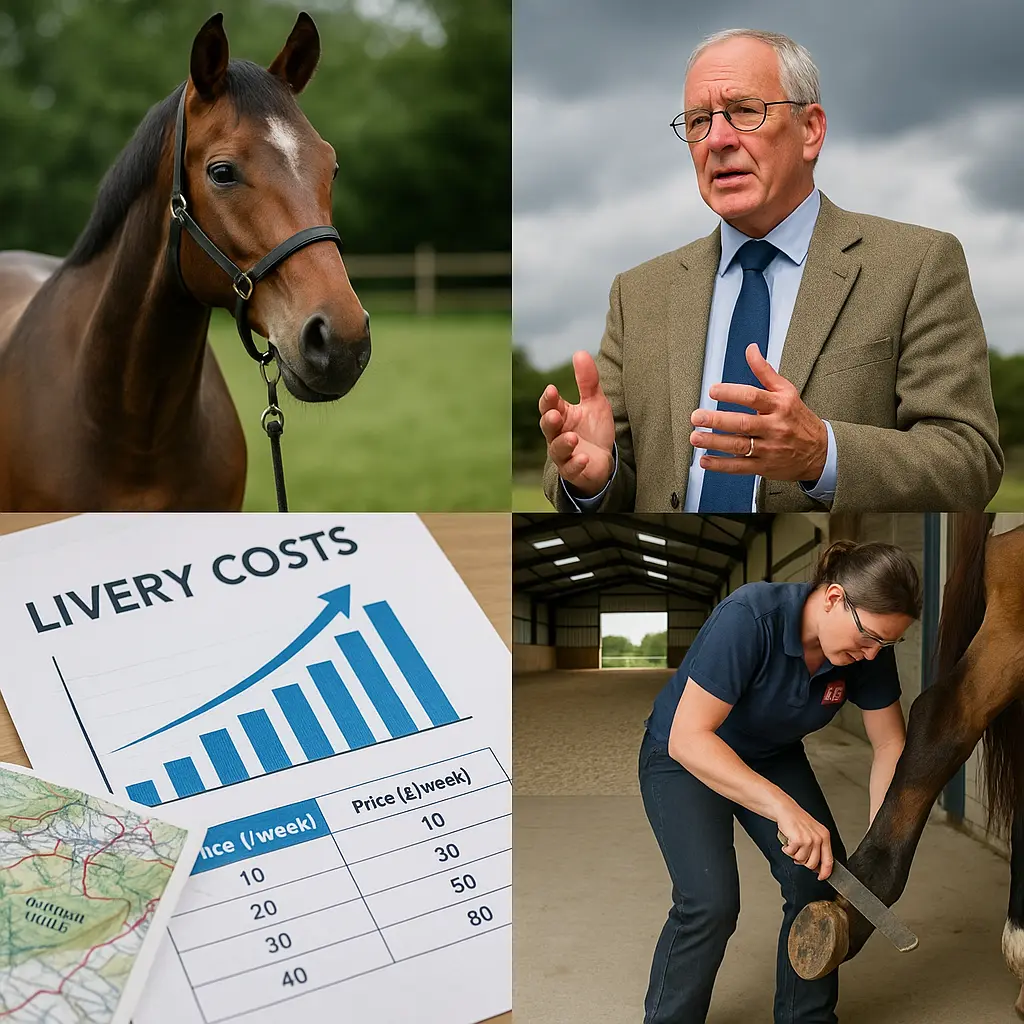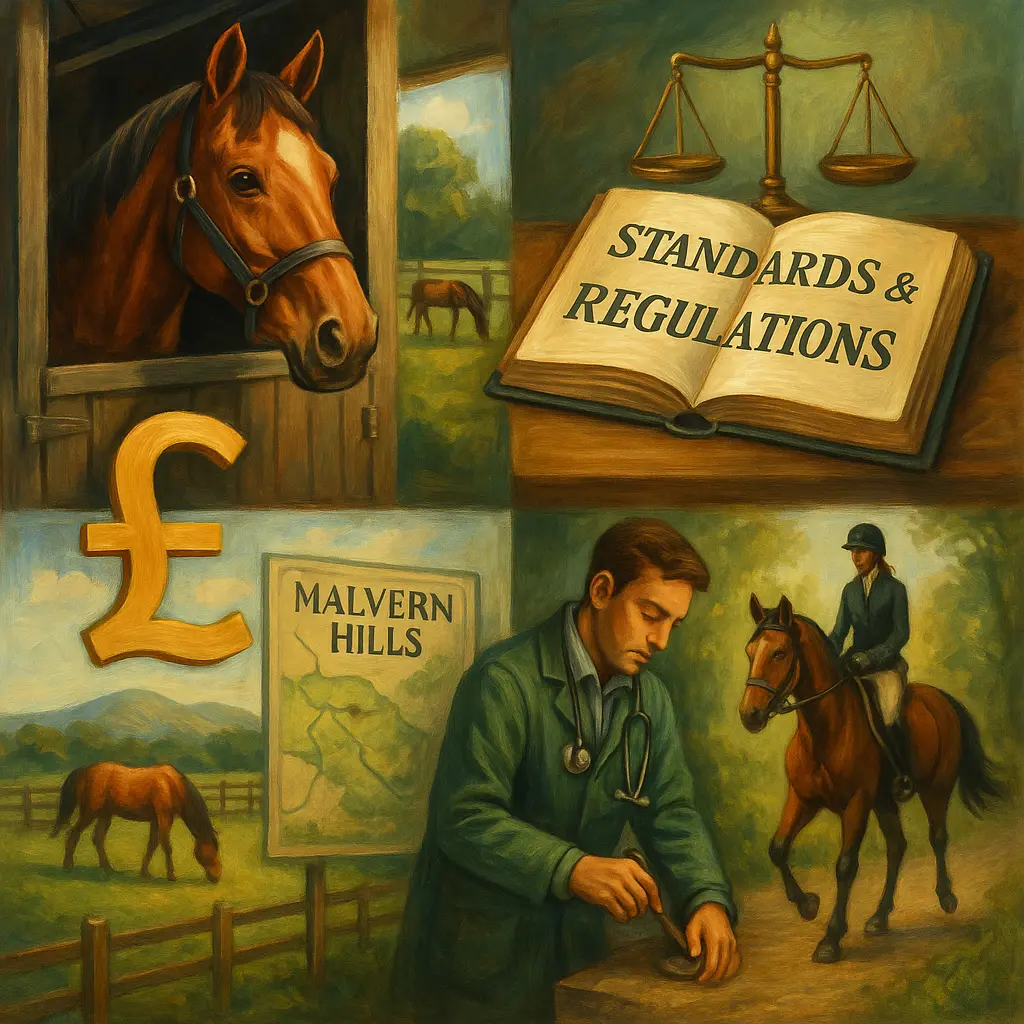
Hunting for the right livery yard around Ledbury and the Malvern Hills can feel like a maze — but a clear checklist and local knowledge make the choice straightforward. With excellent hacking and a good spread of facilities in the area, you can match a yard to your horse’s routine and your diary.
Key takeaway: Prioritise a yard that meets your horse’s turnout needs, gives you safe off-road hacking, and backs this up with clear standards and a written contract — then visit at peak hours to see it all in action.
Livery options around Ledbury & the Malverns at a glance
In and around Ledbury, you’ll find BHS-approved yards offering DIY, Part and Full livery, 20m x 40m arenas, and off-road riding towards the Malvern Hills. There’s also good access to farm tracks and cross-country schooling in the surrounding countryside.
Local examples highlighted in public listings include Ridgeway Livery Centre (BHS Approved) near Cradley on the B4220 Malvern–Bromyard road, offering DIY/Part/Full livery with a 20m x 40m sand/rubber arena and off-road riding on site. Between Ledbury and Newent, Fairfields Stables spans 76 acres with all-year turnout, a cross-country field, and farm track access about four miles from the M50. Birch Farm Livery sits just off the A4103 between Worcester and Hereford, around five miles from Malvern and eight from Ledbury. Use these as starting points to understand typical facilities and travel times in the area, then build a shortlist based on your horse’s needs and your commute.
At Just Horse Riders, we recommend plotting your likely journeys (yard–home–work) at busy times to check whether weekday routines are realistic through winter. Ten minutes saved each way adds up through dark months.
How to choose the right livery yard (a quick checklist)
Choose a yard by matching your horse’s turnout and workload to the facilities, checking hacking access and daily routines, and confirming standards and contracts before you commit. A structured visit and a few focused questions will surface the right fit quickly.
Use this practical checklist as you compare options:
- Turnout routine: daily hours, all-year turnout availability, winter field rotation, and whether paddocks are individual or shared.
- Water and forage: individual paddocks with mains water troughs are a time-saver; ask how and when hay/haylage is fed and who supplies it.
- Arena access: a standard 20m x 40m arena is ideal for schooling; ask about surface, drainage, maintenance, lights, and booking rules.
- Hacking and road risk: look for direct off-road riding, farm tracks, or easy access towards the Malvern Hills; confirm how much roadwork is unavoidable.
- Care level: DIY, Part, or Full — clarify exactly what’s included (bring in/turnout, mucking out, feeds, rugs, etc.).
- Standards and safety: BHS Approval is a helpful quality marker; ask about emergency procedures, first aid, and fire safety.
- Yard culture: visit at peak times to see the atmosphere, how busy the arena gets, and whether the routine suits your horse (and you).
- Professionals and policies: check visiting vet/farrier arrangements, worming policy, vaccination rules, and biosecurity.
- Security and storage: tack and feed room access, CCTV/alarms, and trailer/lorry parking arrangements.
- Contract clarity: get everything in writing, including notice periods and extras (holding for farrier, competition prep, field poo-picking, etc.).
Quick tip: If you plan frequent schooling or winter evening rides, prioritise a yard with reliable lights and a drainage-friendly surface. If long weekend hacks are your goal, bias your shortlist towards yards with farm tracks or direct bridleway links.
For visibility on lanes and field margins, kit yourself out with hi-vis for riders from the start — it’s essential in this landscape of hedged lanes and variable light.
What facilities to expect near Ledbury
Typical local yard facilities include individual paddocks with mains water troughs, a 20m x 40m sand/rubber arena, secure tack and feed rooms, and some level of off-road riding. Many yards here also benefit from proximity to farm tracks and accessible hacking routes towards the Hills.
A 20m x 40m arena is the standard footprint for flatwork and polework, giving enough space to school most horses comfortably. Ask whether there’s a maintenance routine for the surface (levelling, topping up) and how well it drains after heavy rain. For horses that thrive on varied work, a cross-country field or access to farm tracks is a bonus, offering conditioning without the concussive impact of frequent roadwork. Tack and feed rooms should be dry, secure, and organised, and you’ll usually see clearly labelled storage for each livery to keep routines smooth.
If your horse is keen or moves big in the school, protective boots can help manage concussion and interfere risk during schooling. Explore horse boots & bandages that balance breathability and support for arena sessions. And because Malvern clay can hold mud, a solid grooming kit with a mud fever–mindful routine (dry legs before brushing, gentle skin care) will be a daily timesaver through winter.
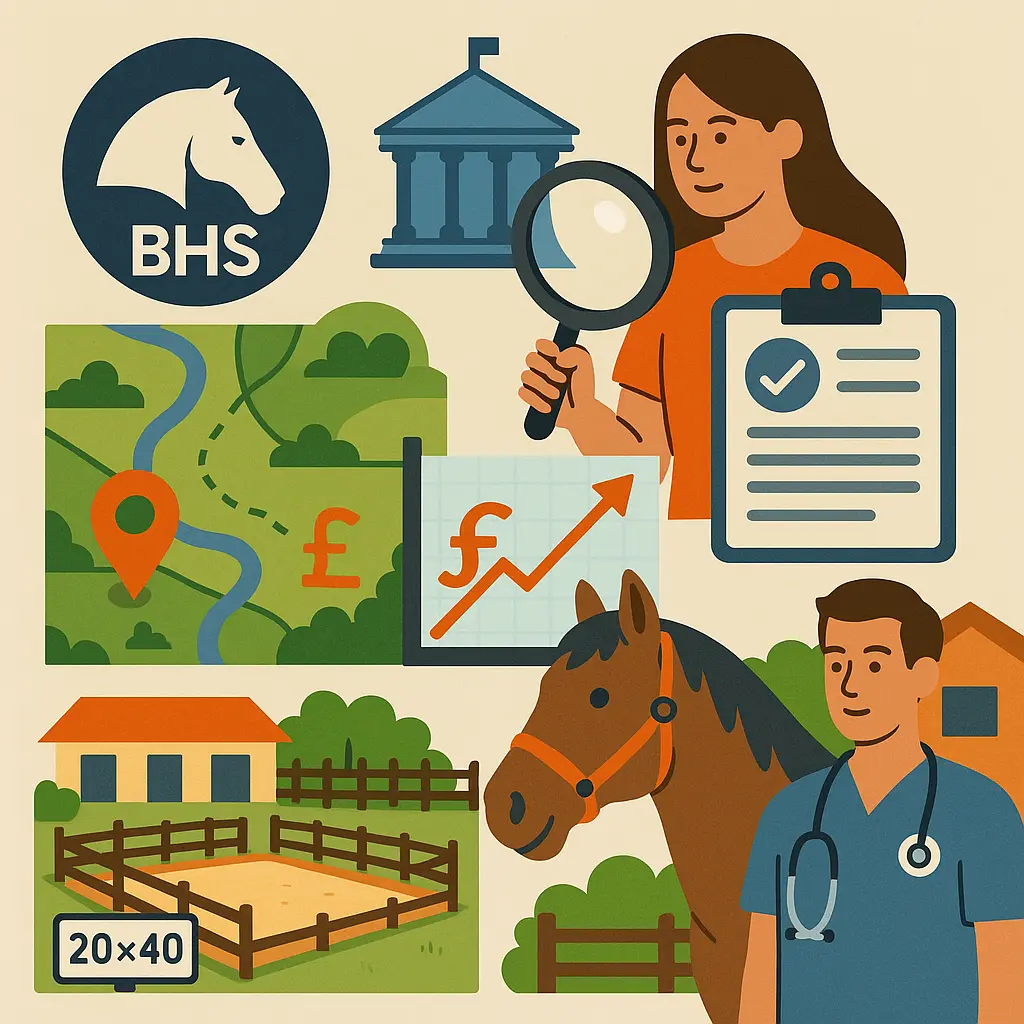
Turnout and seasonal care in the Malvern climate
Expect wet, windy winters and lush spring grass in this region, so plan your rugging strategy, hoof care, and grazing management early. Horses that live out or split their time will benefit from consistent routines and close watch on mud and weight through the seasons.
Through autumn and winter, make sure your yard’s field access and gateways stay safe underfoot, and agree a plan for especially wet spells (rotating fields, bale placement, or temporary rest). Horses that live out may need rugging support depending on coat, condition, and clip; those spending nights in can be managed more easily with stable routines while still getting daylight turnout. When spring arrives, the flush can be rapid — laminitis-prone horses may need restricted grazing or muzzles as you adjust time out and forage.
Practical kit to consider for this area’s seasons:
- Weather-ready turnout protection: a reliable, well-fitting outer rug helps keep skin healthy and your grooming hours down; explore our range of turnout rugs suited to variable British weather.
- Stable comfort: when stabled overnight, consistent routines and appropriate bedding reduce stress; if you’re rugging inside, choose breathable layers and check for rubs daily.
- Fly defence for summer: hedged bridleways and stock-grazed fields can be buzzy on still days — fly rugs and considered turnout times help protect sensitive horses.
- Hoof and skin support: wet-to-dry swings can challenge hooves and skin; pair good farriery intervals with targeted supplements where appropriate (for example, for hooves or seasonal skin care).
- Mud management: use your grooming kit to fully dry legs before brushing, and keep feathers clean; prevention is quicker than cure when the ground is heavy.
Pro tip: Make rug checks part of your bring-in routine. Quick daily feel under the rug, check for rubs, and reassess warmth with the week’s forecast — you’ll prevent minor skin issues from building up.
Hacking safely near the Malvern Hills
Choose a yard with direct off-road access or farm tracks wherever possible, and always wear hi-vis before you touch any lane. The area’s hedged roads and changing light make visibility non-negotiable, even on quiet routes.
Hacking here is a highlight — farm tracks, bridleways, and quiet lanes thread out towards the Hills. Ask how much roadwork is unavoidable from the stable gate and whether there’s a preferred circuit riders use safely. Many riders plan their hacks to avoid school run and commuting peaks; winter daylight also compresses safe ride windows, so build habits that keep you seen and predictable. Pair a hi-vis waistcoat with leg bands and, ideally, visibility on your horse’s tack or breastplate to maximise contrast for drivers.
Stock up with reliable hi-vis gear for riders and refresh it if it fades over time. Consider front and rear lights in deep winter, and keep your mobile charged with your yard’s emergency contacts saved before you set off.
Budgeting and contracts: what to clarify upfront
Ask for a written contract that defines your livery type, the services included, all extras, and the notice period, and confirm pricing before you agree to anything. Clarity on who does what — and when — prevents misunderstandings later.
Most local yards offer a spectrum from DIY (you do daily care) to Part (yard shares duties) to Full (yard handles day-to-day care). Nail down what’s included in each tier: turnout/bring-in, mucking out, hay/haylage, hard feeds, rug changes, field poo-picking, holiday cover, and any limits on services around bank holidays or severe weather. Typical extras can include holding for farrier/vet, late-night checks, trailer parking, competition prep, worm counts, and field fertilising/maintenance contributions.
One basic DIY option in public listings for this area has been noted at £20 per week, but prices vary widely by facilities and service level. Instead of price-chasing alone, compare like-for-like: calculate the true monthly cost once you add hay/bedding, fuel, extras, and your time. The most economical yard for your situation is often the one that saves you hours each week or gives you safe, reliable facilities you’ll actually use.
It’s also sensible to ask about yard rules, complaints procedures, and how changes are communicated. A clear, respectful framework signals good management and a culture that supports long-term liveries.
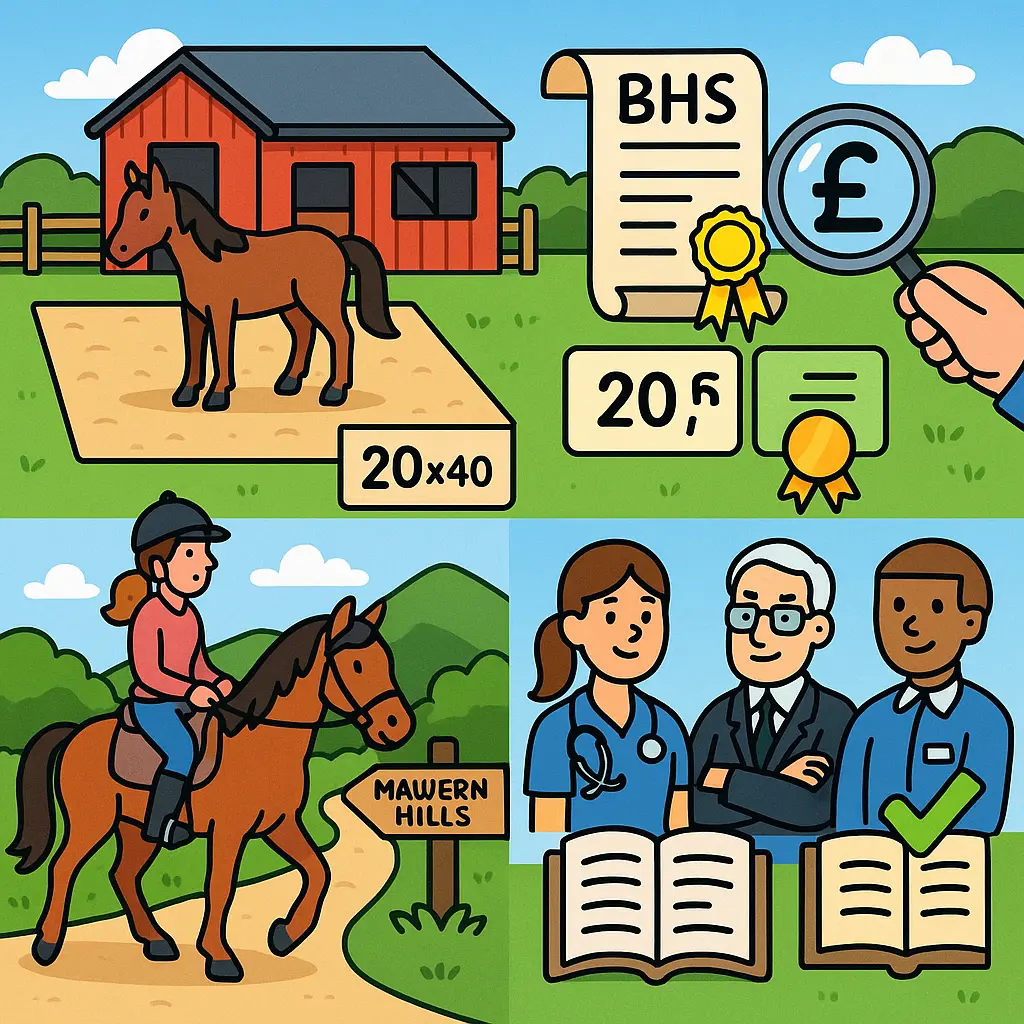
Questions to ask on your yard visits
Visit at peak times (turnout or evening bring-in) and ask about turnout routine, arena booking, hacking routes, biosecurity, and emergency cover before you put down a deposit. Seeing everyday rhythms tells you more than any brochure.
Use these targeted questions to get a complete picture:
- Turnout and fields: Are paddocks individual or shared? Is there all-year turnout? How are fields rotated and rested? Are there mains water troughs?
- Arena and schooling: What size and surface is the arena (e.g., 20m x 40m)? Are there lights and a booking sheet? How busy is it on weeknights and weekends?
- Hacking: Can I access farm tracks or off-road riding from the gate? How much roadwork is unavoidable, and which routes are safest?
- Care and services: What exactly is included at my livery level (DIY/Part/Full)? What’s the process if I need extra help at short notice?
- Health and biosecurity: What’s the worming policy (poo-picking, worm counts, dosing schedule)? What are vaccination requirements? How are new horses quarantined, if at all?
- Emergencies: Who handles colic or injury if I’m unreachable? Is there a written emergency plan and a first-aid kit? How are owners informed?
- Security and storage: How is the tack room secured? Are there access hours? Is there trailer/lorry parking and does it cost extra?
- Community and rules: How are yard rules shared and enforced? Are there set quiet hours, and what’s the policy on dogs or children?
- Professionals: Which farriers and vets visit regularly, and can I use my own? What days do they typically come?
Pro tip: Take photos (with permission) of stable, paddock, and storage areas as you tour; reviewing them after visiting a few yards makes comparisons far easier.
Kit checklist for moving yards near Ledbury
Organise your everyday kit — rugs, grooming, feed/supplements, and safe rider gear — before you move so your first week runs smoothly. A tidy tack room corner plus a labelled field kit box saves time and reduces stress for your horse.
Core items to line up:
- Rugs that match your horse’s clip and condition (turnout and stable layers as needed), plus spare liners for quick changes.
- Fly control for summer (fly rugs and masks for sensitive types, plus appropriate turnout times and field choices).
- Schooling protection (brushing boots or bandages) and an everyday saddlepad rotation.
- Grooming essentials: hoof pick, body brush, rubber curry, sweat scraper, mane/tail detangler, towels, and skin care for muddy months.
- Feed and supplements: pre-bag first week’s feeds; keep key supplements at hand (for hooves, digestion, or seasonal support).
- Labels and storage: name tags for headcollars/rugs, sealed feed bins, and a field kit box (headcollar, long rope, fly spray, spare bell boots).
- Rider safety: a well-fitted riding helmet and weather-appropriate layers for long yard days.
At Just Horse Riders, we suggest packing a small “moving day” tote: passport copies, yard contact numbers, headcollar and two lead ropes, basic first-aid items, and a familiar haynet for settling in.
FAQs
What types of livery are common near Ledbury?
You’ll typically find DIY, Part, and Full livery. DIY means you handle daily care; Part splits duties with the yard; Full covers day-to-day care for you. Many local yards also offer optional extras like holding for farrier or holiday cover.
Is there much off-road hacking around the Malvern Hills?
Yes. Many yards have access to farm tracks or off-road routes and convenient links towards the Hills, though the exact mix varies by location. Ask each yard how much roadwork is unavoidable from their gate.
What size arena should I expect?
A 20m x 40m arena is common locally and perfectly serviceable for flatwork, poles, and most exercises. Check surface type, drainage, lighting, and whether there’s a fair booking system.
How can I compare costs fairly between yards?
Get a written list of inclusions and extras for each livery level, then add your expected hay/bedding, fuel, and time to form a monthly picture. One basic DIY price of £20 per week has been listed in the area, but facilities and total costs vary widely.
What should I see on a well-run yard visit?
Clear routines, tidy stables and fields, safe fencing, clean water, a maintained arena, and relaxed, well-cared-for horses. You should also see safety notices, contact numbers, and an organised tack/feed room with secure storage.
Do I need hi-vis if I mostly ride on farm tracks?
Yes. Visibility matters at field margins, yard driveways, and any lane crossings — and weather can shift quickly here. A simple hi-vis waistcoat plus leg bands increases your safety significantly.
What paperwork should be in place when I join a yard?
A written contract with livery level, inclusions, extras, and notice period; proof of your horse’s vaccinations and worming status as required; and clear emergency contact details the yard can use if needed.