

Creative Solutions for Managing Overactive Horses in the Stable
Have you ever felt like your horse is rehearsing for an equine ballet with all its dancing around the stable? If so, you're not alone. Managing overactive horses in the stable can be quite the task, yet with knowledge and some strategic plans, it can transform from tumultuous chaos to harmonious calm.
Understanding Overactive Behavior in Stabled Horses
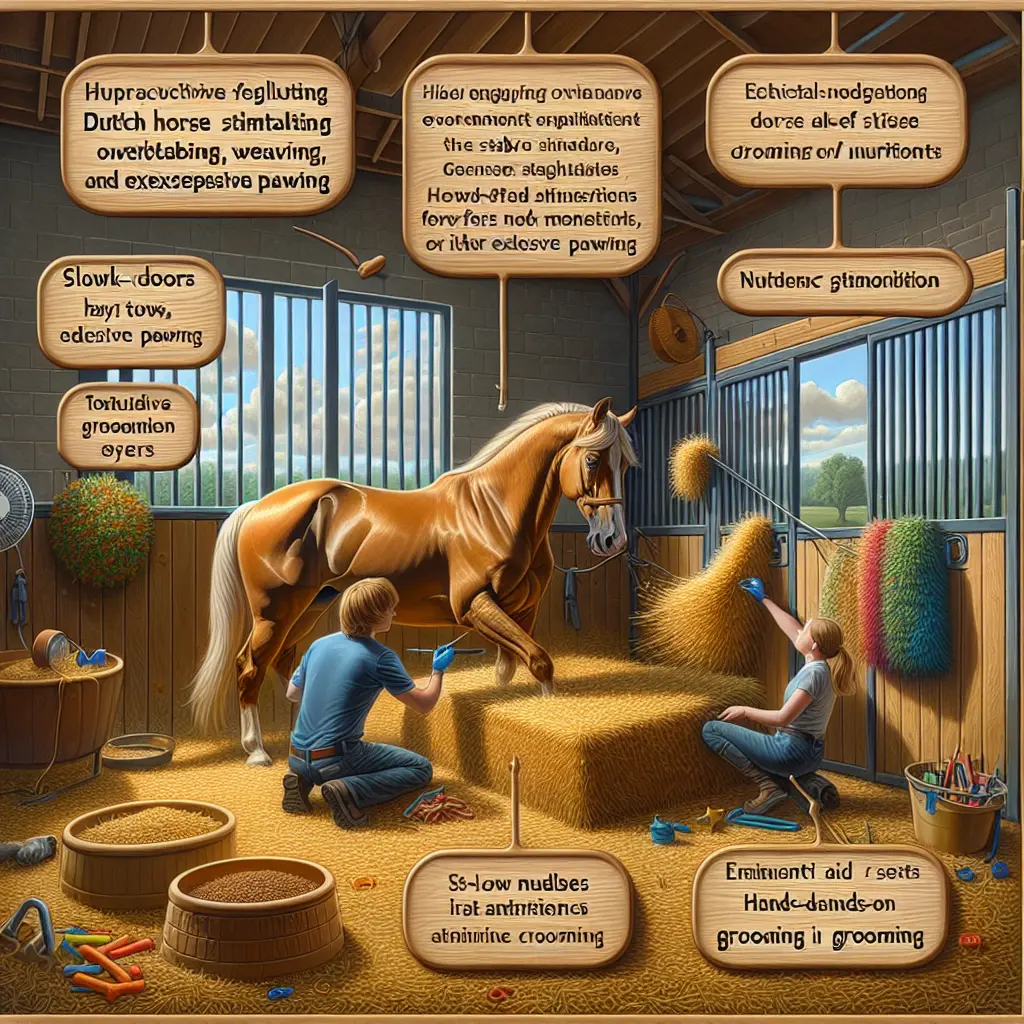
Think of horses as the marathon runners of the animal kingdom—they love to move and socialize. Unfortunately, confinement can restrict these natural instincts, stirring up their overactive tendencies. According to equine behavior studies, when confined, horses often engage in stereotypic behaviors like cribbing and weaving [3]. The solution often lies in addressing root causes, such as limited foraging or social isolation.
Key Signs of an Overactive Stabled Horse
- Pacing or weaving along the stall walls
- Cribbing (biting and sucking air)
- Pawing or kicking the stall door
- Excessive whinnying or agitation during feeding/turnout times
It's essential to recognize these early, as stress-induced issues like gastric ulcers affect a large portion of performance horses [3].
Establish a Predictable Daily Routine
Consistent routines aren't just for us humans; they're crucial for horse stability too. Horses, much like us, crave predictability—it calms their nerves. Routine is a horse's best friend!
- Stick to fixed schedules for feeding, exercise, and cleanliness.
- Daily grooming sessions mimic social grooming, releasing those happy endorphins.
Involve one consistent caregiver to build trust and lower stress hormones [1]. You might also want to explore the Jodhpur Collection for the right gear to complement your stable routines.
Maximize Turnout and Movement Opportunities
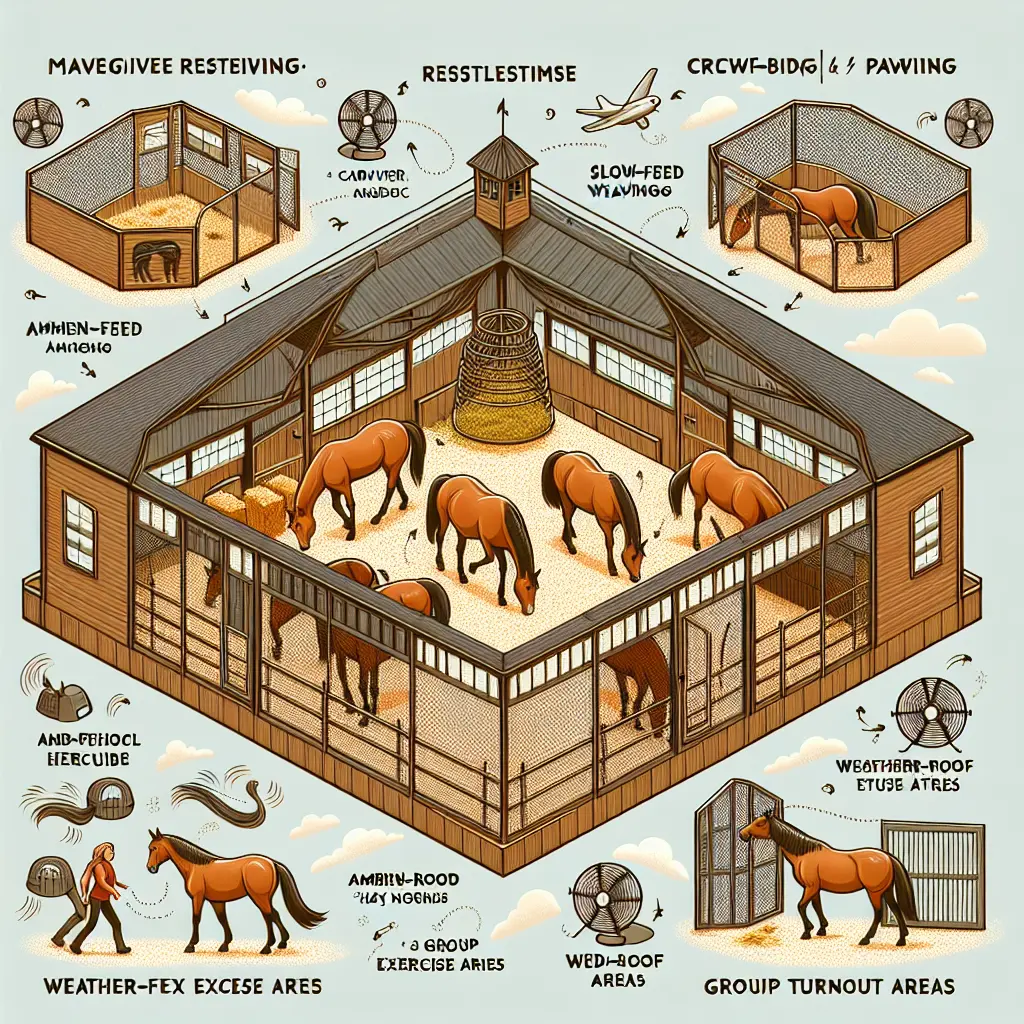
Confinement is kryptonite for active horses. Maximize every movement opportunity. Turnout time isn't just exercise time—it's when they naturally unwind.
Weather-Proof Options
- Consider covered lanai spaces via Dutch door stalls or brief aisle walks to prevent cabin fever during storms.
- Promote group turnout to foster socialization and reduce stress. Aim for at least 4-8 hours daily [3].
Create a Stimulating Stable Environment
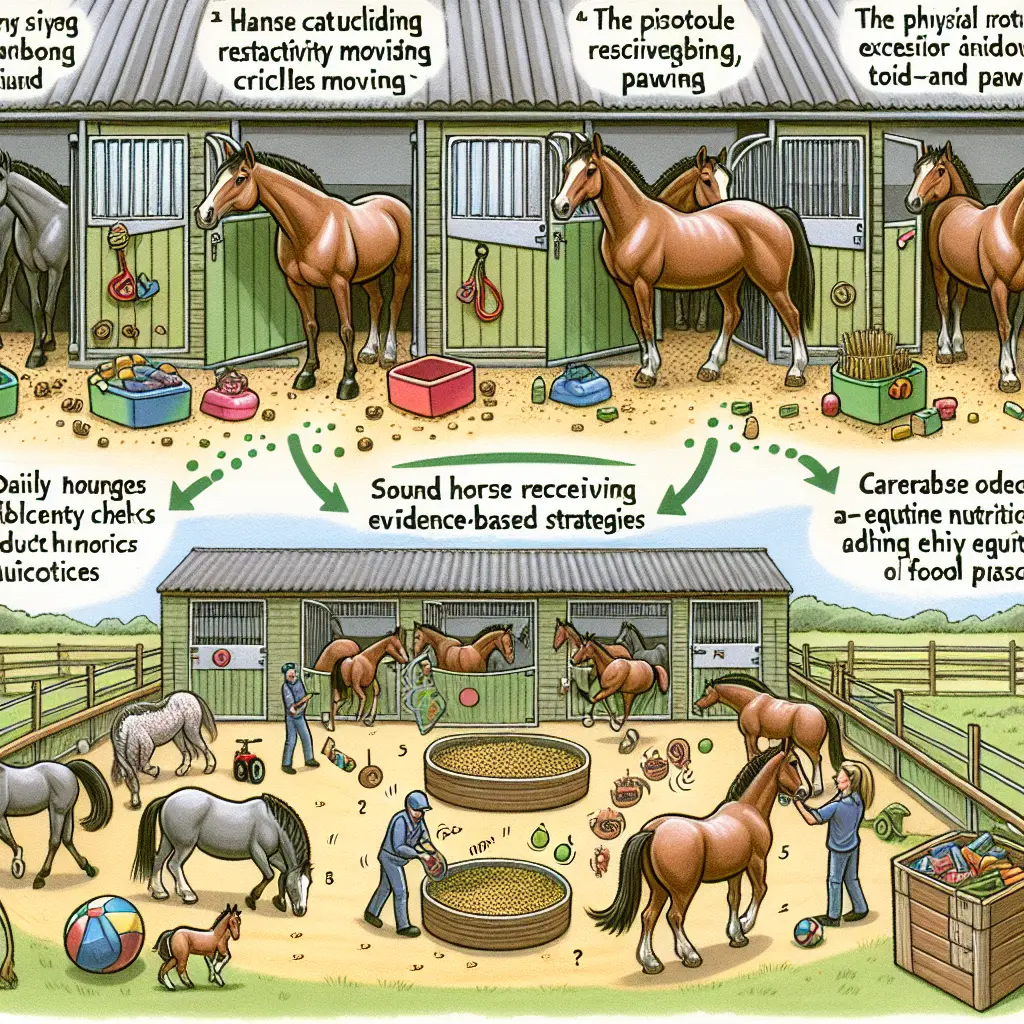
Stall boredom can make a horse feel like they're stuck on hold with the world's dullest operator. Turn your stable into a stimulating space with toys and ambient aids!
| Solution | How It Helps | Practical Tips |
|---|---|---|
| Windows & Doors | Reduces isolation boredom | Maintain glass cleanliness; consider during shows to allow napping by blocking excess noise. |
| Slow-feed Hay Nets | Extends foraging times; buffers stomach acid | Reduces cribbing/weaving and mimics natural grazing. |
| Toys & Distractions | Prevents pawing and keeps engagement | Rotate toys like treat balls or mirrors to maintain interest. |
Explore our Horse Fly Protection to keep pesky distractions at bay.
Optimize Diet for Calm Energy
An unruly diet could be the silent disruptor in your stable. Horses consuming high starch/sugar diets tend to be on the higher side of active—think sugar rush! Balance their diet with low-starch, high-forage feeds for a steadier, calmer energy level.
- A forage-first approach encourages 12+ hours of foraging to reduce ulcers [3].
- Ensuring balanced nutrition prevents excess calorie hyperactivity [3].
Our experts recommend regular checks for pain sources which could be mistaken for behavioral issues [2].
Hands-On Grooming and Professional Help

Who doesn't love a good massage? Grooming isn't just about appearances; it's about bonding and relieving stress. Allocate multiple short grooming sessions each day.
For stubborn issues:
- Identify root causes and engage with vets, farriers, or trainers for a comprehensive approach [2].
- Bring in third-party trainers to solve training gaps positively.
Don’t forget to check our collection of Everyday Horse Vitamins & Supplements for dietary support.
Long-Term Prevention Tips
Avoid temporary fixes where possible—your interventions should aim for long-term calm and happiness.
- Implement biosecurity and consistent health checks with regular fecal tests to combat irritability [7].
- Rotate grazing and adjust seasonal activities to match your horse’s energy [8].
Conclusion
From predictable routines to enriched environments, these creative solutions can transform your stable into a haven of peace. As you align the lives of these magnificent creatures more closely with their natural instincts, you'll not only nurture their physical well-being but their mental health too. A calm horse is a happy horse—and you, the keeper, play a pivotal role in that serene picture.