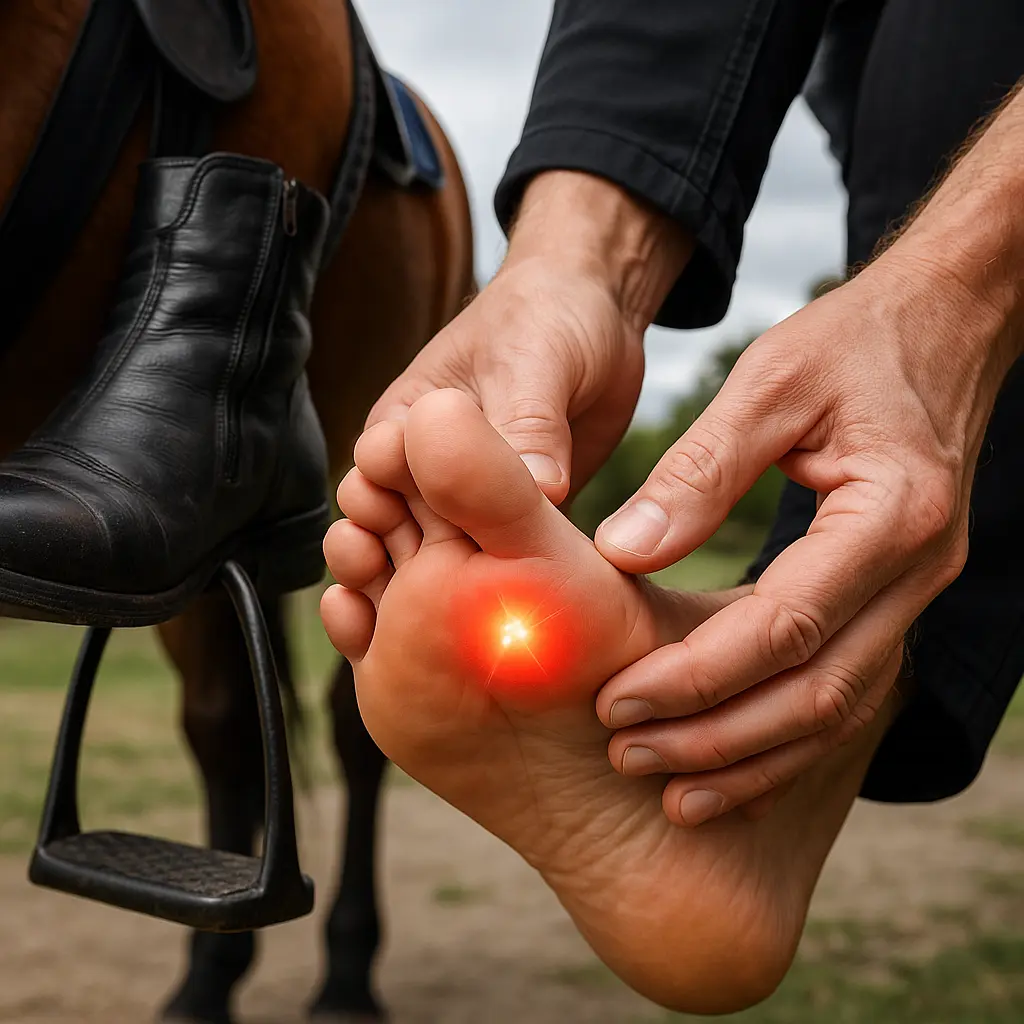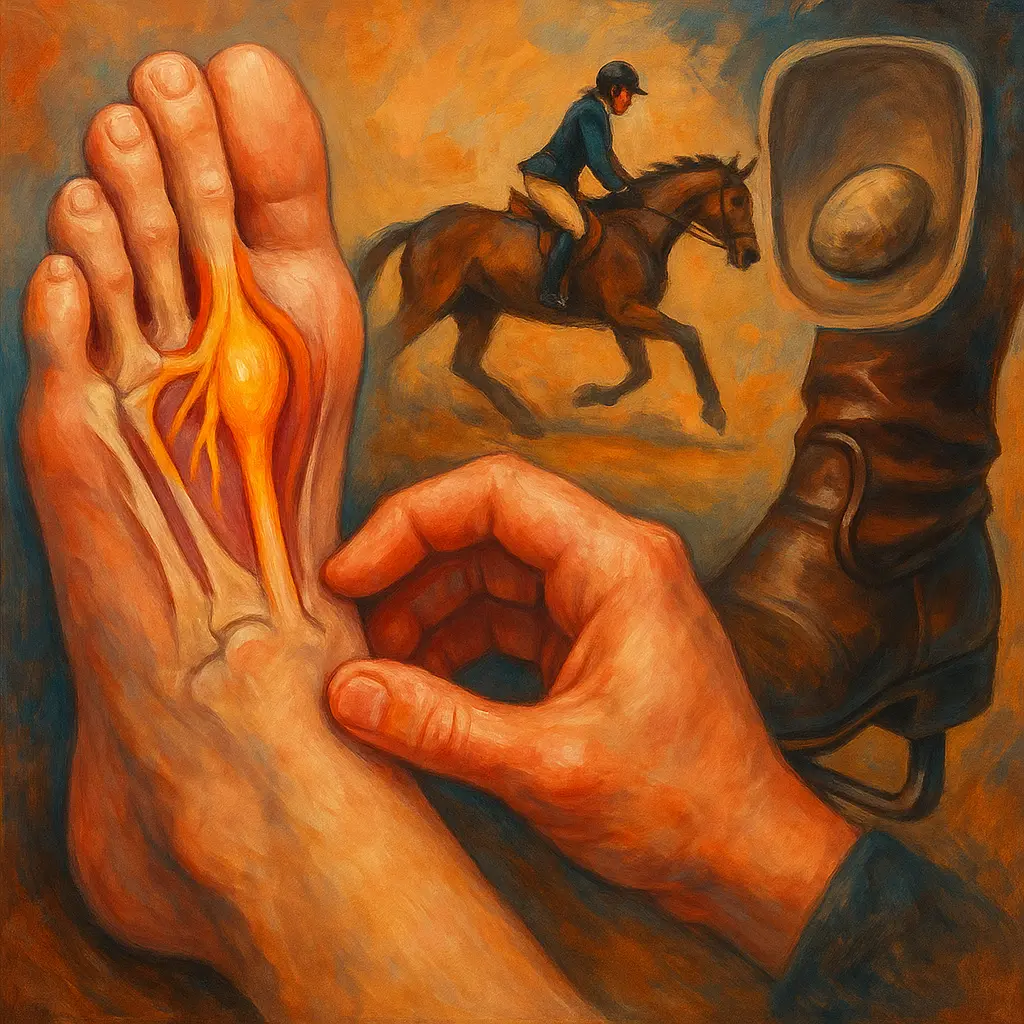
That pebble-in-your-boot feeling that makes you hop off mid-hack isn’t “just a niggle”. For many UK riders, it’s a classic sign of Morton’s neuroma — a painful nerve thickening in the forefoot that flares under stirrup pressure and tight boots.
Main takeaway: Start with a clinical diagnosis and conservative fixes — wider boots, orthotic support, and riding adjustments — because surgery carries a 35% risk of similar or worse pain and NHS pathways average 25 months before it’s even offered.
What is Morton’s neuroma?
Morton’s neuroma is a painful thickening of a digital nerve in the forefoot, most often between the 3rd and 4th toes (66% of cases), less often between the 2nd and 3rd (30%).
This “neuroma” develops where the interdigital nerve is repeatedly compressed and irritated under the metatarsal heads. In riding, that means the narrow toe box of a boot and the repetitive loading in the stirrup can aggravate the nerve. The result is burning or shooting pain into the toes, tingling, numbness, and that classic “walking on a pebble” sensation. Distribution by space is well documented: about 66% in the third intermetatarsal space, 30% in the second, with rare first/fourth space neuromas (~4%). You can review a concise summary via a podiatry professional commentary here: Keep On Your Feet.
How common is it in the UK — and among riders?
About 87.5 people per 100,000 are affected, and repetitive forefoot stress (like stirrup loading) increases risk and symptom flare-ups.
Morton’s neuroma is a recognised cause of forefoot pain in active adults and is commonly linked to footwear compression and repetitive impact. UK riders report high rates of pain that increase during or after riding — in a UK study of 2,185 riders, pain during/after riding rose across age groups (e.g., 82.8% back pain prevalence in 35–40s, with pain frequently worsening with riding), highlighting the cumulative strain of equestrian activities on the body, including feet under the stirrup. See the UK-rider data summarised via Rasayel Journals: Rasayel Journals. While that paper focuses on back pain, the same repetitive-load patterns and post-ride pain escalation are relevant to forefoot nerves compressed by boots and stirrup use, especially in wet UK winters when boots stay on longer around the yard.
Crucially for planning care, NHS pathways often span an average of 25 months before surgery is considered, with most patients first moving through podiatry, physiotherapy, imaging, injections, and orthoses. Full pathway overview: Morton’s Neuroma UK.
What are the early signs — and how do you gauge severity?
The hallmark signs are a pebble-in-the-shoe sensation, burning forefoot pain, and a click when squeezing the forefoot (Mulder’s sign), which often correlates with larger neuromas.
On examination, a clinician may perform Mulder’s click (compressing the forefoot to provoke a click and pain). A prominent click or a palpable “lump” sensation often accompanies larger, more symptomatic neuromas. As Morton’s Neuroma UK specialists note:
“If there is a prominent clicking sensation when the bones in the foot are squeezed, or if the patient can feel a lump like sensation or has a pebble-in-the-shoe sensation the chances are the neuroma will be over 6.3 mm.”
Size does matter: symptomatic neuromas average about 5.6 mm (range 4–8 mm) on ultrasound, larger than asymptomatic ones at about 4.5 mm (range 3–7 mm) in one study cited by podiatrists (Keep On Your Feet). But beware of over-relying on scans alone. A 2012 study found 54% of pain-free volunteers had sonographic interdigital nerve thickening greater than 5 mm (35.4% bilateral). The authors concluded:
“Ultrasound, even in highly skilled hands, has a high rate of incidental finding of an asymptomatic interdigital nerve enlargement… Sonographic evidence of Morton’s neuroma per se is unreliable unless it is correlated with an equivocal clinical examination.”
Source: Foot & Ankle International (PubMed). In short: prioritise a proper clinical exam and use imaging to confirm, not to decide.
How should UK riders get a reliable diagnosis?
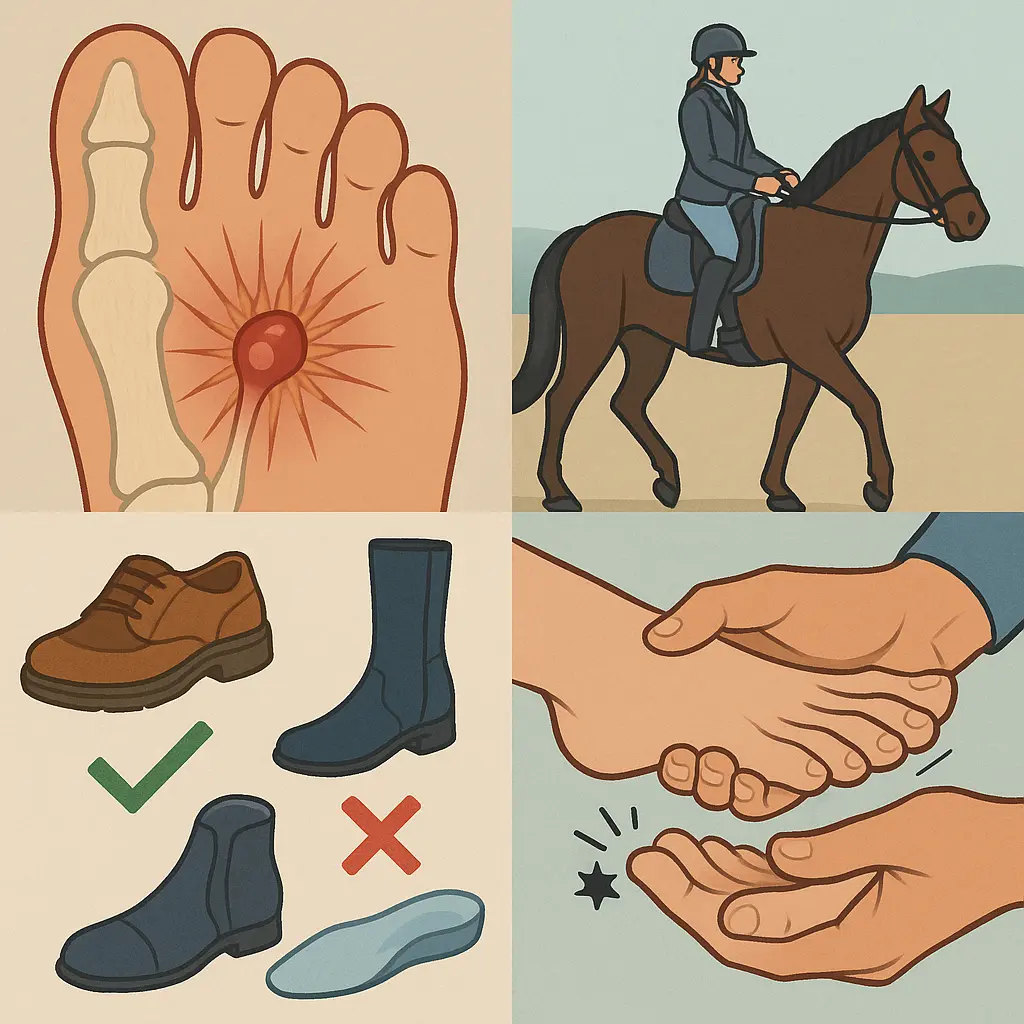
Start with a clinical exam by a GP, podiatrist, or foot/ankle specialist; use ultrasound or MRI to confirm and exclude other problems, not as a standalone diagnosis.
Because imaging can show false positives, the gold standard is still clinical: your clinician will map your pain, squeeze the forefoot (Mulder’s sign), and check for reproduction of symptoms in the correct intermetatarsal space. If the clinical picture fits, imaging helps confirm the size, exclude stress fractures or synovitis, and aid planning. This sequence mirrors expert guidance from foot and ankle surgeons and podiatrists (Foot & Ankle International; Keep On Your Feet).
In the NHS, pathways generally start with community podiatry and physiotherapy, then escalate to imaging and injections, with surgery considered later; average time to that decision point is about 25 months (Morton’s Neuroma UK). Private routes can compress this into weeks, which may suit riders needing to stay competition-ready, but the same stepwise logic applies.
What’s the evidence-based treatment order for riders?
Change footwear and add orthotic support first; then consider up to 2–3 corticosteroid injections spaced by about 3 months; reserve surgery as the last step.
Conservative care works for many, especially when you address the two big drivers: forefoot compression and repetitive stirrup loading. A pragmatic plan:
- Footwear: Prioritise a wide, high-volume toe box to stop squeezing the metatarsal heads. At Just Horse Riders, we recommend trying wide-fit riding boots with generous forefoot room for schooling and yard work.
- Orthotic support: Use insoles that off-load the metatarsal heads and support the arch. A metatarsal dome placed correctly can reduce nerve pinching in the affected space. Many NHS pathways include orthotics before escalating care (Morton’s Neuroma UK).
- Injections: If pain persists, up to 2–3 corticosteroid injections can be effective. Space them about 3 months apart and monitor for fat pad thinning. Around 75% of NHS patients follow this conservative route over roughly 25 months before surgery is considered.
- Activity modification: Shorten sessions initially, ride on forgiving surfaces, and tweak stirrup position and tread to cut forefoot load (see riding adjustments below).
Only when pain continues to limit walking, schooling, or competing should surgery be on the table — and even then, weigh it carefully. Data shared by Morton’s Neuroma UK show that after excision, at least 35% report similar or greater pain levels compared with pre-op, so set expectations and explore targeted rehab and kit changes thoroughly first.
What riding adjustments reduce pain immediately?
Widen forefoot space and reduce stirrup pressure by choosing roomier boots, softening tread contact, and cutting ride duration while you settle symptoms.
Quick, rider-specific wins make a big difference:
- Boot fit: Swap narrow or stiff-toe boots for roomier riding boots with a wide forefoot to minimise nerve compression during mounting, schooling, and yard chores.
- Insole placement: Use a metatarsal pad (dome) to lift and separate the metatarsal heads, taking pressure off the interdigital nerve. Check placement with your podiatrist.
- Stirrup strategy: Keep the stirrup under the ball of the foot but play with tread thickness, cushioning, and stirrup length so you’re not “pinning” the same spot. Shorter sessions and more walk breaks ease flares.
- Surface and schedule: Favour arenas over hard tracks until symptoms settle. In busy winter yard schedules, take micro-breaks to get off your feet between tasks.
- Socks and liners: Use seamless, cushioned socks and waterproof liners so wet, bunching fabric doesn’t cramp the toe box on long, muddy days (popular among our customers in the UK autumn/winter).
- Safer slower hacks: If you drop intensity while recovering, wear high-visibility rider gear for daylight-limited months so you can keep moving gently and safely.
Pro tip: Pair foot-friendly riding kit with lower-body clothing that moves with you. Supportive, stretch fabrics in women’s jodhpurs and breeches reduce overall tension down the kinetic chain, which matters when you’re protecting a sensitised forefoot.
When should riders consider surgery — and how fast can you return?
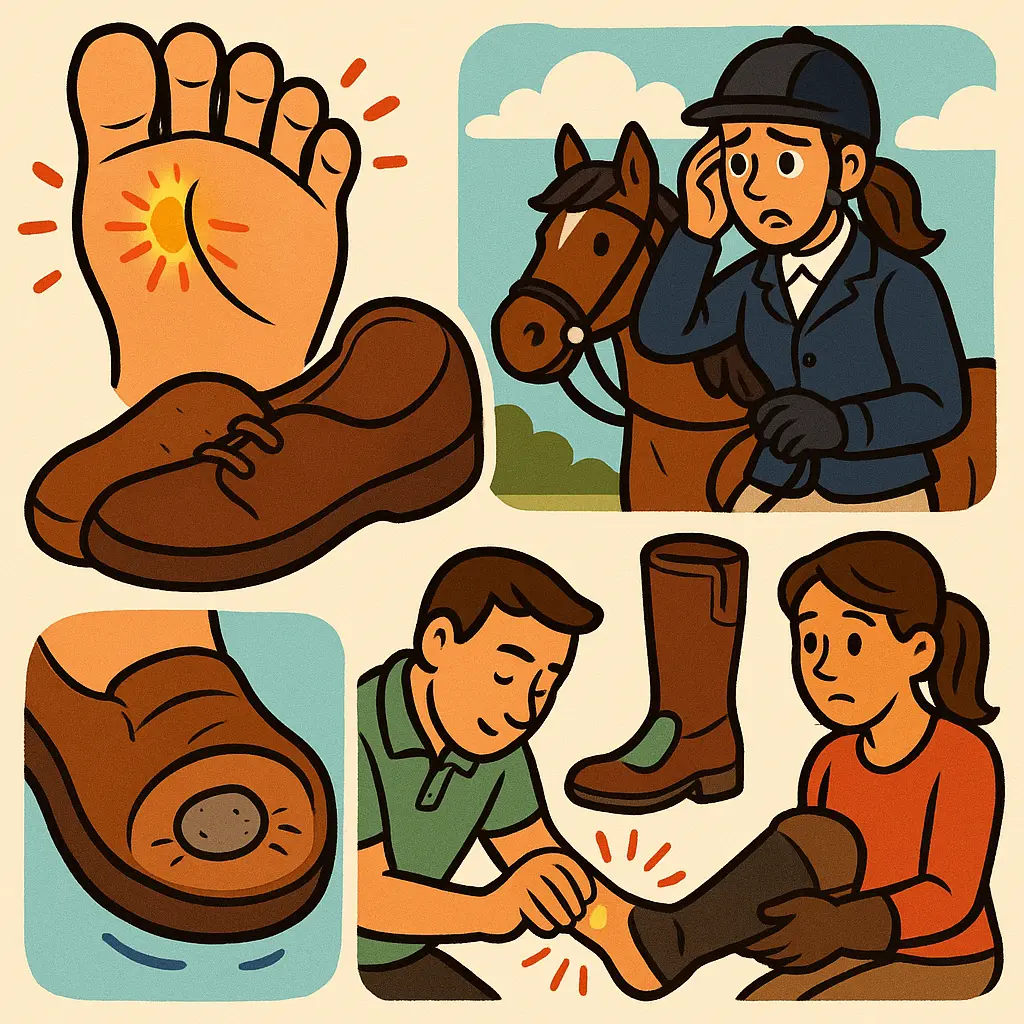
Consider surgery when pain persists after footwear changes, orthotics, and up to three injections, and when it limits daily walking and riding; many riders return to fuller activity 6–12 weeks after surgery once wounds heal and footwear is comfortable.
In the NHS, surgery usually comes late in the pathway (around 25 months on average), after conservative options. Private pathways can be quicker, but the decision standards are the same: confirm the diagnosis clinically, correlate with imaging, and set realistic expectations. Post-op, expect a phased return: initial wound healing, gentle weight-bearing, then progressive loading into the stirrup. Discuss saddle time with your surgeon and physio, and prioritise comfort-based progression.
Crucially, outcomes vary. Data shared by Morton’s Neuroma UK indicate that at least 35% of patients report similar or worse pain after excision. That’s why skilled diagnosis, precise symptom mapping, and rigorous conservative optimisation are essential before committing to surgery.
What kit actually helps riders with forefoot pain?
Choose roomy boots, targeted support under the metatarsals and arch, and extra cushioning to protect the forefoot during rides and yard work.
- Roomy, supportive boots: Explore wide-fit riding boots with a generous toe box and supportive midfoot. Cold, wet seasons mean more boot hours — make them work for your feet.
- Cushioned socks and liners: Waterproof or thermal boot liners reduce bunching and maintain space on long, muddy shifts; for value seasonal swaps, check our Secret Tack Room clearance.
- Orthotic insoles: Ask your clinician about a metatarsal dome and arch support to reduce interdigital compression inside riding boots.
- Shock damping at the stirrup: Choose treads or stirrups that soften impact to the ball of the foot; small reductions in local pressure add up over schooling sets.
- Rider clothing that moves: Stretch fabrics in performance breeches reduce compensatory tension through the lower limb and foot.
- Trusted brands for yard-to-hack kit: Many riders rate the durability and fit of Shires and the technical comfort of LeMieux for long, wet UK yard days that can otherwise aggravate neuroma symptoms.
At Just Horse Riders, we recommend trialling your chosen boot–insole–sock combination around the yard before schooling. A 15–30 minute walk-and-tack test will quickly show whether your forefoot has enough space and support.
What UK seasonal factors should you plan for?
Autumn/winter in the UK means longer boot wear, wetter socks, and colder toes — all of which increase forefoot compression risk if your kit is too tight.
Plan ahead each season:
- Pre-winter boot check: As fields get wet and turnout times shift, reassess boot fit and insole placements before you suddenly double your daily boot hours.
- Dryness matters: Wet socks swell and seams rub; rotate pairs and use liners to keep the toe box roomy.
- Ride smart in low light: If you’re rehabbing with more walking hacks, wear hi-vis to stay safe in shorter daylight windows while you keep active without overloading the forefoot.
Quick tip: If you’re eyeing an upgrade, scan our seasonal clearance — it’s a smart way to assemble an A/B boot–insole–sock setup and switch mid-ride if needed.
A 5-step decision checklist for riders
Follow this order to protect your time in the saddle:
- Confirm the diagnosis clinically (Mulder’s sign, symptom map); use imaging to support, not to decide (Foot & Ankle International).
- Optimise kit: upgrade to roomy boots, add a metatarsal dome and supportive insole, and refine socks/liners.
- Modify riding: shorten sessions, increase walk breaks, soften stirrup contact, and favour forgiving surfaces.
- Use injections judiciously: up to 2–3 corticosteroid injections, spaced about 3 months, with monitoring (Morton’s Neuroma UK).
- Reassess function: only escalate to surgery if daily walking and riding remain limited after the above, understanding that ≥35% report similar/worse pain post-excision.
As the British Horse Society (BHS) emphasises in broader safety guidance, controlled progression is key: keep your rehab structured, visible, and steady — not stop–start.
Bottom line for UK riders
Morton’s neuroma is common, clinically diagnosable, and often manageable without surgery. Prioritise space in the toe box, targeted underfoot support, and stirrup-load tweaks; use injections sparingly and keep surgery as a last resort. With the right plan and kit, most riders can stay active while symptoms settle — even through a busy UK winter.
FAQs
How common is Morton’s neuroma in active people like equestrians?
Population incidence is around 87.5 per 100,000. It’s frequently linked to footwear compression and repetitive load — both relevant to riders. See incidence and pathway data at Morton’s Neuroma UK.
Do I need surgery, and does it work?
No — not as a first step. About 75% of NHS patients try orthotics and steroid injections over an average 25 months before surgery is considered, and at least 35% report similar or greater pain after excision. That’s why conservative care is the starting point (Morton’s Neuroma UK).
How soon can I get back to riding after surgery?
Light activity typically resumes once wounds heal, progressing towards fuller riding over 6–12 weeks, guided by comfort and your clinician’s advice. NHS pathways are slower to surgery (average ~25 months); private routes can be quicker, but rehab principles are the same.
What are the earliest signs riders should act on?
A pebble-in-the-shoe sensation, burning or shooting pain into the toes, and a click when squeezing the forefoot (Mulder’s sign). Larger neuromas (>5–6 mm) are more likely symptomatic, but confirm clinically; scans alone can mislead (Foot & Ankle International; Keep On Your Feet).
Does riding make it worse?
It can, because stirrup loading and tight boots increase forefoot compression. UK rider data show pain commonly increases during/after riding across age groups, underscoring the importance of kit and training adjustments (Rasayel Journals).
What footwear is best if I have forefoot pain?
Roomy, supportive boots with a wide toe box plus a metatarsal dome and arch support insole. Start by upgrading to wide-fit riding boots and test-fit with your insole and sock combination before schooling.
Why not rely on ultrasound to diagnose it?
Because many people without symptoms show interdigital nerve thickening on scans. Clinical examination is the gold standard; imaging confirms and excludes other causes (Foot & Ankle International).