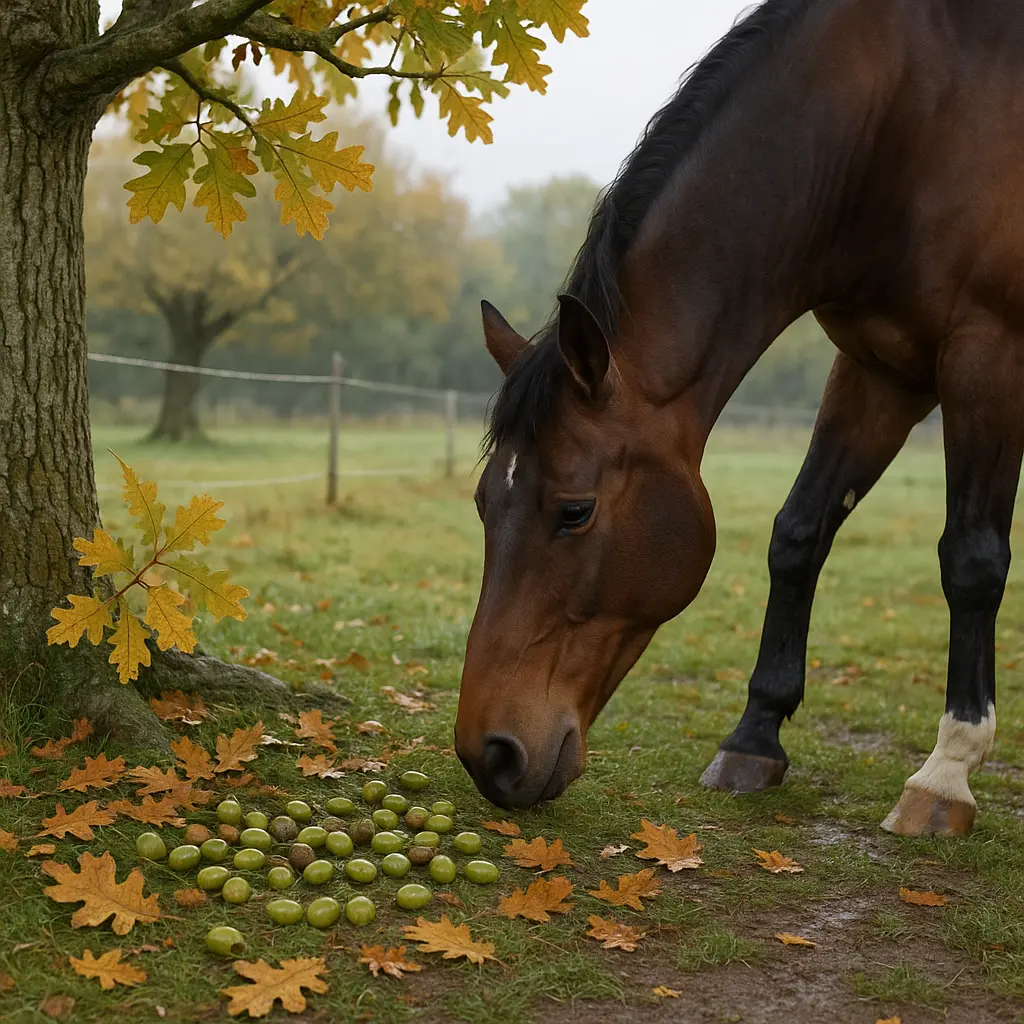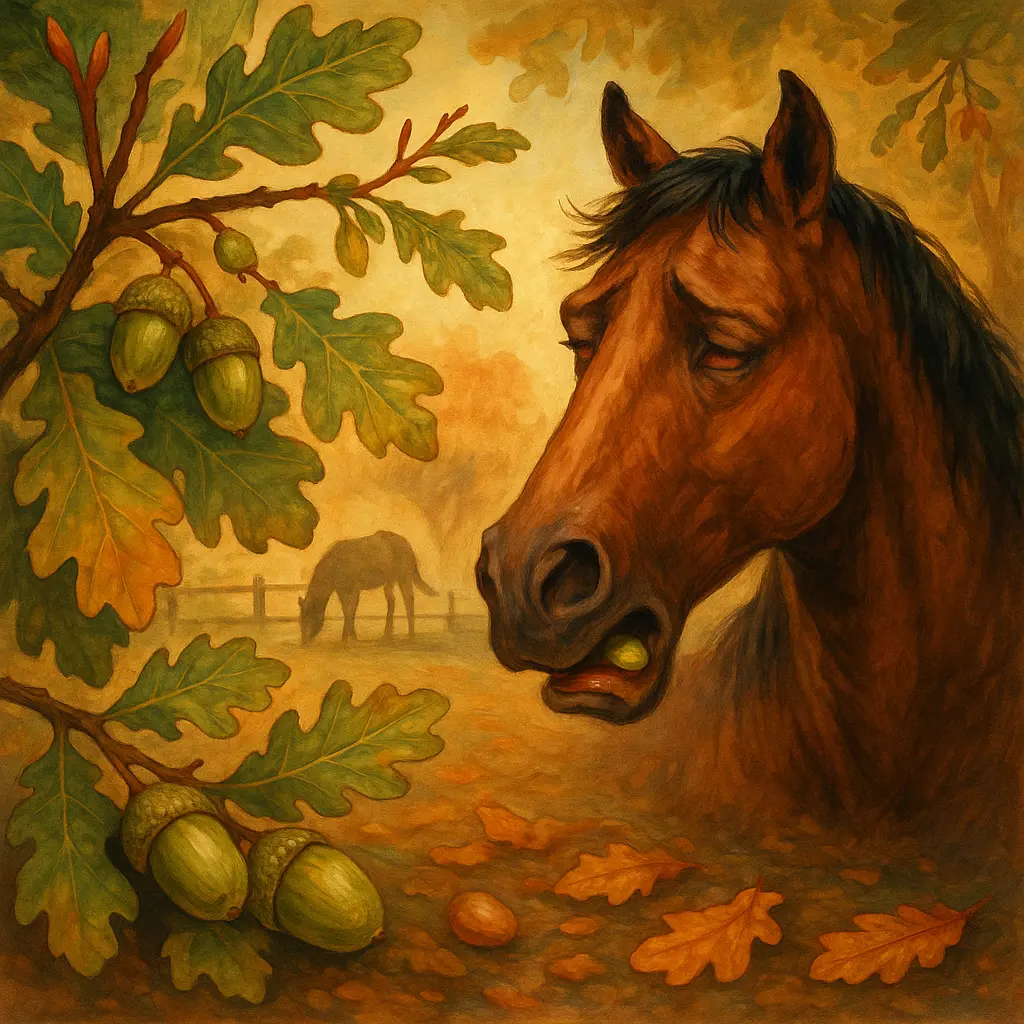
Oak trees are a fixture of British fields, but their leaves and acorns can put horses at real risk each spring and autumn. Knowing when danger peaks, what to look for, and how to prevent access could save your horse’s life.
Key takeaway: All parts of the oak are toxic to horses, with young leaves and green acorns the most harmful; poisoning is rare but life‑threatening, so fence off oaks, supply ample forage, and call your vet immediately if you spot symptoms.
What is oak and acorn poisoning in horses?
Oak and acorn poisoning occurs when a horse eats enough oak material (leaves, buds, bark, acorns) containing tannic acids to damage the gut, kidneys, liver, and blood cells. All parts of the oak are toxic, but new buds, young leaves, and green (juvenile) acorns are the most dangerous.
Tannins (tannic and gallic acids) irritate and inflame the digestive tract and can lead to kidney and liver damage. While many horses dislike the bitter taste and avoid acorns, poisoning does happen—particularly where grazing is poor or some horses develop a taste for acorns and seek them out despite plenty of forage.
“If eaten, acorns, leaves and branches from oak trees pose a risk of poisoning to horses... Acorns contain a substance called tannic acid, which when eaten in sufficient quantity... the tannins can cause serious illness.” — British Horse Society
Significant ingestion is generally required for toxicity, but once clinical signs begin, the condition is a veterinary emergency with a high mortality rate and a prolonged recovery (two months or more) for survivors.
When are UK horses most at risk?
Risk peaks in autumn (September–November) during the acorn fall and again in spring with the emergence of new buds and young leaves, especially after hot, dry summers or following storms that bring down extra acorns and branches.
UK fields often face grazing shortages after long, dry summers, making acorns a tempting alternative. Overgrazed paddocks—common on busier livery yards—compound the risk. After autumn storms or strong winds, more acorns and branches drop; check fields thoroughly before turnout. Some horses learn to relish acorns and will forage for them even when hay or haylage is provided, so physical exclusion with fencing is crucial.
In most cases, paddocks become safe again by late winter once trees have finished dropping and seasonal leaf fall has decomposed or been cleared. However, the spring flush of tender oak growth creates a second, often-overlooked risk window when other grazing is still limited.
How much is dangerous, and what signs should you watch for?
Toxicity typically requires eating large quantities of acorns or oak leaves, but if symptoms appear, it is always an emergency with a guarded prognosis. Early recognition and immediate veterinary care are critical.
Because intake varies by tree, season, and individual horse, there’s no single “safe” number of acorns. Instead, focus on prevention and vigilance. Watch closely from early autumn through late autumn (and again in spring) for:
- Reduced appetite, dullness, or depression
- Constipation or colic that may progress to diarrhoea
- Dehydration and increased drinking/urination or, conversely, reduced urination
- Mouth ulcers or drooling
- Dark or bloody urine (a sign of red blood cell damage)
- Abdominal pain, tucked-up appearance, or straining
“Horses must consume a large amount of oak leaves or acorns to cause toxicosis, however the mortality rate is high. If a horse starts to develop symptoms, it is always considered a medical emergency.” — Vetster
Quick tip: Keep a daily turnout routine that includes a five-minute field scan under and around oaks. If you see clusters of green acorns or storm-fallen branches, adjust turnout and clear the area before horses go out.
What should you do immediately if you suspect acorn poisoning?
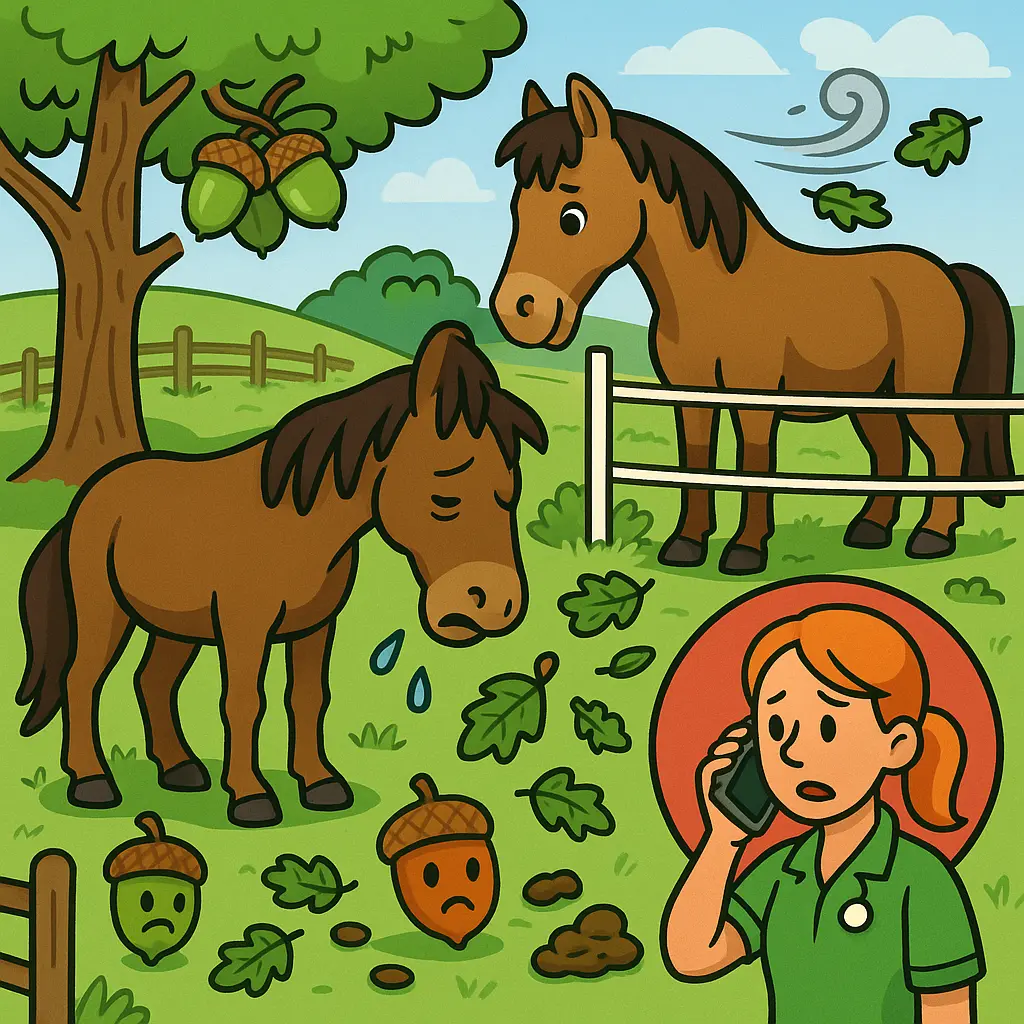
Call your vet straight away; there is no antidote, and treatment is supportive with fluids, pain relief, and, if advised by your vet, activated charcoal or mineral oil administered professionally.
Move the horse off pasture to a clean area with fresh water and palatable forage. Do not give activated charcoal or any other home remedy without veterinary instruction—incorrect dosing or timing can complicate care. Be ready to tell your vet:
- When the horse was last on the affected paddock
- What you’ve observed (signs, colour of urine or faeces, appetite, behaviour)
- Any recent storms, changes in grazing, or known acorn falls
Pro tip: Bag a small sample of the suspected acorns/leaves and take clear photos of the area under the oak. While not always necessary, this can help your vet assess the likely exposure.
Post-crisis, monitor kidney and liver function as your vet advises. Recovery can be lengthy (often two months or more), so expect a careful return-to-normal plan with hydration, nutrition, and rest as priorities.
How can you prevent acorn access in UK paddocks?
Fence off oak trees to at least the branch span, clear falls promptly, and provide ample high-quality forage away from trees to reduce acorn-seeking behaviour.
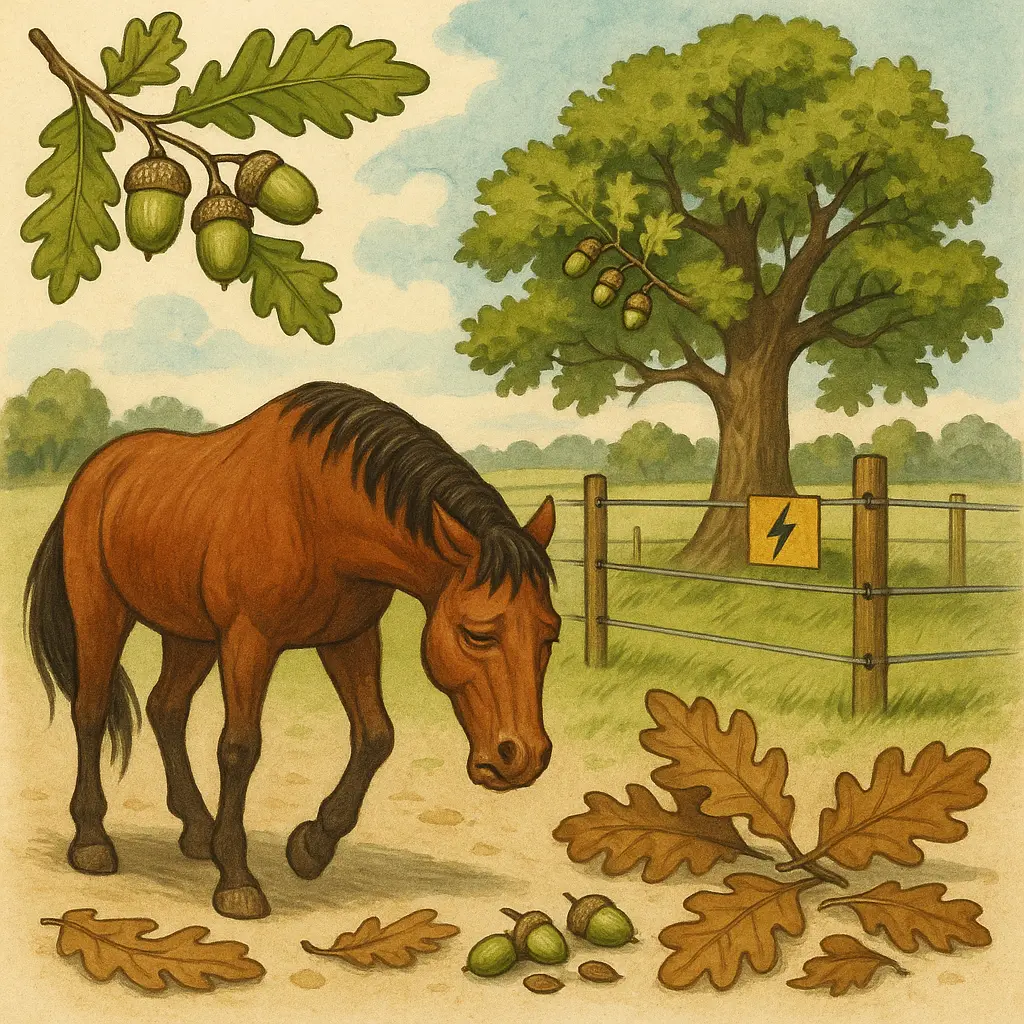
The BHS advises placing temporary electric fencing around oaks—ideally to the dripline (edge of the canopy)—to keep horses off the heaviest fall zones. Pair this with proactive field management:
- Before turnout, do a quick walk of the oak line, especially after winds and storms.
- Rake or sweep up visible acorns and fresh leaf fall; prioritise green (unripe) acorns and young leaves.
- Relocate water and hay stations well away from trees to “anchor” horses in safer zones.
- Rotate fields to avoid overgrazing; rest paddocks that border oak-heavy hedgerows in peak months.
Providing fibre is your best deterrent. Keep hay or haylage available during lean periods so horses aren’t tempted to browse oak material. When you need a safe, boredom-busting reward, choose purpose-made, additive‑compliant treats. Our range of horse treats without risky botanicals gives you peace of mind during acorn season.
At Just Horse Riders, we also recommend planning for a wet, windy autumn where turnout can be patchy. Reliable winter turnout rugs help you maintain a sensible turnout schedule without compromising comfort, so you can keep horses off high‑risk areas when needed while still giving them time out.
Are oak derivatives allowed in UK horse feeds and treats?
No—oak parts are not approved feed additives. In the UK, only authorised additives under EC 1831/2003 may be used, and mixing additives requires appropriate registration with the Food Standards Agency.
Under EC Regulation 1831/2003 (applied in the UK via national Feed Hygiene rules), preservatives such as propionic acid and other additives can be included only if specifically authorised for horses, at set maximum inclusion levels, and used exactly as directed. Feed businesses that mix additives or premixtures (vitamins, trace elements, preservatives) must register their activities with the Food Standards Agency. This framework helps ensure safety and traceability in the equine feed chain.
For everyday horse owners, the take-home is simple:
- Buy reputable, labelled feeds and treats that comply with UK/EU additive rules.
- Avoid any product containing oak leaves, acorn fragments, or “tannin-rich” botanicals not authorised for equine feed.
- Contact the manufacturer if an ingredient seems unclear or unusual.
Choose products from trusted brands and retailers. Our curated authorised supplements and carefully selected equine treats are sourced to comply with UK feed regulations, helping you avoid unwanted contaminants while supporting balanced nutrition through autumn and winter.
What seasonal yard management helps reduce acorn risk?
In autumn and early winter, manage grazing pressure, comfort, and routine with good rugs, clear paddocks, and consistent forage to minimise acorn temptation and stress.
Autumn in the UK brings short days, slick ground, and frequent storms. A small shift in yard routine can keep horses comfortable and your field safer:
- Comfortable turnout encourages calm grazing away from trees. Consider waterproof, breathable turnout rugs that suit your horse’s clip and condition.
- When stabling overnight becomes necessary, match with cosy stable rugs for warmth while you plan early-morning field checks under oaks.
- When you’re doing dawn or dusk acorn sweeps, increase visibility with hi‑vis rider gear around the yard and lanes.
- Keep a tidy grooming routine after wet, muddy turnouts; a well-stocked grooming kit lets you spot subtle skin and mouth changes quickly.
- For hard‑working rugs that stand up to British weather, browse proven options from WeatherBeeta to keep horses turned out comfortably while you fence or clear oak zones.
Pro tip: Pencil in two “storm response” tasks on your yard board from September onwards—(1) fence checks around oaks after high winds and (2) 15-minute acorn sweeps before next turnout. Turn a risky morning into a quick, repeatable routine.
Our customers often tell us that planning hay placement 30–50 metres away from known oak lines keeps the herd settled on safe ground and makes daily inspection of oak areas more manageable.
FAQs
Are small amounts of dried oak leaves in horse treats safe?
No. While horses usually need a large quantity of oak material to cause toxicity, the tannins are undesirable even in small amounts. Avoid feeding any treats containing oak parts, and contact the manufacturer if you spot unusual botanicals. Choose purpose‑made, compliant options from our equine treats collection.
What exactly causes oak poisoning in horses?
Tannic and gallic acids in acorns, young leaves, buds, and bark damage the gastrointestinal lining, red blood cells, kidneys, and liver when eaten in sufficient amounts. Signs include inappetence, colic, diarrhoea, mouth ulcers, dehydration, and discoloured urine. For a welfare overview, see guidance from the British Horse Society.
My field is overgrazed—how can I stop horses seeking acorns?
Increase forage availability (hay/haylage) away from oaks, fence to the dripline, and rotate fields to reduce grazing pressure. Add safe, low‑sugar rewards rather than allowing browsing under trees—browse our safer treat options—and keep water points far from oak lines so horses linger in cleaner zones.
Is there a specific treatment or antidote for acorn poisoning?
No. Vets provide supportive care—typically intravenous fluids, pain relief, and, where appropriate, professionally administered activated charcoal or mineral oil. Prognosis is guarded once clinical signs appear, and recovery can take two months or more. See veterinary guidance summarised by Vetster.
When will my paddock be safe again after an acorn fall?
Fields are generally safe by late autumn/early winter once trees stop dropping and you’ve cleared visible acorns and fresh leaf fall. Remain cautious in spring when tender buds and young leaves emerge, particularly if grazing is sparse.
Some horses love acorns—can they become “hooked”?
Yes, some individuals develop a liking and will actively seek acorns regardless of available forage. For these horses, physical exclusion is essential: fence off oak areas to the branch span and maintain disciplined field checks, especially after storms.
What’s the best way to clear fallen acorns quickly?
Focus on high-density zones under the canopy. Rake or sweep daily during peak fall, prioritising green acorns and young leaves. For larger areas, a paddock sweeper or yard vacuum can speed things up. Pair clearance with fencing and strategic hay placement to keep horses occupied elsewhere.
At Just Horse Riders, we’re here to help you navigate acorn season with confidence. From reliable turnout rugs and warm stable rugs to practical grooming essentials and compliant supplements, we’ll support your plan to keep horses safe, comfortable, and out of the oak line this autumn and spring.