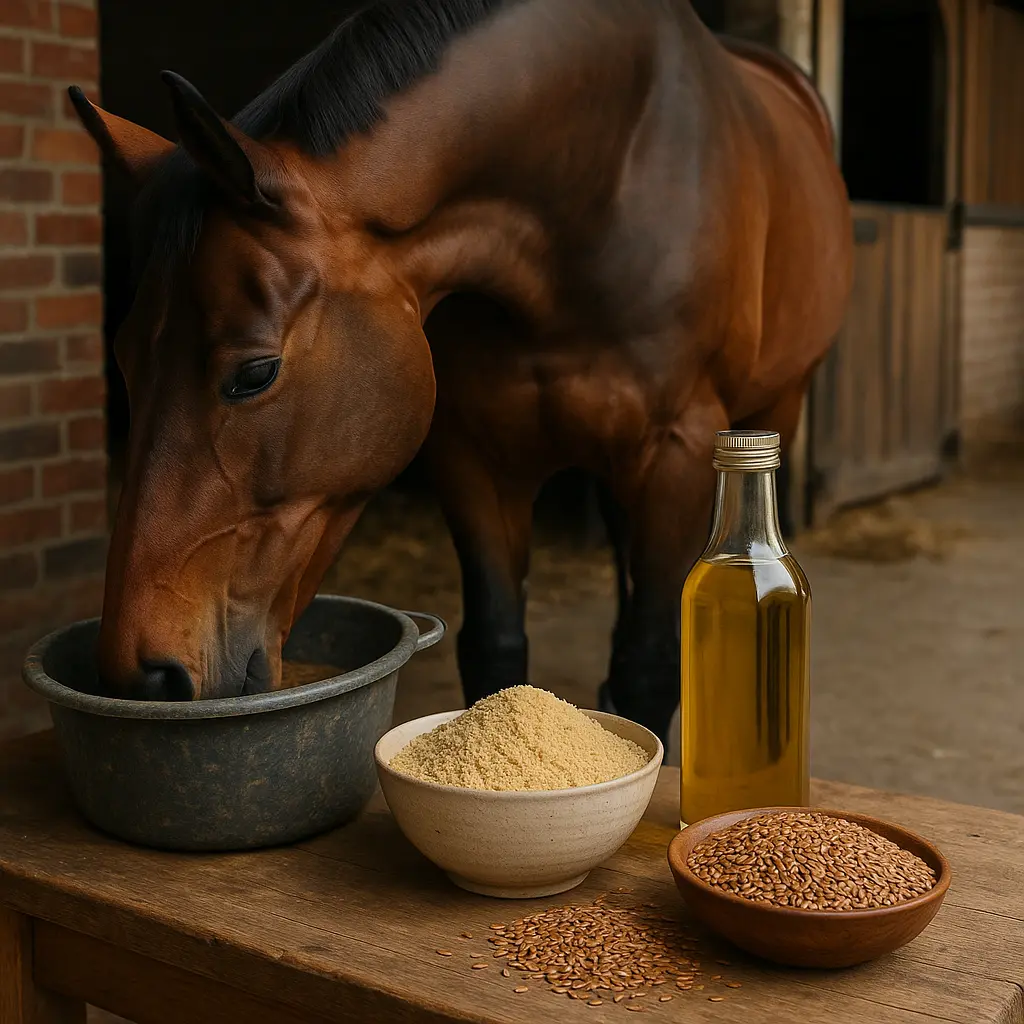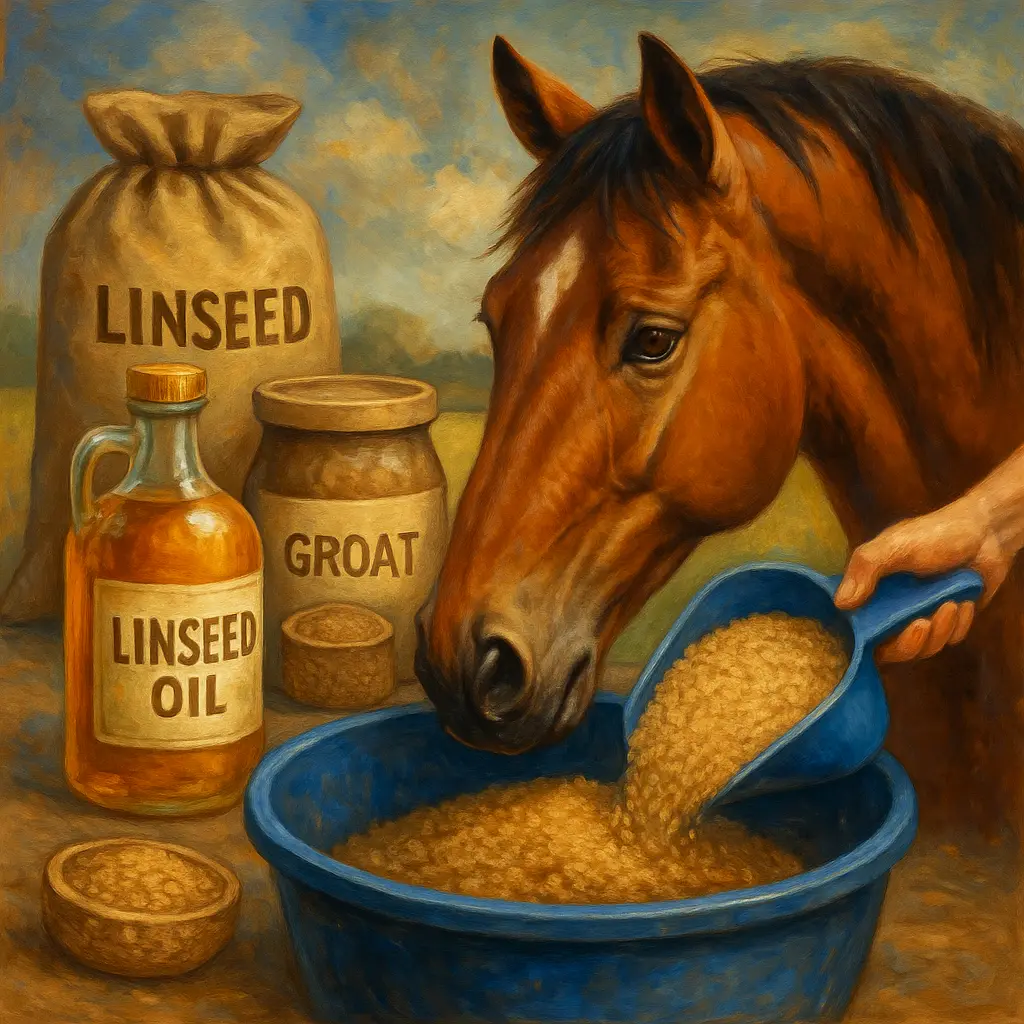
Struggling to keep condition on an ulcer-prone horse without lighting the starch fuse? Linseed – especially in micronised form – is one of the safest, most effective ways to add calories, omega-3 and quality protein without upsetting a sensitive gut.
Key takeaway: For ulcer-prone horses, feed micronised linseed (35–40% oil, low starch) alongside a BETA-approved, high-fibre, low-starch ration to promote steady weight gain, topline and a glossy coat.
Why linseed works for ulcer-prone horses
Linseed provides high calories from oil with very low starch, plus soluble fibre and omega‑3s that support a healthy, calmer digestive system. This makes it a top choice for building condition without aggravating Equine Gastric Ulcer Syndrome (EGUS).
Ulcer management hinges on fibre-first feeding. As Horse & Hound advises:
“A horse with diagnosed or suspected gastric ulcers should receive a high-fibre, high-forage diet that contains little or no whole cereal grains.”
Linseed (flax) delivers just that: energy from fat, not cereals, and a naturally anti‑inflammatory omega‑3 profile. Whole or micronised linseed typically contains 35–40% oil, around 4% starch and approximately 22% protein per the meal component, whereas extracted linseed oil is pure oil with no protein or fibre. That balance helps ulcer-prone horses maintain weight, coat and topline while keeping stomach acid buffered by forage and soluble fibre.
For owners replacing cereals with safer calories, researchers conclude linseed by‑products can be safely used with other fibre sources:
“Linseed by-products (linseed groats 0.8 g/kg BW/d) combined with other fibre sources can be safely used... in feeding strategies replacing grains in the horses’ rations in order to reduce the intake of starch.” — PMC study
Micronised linseed vs oil: which builds weight better?
Micronised linseed generally builds weight better than oil alone because it delivers 35–40% oil plus fibre and roughly 22% protein, whereas plain linseed oil is 100% fat with no protein or fibre.
Micronisation gently cooks the seed to improve digestibility, preserving the valuable oil while providing soluble fibre and amino acids essential for muscle and topline. By contrast, linseed oil offers calories but none of the fibre or protein that supports healthy digestion and steady condition. If you’re feeding an ulcer‑prone horse, those added fibre fractions matter for buffering and gut comfort.
Key numbers you can use:
- Micronised linseed/linseed meal: ~35–40% oil, ~4% starch, ~22% protein. A 150 ml scoop weighs ~80 g.
- Linseed oil: 100% oil (no protein, no starch).
- Linseed meal (after oil extraction): averages ~12% fat and ~36% protein; useful as a protein top‑up but lower in omega‑3 than whole/micronised linseed.
For omega balance, linseed leads the field. As Equinutritive notes:
“For an almost perfect balance of Omega‑3 and Omega‑6 fatty acids, linseed/flax oil has proven itself to be the oil of choice... Beyond being ingested as an oil, it can be provided in the form of micronised linseed.”
Compared with corn oil (high in pro‑inflammatory omega‑6), linseed’s omega‑3 bias is a better match for day‑to‑day conditioning, coat shine and overall digestive comfort.
How much linseed to feed and how to start
Safe feeding rates are 0.8 g/kg bodyweight/day for linseed groats (about 400 g for a 500 kg horse) and up to 454 g/day of linseed products in total; start at 50–120 g/day and increase gradually over 10–14 days.
Follow this simple, evidence‑led plan:
- Start low: 50–120 g/day of micronised linseed (or 30–60 ml/day of oil) mixed into a dampened, forage‑based meal.
- Build slowly: Increase every 3–4 days, aiming for 0.6–0.8 g/kg BW/day (e.g., 300–400 g/day for a 500 kg horse), split across two or three feeds.
- Upper practical limit: 454 g/day total linseed products is a sensible ceiling for most horses in work.
- Monitor tolerance: If droppings soften, hold or reduce the dose; switch to lower‑oil linseed meal if needed.
- Weigh accurately: A 150 ml scoop of linseed meal is approx. 80 g. Weigh your specific product once to confirm.
In a controlled trial, feeding linseed groats at 0.8 g/kg BW/day (about 6.3–6.7% of diet dry matter) improved crude protein and fat digestibility in hay‑oats diets without adverse effects on blood parameters or health (PMC).
Quick tip: Pair linseed with a comprehensive balancer or vitamin‑mineral supplement to keep micronutrients aligned as calories increase. Explore our curated range of horse supplements and gut balancers to support the transition.
What to feed with linseed for ulcer‑safe gains
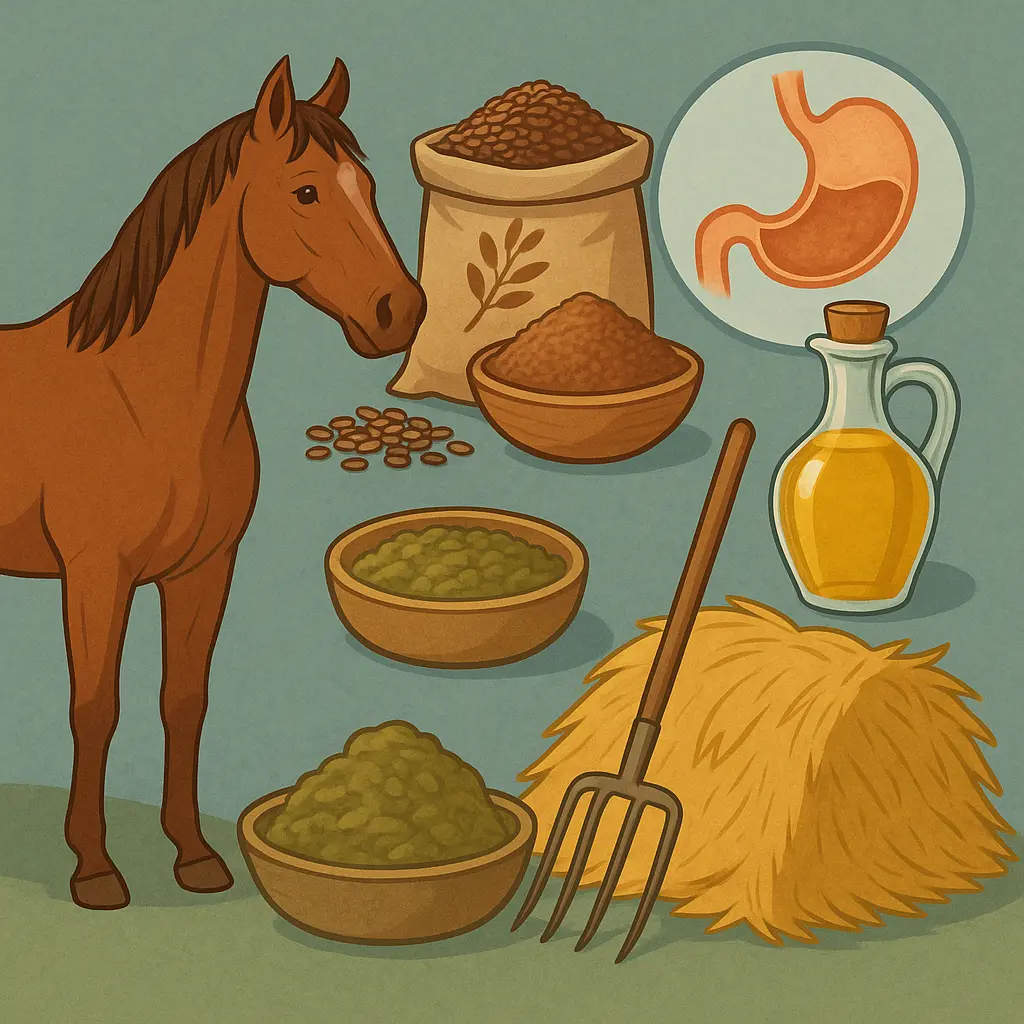
Combine linseed with a high‑forage, high‑fibre ration that’s low in starch (<8%) and sugar (<6.5%), ideally with BETA approval for horses prone to gastric ulcers.
Forage (hay, haylage, turnout) should be the backbone, offered ad‑lib where possible to keep the stomach trickle‑fed. Your bucket feeds should be fibre‑based, low in cereal content and fortified with quality protein sources for topline. Look for the BETA “Suitable for Horses and Ponies Prone to Gastric Ulcers” mark to simplify your shortlist; as Baileys explains, this approval helps owners identify the right feeds for EGUS‑prone horses.
Examples of good companions to linseed include:
- BETA‑approved conditioning fibres (e.g., Dengie Performance Fibre at 11.5 MJ/kg) to supply slow‑release energy and support weight gain.
- “Super fibres” like beet pulp and soya hulls for extra calories from digestible fibre, not cereals.
- Gut‑comforting add‑ons like pectin and lecithin, especially post‑omeprazole, to help protect the squamous lining.
At Just Horse Riders, we recommend selecting a fibre base with starch around 6–8% and a superior amino acid profile (lysine-first) to build muscle over the topline. Pair that with 300–400 g/day of micronised linseed for most 500 kg horses in regular work and adjust every 10–14 days based on weight and droppings.
Pro tip: If you already use oil, consider switching part or all of that volume to micronised linseed for the added fibre and protein. You’ll often see steadier condition, better droppings and more “rideable” energy.
UK seasons: when linseed earns its keep
Through UK autumn and winter, linseed supplies safe extra calories during the “hunger gap” when grass quality dips, without adding cereal starch that can unsettle a sensitive stomach.
Wet British winters and frequent stabling challenge condition: forage can vary week to week, turnout is reduced and some horses lose cover fast. Linseed is easy to mix into fibre feeds, with a palatable taste most horses accept straight away. Because it’s oil‑based energy, it also supports those who need “cool” calories for hacking, lessons or hunting in cold, blustery weather without adding fizziness.
Make comfort a priority when the weather turns: suitable rugs help your calories go further by reducing energy lost to thermoregulation. Explore our range of winter turnout rugs for mud‑proof protection and our cosy stable rugs for chilled nights on the yard.
For performance horses keeping their edge in variable weather, Horse & Hound highlights the value of oil‑based energy in ulcer‑safe feeds — a useful nudge for those wet and windy schooling blocks.
Monitoring results and what to avoid
Expect a shinier coat and more cover over the ribs and topline within a few weeks; reduce the dose or switch to lower‑oil linseed meal if droppings soften or weight gains too quickly.
What to watch:
- Positive signs: glossier coat, better skin, easier weight maintenance, improved rideability (less starch‑spike behaviour).
- Neutral checks: energy level remains “cool” and consistent; saddle still fits as topline changes.
- Red flags: loose droppings, greasy coat, or “too much” condition — dial back linseed or split into more feeds; consider moving from whole/micronised to higher‑protein, lower‑oil linseed meal if needed.
Coat condition often improves quickly with omega‑3 support. Keep on top of external care too: regular grooming lifts natural oils to the surface and can magnify that linseed shine. Our grooming collection has everything you need to finish the picture from curry combs to coat sprays.
If your horse has a clinical history of EGUS, work with your vet or nutritionist on quantities and timing, particularly around training and competition days. Linseed pairs well with pre‑ride fibre feeds to help buffer stomach contents.

Practical feeding plans you can copy
For a 500 kg ulcer‑prone horse, a proven starting plan is ad‑lib forage, a BETA‑approved low‑starch fibre feed, 300–400 g/day micronised linseed split between meals, and a gut balancer containing pectin/lecithin.
Use these sample templates and adapt every fortnight by condition score and droppings:
Poor‑doer in light/medium work
- Forage: ad‑lib hay/haylage; small haynet pre‑exercise for buffering.
- Bucket feed (2–3 times/day): BETA‑approved, low‑starch conditioning fibre; add 100–150 g micronised linseed per meal (total 300–450 g/day).
- Supplements: vitamin–mineral balancer; gut balancer with pectin/lecithin; salt/electrolytes as workload dictates. See our supplements selection.
- Review: aim for 0.25–0.5 body condition score gain per month; if dropping, add 50–100 g/day linseed or increase fibre feed volume.
Good‑doer with a history of ulcers
- Forage: controlled but frequent access (e.g., small‑hole net) to maintain trickle feeding without excess calories.
- Bucket feed: high‑fibre, low‑starch chaff plus 100–200 g/day micronised linseed; consider linseed meal (lower oil, higher protein) if weight climbs too fast.
- Monitoring: keep starch under ~8% of total ration; drop linseed by 50 g increments if condition creeps up.
Performance horse needing cool energy
- Forage: ad‑lib quality hay/haylage; add beet pulp/soya hulls for “super‑fibre” calories.
- Bucket feed: BETA‑approved performance fibre (e.g., 11.5 MJ/kg category) + 300–454 g/day micronised linseed; split across 3 meals.
- Optional: high‑oil conditioning pellets (e.g., rice bran/linseed blends ~£30–£40/5 kg) if extra top‑end calories needed; keep starch low overall.
If you prefer to feed pure oil, choose linseed/flax oil (£10–£20 per 1 L typical) over corn oil to maintain an omega‑3 bias. But for most ulcer‑prone horses, micronised linseed wins on digestibility and overall gut comfort.
Budget‑minded? Keep an eye on our rotating deals in The Secret Tack Room (clearance) — ideal for stocking up when you dial in a ration that works.
Quality and compliance: British standards to trust
BETA’s ulcer‑suitable approval scheme helps UK owners identify feeds proven appropriate for horses prone to gastric ulcers. Always prioritise the BETA mark when choosing conditioning fibres to sit alongside linseed.
In line with UK guidance, any product indicated as “suitable for horses and ponies prone to gastric ulcers” should demonstrate high‑fibre, low‑starch credentials and follow BETA’s protocols. Brands like Dengie and Baileys participate in this assurance framework, making selection simpler in busy yard life and through unpredictable UK winters.
At Just Horse Riders, we stock trusted brands and supportive extras that fit this philosophy, from omega‑rich conditioners to targeted gut balancers and tried‑and‑tested yard staples. For brand‑specific solutions, explore our NAF range for digestive and coat support aligned with your linseed plan.
Troubleshooting and fine‑tuning
If your horse isn’t gaining despite linseed and fibre, increase total forage quality and quantity first, then add 50–100 g/day linseed increments every 7–10 days. If droppings soften, pause increases or step back 50–100 g.
Common pitfalls and easy fixes:
- Feeding oil only: swap all or part of oil for micronised linseed to add fibre/protein for better utilisation.
- Too much starch elsewhere: recheck labels; aim under ~8% starch and ~6.5% sugar in bucket feeds for ulcer‑prone horses.
- Irregular feeding times: prioritise little-and-often, especially pre‑ride fibre to buffer acid splash.
- No micronutrients: add a balancer to avoid hidden plateaus from vitamin/mineral gaps.
- Cold, wet horse: spare those calories by keeping them warm and dry with appropriate rugs and good management.
As Baileys reminds owners, the BETA mark on fibre feeds is your shortcut to suitability for ulcer‑prone horses (read more). Pair that assurance with linseed’s omega‑3 profile for a practical, research‑backed route to condition.
FAQs
Is micronised linseed better than linseed oil for weight gain?
Yes. Micronised linseed supplies 35–40% oil plus fibre and around 22% protein, which supports digestion and topline; oil is 100% fat with no fibre or protein. Most ulcer‑prone horses do better on micronised linseed.
Can linseed help an ulcer‑prone horse gain weight safely?
Yes. Linseed is low in starch and rich in omega‑3 and soluble fibre, making it ideal alongside a high‑forage, BETA‑approved low‑starch ration. See the Horse & Hound guidance.
How much linseed should I feed my horse?
Use 0.8 g/kg bodyweight/day for linseed groats (≈400 g/day for 500 kg) or up to 454 g/day of linseed products total. Start at 50–120 g/day and build slowly over 10–14 days. Evidence shows improved fat and protein digestibility at these levels (PMC).
Does linseed oil cause inflammatory imbalances like corn oil?
No. Linseed has an omega‑3‑dominant profile and is highly digestible, whereas corn oil is high in omega‑6. For anti‑inflammatory balance, linseed is the oil of choice (Equinutritive).
How quickly will I see results from linseed?
Many horses show a shinier coat and steadier condition within a few weeks when linseed is fed consistently with a fibre‑first diet. Monitor droppings and weigh or measure girth weekly to track changes.
What should I feed with linseed to keep starch low?
Choose BETA‑approved, high‑fibre feeds with starch under ~8% and sugar under ~6.5%, and base the diet on ad‑lib forage. See the BETA guidance via Baileys’ ulcer library.
Any UK winter management tips while feeding linseed?
Yes: keep them warm and dry so calories build condition, not body heat. Well‑fitting turnout rugs for the field and stable rugs at night help your linseed calories go further through the “hunger gap.”