

Understanding the Role and Benefits of Balancers in Equine Nutrition
Proper nutrition is foundational to equine health, yet many horse owners struggle to provide balanced diets that meet all their horses' nutritional requirements, particularly when relying primarily on forage. Ration balancers have emerged as an elegant solution to this challenge, offering concentrated nutrition without excess calories. This comprehensive guide explores what balancers are, why they matter, and how they can significantly improve your horse's overall health and performance.
What Are Equine Ration Balancers?
Ration balancers are concentrated feeds formulated to provide essential protein, vitamins, and minerals without adding substantial calories to a horse's diet [4]. Typically fed at low rates—ranging from 0.25 to 1 pound per head per day—these supplements deliver the nutritional fortification that forage alone often cannot provide [2].
The Nutritional Gaps in Forage-Only Diets
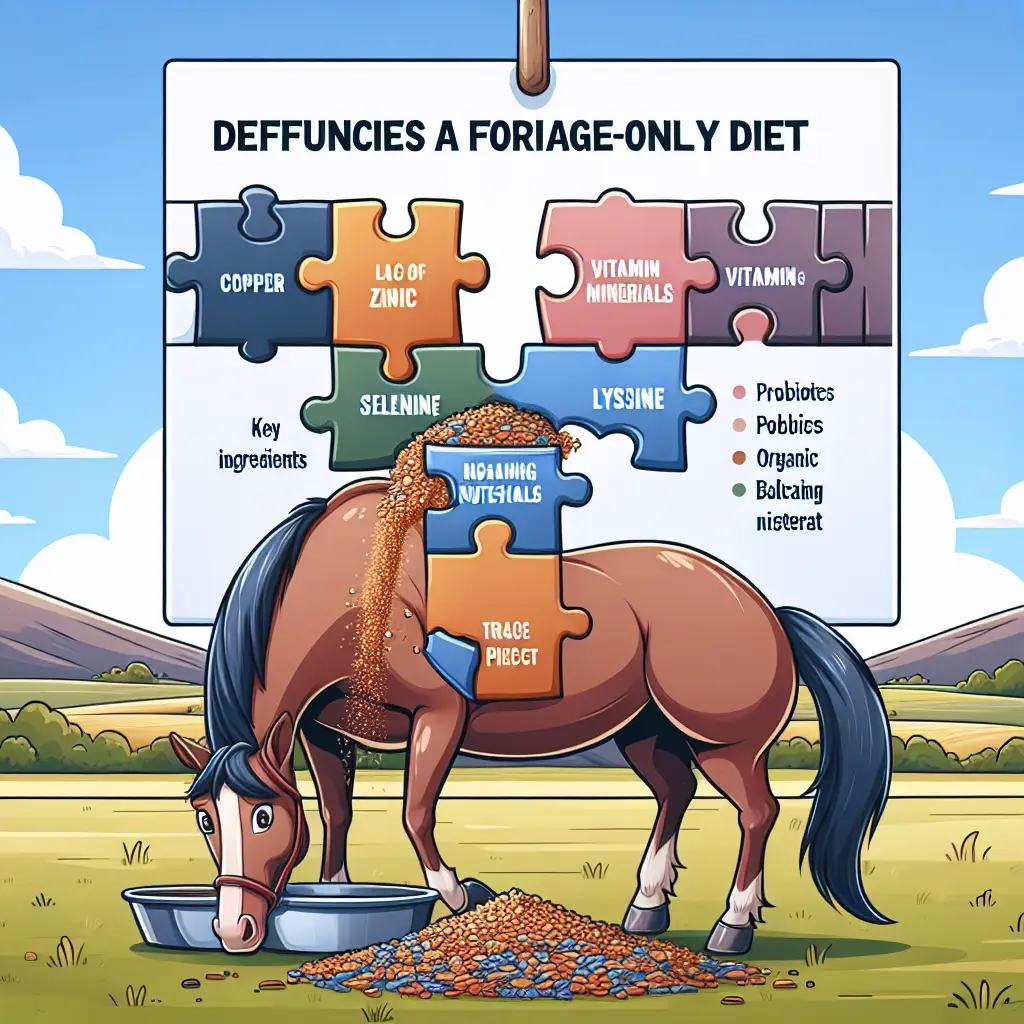
While high-quality forage forms the foundation of an ideal equine diet, it often falls short in critical nutrients. Forage-only diets can easily meet or exceed energy requirements for good doers, but they frequently fall short of providing key nutrients such as copper, zinc, selenium, vitamin E, and lysine [1].
Specific Nutrient Deficiencies
Vitamin E is particularly concerning. This powerful antioxidant is essential for supporting muscle and immune health. While free access to green pasture might provide sufficient vitamin E, the levels in hay and haylage can be negligible.  Horses without regular access to fresh green grass should have their vitamin E levels tested to assess adequacy.
Important minerals such as copper, zinc, and selenium are also frequently deficient. The selenium content of forages can vary significantly by geographic region, making supplementation particularly important in deficient areas.
Amino acids, particularly lysine, are frequently deficient in forage. Unlike traditional vitamin and mineral supplements, balancers specifically provide amino acids such as lysine [1]. This distinction is crucial for supporting muscle development and overall protein metabolism.
The calcium and phosphorus balance also requires attention. To maintain a proper calcium-to-phosphorus ratio, horses must consume more calcium than phosphorus [4]. This is vital to support bone health and prevent developmental issues.
Who Benefits Most From Ration Balancers?
Ration balancers are ideal for horses and ponies that maintain weight easily (or too easily!) on forage alone. They also serve as an excellent option for animals that maintain weight easily on less than the recommended amount of complementary feed [1].
The Case Study Approach
Research demonstrates the practical value of balancers in real-world scenarios. One documented case involved a farm feeding good quality hay at approximately 2% of each horse's body weight with overall good body condition scores. However, horses receiving only 1 pound per day of grain were not receiving adequate nutrient fortification for optimum health. By incorporating a ration balancer, the farm was able to balance amino acids and vitamin/mineral fortification without adding excessive calories [2].
Key Benefits of Ration Balancers
1. Concentrated Nutrient Delivery Without Excess Calories
One of the most significant advantages of ration balancers is their ability to provide essential nutrients without the caloric burden of traditional grain feeds [7]. For horses prone to weight gain or those with metabolic concerns, this distinction is invaluable.
2. Support for Horses on Non-Structural Carbohydrate (NSC) Restricted Diets
For horses requiring low-NSC diets due to metabolic conditions, ration balancers provide amino acids, vitamins, and minerals that may be deficient in forage without added calories in the form of fat, starch or sugar [3]. This makes them particularly suitable for horses with insulin resistance, equine metabolic syndrome, or laminitis risk factors.
3. Enhanced Digestion and Mineral Absorption
Quality ration balancers often contain probiotics and prebiotics, which enhance fiber and protein digestion while aiding mineral absorption [2]. Additionally, organic complexed trace minerals, such as "zinc methionine complex" listed on the ingredient label, increase bioavailability, ensuring optimal utilization by the horse's body.
4. Prevention of Developmental Issues
Research has demonstrated that fortification of trace minerals may prevent developmental orthopedic disorders in young horses. For owners of young stock, this preventive benefit represents significant long-term health protection [3].
5. Flexibility in Feed Selection
Balancers provide flexibility for owners who want to use quality forage products as their primary feed. They work effectively with various forage options, including alfalfa products, grass haylage, and high-quality hay [1].
When to Feed a Ration Balancer
The Label Standard
A fundamental principle in equine nutrition states: when horses are fed below the recommended amount of grain for their type as listed on the label, the amount of vitamins and trace minerals in the diet will likely be insufficient [3]. In these cases, a ration balancer becomes essential.
Optimal Scenarios for Balancer Use
Ration balancers should be considered in the following situations:
- Your horse maintains weight easily on forage alone
- Your horse receives less than recommended complementary feed amounts
- You prefer to use low-fortification forage products as your primary feed
- Your hay has not been analyzed for nutritional content
- Your horse has limited access to fresh green grass
- Your horse requires a low-NSC diet
- You want to ensure adequate amino acid and trace mineral intake without excess calories
For owners not conducting regular hay analysis—which represents the majority of horse owners—providing a ration balancer is probably a wise strategy to ensure the horse is getting the necessary vitamins, minerals, and protein, especially some of the limiting amino acids [4].
Comparing Balancers to Other Supplementation Options
Balancers vs. Traditional Supplements
While traditional vitamin and mineral supplements can address some nutritional gaps, they typically provide very few amino acids [1]. Ration balancers offer a more comprehensive solution by addressing protein, vitamin, and mineral requirements simultaneously.
Balancers vs. High-Energy Concentrates
Standard grain mixes often deliver more calories than weight-stable horses require. A ration balancer at 30% protein is equivalent to or slightly less than feeding a standard 12% feed at a higher rate, but without the excess energy [2]. This makes balancers superior for horses that should not receive additional calories.
Addressing Common Concerns
Protein Myths
Excess protein intake usually isn't harmful unless the horse has kidney disease [4]. Quality ration balancers contain elevated protein levels (around 30%) specifically to ensure adequate amino acid delivery at low feeding rates without creating health risks for healthy horses.
Mineral Balance Considerations
While some minerals and trace minerals can react with one another, the horse would have to consume quite a lot to create an imbalance, but it could happen if a person consistently overfed [4]. Following label recommendations prevents this concern entirely.
Sodium and Salt
It's worth noting that voluntary sodium intake from salt blocks varies between horses, potentially falling short of maintenance requirements. To ensure adequate sodium, give 1 tablespoon of loose salt per 500 pounds of body weight in feed, along with access to a salt block [3]. Many quality ration balancers include appropriate sodium levels.
Research and Evidence Supporting Balancer Use
Recent equine nutrition research has significantly advanced our understanding of balancer benefits. Equine nutrition research over the last 25 years has greatly improved our knowledge of equid digestive physiology and diet formulation for horses [5].
Practical studies demonstrate effectiveness across different feeding systems. For example, standardbred trotters performed equally well on a diet based on haylage (with a fortified balancer) compared with a hay and cereal-rich diet [5]. This evidence supports the use of balancers with alternative forage sources without compromising performance.
Best Practices for Selecting and Feeding Ration Balancers
What to Look For
When selecting a quality ration balancer, prioritize products that include:
- Probiotics and prebiotics for enhanced digestion and mineral absorption
- Organic complexed trace minerals for superior bioavailability
- Appropriate calcium-to-phosphorus ratios
- Essential amino acids, particularly lysine
- Vitamin E and other antioxidants
A quality ration balancer can often eliminate the need for additional supplementation [2].
Implementation Strategy
Feed according to the label recommendations for your horse's weight and needs. Start with lower feeding rates and monitor your horse's body condition, coat quality, and overall health. Work with a veterinarian or equine nutritionist if you have specific health concerns or questions about your individual horse's requirements.
The Value of Forage Analysis
While not essential, having forage tested and working with a veterinarian and/or nutritionist to analyze the results provides the most accurate picture of your horse's actual nutritional status and specific balancer needs [3].
Conclusion
Ration balancers represent a significant advancement in equine nutrition, offering a practical solution to the nutritional gaps inherent in forage-only diets. By delivering concentrated levels of essential amino acids, vitamins, and minerals at low feeding rates, balancers enable owners to maintain their horses' weight while ensuring complete nutrition. Whether your horse is an easy keeper, requires a low-NSC diet, or simply deserves optimal nutrition without excess calories, a quality ration balancer can be a valuable addition to your feeding program. As with any dietary change, introduce balancers gradually and monitor your horse's response, consulting with equine nutrition professionals when needed to ensure your feeding program meets your individual horse's unique requirements.