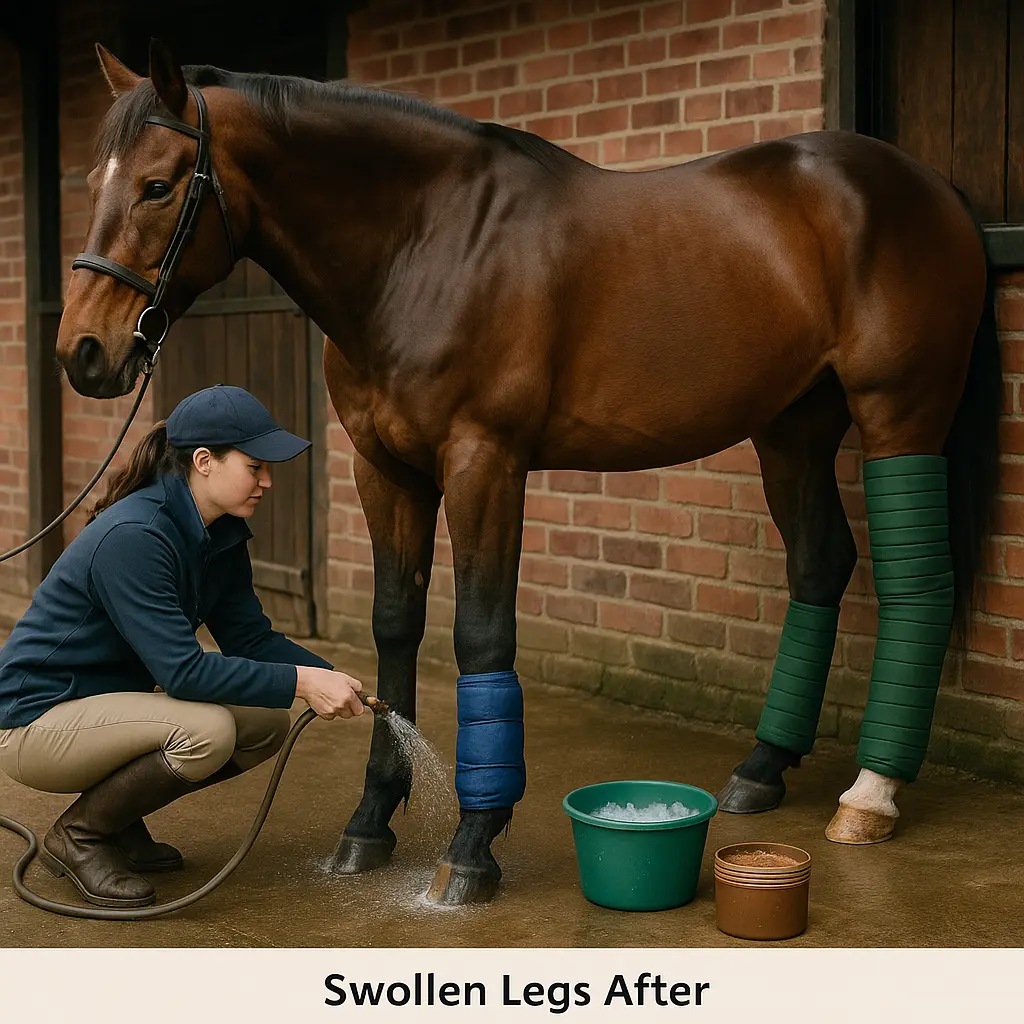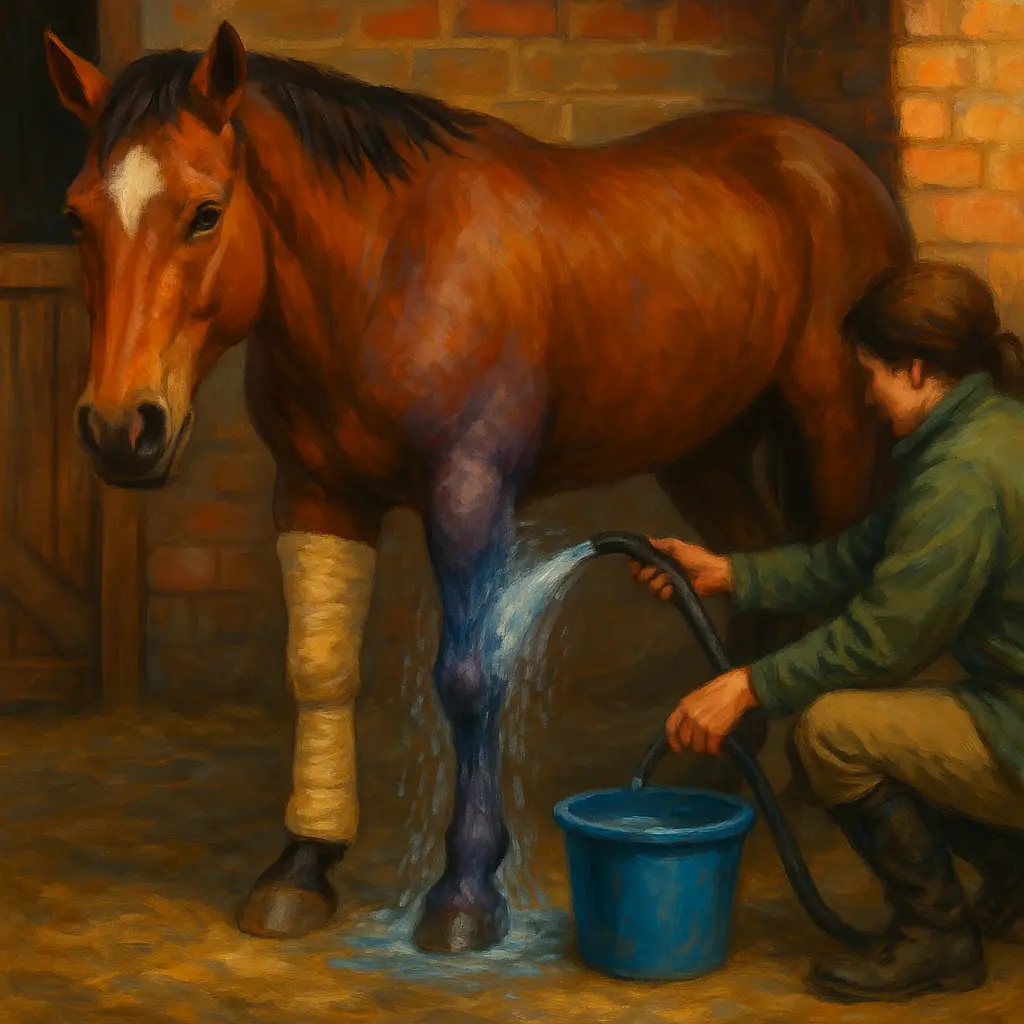
Hunting days are hard on legs. If your horse comes in with filled lower limbs, you need to decide fast whether it’s simple “stocking up” or the start of an injury — and act accordingly.
Key takeaway: Most post-hunt leg swelling is mild, affects both hind legs, and goes down with movement and cold therapy; single-leg swelling, heat, pain or lameness needs a vet.
What causes swollen legs after hunting?
Swelling after hunting is usually fluid accumulation in the lower limbs from inflammation and reduced circulation, with the fetlock to knee/hock most commonly affected and upper limb swelling far less common. Benign “stocking up” reduces with light exercise, while heat, pain, lameness or one-sided swelling suggests injury that needs veterinary assessment.
A hard day across country creates microtrauma in tissues and temporarily impairs lymphatic drainage. Horses then often travel and stand in a stable, further slowing circulation and allowing fluid to pool in the lower legs. That’s why you’ll most often see puffiness around the cannon bones, fetlocks and digital flexor region. True “stocking up” classically affects both legs equally, is cool or only slightly warm, and the swelling visibly goes down after turnout or a short leg-stretch.
In contrast, unilateral swelling, heat, pain on palpation, or any degree of lameness points to a specific structure (e.g. tendon, ligament or joint) being inflamed. After hunting — particularly in autumn/winter ground — knocks to the knee or hock, overreach strains, and tendon overload are realistic risks. Treat every one-sided or painful swelling as potentially significant until proven otherwise.
What should you do in the first 24–48 hours?
Apply cold therapy for 10–20 minutes two to three times a day, keep your horse moving gently, and monitor closely for 1–2 days; use ice boots for 20–30 minutes if you suspect tendon or ligament strain. If swelling worsens or lameness/heat/pain appears, call your vet promptly.
Cold therapy is your first, best tool. Cold hosing provides cooling plus a gentle massage effect; ice boots or ice baths give a deeper, longer-lasting temperature drop and are ideal where tendon or ligament inflammation is suspected. For best results:
- Cold water: Hose for 10–20 minutes, two to three times a day. Immediately after hunting, a 15–20 minute hose is a solid start.
- Ice therapy: Apply for 20–30 minutes, two to three times daily. Crushed ice boots or purpose-made ice sleeves work well.
- Compression with cooling: Adding light compression improves the effect of icing. Purpose-made cold therapy boots combine both. See our range of cooling boots and leg wraps.
“For mild cases of swelling that have been assessed by your vet and aren’t linked to a specific injury or illness, cold water/ice boots, massage and bandaging, and keeping your horse moving are effective treatments.” — Your Horse veterinary advice
Anti-inflammatories can be part of a veterinary plan. Non-steroidal anti-inflammatory drugs (NSAIDs) often used in horses include phenylbutazone (bute), Equioxx (firocoxib), and Banamine (flunixin). Corticosteroids are sometimes used by vets in the very early inflammatory window — typically within the first 24–48 hours — for specific cases. Always speak to your vet before medicating.
Quick tip: In cold weather when hosing is risky underfoot, swap to cold water boots or ice boots and salt/sand the wash area to prevent slips.
Bandaging, clay and massage: when and how
Use support bandages overnight with at least a one-inch quilt underneath, apply kaolin leg clay in a 6mm layer after work if needed, and add gentle massage or a thorough groom to boost circulation. Applied correctly, these reduce fluid build-up and support recovery.
Bandaging is a standard yard practice for filled legs, especially during periods of stabling. Done well, it evens out pressure and helps prevent fluid from pooling. Safety matters:
- Always use at least a one-inch thick layer of quilt or padding under the bandage to protect tendons and ensure even pressure.
- Wrap from front to back, inside to outside, with consistent, moderate tension — never tight.
- Bandage in pairs (both front or both hind) to keep pressures even, and remove daily to reassess.
- Choose purpose-made stable bandages or overnight wraps from our horse boots & bandages collection.
Leg clay is a time-tested tool for routine post-training or post-hunt puffiness. For routine use, spread a kaolin-based clay evenly about 6mm thick from knee/hock to fetlock. For a longer effect, cover with moistened brown paper and a light bandage, then remove and reapply after 24 hours as required. Many clays include cooling oils for extra comfort.
“Clay acts as a ‘drawing salve’ to heal and prevent injury… The clay improves blood circulation and draws out toxins and fluid, while medicinal oils cool and reduce tension and inflammation in the legs.” — FSAH UK
You’ll find trusted clays and coolants among our customer favourites from NAF.
Massage and grooming support lymphatic flow. Five to ten minutes of gentle, upward strokes on the cannon area and around the tendons can help fluid dissipate. A good brush and strap also increase blood flow. Stock up your kit from our curated grooming collection.
Pro tip: Never bandage over hot, actively inflamed legs without prior cooling — chill first, then bandage for support.
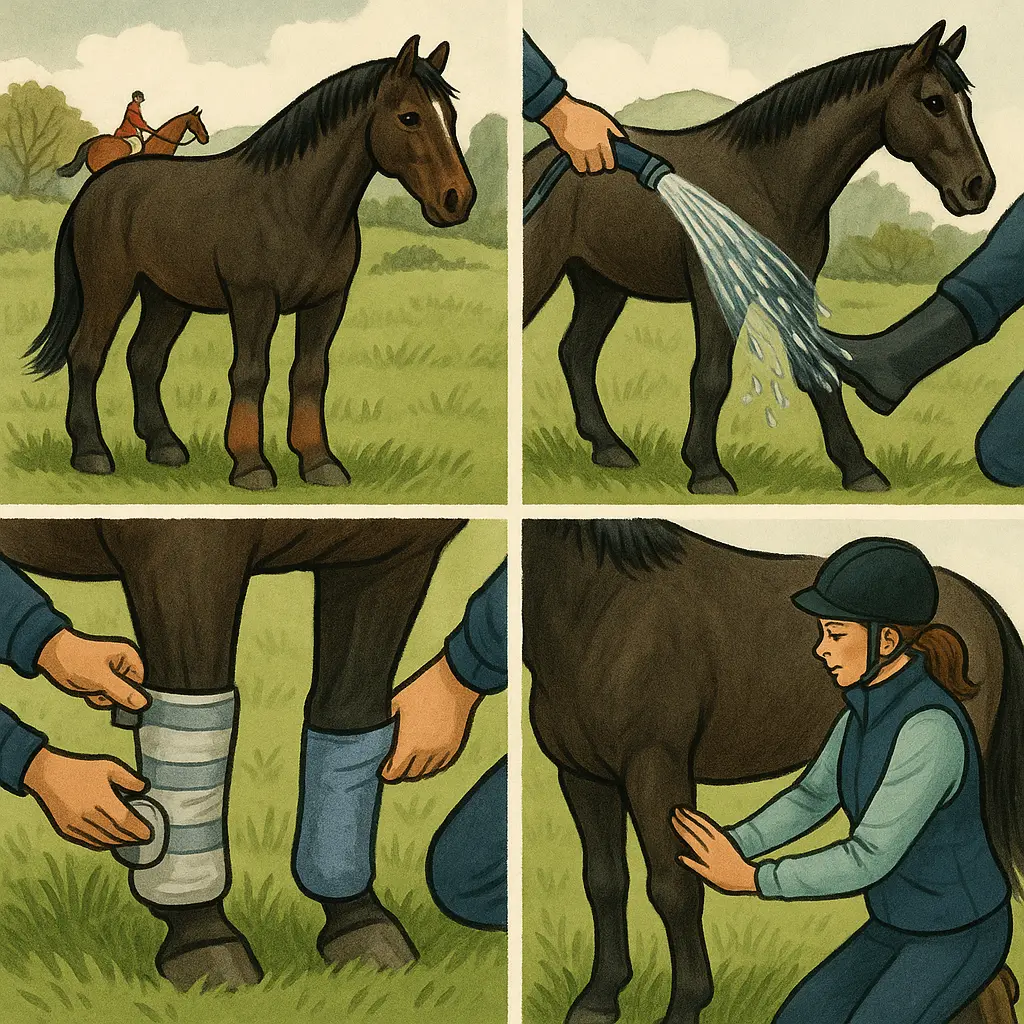
How much exercise helps — and what’s safe?
Light, regular movement reduces swelling; turnout, hand-walking, a horse walker, gentle lunging or a quiet hack are appropriate if there’s no heat, pain or lameness. Avoid fast work or circles if you suspect tendon/ligament injury and check with your vet first.
“Stocking up” responds to activity because movement drives circulation and lymphatic drainage. In many mild, symmetrical cases, swelling drops markedly after turnout or a 15–30 minute leg-stretch. If you’re short on turnout, consider controlled strategies:
- Hand-walking in straight lines on good footing
- Short sessions on a horse walker
- Gentle lunging on a large circle if the horse tracks up evenly
- Quiet ridden walk if they’re comfortable and safe
“The fact that there was no pain or lameness and that the swelling improved with exercise are good signs that there is no serious damage underneath. Restricted exercise such as being hand walked, exercised on a horse walker, gently lunged, gently ridden or turned into a pen will all help to increase the circulation and reduce swelling without significant risk of further injury.” — Deirdre Carson BVSc (Syd), MRCVS, Vet at Rossdales and President of the British Equine Veterinary Association (BEVA)
UK winter brings short days and dark verges. If your leg-loosener is a road walk, stay seen with high-visibility rider gear and reflective accessories for safety on gloomy afternoons.
Quick tip: The more movement, the better — little and often beats one big session when you’re aiming to disperse fluid.
When should you call the vet — and what might they do?
Call your vet if swelling doesn’t improve within 1–2 days, if it’s one-sided, hot or painful, if your horse is lame, or if there are signs of infection such as fever. Recurrent swelling after a week of rest warrants further investigation, including ultrasound.
These red flags mean stop self-managing and get a professional assessment:
- Unilateral swelling (one leg only), especially below the knee/hock
- Heat, obvious pain on palpation, or digital pulse elevation
- Lameness at any gait
- Worsening swelling despite cooling and movement
- Fever, wounds, or signs of cellulitis/infection
Under veterinary care, treatment may include targeted NSAIDs (e.g. phenylbutazone, firocoxib, flunixin) and, in some acute cases, corticosteroids within the first 24–48 hours to temper the inflammatory cascade. If swelling recurs after apparently settling, BEVA guidance (via President Deirdre Carson) is clear: request an ultrasound scan to rule out structural injury to tendons, ligaments or joints.
Pro tip: Take clear photos and short videos (walk and trot straight lines) on Day 0 and Day 2. Having comparable visuals helps you and your vet judge response to care.
What are the best winter workarounds for UK yards?
Swap cold hosing for cold water or ice boots in freezing weather, grit or bed the wash area to prevent slips, and use overnight stable bandages with proper quilts to limit filling when turnout is limited. Turn out where possible and rug appropriately to keep muscles warm without overheating.
Cold hosing is brilliant — until your wash bay becomes an ice rink. Through the hunting season (autumn/winter), use alternatives:
- Cold water boots or gel cooling wraps for 10–20 minutes, 2–3 times daily
- Ice boots for 20–30 minutes for more intense cooling
- Salt, sand or rubber matting in wash areas to reduce slip risk
More stabling equals more risk of stocking up. Overnight standing bandages with sufficient padding are standard practice on UK livery yards to prevent filling. Combine this with controlled daily movement (hand-walking or a walker) to keep legs flushing naturally.
Keeping your horse comfortable outdoors encourages gentle movement. In wet, cold conditions, choose the right rug for turnout and for the stable so you can maximise safe time out without chills: explore our dependable winter turnout rugs and warm, breathable stable rugs.
Quick tip: If you ride after work, pack a thermos of warm water to re-wet clay or bandage pads without freezing your fingers.
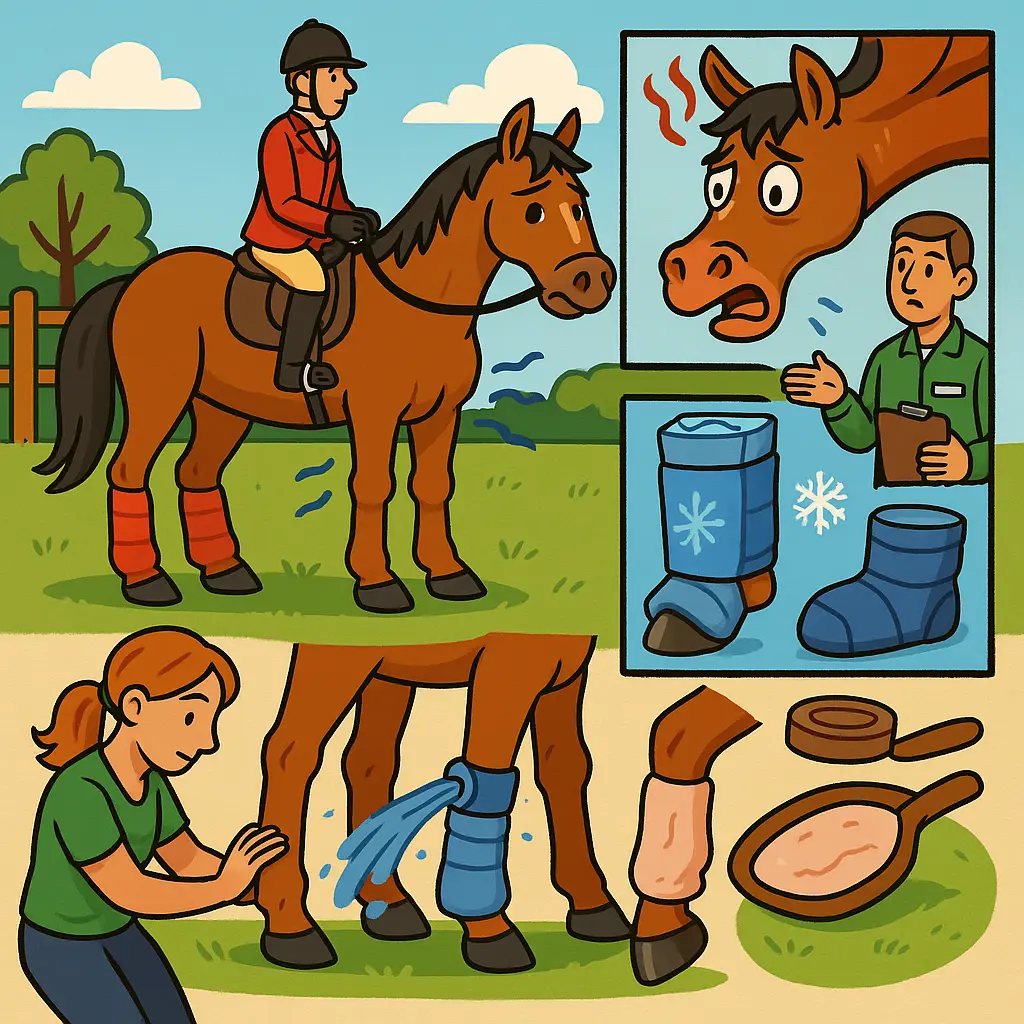
What kit should every yard have ready for post-hunt legs?
Keep cold therapy boots, ice boots, standing bandages with thick quilts, kaolin leg clay, and grooming tools to hand so you can cool, compress and keep circulation moving straight away.
At Just Horse Riders, we recommend building a simple, effective leg-care station so you’re never hunting for gear when the lorry rolls in:
- Cooling and ice boots: Choose easy-on designs for fast, even cooling. See proven options in our horse boots & bandages.
- Standing bandages + quilts: Ensure at least a one-inch quilt layer for safe overnight support.
- Leg clay and coolants: A reliable kaolin clay and witch hazel/menthol-based gels from brands like NAF help with routine post-work puffiness.
- Grooming kit: Massage mitts, body brushes and sweat scrapers from our grooming collection make quick work of bringing circulation back online.
- Treats for patience: Cooling and bandaging go smoother with a pocket of rewards — browse our popular horse treats.
- Yard spares and bargains: Top up with extra quilts and wraps from our Secret Tack Room clearance so you’re never caught short.
- Trusted brands: Many riders love the fit and durability of LeMieux leg boots and staples from Shires for daily yard use.
Pro tip: Label pairs and sizes, and store boots flat so inserts freeze evenly and are ready to go the moment you get back from the meet.
How do you tell “normal” post-hunt filling from a real problem?
Normal stocking up is usually in both hind legs, cool, non-painful, and reduces quickly with light exercise; a problem is more likely if only one leg is swollen, there’s heat or pain, lameness, or swelling worsens over 24–48 hours despite care.
Use this quick decision frame after hunting:
- Both legs equally puffy, cool to touch, horse is sound: Cool, bandage overnight with proper quilts, and keep them moving. Expect improvement within 24–48 hours.
- One leg only, hot or tender, or any lameness: Ice and call your vet. Stable with restricted movement until advised.
- Recurrent swellings after a short rest period: Ask your vet about imaging — BEVA’s president highlights the value of an ultrasound scan if issues recur after a week.
Remember, prevention is powerful: regular exercise and avoiding long periods of inactivity are cornerstone strategies to reduce leg filling.
FAQs
Is swelling after hunting always serious?
No. Mild swelling that affects both legs equally, has little to no heat or pain, and reduces with exercise — often called “stocking up” — is usually benign. It responds well to movement and cold therapy. One-sided swelling, heat, pain, or any lameness should be treated as potentially serious and assessed by your vet.
Should I exercise a horse with swollen legs after hunting?
Yes, if it’s mild and there’s no heat, pain or lameness. Turnout, hand-walking, a horse walker, gentle lunging or a quiet hack at walk help increase circulation and disperse fluid. Avoid intense work or small circles if you suspect tendon or ligament strain, and consult your vet.
How long should I cold hose or ice swollen legs?
Cold water therapy: 10–20 minutes, two to three times a day. Ice therapy: 20–30 minutes, two to three times a day. If you can add light compression with your cold therapy (e.g. a dry sleeve or cooling boot), you’ll enhance the effect.
Can I use compression bandages overnight without causing harm?
Yes — when applied correctly. Always use at least a one-inch thick quilt or padding under the support bandage, apply with even, moderate tension, and never too tight. Bandage both legs of a pair, and remove daily to reassess. Explore safe, purpose-made options in our boots & bandages range.
What’s the difference between ice therapy and cold water therapy?
Cold water therapy reduces heat and inflammation while gently massaging tissues; ice therapy produces a deeper, more intense cooling effect that strongly constricts blood vessels and is especially useful for tendon and ligament inflammation. Both are effective; choose based on severity and practicality.
How long should I wait before calling the vet about post-hunt swelling?
If the swelling is mild and improves with cooling and movement, monitor for 1–2 days. If it hasn’t improved or worsens, or if there’s heat, pain, lameness, or signs of infection (fever), contact your vet promptly. If swelling returns after a week of recovery, ask about an ultrasound scan.
Do magnetic bands help with leg swelling?
Magnetic therapy boots and bands are widely used as a complementary option to support circulation and long-term leg health. They can be part of a routine management plan, but they’re not a primary treatment for acute swelling and shouldn’t replace cooling or veterinary care when indicated.
At Just Horse Riders, we’ve helped thousands of UK riders fine-tune their post-hunt routines. Build your leg-care kit, keep your horse moving, and don’t hesitate to involve your vet when red flags appear — your horse’s legs will thank you all season long.