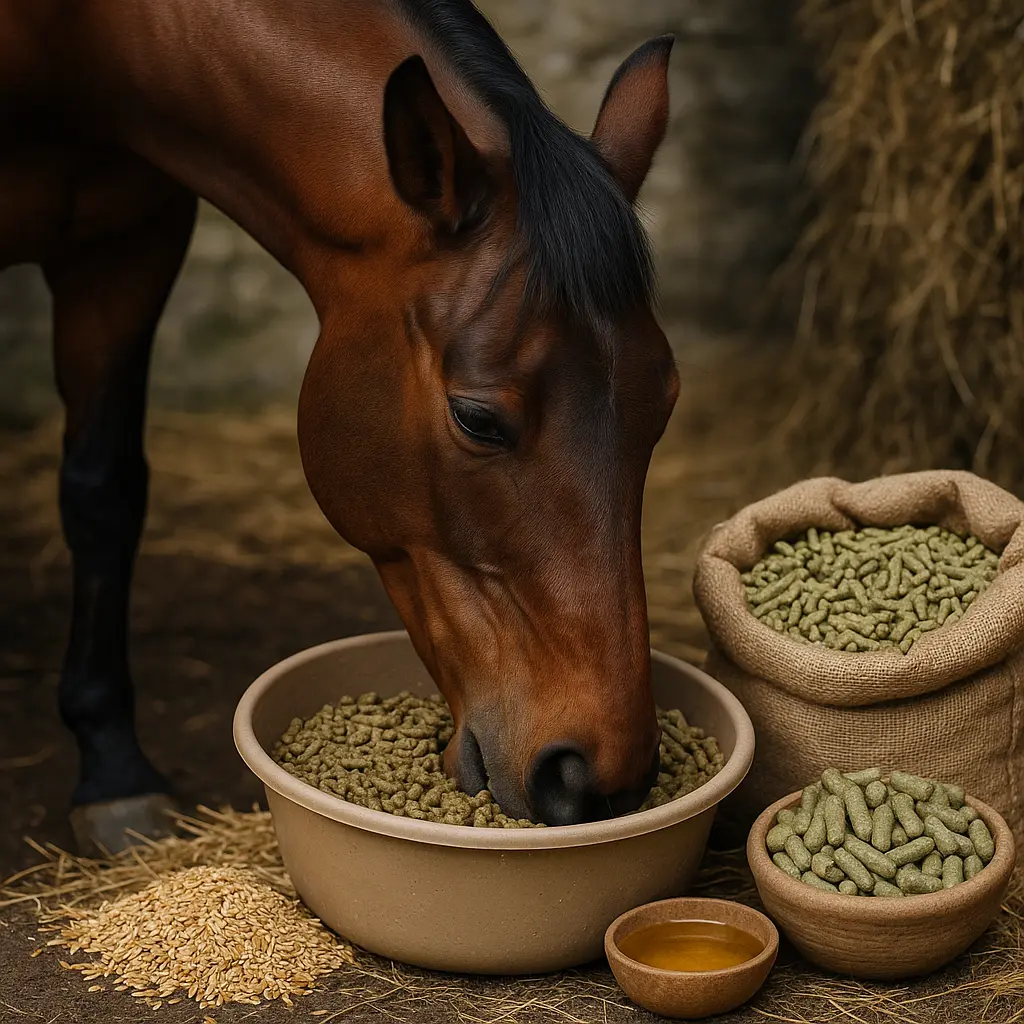
If your horse thrives on Red Mills Horse Care Ultra Cubes but you can’t get hold of them, you still have excellent low-starch, conditioning options in the UK. The key is to match Ultra Cubes’ standout profile — ultra-low starch with high fibre and oil — and to switch gradually.
Key takeaway: For a safe, like-for-like alternative to Ultra Cubes, pick a cereal-grain free or low-starch cube under 5–10% starch (Ultra Cubes are 4%) with around 18%+ fibre and 8%+ oil, cost it out per day, then transition over 7–14 days.
What are Red Mills Ultra Cubes and who are they for?
Red Mills Horse Care Ultra Cubes are cereal-grain free, just 4% starch, and formulated for horses prone to laminitis, gastric issues, or stress, with 14% crude protein, 18% crude fibre, 8% oils & fats and 12.0 MJDE/kg digestible energy. They’re double-pelleted and include electrolytes, quality protein and essential amino acids for safe condition and topline support. Sources: Horse & Hen, NPNunn.
This nutritional profile makes Ultra Cubes a rare option when you need conditioning without the “fizz”, especially for EMS/IR and laminitis-prone horses, or for sensitive types that don’t tolerate cereals. They’re designed for slow-release energy from fibre and oil, with added electrolytes to support hydration and performance, particularly useful during the UK’s stop–start weather where turnout and work can be inconsistent.
“Horse Care ULTRA Cubes are the lowest starch feed in the range, containing just 4% starch and are completely cereal-grain free, making them perfect for horses that require an ultra-low starch conditioning feed.” — RED MILLS Nutritional Hub
Typical retail pricing cited is £16.50 for 20kg (availability varies by retailer), which is competitive for a specialist cube. Source: NPNunn.
What should you match if you can’t get Ultra Cubes?
Match the nutritional brief: aim for under 5–10% starch (4% is ideal), a high fibre base (18%+), 8%+ oil for condition, and cereal-grain free where possible, plus gut support (pre-/probiotics) and electrolytes. This keeps energy slow-release and suitable for laminitis-prone and sensitive horses. Sources: Horse & Hen, NPNunn.
Use this quick label checklist when picking an alternative:
- Starch: under 10%; ideally 4–6% for Ultra-equivalent calm conditioning.
- Fibre: 18% or higher for hindgut health and steady energy release.
- Oil: 8% or higher for safe calories and coat shine.
- Ingredients: cereal-grain free for EMS/IR and gastric-sensitive horses; look for “super-fibres” (beet pulp, soya hulls) and added oil.
- Gut support: pre-/probiotics; electrolytes useful for work/travelling.
- Compliance: check UK Feed Materials Regulations (DEFRA/AHDB) on labelling and ingredient declarations, particularly if avoiding cereals for metabolic reasons.
Quick tip: Weigh your scoop. A “round scoop” can swing calorie intake by 20–30%. Accurate weights make condition changes predictable — and keep your cost-per-day math honest.
How do leading UK alternatives compare on cost and nutrition?
Several UK low-starch conditioners offer similar slow-release energy, with daily costs from about £0.95–£3.38 depending on ration; examples include Spillers Digest+ Conditioning Cubes, Baileys Ease & Excel Cubes, Saracen Condition-Improver Cubes, TopSpec CoolCondition Cubes, and British Horse Feeds Fibre-Beet. Sources: Horse & Hound, Horse & Rider UK.
Here’s how the standouts stack up against the Ultra brief:
-
Spillers Digest+ Conditioning Cubes — 20kg at £18.15; low-starch, molasses-free. At 3kg/day that’s £2.73/day. Formulated for slow-release energy with added pre- and probiotics and quality protein for topline. Source: Horse & Hound.
“Low in starch and high in digestible fibre and oil for slow-release energy, these cubes contain pre- and probiotics to support gut health... as well as high quality protein sources to support good muscle tone and topline development.” — Horse & Hound Buyer’s Guide
- Baileys Ease & Excel Cubes — 20kg from £18.75; slow-release energy from super-fibres and oil. Typical rations work out at £3.38/day. A strong choice for performance or stressy types needing calm fuel. Source: Horse & Rider UK.
- Saracen Condition-Improver Cubes — 20kg at £19.50; includes super-fibres and oil for controlled energy. Similar “calm calories” brief to Ultra. Source: Horse & Rider UK.
- TopSpec CoolCondition Cubes — 20kg at £19.95; cereal-free, low sugar/starch. Up to 1.5kg/day at £1.53/day for modest conditioning without fizz. Source: Horse & Hound.
- Connolly’s Red Mills Define & Shine — 18kg at £34.39; typical 500g–1kg/day gives ~£0.95/day. Protein-rich pellets to build muscle and shine alongside forage. Source: Horse & Hound.
- British Horse Feeds Fibre-Beet — 20kg from £19.09; a high-fibre beet pulp and alfalfa mash at ~£0.95/day. Great for poor doers and dentition issues; always feed soaked. Source: Horse & Rider UK.
When cost is the deciding factor, do the simple calculation: bag price ÷ (bag weight ÷ daily ration). For example, Spillers Digest+ at £18.15 for 20kg fed at 3kg/day = 6.6 days per bag, or £2.73/day. TopSpec CoolCondition at 1.5kg/day = 13.3 days per bag, or £1.53/day. The guidance range for Ultra-like feeding is roughly £0.80–£1.00/day when fed at lighter rates; use this as a benchmark for budget planning. Sources: Horse & Hound, Horse & Rider UK.
“High-protein feed made with lucerne and linseed, designed for optimum muscle maintenance and to boost condition without adding fizz.” — on Simple System TopGain via Horse & Rider UK
What should a 500kg horse eat each day?
For most 500kg horses in light work, plan 2–3kg/day of a low-starch conditioner alongside ad-lib forage, adjusting to 3kg/day where more condition is needed; for example, 3kg/day of Spillers Digest+ costs £2.73/day. Source: Horse & Hound.
In UK autumn and winter, many horses need a seasonal uplift in calories due to wet weather, shorter days and reduced grass. On livery yards, 2–3kg/day is a reliable starting point for condition when combined with high-quality hay or haylage at 1.5–2% of bodyweight. Sensitive or “good doer” types may maintain on 1–1.5kg/day of a cool conditioner plus a vitamin/mineral balancer and forage. Always follow manufacturer guidance and adjust based on weight, workload and body condition scoring.
Pro tip: Weigh forage nets and your chosen cube so you can track weekly changes. If you’re rugging up in cold snaps, use well-fitted winter turnout rugs and, for stabled time, appropriate stable rugs to reduce caloric drain without overfeeding.
How to switch safely from Ultra Cubes
Transition over 7–14 days, increasing the new feed while decreasing the old to protect hindgut balance and reduce the risk of digestive upset. In the UK’s stop–start autumn/winter, aim for the full 10–14 days if your horse is stressy or prone to gastric issues. Sources: Horse & Hen, NPNunn.
Practical steps:
- Days 1–3: 75% Ultra Cubes / 25% new feed.
- Days 4–6: 50% / 50%.
- Days 7–10: 25% / 75%.
- Days 11–14: 100% new feed.
For older horses or those with poor dentition, soak suitable cubes or choose a fibre mash like Fibre-Beet to maintain intake safely. Monitor droppings, appetite and behaviour daily. Review topline and coat condition at 4–6 weeks; if weight is good but shine is lacking, nudge oil content up within the low-starch bracket, or consider adding a targeted balancer from our supplements and balancers collection.
Because wet UK winters can restrict turnout and increase mud-related stress, support routines that promote calmness — consistent work, adequate forage and bright, safe hacking gear such as hi-vis for riders and horses — to keep energy steady and digestion regular.
Which alternative fits your horse’s goal?
Match the feed to your primary goal: low-starch cereal-free cubes for laminitis/EMS; fibre mashes for poor doers or dentition issues; protein-rich pellets for topline and coat; or a cost-efficient balancer plus beet pulp when calories from forage are adequate. Sources: Horse & Hound, Horse & Rider UK.
- Laminitis/EMS or gastric-sensitive: Choose cereal-free, ultra-low starch options like TopSpec CoolCondition Cubes (low sugar/starch) or consider Spillers Digest+ (low-starch, molasses-free) with gut support.
- Poor doer, winter weight loss, or older horse: British Horse Feeds Fibre-Beet (beet pulp + alfalfa) offers soaked, highly digestible fibre and safe calories at ~£0.95/day; excellent when chewing is compromised.
- Topline and show shine with calm temperament: Connolly’s Red Mills Define & Shine (500g–1kg/day; ~£0.95/day) builds muscle tone and coat quality with modest starch exposure. Simple System TopGain (lucerne + linseed) is designed to add condition “without fizz”.
- Performance without the highs and lows: Baileys Ease & Excel Cubes deliver slow-release energy from super-fibres and oil, supporting recovery and a rideable brain — helpful for eventers and all-weather arena work.
- Budget- and forage-first approach: Keep starch low by feeding quality hay/haylage ad-lib, add a cereal-free balancer from our supplements and balancers range, then top up with Fibre-Beet or a cool conditioner only if body condition demands.
Quick tip: If you’re frequently turning out in driving rain, invest in robust brands known for weather protection (see our WeatherBeeta rug selection) so you can feed for condition, not for keeping your horse warm.

What to adjust beyond the bucket feed
Conditioning feeds work best alongside management: prioritise forage quality, appropriate rugging, steady exercise, and consistent hoof and grooming care. When these are right, you can often feed less — and get better results.
Practical wins that support any low-starch plan:
- Forage first: aim for 1.5–2% of bodyweight/day. If grass is poor, increase hay/haylage quality before ramping up buckets.
- Rug to the weather: a well-fitted turnout rug prevents windchill from burning calories; use stable rugs to maintain overnight warmth when stabled.
- Work routine: regular, moderate work improves appetite and helps partition calories to muscle rather than fat.
- Grooming and skin/coat care: daily grooming boosts circulation and coat bloom; explore our grooming essentials for winter-friendly brushes and oils.
- Safety for winter hacks: keep the miles ticking over safely with a properly fitted riding helmet and high-visibility layers from our hi-vis collection.
Real-world checklist and mistakes to avoid
Keep starch low, change feeds slowly, weigh every ration, and calculate cost per day before you commit to a pallet. These four habits prevent most setbacks with sensitive horses.
Your fast-track plan:
- Confirm your target: laminitis-safe calm condition or performance topline.
- Pick a feed under 5–10% starch with 18%+ fibre and ~8%+ oil; check for probiotics and electrolytes.
- Do the cost-per-day maths so your budget matches winter reality.
- Introduce over 7–14 days; soak where appropriate for dentition.
- Track weekly weights and photos; reassess at 4–6 weeks for topline, coat, energy and droppings.
Common mistakes to sidestep:
- “Chopping and changing” feeds weekly — the hindgut needs consistency.
- Overfeeding starch to chase shine — add oil/fibre instead.
- Ignoring turnout and rugging — cold, wet horses burn calories you intended for condition.
- Skipping a balancer when bucket rations are small — this leaves vitamin/mineral gaps that blunt results.
At Just Horse Riders, we recommend starting with the calmest, lowest-starch option that meets your condition goal, then adjusting fibre and oil before increasing starch. Our customers often see better topline by pairing a cool cube with a quality balancer and consistent work than by simply feeding more.
FAQs
What makes Red Mills Ultra Cubes suitable for laminitis-prone horses?
They’re cereal-grain free with just 4% starch, built on highly digestible fibres (18%) and 8% oil for slow-release calories, and include electrolytes and quality protein — a profile designed to condition without starch spikes. Sources: Horse & Hen, NPNunn.
Are there cheaper low-starch alternatives near the £16.50/20kg mark?
Yes. Spillers Digest+ Conditioning Cubes are £18.15 for 20kg (about £2.73/day at 3kg), and Saracen Condition-Improver Cubes are £19.50 for 20kg. Both focus on fibre and oil for controlled energy. Sources: Horse & Hound, Horse & Rider UK.
Can I use these low-starch conditioners for performance horses?
Absolutely. Options like Baileys Ease & Excel provide slow-release energy from super-fibres and oil, supporting muscle recovery and a calm temperament — ideal for eventing or schooling through variable UK weather. Source: Horse & Rider UK.
What’s the daily feeding rate for a 500kg horse?
Typically 2–3kg/day of a low-starch conditioner alongside forage, adjusting to workload and condition. As an example, 3kg/day of Spillers Digest+ works out to £2.73/day. Source: Horse & Hound.
Do alternatives include hoof support like some Red Mills feeds?
It varies by product. Some cool conditioners and fibre mashes include biotin and key micronutrients (e.g., TopSpec formulations and Fibre-Beet are often paired with hoof-focused regimes). Check UK-labelled nutrient specs and consider topping up with a quality balancer from our supplements and balancers collection.
How do I switch from Ultra Cubes without upsetting my horse’s gut?
Change gradually over 7–14 days: start at 25% new/75% old and increase every few days. This is especially important in UK autumn/winter when turnout is unpredictable and stress can be higher. Sources: Horse & Hen, NPNunn.
Should I soak cubes or choose a mash?
For older horses or those with poor dentition, soaking suitable cubes or using a dedicated mash like Fibre-Beet is a smart move for intake and safety. British Horse Feeds Fibre-Beet is designed to be fed soaked and costs around £0.95/day. Source: Horse & Rider UK.
Need tailored help choosing a winter feeding plan or rugging to match? Our team is here to help — and don’t forget to browse seasonal essentials like turnout rugs and great-value finds in our Secret Tack Room clearance to keep your horse comfortable while you build calm condition.