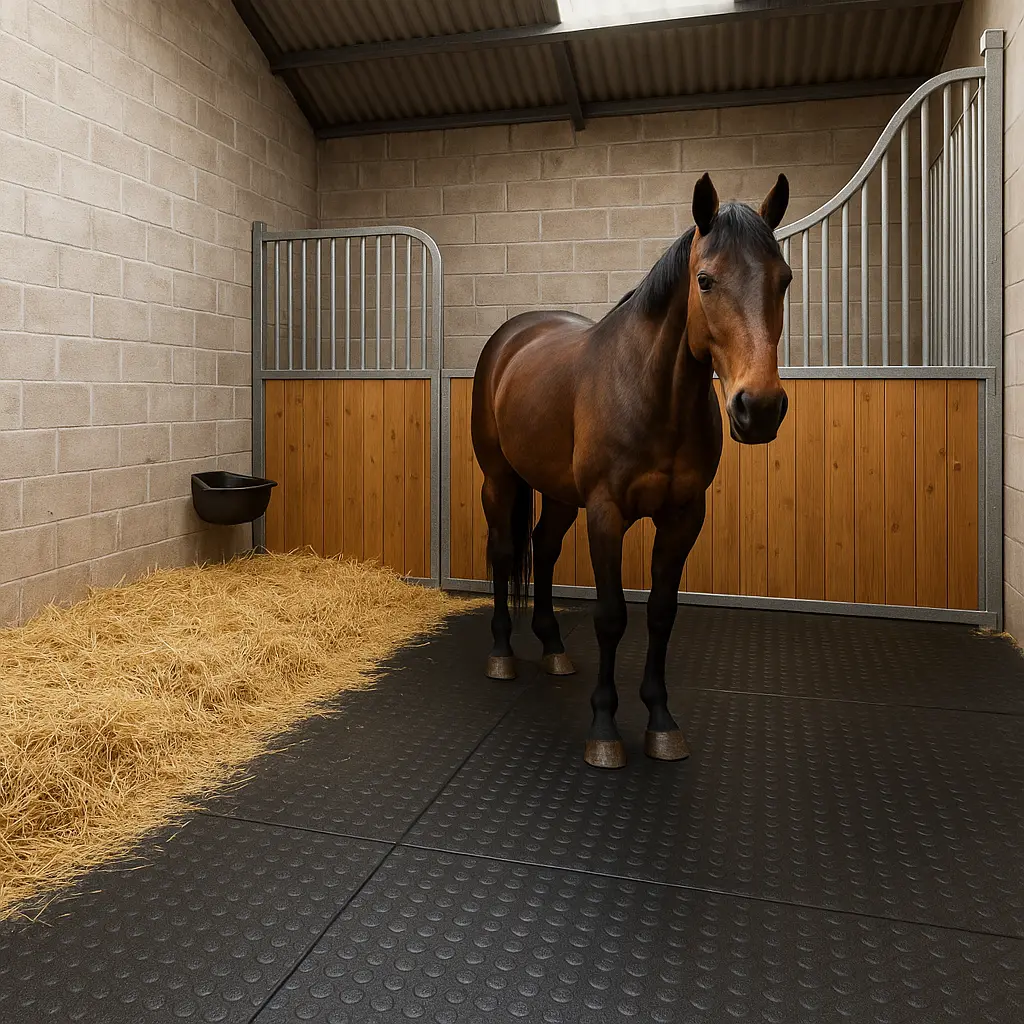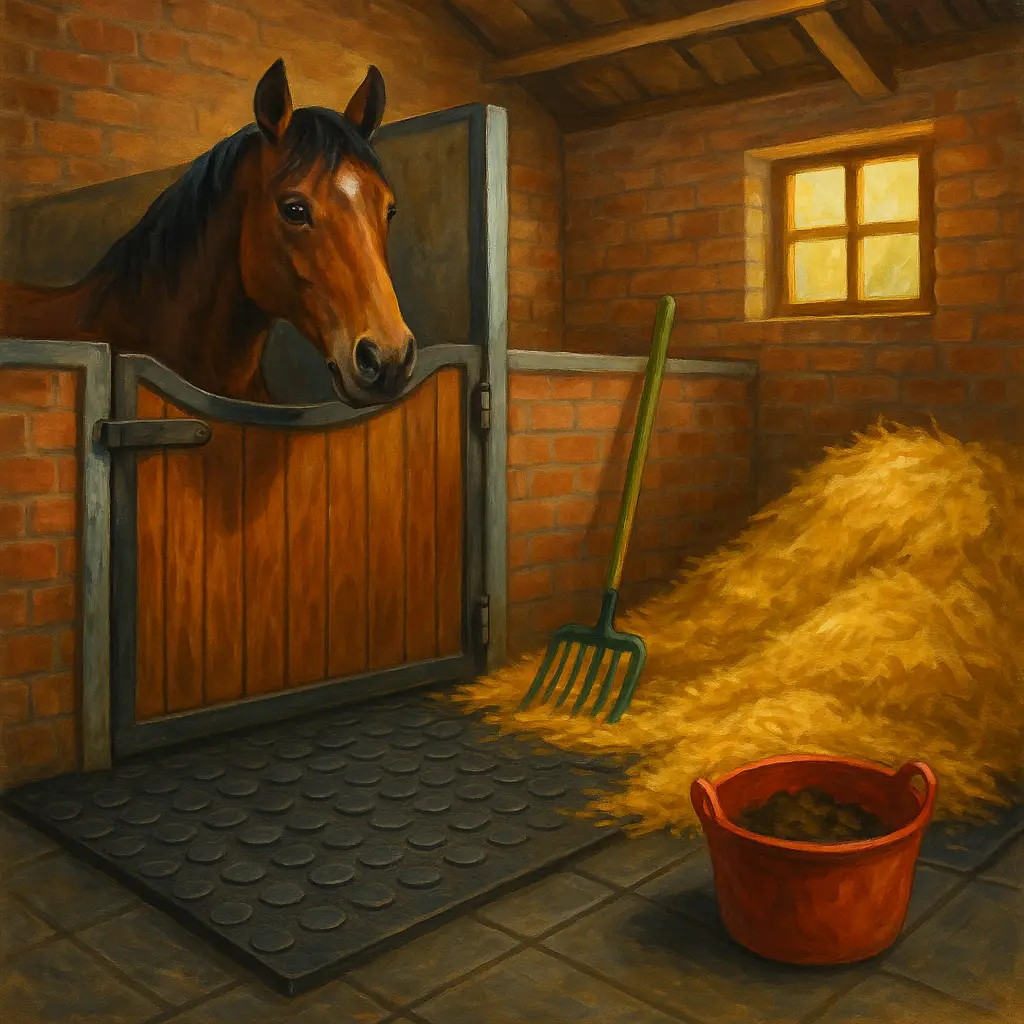
Rubber matting has become a staple in UK stables for good reason: it cushions joints, insulates against cold concrete, and dramatically cuts bedding waste. Done right, it saves time and money without compromising hygiene or comfort.
Key takeaway: Rubber stable mats can reduce bedding use by up to 80% while keeping horses comfortable and stables warmer — but you must still use an absorbent top layer and follow a strict cleaning routine.
What is rubber matting and why use it?
Rubber matting reduces bedding use by up to 80% and provides a cushioned, non-slip base that insulates cold concrete floors. It also supports joints, improves grip, and speeds up mucking out in busy UK yards.
Rubber stable mats (typically 12–18mm thick) create a padded surface that mimics firm pasture while protecting against the chill and damp that UK stables face through autumn and winter. Independent suppliers report bedding reductions up to 80% when mats are installed and maintained correctly (Coruba), and industry guidance agrees mats let you use “slightly less bedding” overall, even if the upfront outlay is higher than loose bedding alone (Your Horse; BHS).
The immediate welfare benefits are hard to ignore. Mats improve traction, reducing slips on wet concrete, and they cushion limbs when horses lie down or shift their weight. This is especially useful for older horses, hunters in hard work, or those convalescing. For high-traffic livery yards, the time saved on mucking out and the smaller muck heap are major wins during wetter UK months when stabling hours increase.
Do you still need bedding on top of mats?
Yes — always add an absorbent bedding layer on top of mats to soak up urine and contain droppings. The British Horse Society does not endorse using bare mats without bedding due to hygiene and welfare risks.
“We strongly advise that a good layer of bedding material is added on top of the mats, as this will help soak up urine and contain droppings. Some people choose to use rubber matting without any bedding, although we at the BHS do not endorse this practice.” — British Horse Society
While mats compress under the horse’s weight and are comfortable to lie on, they won’t absorb liquid. Without bedding, urine will pool and run, creating wet floors, strong ammonia odours, and a higher risk of thrush and skin scald. A light daily layer of absorbent material — such as wood pellets, high-quality shavings, shredded wood fibre, or hemp-based options like Aubiose — keeps the surface dry and hygienic while still delivering the cost and time savings rubber matting promises.
At Just Horse Riders, we recommend low-dust, high-absorbency options like wood pellets or Aubiose over mats to reduce respiratory irritation and muck heap size. This approach is particularly effective in the UK’s damp climate, where moisture and ammonia build-up happen quickly.
How thick should stable mats be in the UK?
For most UK stables, 15mm bobble-top rubber mats are a reliable standard, while 17–18mm mats suit heavier horses, high-use yards, or colder set-ups needing extra insulation. Common stable mat thicknesses range from 12mm to 18mm.
Thickness matters for comfort, durability, and ease of handling. Industry guidance highlights 15mm (often with a bobble or hammer-top for grip) as a versatile choice for general horse use, with 18mm providing more cushioning, warmth, and longevity in demanding environments (Hunter Stables; Mats4U; Quattro). Interlocking edges help prevent movement and urine seepage, while non-slip surfaces reduce the risk of scrambles when horses rise.
Choose the heaviest grade you can manage when lifting for cleaning. If you’re a solo yard manager, 15mm interlocking tiles are often the sweet spot between weight, cushioning, and practicality. Heavier hunters, cobs, or horses on prolonged box rest benefit from thicker 17–18mm mats to spread pressure and retain spring longer.
How should you install and clean rubber mats?
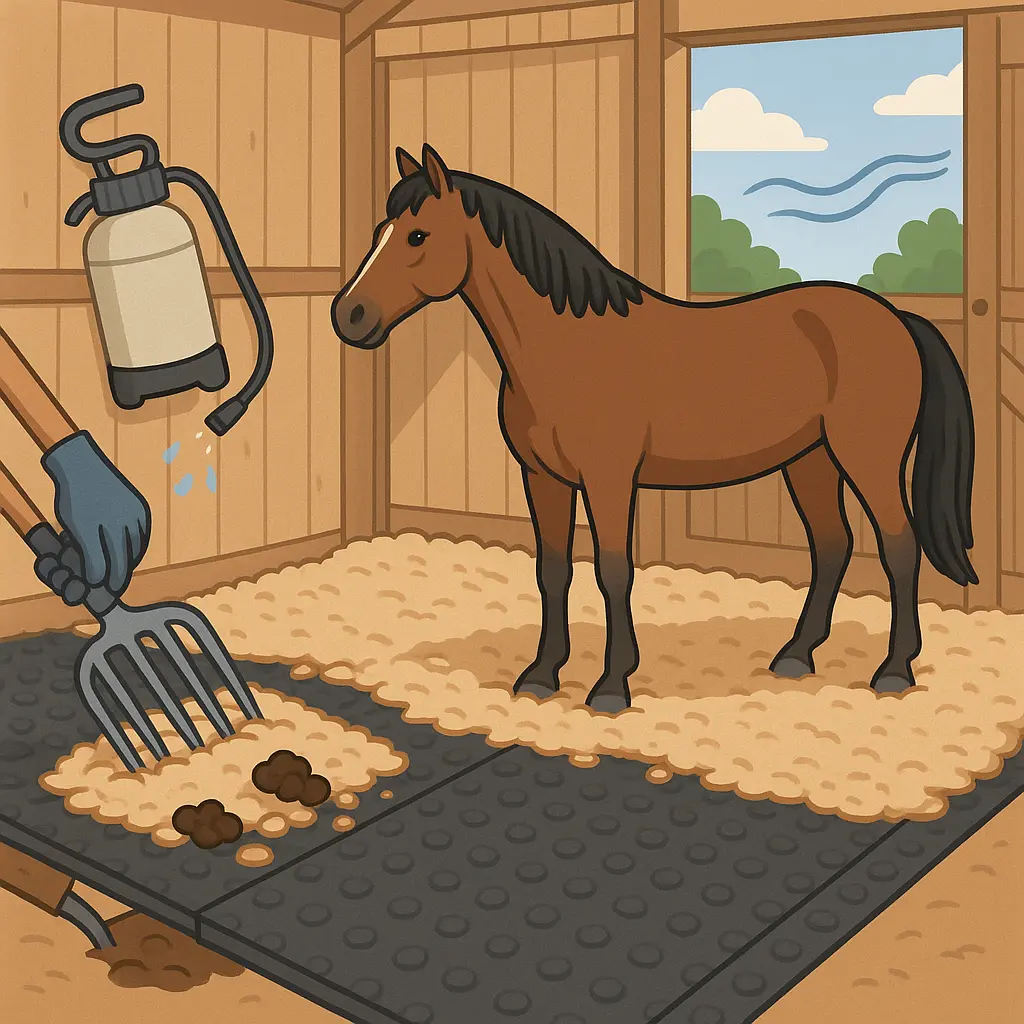
Install mats on a level concrete base with a snug, interlocking fit, and lift and clean underneath at least monthly — more often in summer — to prevent ammonia build-up. High hygiene is essential when using matting.
Start with a flat, well-drained concrete floor. Interlocking mats or seamless liquid rubber floors reduce gaps where urine can pool. Leave minimal joints, and where possible, slope floors very slightly toward a drain. Fit mats wall-to-wall and cut accurately around posts and doorways to stop edges curling. Consider adding EVA or rubber wall panels in kick zones for insulation and protection in winter drafts.
The BHS is clear on standards: mats must be uplifted regularly — at least monthly, and more frequently in warmer weather — then hosed, scrubbed, and disinfected to keep ammonia at bay and protect hoof and skin health (BHS). Allow the floor and the underside of mats to dry fully before refitting, then re-bed with your chosen absorbent top layer.
Quick tip: Mark mats with a discreet number/position so they go back exactly the same way. This keeps the fit tight and stops new gaps forming where wet can creep underneath.
Will rubber matting save money in the UK?
Yes — despite a higher initial outlay, rubber matting can reduce bedding use by up to 80%, delivering long-term savings on materials, muck heap removal, and mucking-out time. Savings are greatest in yards where horses are stabled longer in autumn and winter.
UK bedding costs have climbed in recent years, especially for quality shavings and hemp-based products. By switching to mats with a light daily top-up of absorbent material, many owners report significantly smaller muck heaps and faster daily routines. Add in lower lorry or skip costs for muck disposal and the reduced time spent mucking out — vital in busy livery settings — and mats quickly pay for themselves. As Your Horse notes, mats let you use “slightly less bedding,” and real-world yard experience often delivers far more dramatic reductions when hygiene is managed well.
Pro tip: Keep a simple tracker for your yard — note bales used weekly before and after installing mats. Most owners are pleasantly surprised by how quickly the numbers drop once a consistent routine is in place.
What’s the best daily routine on rubber mats?
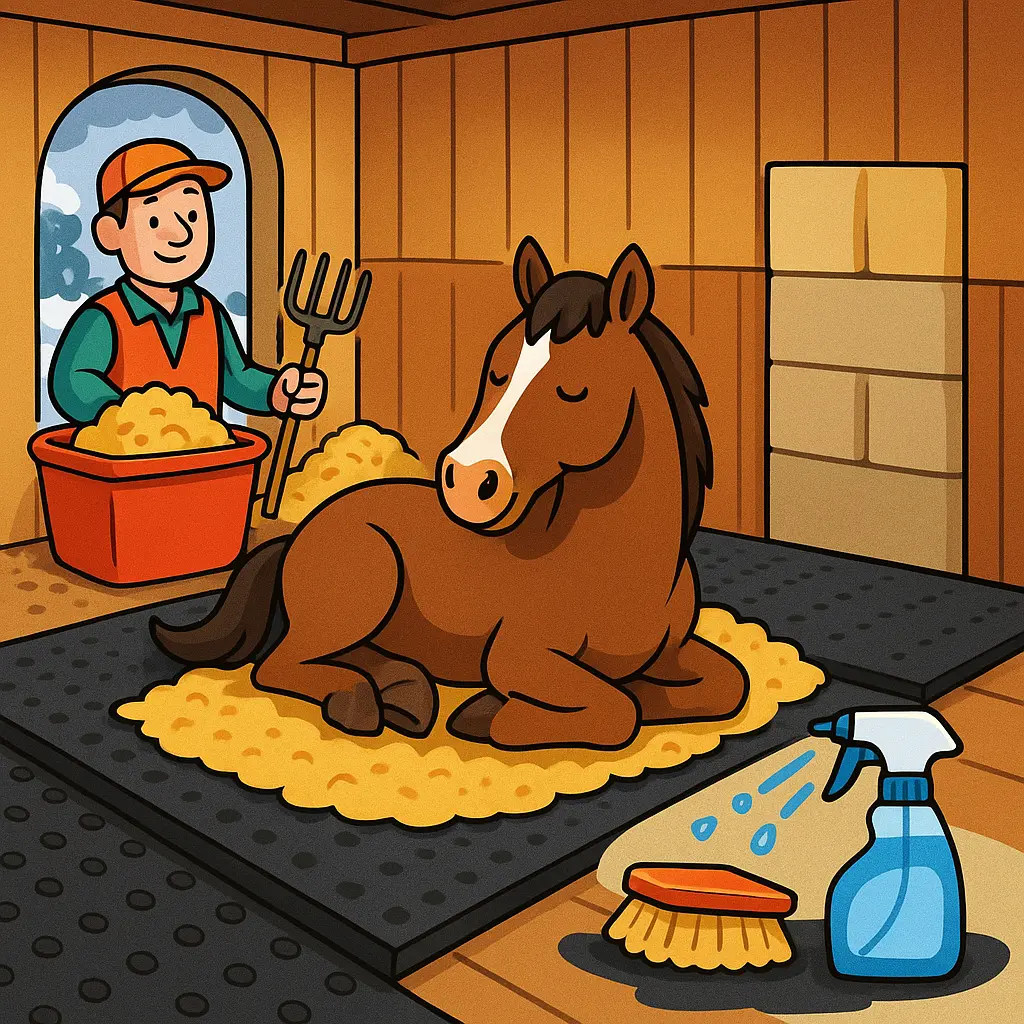
Use a light, absorbent top bedding, lift droppings and wet patches at least twice daily, and sweep mats dry to minimise ammonia and slips. Avoid deep littering on mats — you don’t need it for cushioning.
A well-run matting system is clean, quick, and repeatable:
- Lay a thin, even layer of absorbent bedding (wood pellets, shavings, shredded wood fibre, or Aubiose).
- Skip out morning and evening; remove wet patches daily rather than deep littering.
- Sweep exposed matting so it stays dry and non-slip.
- Top up lightly as needed — the aim is dryness, not depth.
To help prevent thrush in the UK’s damp climate, pick out feet during your grooming routine and keep heels and frogs dry. If your horse is in hard work or has past injuries, protective horse boots and bandages can add support during exercise, complementing the shock absorption mats provide at rest.
At Just Horse Riders, we also recommend reviewing nutrition if your horse is prone to soft soles or recurring thrush; hoof-supporting options from trusted brands such as NAF supplements can be worth discussing with your vet or farrier. For overall wellbeing through winter stabling, browse our wider horse supplements collection.
How do mats help through UK autumn and winter?
Rubber matting insulates against cold, damp concrete, keeping stables warmer and drier during UK winters. This reduces the depth of bedding needed for warmth while maintaining comfort and grip.
In Britain’s wet, frosty months, cold concrete can chill horses from the ground up. Matting acts as a thermal barrier and a shock absorber, making the stable more inviting for horses to lie down and rest properly. This has knock-on benefits for recovery after work, especially for performance horses and seniors who stiffen in cold weather. Non-slip, bobble-top surfaces also help prevent scrambling on icy mornings or when wet rugs drip after exercise.
Pair matting with season-appropriate rugs to keep your horse comfortable at rest. For clipped or fine-coated horses, consider breathable, fit-for-purpose stable rugs for overnight warmth. When turnout is possible but the ground is saturated or temperatures drop, well-fitted winter turnout rugs — from trusted brands like WeatherBeeta — help maintain comfort and coat condition between stabling periods. Together, mats and the right rugging strategy reduce shivering and energy loss, supporting body condition across the season.
Quick tip: If your stable is particularly exposed, EVA or rubber wall panels add warmth and help prevent condensation drips, keeping bedding drier and the air fresher for horses with sensitive airways.
Conclusion: A well-chosen mat thickness, consistent bedding routine, and monthly deep cleans create a warmer, cleaner, and more economical stable through the UK’s variable seasons — without compromising welfare.
FAQs
Can horses lie comfortably on rubber mats alone?
Yes — quality mats compress under weight and are comfortable to lie on, similar to firm turf. However, the BHS advises adding bedding on top to absorb urine and contain droppings, as bare mats lead to wet, unhygienic floors and stronger ammonia odours (BHS).
What’s the best bedding to use over mats for low waste?
Highly absorbent options like wood pellets or hemp-based Aubiose are popular over mats because you need only a thin layer to capture urine, resulting in smaller muck heaps and quicker skip-outs. Shredded wood fibre and quality shavings also work well when kept dry and refreshed daily.
How often should I clean under the mats?
Lift, hose, and disinfect underneath at least once a month, and more frequently in summer. This prevents ammonia build-up, reduces thrush risk, and keeps the stable smelling fresh, in line with BHS guidance (BHS).
Is 15mm thickness enough for most UK stables?
Yes — 15mm bobble-top mats are a strong all-round choice for standard use, while 17–18mm suits heavier horses, high-use livery yards, or colder stables where extra insulation and durability are priorities (Mats4U).
Do mats really save money long-term?
They can — mats reduce bedding use by up to 80% according to industry figures (Coruba). Combined with faster mucking out and smaller muck heaps, most owners see meaningful savings over time, especially when horses are stabled longer in autumn and winter.
What surface should I install mats on?
A level concrete base is best for stability, drainage, and hygiene. Fit mats snugly (ideally interlocking), minimise gaps, and slope very slightly toward a drain if possible to prevent pooling under the matting.
Do I need any extra kit once mats are in?
Maintain a thin, absorbent bedding, a reliable disinfectant for monthly deep cleans, and tools to keep horses comfortable and healthy around stabling. For example, choose breathable stable rugs for overnight warmth, robust turnout rugs for wet, cold days, pick hooves as part of your grooming routine, and consider supportive horse boots for exercise alongside hoof health support from trusted brands like NAF.