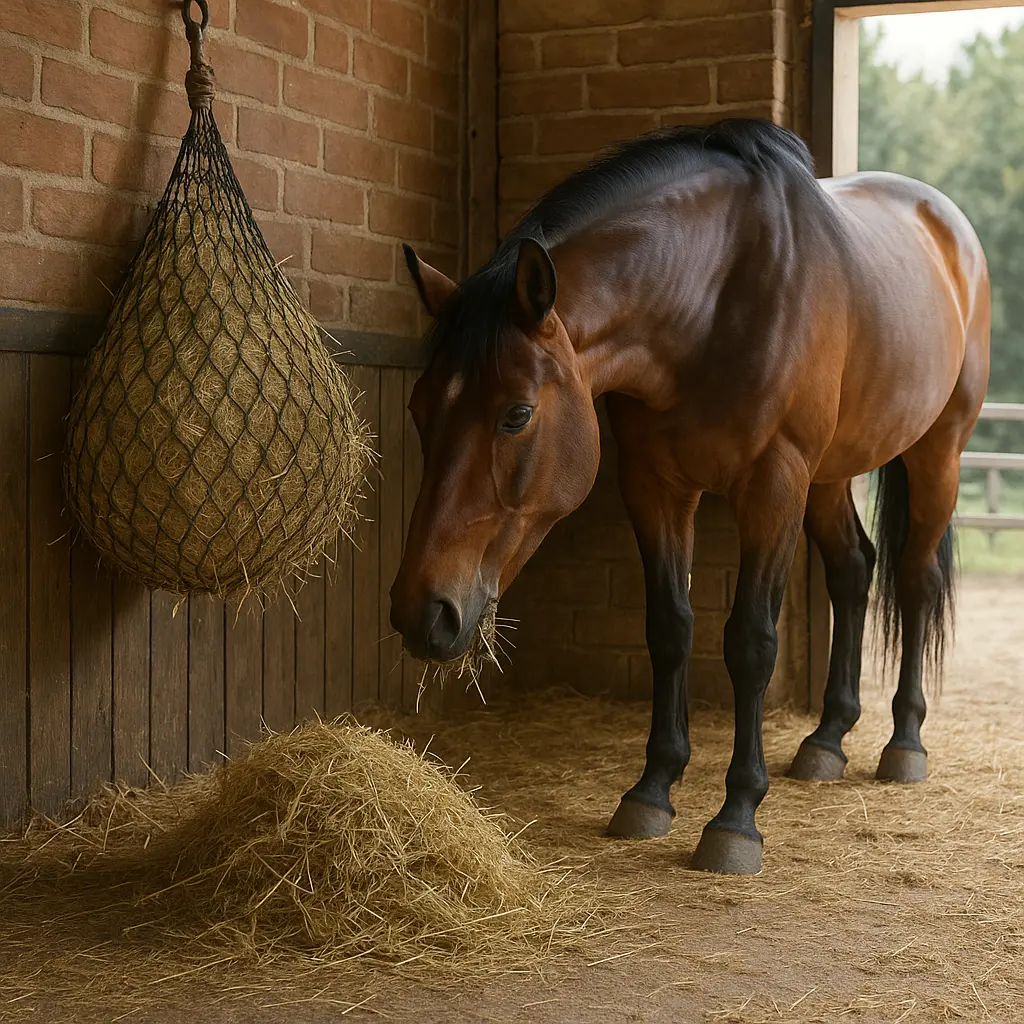
Your horse’s “haylage mugging” isn’t cheekiness — it’s a management signal. When forage runs out, behaviour deteriorates fast, especially in young or sharp horses.
Key takeaway: Horses typically empty hay/haylage nets within 4–5.5 hours; aim for 24/7 forage via slow feeders and smart set-up to stop mugging, protect the gut, and keep behaviour polite.
Why horses mug for haylage
Horses mug for haylage because their forage runs out, often for up to 8 hours overnight, which triggers frustration, begging and grumpy behaviour. Most horses clear a hay or haylage ration in 4–5.5 hours, leaving a long gap before morning feeds.
Horses are built to browse and chew almost continuously. On many UK yards, they’re given an evening hay/haylage net and nothing more until morning — commonly leaving 6–8 hours without fibre. This gap heightens ulcer risk and stereotypies like pacing, fence-walking and, yes, mugging for food when you appear. Young horses and thoroughbreds are especially quick to develop “pushy” patterns when forage is restricted.
Extend eating time and you fix the root cause: appetite regulation, calmer behaviour, and a healthier gut.
Make forage 24/7 with slow feeding
Provide hay or haylage round-the-clock using slow-feeding nets or feeders to maintain trickle-feeding and curb mugging. Hanging two or more nets with reduced hole sizes extends chew time, mimicking natural foraging.
Veterinary nutrition specialists emphasise constant access to fibre for welfare and behaviour:
“Provide 24/7 access to free-choice forage: Ensuring hay is always available helps prevent boredom and associated behavioral issues, and also supports overall digestive health. Use slow feeders… horses using slow feeders have… lower incidence of stereotypies.” — Mad Barn Equine Nutrition Experts
Start simple: if your horse currently blasts through a large-holed net, hang two lightly packed nets with medium holes so they last longer without causing frustration. Over 1–2 weeks, reduce hole size gradually to slow intake further. The British Horse Society (BHS) supports small-holed haynets to extend feeding time and even promote movement if you hang nets in different positions.
Pro tip: Mix a little clean straw through the haylage so your horse has to search and sort, which naturally slows eating and provides mental enrichment. This “fibre treasure hunt” reduces pushy, gate-focused behaviour because your horse stays occupied.
Looking for robust slow-feed options? Our customers rate durable small-holed nets and bags from trusted brands; explore stable-friendly solutions in the Shires stable and haynet range and LeMieux hay and stable accessories.
Set up your stable and field to stop the rush
Hang multiple small-holed nets in different places, add a small floor pile first, and mix in straw to slow eating and reduce frustration. This simple set-up keeps horses foraging and away from your pockets.
The BHS recommends varying hay/haylage delivery to extend time and encourage natural movement:
“Hay and haylage can be fed using a variety of methods… small holed haynets… increases feeding time… Can encourage movement if hung in different areas… Introduce slowly by decreasing hole size gradually.” — British Horse Society
Use this stable/field pattern:
- When you bring in a hungry horse, place a small floor pile of haylage first to “take the edge off”. Then offer the slow-feed nets. This prevents the frantic, grabby behaviour that young horses learn fast.
- Hang 2–3 haynets at different heights and locations (always safe, away from shoes and with breaks), so your horse walks between them and can’t gorge one spot.
- Mix good-quality straw through the haylage to make them pick and search. That extra “forage work” is hugely calming.
Quick tip: If your horse is new to slow nets, start with larger holes and lighter packs for a week. Shrinking hole size too quickly can cause frustration and re-ignite mugging.
Choose and check haylage wisely
Only feed properly wrapped, clean haylage and inspect daily for mould, dust or musty smells; poor forage quality can trigger gut upset and pushy behaviour. After UK winter feed switches, thoroughbreds are especially prone to grumpiness if haylage quality is off.
Follow UK nutrition guidance for safety and consistency:
- Storage: Keep bales well-wrapped and protected; once opened, use promptly and discard spoiled sections.
- Daily checks: Look for visible mould, dust, wet or slimy patches, and off odours.
- Analysis: Ask your supplier for sugar and starch levels, especially if your horse is ulcer-prone or “sharp”.
As UK forage specialists advise:
“For haylage, ensure it has been properly wrapped and stored to prevent spoilage… visually inspect for dust, mould… request analysis for sugar, starch.” — Forageplus
At Just Horse Riders, we recommend ad-lib access to clean, long-stem forage. It supports steady appetites, reduces colic and behavioural risks linked to restriction, and is often more cost-effective than adding multiple bagged feeds. For horses needing extra support while you improve forage management, browse targeted gut and behaviour supplements in our horse supplements collection.
Train the behaviour you want: no hand‑fed treats
Stop hand-feeding haylage or treats; deliver all forage via nets or stable fixtures to remove the “pockets equal food” association. Handing out food at the gate directly reinforces mugging and increases mouthing risk.
Training and health experts are clear on treat timing and delivery:
“When given indiscriminately, treats can create problem behaviors, including mugging, mouthing, biting, excitement, and distraction… due to their size and strength.” — TheHorse.com
Do this instead:
- Feed forage from fixed points only. If you want to use treats for training, pre-portion them and use structured, on‑cue sessions away from gates and feed areas.
- Reward calmly: treat only when the head is straight, the nose is off your body, and feet are still. End the session if the horse becomes grabby.
If you do use rewards, choose low-sugar options and keep them for planned sessions — find suitable choices in our curated horse treats collection.
Yard routines and safety to prevent mugging
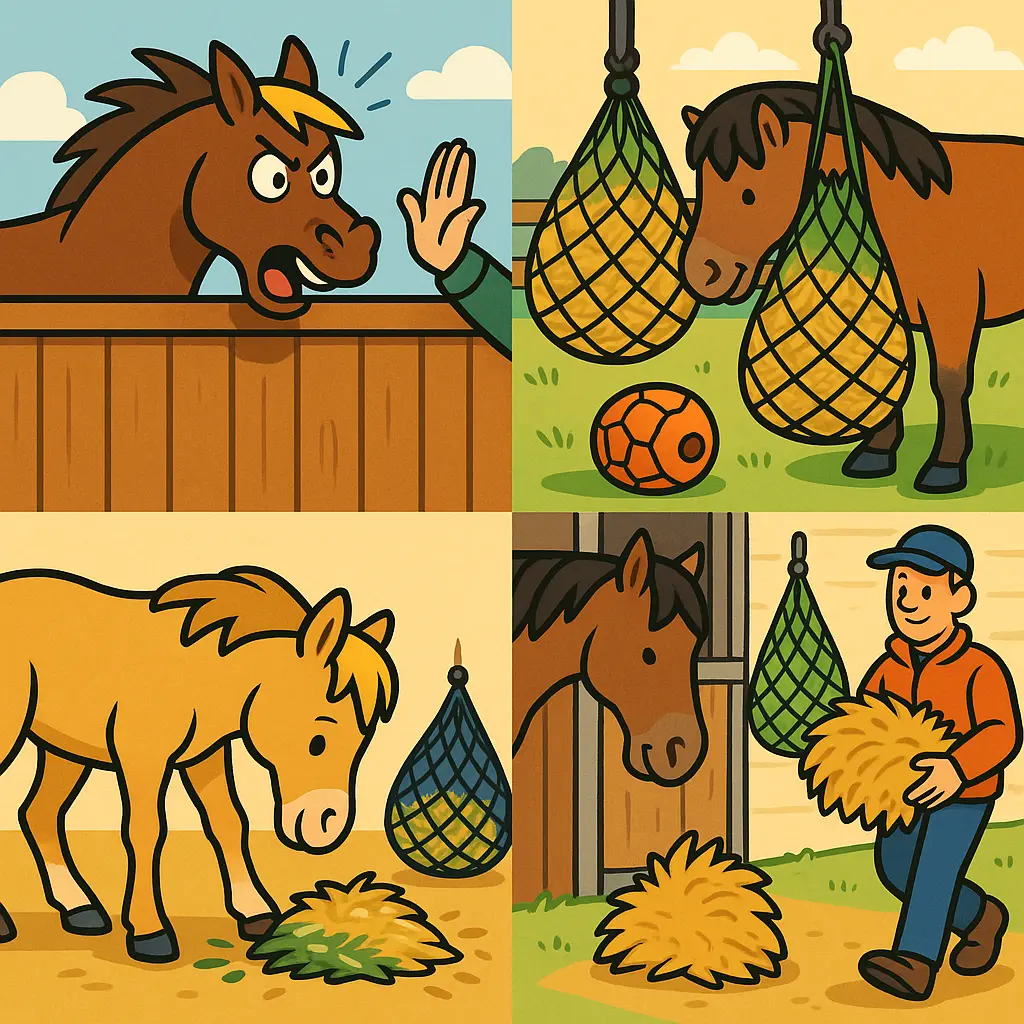
Vary check and feed times, never leave headcollars on or feed near gates/roads, and secure pasture access to reduce crowding and opportunistic mugging. Predictable routines teach horses to mob gates at set hours.
Practical UK yard safeguards include:
- Variable routines: Shift checks and top-ups within a reasonable window so horses don’t clock-watch and surge to the gate.
- Safe layout: Don’t feed directly at gateways or along fence lines near roads. Spread forage in safe zones inside the paddock to reduce bunching and barging.
- No “easy capture”: Avoid leaving headcollars on pasture horses or hanging near gates — it encourages crowding and risks theft (aligns with Operation Gallop safety advice) and mugging-like behaviour at access points.
- Legal ID: Ensure your horse’s microchip and passport details are up to date; microchipping is a UK legal requirement and aids recovery if an incident or escape occurs around feeding commotion.
Quick tip: Short days mean more dusk checks; wear hi‑vis for yard and field visits to stay visible to vehicles and other yard users during winter routines.
Winter adjustments: haylage, rugs and movement
In UK winters (average lows 2–7°C), switch to higher‑calorie haylage if needed and use appropriate rugs to keep horses warm without restricting forage. Longer stabled hours increase boredom, so enrichment is essential.
As temperatures drop and grass wanes, ad‑lib haylage supports calories and warmth through fermentation heat in the hindgut. Keep them moving between nets to mimic grazing and prevent “stand-and-sulk” behaviour that can boil over into mugging at the next feed time.
Rug wisely so you don’t rely on buckets to replace lost warmth. For outdoor time, choose weatherproof, breathable coverage from our winter turnout rugs collection. For in‑stable comfort, layer appropriately from our stable rugs range. Good thermoregulation plus constant fibre equals a calmer horse that isn’t desperate at the gate.
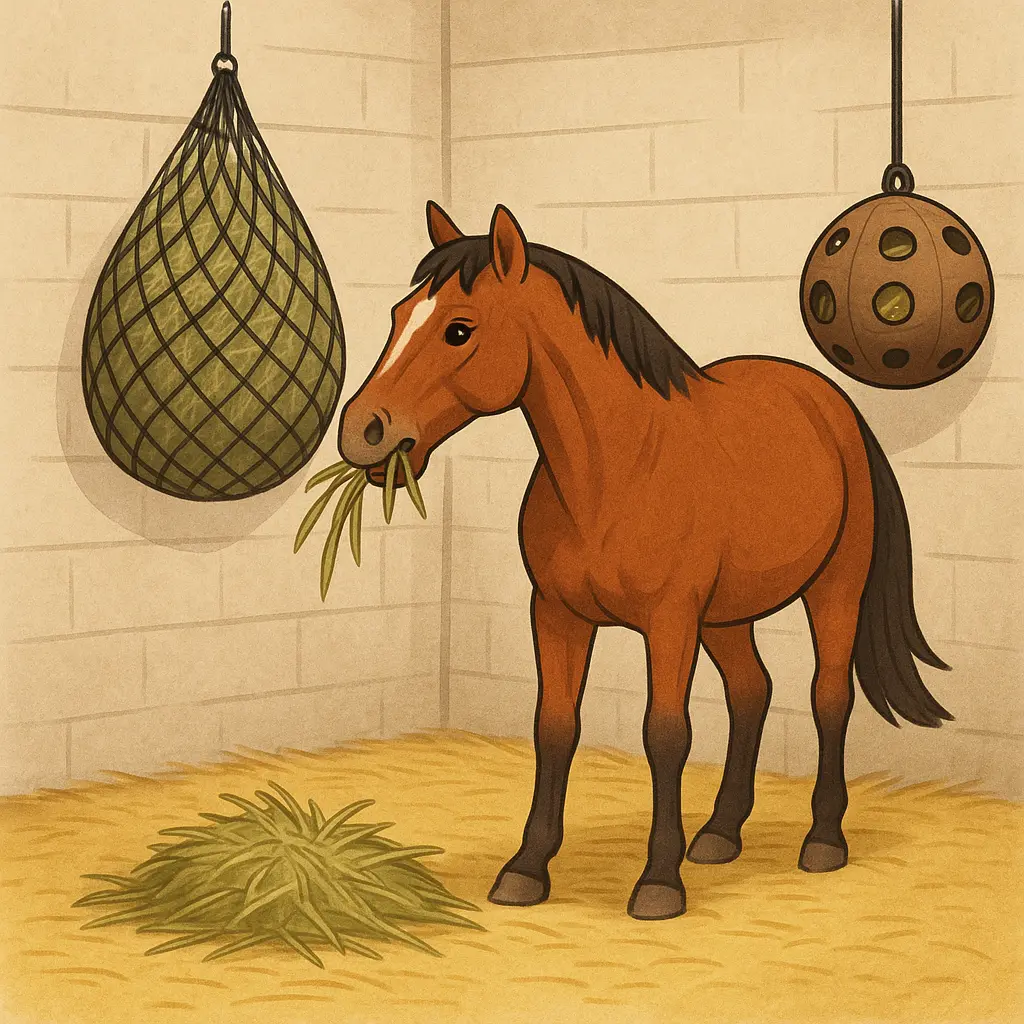
Pro tip: Add boredom-busters alongside your slow nets. Hay balls and stable-safe toys encourage foraging play — browse options from brands like LeMieux that pair nicely with your net system.
A 7‑day plan to end haylage mugging
Follow this step-by-step plan to turn behaviour around without aversives or startles.
- Day 1: Audit forage time. Note when nets run out; aim to eliminate any 6–8 hour gaps. Add an extra net if required so forage lasts to morning.
- Day 2: Introduce a small floor pile before nets at bring‑in to take the edge off hunger. Split the rest between two nets hung in different spots.
- Day 3: Mix in a small amount of clean straw to encourage searching. Keep nets lightly packed to prevent frustration.
- Day 4: Standardise rules. All forage comes from fixed points only; stop hand-feeding at the gate. If using rewards, pre‑portion and only give on a calm, still head.
- Day 5: Quality check. Inspect haylage wrap and contents; remove any dusty or musty sections. If behaviour worsened after a winter switch, speak to your supplier and request analysis for sugar/starch.
- Day 6: Safety and routine. Vary check times within a sensible window, secure gates, and move feeding points away from gateways and roads.
- Day 7: Fine‑tune slow feeding. If your horse is now comfortable, reduce hole size one step or add a third net to extend time further. Consider stable enrichment toys to maintain interest.
Optional upgrades: Replace tired nets with durable small‑holed options from Shires; add a winter‑ready rug from our turnout range so you can keep forage ad‑lib outdoors in all weathers.
Common mistakes to avoid
These errors keep mugging alive — or make it worse:
- Big evening net, nothing else: It’s gone by midnight. Add capacity or slow feeding so forage lasts until morning.
- Jumping to tiny holes too fast: This causes frustration and reactivity. Step down hole size gradually.
- Hand‑treating at gates: You’re paying them for crowding. Keep gates “food‑free zones”.
- Poor haylage hygiene: Musty or mouldy forage equals gut irritation and crankiness. Inspect daily.
- Predictable yard timings: Horses learn your schedule and rush the gate. Vary within a window.
Conclusion
Fix the forage-time problem and the mugging stops. Keep hay/haylage available 24/7 via slow feeders, set up multiple feeding points, remove hand-fed rewards, and choose clean, analysed forage. With small, consistent changes — plus weather‑smart rugs from our turnout and stable rug collections — you’ll see a calmer, more polite horse in days.
FAQs
Why does my young horse mug me for haylage at the gate?
Restricted forage creates frustration; most horses consume a net in 4–5.5 hours and may go up to 8 hours without overnight. Use slow feeders and multiple nets to provide 24/7 access and remove the “you equal food” association.
Can haylage cause behaviour changes like pushiness in thoroughbreds?
Yes, if the haylage quality upsets the gut (e.g., mould, high sugars, poor fermentation), you may see grumpiness and mugging after winter switches. Inspect bales daily and request sugar/starch analysis from your supplier.
Is a party blower or sudden noise safe to deter mugging?
No. Startling methods can scare young horses and risk injury. Prioritise positive management: ad‑lib forage via slow nets, varied feeding points, and no hand‑feeding at gates.
How do I introduce slow feeders without causing frustration?
Start with larger holes or lightly packed nets and offer a small floor pile first. Over 1–2 weeks, gradually reduce hole size as your horse learns the system.
What’s the best haylage feeding method for UK stables?
Use small‑holed haynets hung in varied spots to increase chew time and gentle movement. This reduces colic risk linked to restricted forage and cuts gate‑rush behaviour compared with single floor piles.
Does overnight haylage deprivation cause mugging?
Yes. Long gaps (often 6–8 hours) without forage spike ulcer risk and drive stereotypic begging and mugging. Aim for ad‑lib access using slow feeders.
Which products help me implement this quickly?
Start with small‑holed nets and stable toys from LeMieux and Shires, add winter warmth from our turnout rugs or stable rugs, and consider targeted gut support from our supplements collection.