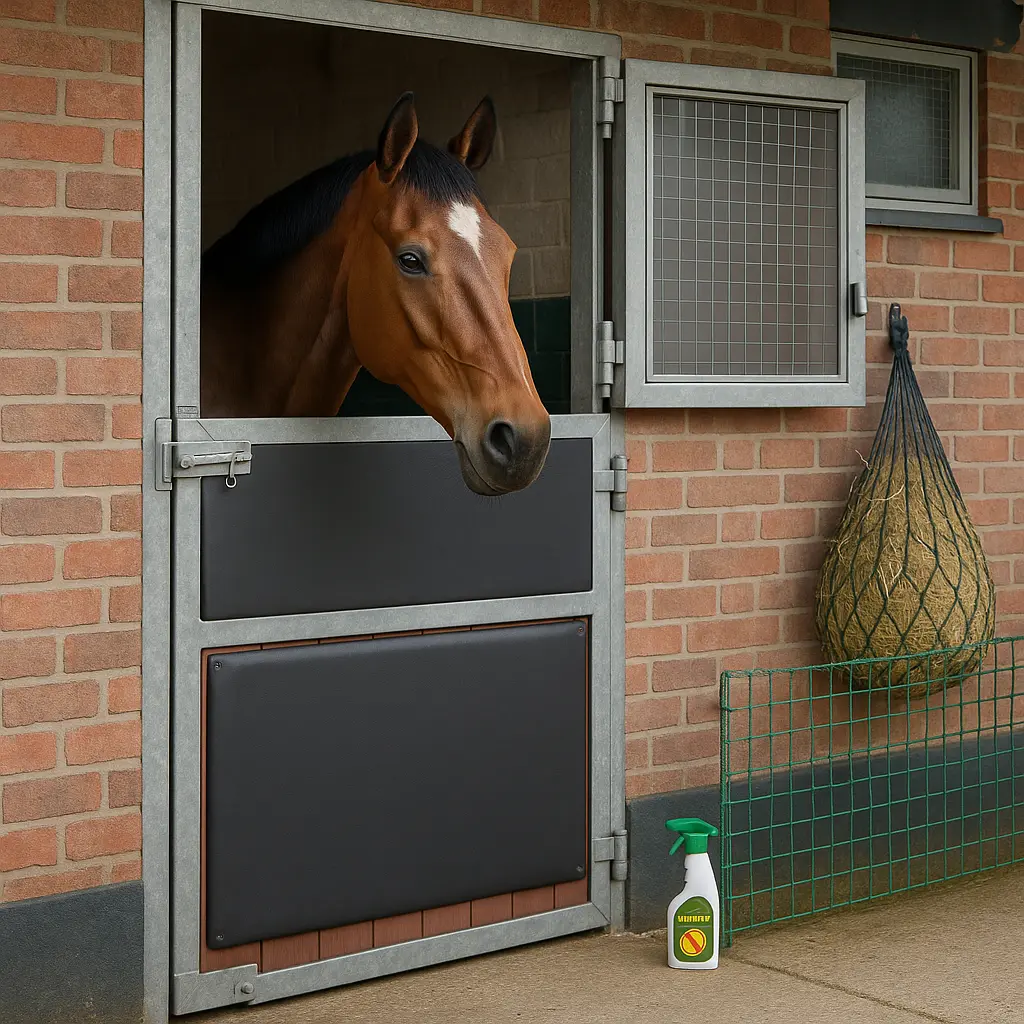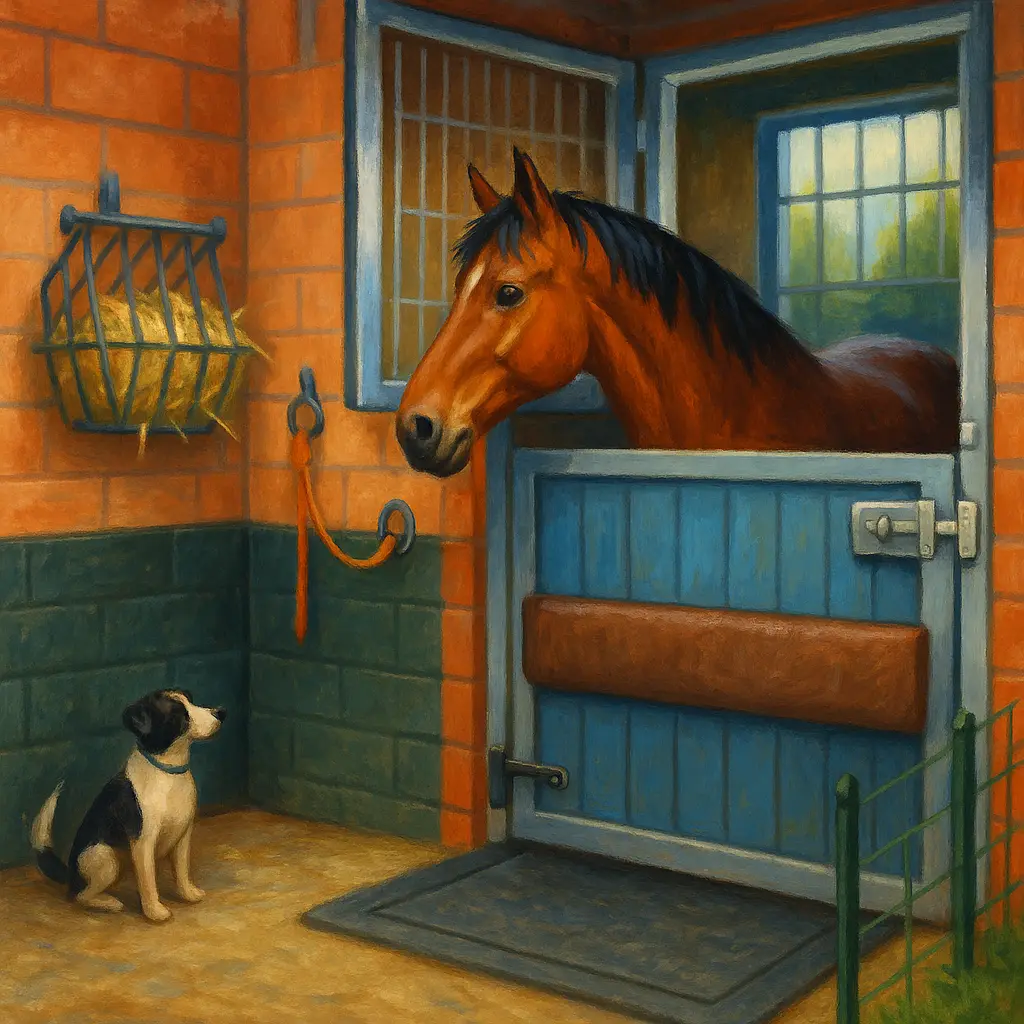
Horses and yard dogs can co-exist happily, but stable doorways are high-risk spaces. A few simple, yard-proof upgrades will prevent escapes, reduce injuries, and stop dogs fouling right outside your horse’s door.
Key takeaway: Fit kick bolts, add impact protection and rubber matting, manage hay and feed height, and use natural repellents and training to keep dogs away from stable doors—then check everything, every day.
Why stable door safety matters every day
Kick pads, secure bolts and rubber matting reduce injuries, prevent escapes and cut noise that can agitate horses. That’s the core of safer doorways in UK yards.
Stable door kick pads and stable pads are a fast, effective way to protect horses that barge or bang on doors; they’re easy to install and noticeably reduce noise and agitation (The Awning Company). Combine these with horse-proof locks and bottom kick bolts to prevent “Houdini” moments and you’ll remove the main risks identified by stable safety experts (Social Tails). Under the UK’s Animal Welfare Act 2006, you must keep horses safe from avoidable harm, and that starts with secure, well-maintained stables and yards.
Inside and outside the doorway, rubber matting gives a non-slip, cushioned surface that’s kinder to joints and reduces scrapes if a horse rolls or slips near the entrance (Cheval Liberté). In wet UK winters, that extra grip at the threshold is invaluable.
Fit the right hardware: bolts, top doors and horse-proof locks
Install bottom kick bolts and reliable door bolts, and add top doors or grills for extra control during busy or agitated moments.
Kick bolts fixed to the bottom of stable doors are described as a necessity by stable safety professionals to stop determined equine escape artists (Social Tails). Pair them with sturdy, horse-proof upper bolts that are easy for you to operate but impossible for a lip or shoulder to flip open. Make “bolt checks” part of your daily routine; loose or stiff bolts create dangerous obstructions and can fail when you most need them (Social Tails).
Top doors and/or grills can be fitted retrospectively to most UK stables. Close them during high-traffic times—feed rounds, horse turnouts, or when the yard dog is patrolling—to calm over-excited horses and maintain airflow without inviting a leap or nudge at the opening (Cheval Liberté). Many yards also use plastic sliding windows with metal grills in bad weather to combine ventilation with security.
“Ensure all the bolts on the stable door are in good working order and fix kick bolts as a necessity to the bottom of stable doors, as some horses can be Houdini’s!” — Social Tails
Pro tip: When you’re handling a horse at the doorway, tie to a fixed point with baling twine as a quick-release weak link. If they spook, the twine will break before the horse or hardware does.
“Always ensure that when you are working with your horse in the yard that they are tied up securely… to some baling twine … so in the event of any spooking, he can break away easily without causing further damage.” — Social Tails
Cushion impact zones: kick pads and rubber matting
Use kick pads on doors and rubber matting on floors and thresholds to prevent leg scrapes, reduce noise and help anxious horses settle.
Kick pads and stable pads sit exactly where horses strike—across the lower and mid-height panels—absorbing impact and saving skin, wood and nerves (The Awning Company). They’re especially useful for door-bangers awaiting feed or when other horses pass. If your horse is a habitual striker, consider adding a pad to the opposite wall as well, as some will whirl and kick when frustrated.
Rubber matting inside the stable creates a grippy, cushioned base that supports joints and reduces the chance of hock or fetlock scrapes if a horse rolls close to the doorway. Extend matting slightly outside the door in winter so muddy hooves aren’t stepping onto slick concrete or algae; it also deters dogs from digging at soft ground right at the threshold (Cheval Liberté).
Quick tip: If you’re adding mats outside, keep the lip flush with the floor and sweep debris daily so no hoof catches an edge.
Manage hay and feed to avoid dog interest
Tie hay nets high enough or use integrated racks to prevent hoof entrapment and keep feed off the yard so it doesn’t attract dogs to the door.
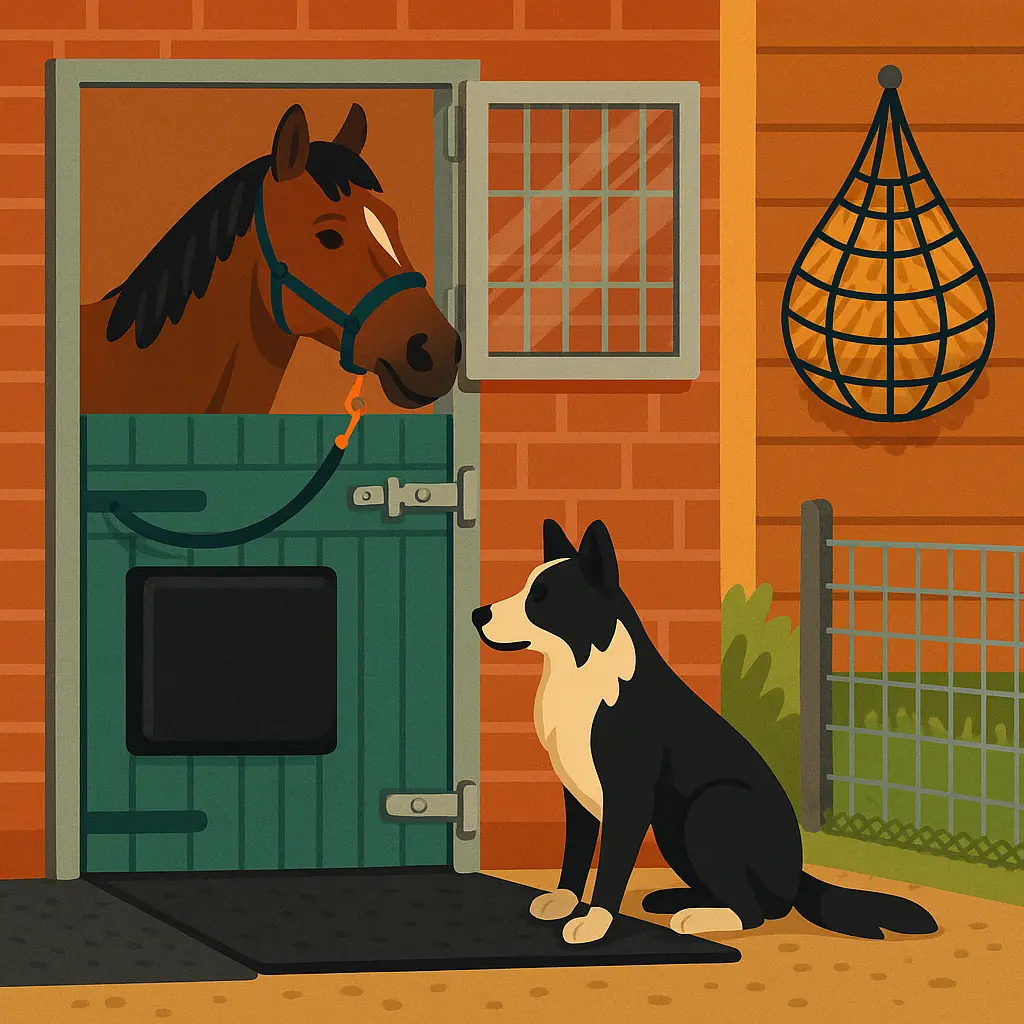
Hay nets hung too low are a double risk: they can snag a shoe or hoof, and the inevitable dropped hay attracts dogs to linger and foul at the doorway. Tie nets high—with an empty bottom no lower than the point of shoulder—or, better yet, switch to fixed or integrated hay racks for safer feeding and a tidier doorway (Cheval Liberté).
Outside the stable, sweep up spillages immediately. Secure feed bins with tight lids and store treats indoors; reward good behaviour away from doorways to avoid creating a “picnic spot” at the threshold. If you need high-energy support or calming support during box rest, choose targeted nutrition and keep it safely stored; browse proven options in our supplements collection.
Seasonal note: In colder weather, many horses increase hay intake. Keep nets and racks positioned so even a rugged horse can’t get a buckle or strap near them, and consider how heavier stable rugs hang in confined spaces.
Keep dogs out humanely: repellents, training and fencing
Use natural, ready-to-use dog-repellent sprays, consistent training on-lead at first, and low welded wire meshes on existing fences to deter fouling without risking horses.
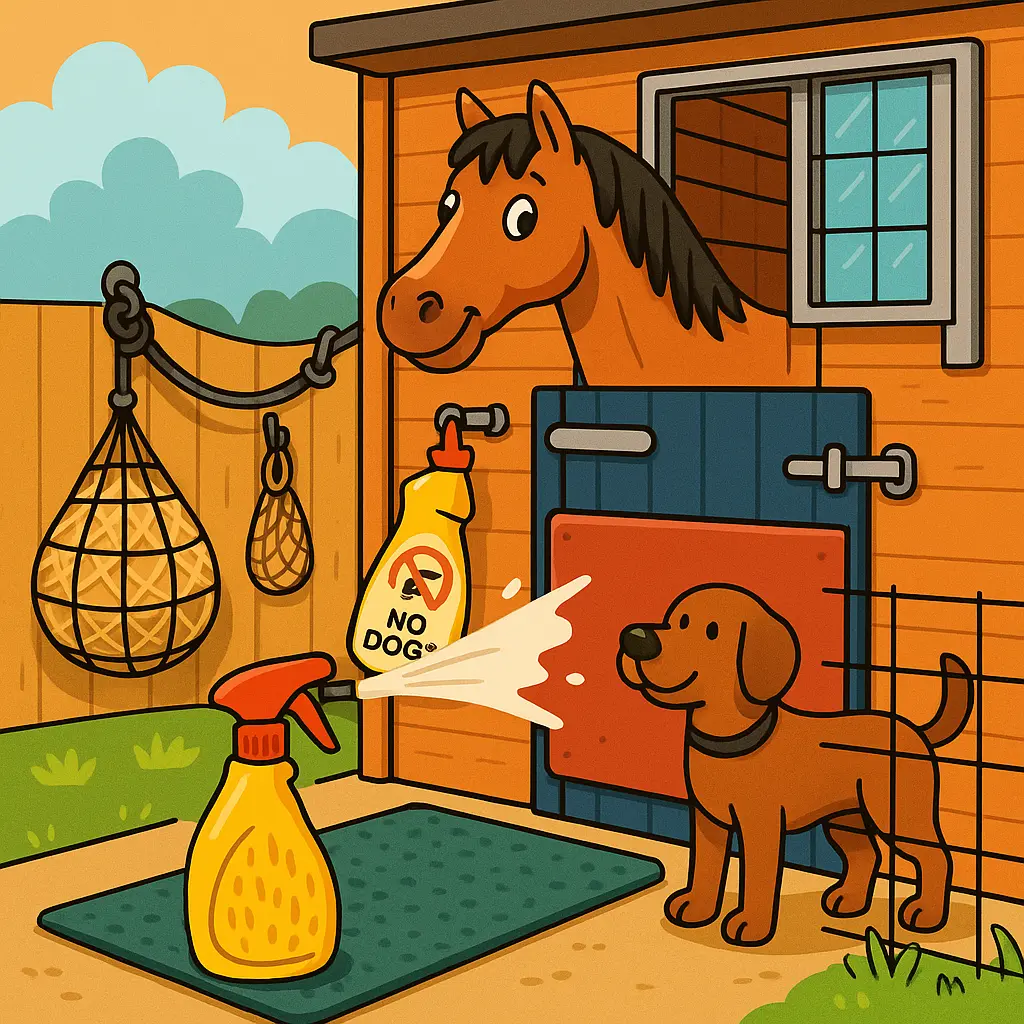
To stop neighbourhood dogs fouling right outside a stable door, apply a natural repellent spray formulated to deter digging, scratching and fouling without harming horses. Reapply as directed, especially after rain. On concrete, scrub the area with a strong, lemon-scented detergent and repeat—the scent helps break the scent-marking cycle and acts as a natural deterrent over time (practical recommendations drawn from Cheval Liberté and yard best practice).
When dogs are on the yard, start with them leashed or crated and use voice commands to prevent them approaching stable doors. Build up freedom only once they reliably ignore feed and bedding. This is consistent with common-sense UK yard protocols and reduces stress for horses and handlers.
For persistent dog intrusions into turnout or lanes, add an 18–24 inch strip of welded wire or plastic mesh to the outside of existing electric fencing, low enough to block dogs but light and breakable if a horse ever contacts it. In the UK’s wet winters, this addition also helps stop dogs digging under at muddy gateways.
Pro tip: Fit top doors or grills and close them during peak yard traffic and feeding times so curious dogs can’t invite a nose-to-nose greeting that might escalate.
Daily yard routine: a 60‑second safety sweep
Do a one-minute check: sharp edges, working bolts and kick bolts, clear thresholds, sound fencing, and a final “bolt-and-kick-bolt” glance before leaving.
A consistent routine is what turns good intentions into real safety. Start at eye level and scan down: no protruding nails or splinters; door track, hinges and hardware free of burrs; kick pads intact; matting flush and swept. Test both the main bolt and the bottom kick bolt—don’t just look. Where horses are tied, use baling twine as the breakaway link, not a solid, unyielding tie.
“Before leaving the yard, it’s good practise to do a few last minute checks. Cast your eyes back and make sure the stable doors are bolted and kick bolts have been applied.” — Cheval Liberté
Walk the immediate perimeter weekly for gaps or damage and confirm all gates at yard exits are shut—UK livery yards commonly require this to safely contain any loose horse. At Just Horse Riders, we also recommend basic personal safety while you work: if you’re moving around the yard at dawn or dusk, add a lightweight hi-vis layer, and if you lead a lively horse near vehicles or dogs, consider wearing your riding helmet.
Seasonal tweaks for UK weather
In wet, windy months use rubber matting outside doors and sliding windows with grills; in summer, manage airflow with top doors and stay on top of flies and forage hygiene.
Winter and shoulder seasons bring mud, algae and gusts that slam doors. Add exterior rubber matting at entrances, keep drainage clear, and fit a simple door stay so nothing blows shut onto a hip or hock. Plastic sliding windows with metal grills on doors maintain airflow while keeping roaming dogs and wildlife out in foul weather (Cheval Liberté).
In spring and summer, ventilation is key. Keep top doors open with grills as needed, sweep dropped hay that lures dogs and pests, and manage flies so restless horses don’t start door-banging. A breathable fly rug can reduce stamping and agitation in the box, and a well-fitted turnout rug or stable rug avoids a sweaty horse pacing at the doorway on changeable days. Many customers also look to reputable brands for fit and durability; explore seasonal staples from WeatherBeeta and Shires.
Quick tip: Keep a small grooming kit by the door—a dandy brush and hoof pick from our grooming collection—to flick off mud before stepping onto smooth thresholds.
Recommended kit list: build a safer doorway, fast
Stock these essentials: bottom kick bolts, top-door or grill, kick pads, rubber matting, high hay racks or safely tied nets, and natural dog repellents.
Here’s a practical shopping-and-actions list you can tick off in a weekend:
- Kick bolts and horse-proof main bolts fitted, lubricated and tested. Mark “bolt & kick-bolt” on your whiteboard as a daily close-down check.
- Top door or grill installed for controlled ventilation and extra security at busy times.
- Kick pads on the door (and high-strike walls if needed) to prevent bangs, bruises and splinters (The Awning Company).
- Rubber matting inside—and a flush, grippy strip outside for winter—reducing slip risk and aiding joints (Cheval Liberté).
- High hay nets tied correctly, or integrated racks, to avoid hoof/shoe entrapment and keep feed off the floor (Cheval Liberté).
- Natural dog-repellent spray for doorway perimeters; lemon-scented detergent for concrete cleans.
- Lead rope points rigged with baling twine as a safe weak link for tying.
- Protective legwear for horses prone to striking; explore our horse boots and bandages to cushion knocks during fidgety moments.
At Just Horse Riders, we also see calmer stabled horses when routines are consistent and enrichment is sensible. If your horse frets during box rest, discuss management with your vet and consider targeted calmers from our supplements. For training rewards that don’t attract yard dogs, keep treats sealed and use them well away from the doorway.
Conclusion: secure, cushion, manage, deter—then check daily
Stable doors become safe, quiet spaces when you combine kick bolts and top-door control with impact pads, rubber matting and tidy feeding. Add humane dog deterrents and on-lead training, and finish every day with a quick bolt-and-kick-bolt check. The result is fewer bangs, fewer slips, and a calmer horse—whatever the British weather sends your way.
FAQs
How can I stop neighbourhood dogs fouling right outside my stable door?
Use a natural, ready-to-use dog-repellent spray along the exterior threshold and reapply regularly, especially after rain. On concrete, scrub with a strong lemon-scented detergent and repeat; the scent helps break marking habits. Combine with on-lead training for any on-site dogs and close top doors or grills during busy times. Practical measures here reflect advice collated from Cheval Liberté and stable management best practice.
Is it safe to use dog repellents near horses?
Yes—choose natural, plant-based formulas labelled for fouling prevention and non-toxic around livestock. Apply outside the stable door, avoid direct contact with feed or bedding, and reapply as directed. This approach is echoed in yard-friendly recommendations and avoids harsh chemicals while remaining effective.
What fencing keeps dogs out without trapping horses?
Attach an 18–24 inch strip of welded wire or plastic mesh to the outside of existing electric fencing, set low enough to block dogs but light and breakable if a horse contacts it. This reduces digging in muddy UK conditions and doesn’t compromise equine safety.
How do I secure stable doors against both horse escapes and dog intrusions?
Fit a bottom kick bolt and a reliable upper bolt, test them daily, and add a top door or grill for control during feed times and bad weather. Keep hardware free of sharp edges and in good working order (Social Tails; Cheval Liberté).
Should I allow dogs on the yard at all?
Yes, but start on-lead or crated, build reliable recall and “leave it,” and keep them away from doorways and feed areas. Close top doors during introductions and reward calm behaviour. Over time, consistent handling prevents fouling and startle incidents.
What if my horse bangs the stable door when stressed?
Add kick pads to absorb impact and reduce noise, use rubber matting for grip, and manage triggers—close a top door when horses pass by, feed on a set routine, and consider enrichment. Kick pads have been shown to cut injury risk and agitation from door-banging (The Awning Company).
Any extra kit that helps in UK winters?
Exterior rubber matting at thresholds, plastic sliding windows with grills for airflow and security, and weather-appropriate rugs help reduce pacing and slips. Browse dependable options across turnout rugs, stable rugs and fly rugs, plus seasonal favourites from WeatherBeeta and Shires.