

When Should You Expect Your Livery Deposit Back?
Livery deposits are a crucial part of horse boarding agreements, offering financial security to both parties involved. Understanding when you can expect your deposit back ensures a smooth and amicable boarding arrangement. In this guide, we will delve into the ins and outs of livery deposit returns, common procedures, legalities, and best practices.

What Is a Livery Deposit?
A livery deposit is typically akin to one month's livery fee and acts as a security against unpaid fees or damage to the facilities. It's an upfront payment made to the yard owner, ensuring that the contractual terms are observed with the best interests of both parties [source].
Why Livery Deposits Are Necessary
Livery deposits not only protect the yard owners from potential losses but also encourage horse owners to abide by the terms of the agreement. By securing the premises, they embed a layer of trust and responsibility throughout the entire stay at the livery yard.
Typical Timeframe for Deposit Return
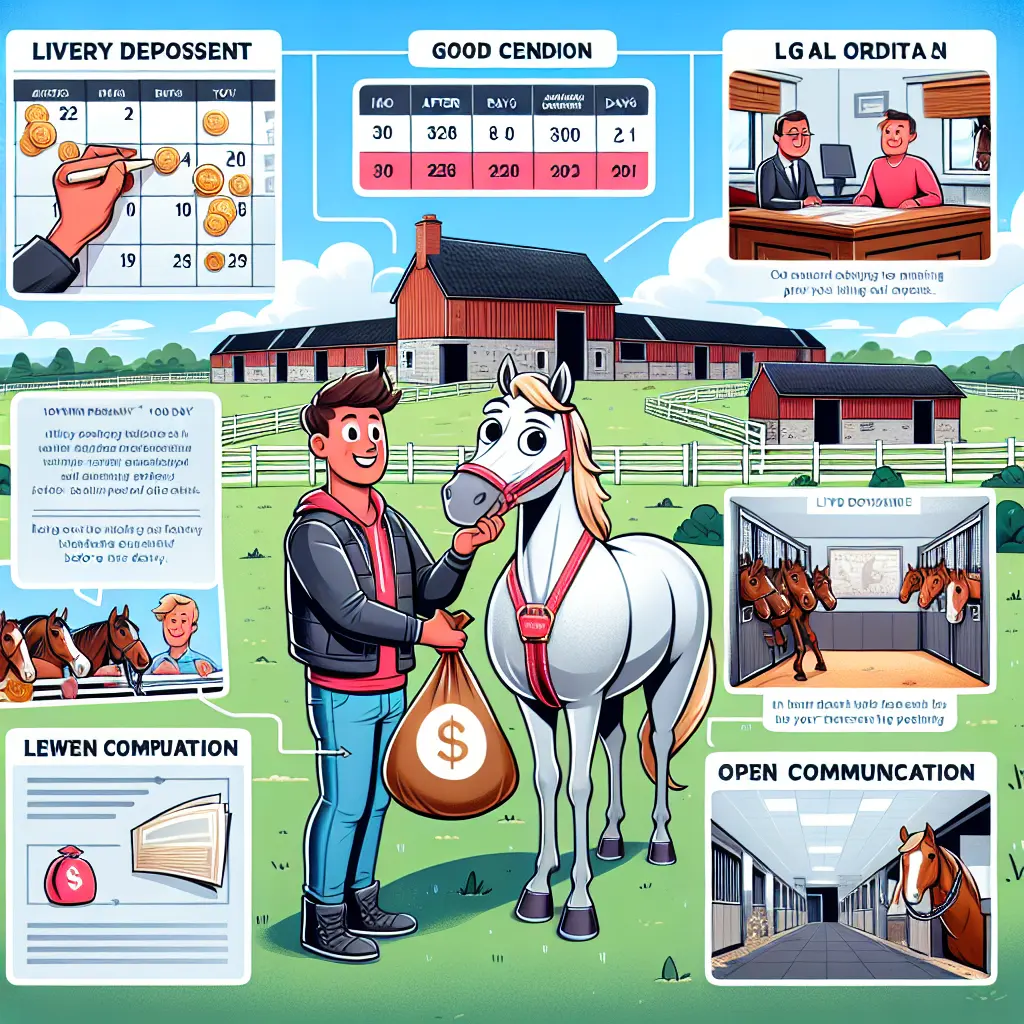
Most livery deposits are returned within 30 days post the end of the contract, giving the yard owner time to check for any fees, damage, or issues [source]. In some cases, this can be expedited to as soon as 7 days after departure, pending final checks and balances.

Standard Practices
Yard owners typically issue refunds within 30 calendar days if all conditions are met — all fees are paid, and no damages occurred. Prompt refunding is usual practice when there's transparency and timely settlement of obligations.
Conditions Affecting Deposit Return
The refund of a livery deposit is contingent upon several conditions:
- All Fees Paid: Completion of due livery fees and related charges is a must [source].
- No Damage or Extra Costs: Stables and facilities should remain in pristine condition.
- Proper Notice Given: Compliance with the agreed-upon notice period, often one calendar month.
- No Outstanding Debts: Ensuring there are no lingering amounts owed to the yard owner.
Potential Deductions
If any issues arise, the yard owner may subtract reasonable costs from your deposit. For instance, cleaning a dirty stable or repairing damages can incur charges, with the rest of the deposit returned with explanation.
Legal Rights and Disputes
If disputes arise over deposit returns, there are several avenues for horse owners. Keeping clear communication lines and formal contracts can prevent misunderstandings [source].
Resolving Disputes
Initiating a formal legal claim through Money Claim Online (MCOL) might be necessary if a yard retains an unreasonable portion of your deposit. However, clear contracts and comprehensive documentation can be an effective first step.
Importance of Written Agreements
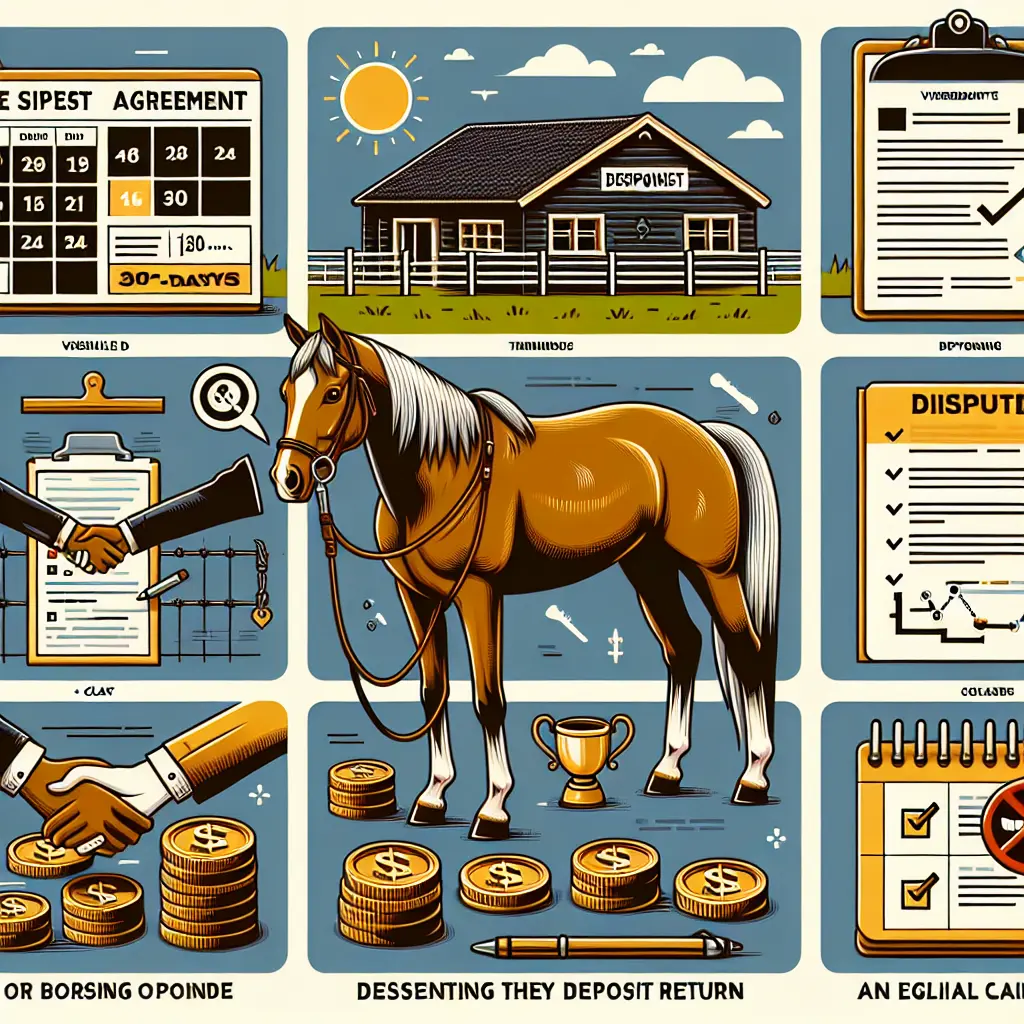
Having a solid contract that spells out the deposit return procedures, timeframes, and dispute resolution strategies protects everyone involved. It provides a blueprint for addressing any discrepancies that might arise during the horse's stay.
Best Practices for Smooth Transactions
Ensuring a hassle-free deposit return involves practices that benefit both the horse owner and the yard operator.
Essential Tips for Owners
- Separate Payments: Keep deposit amounts distinct from other invoices to simplify the refund process.
- Documenting Condition: Encourage owners to take photos of the stable pre- and post-occupancy to support any claims or returns [source].
Recommendations for Yard Owners
- Clear Contracts: Use straightforward contracts that both parties understand and agree to.
- Effective Communication: Ensure all communications are in written form and keep solid records.
Conclusion
In conclusion, expecting a livery deposit return is a straightforward process if all parties adhere to agreed terms and maintain open communication. The typical 30-day window can be minimised through transparency and the settlement of all outstanding dues. When disputes do arise, legal recourses are available, but clear documentation helps facilitate smoother transitions. By understanding these key dynamics, horse owners can confidently manage their expectations and relationships with livery yards [source].
For all your equestrian needs, including Jodhpur Collection, Horse Riding Boot Collection, and Everyday Horse Vitamins & Supplements, visit Just Horse Riders.