

Creating an Effective Equestrian Website: Tips and Tricks for Beginners
Designing a website for your equestrian business or passion project can seem daunting. However, with the right approach, you can build a website that is both appealing and functional. Your goal should be to create a site that not only attracts horse enthusiasts of all levels but also converts visitors into active clients. In this blog, we'll explore essential tips on how to achieve this, using strategies trusted by equestrian design experts.
Understand Your Audience Before You Start
The cornerstone of any successful website is a deep understanding of its audience. Are your visitors casual horse lovers, competitive riders, or interested in boarding and lessons? By answering these questions, you'll ensure that your content is highly relevant and engaging. For instance, surveying equestrian groups and analyzing competitor sites can provide insights into what resonates most with your target audience.
- Action step: Gather feedback through surveys or social media.
- Pro tip: Tailor content to user needs like "easy lesson booking" to attract busy riders, building trust and encouraging sign-ups.
Plan Your Site Structure and Choose the Right Tools
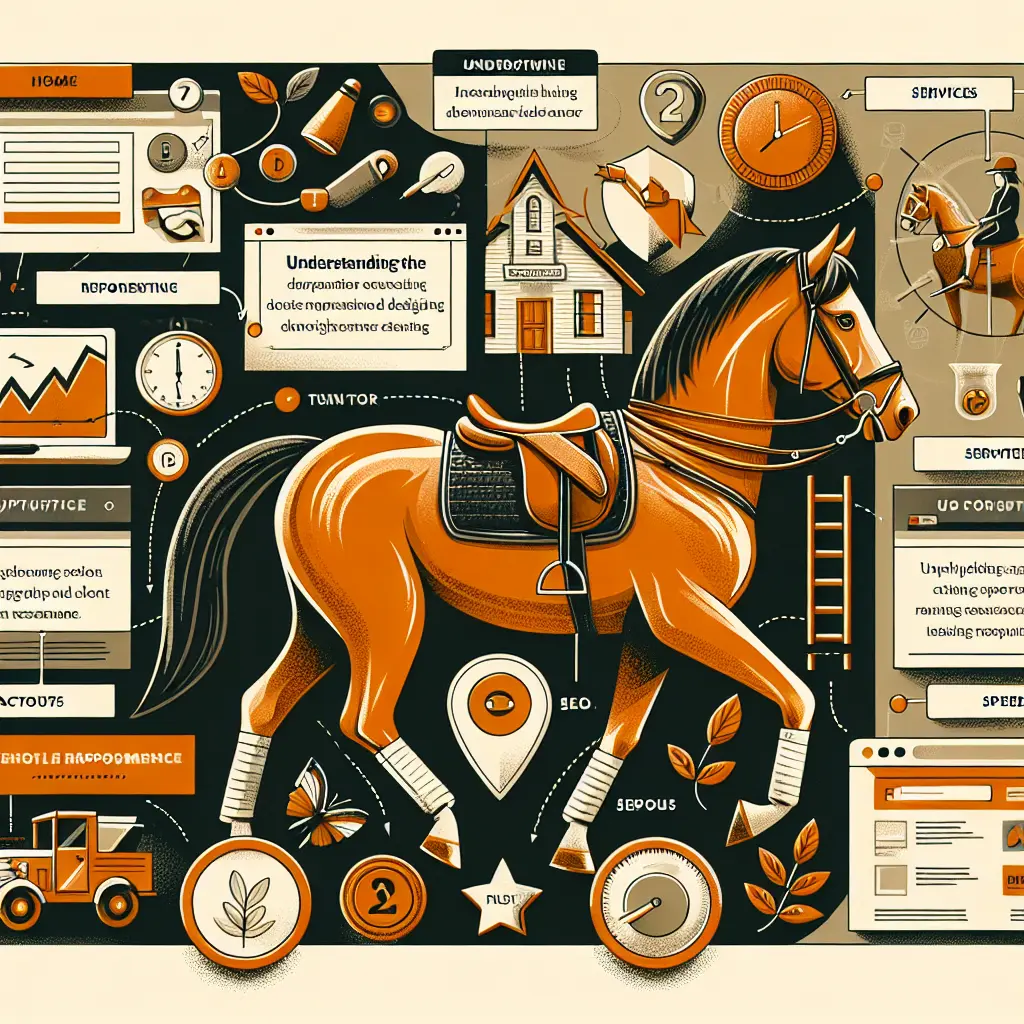
A well-organized site structure helps keep visitors engaged. Key pages like Home, Services, About, Blog, and Contact create a comprehensive experience. Using a content management system like WordPress, which powers over 40% of websites, offers equestrian templates that simplify setting up calendars, bookings, and galleries.
| Page | Purpose | Example Features |
|---|---|---|
| Home | First impression | Hero image of horses, clear CTA like "Book a Lesson" |
| Services | Showcase offerings | Training, boarding sections with photos and pricing |
| Blog | Build authority | Tips on horse care to drive traffic |
| Events/Calendar | Drive bookings | Online registration for clinics |
| Contact | Convert visitors | Pop-up forms, trainer profiles with video |
Map your user journey: Ensure every page leads to an action, such as "Enquire About Boarding."
Design with Visuals That Captivate Horse Lovers
Aesthetics are crucial for equestrian websites. High-quality, optimized images of horses and riding facilities are a must. These visuals not only create a lasting impression but also build trust with your audience. Keep file sizes small to ensure fast loading times, as 60% of traffic is from mobile devices, and ensure your design is responsive.
- Do's: Use stunning images and videos, and choose warm colors for a rural, professional vibe.
- Don’ts: Avoid clutter, heavy animations, or anything that slows down your site.
Craft Engaging Content That Positions You as an Expert
Your website content should position you as an authority in the field. Informative articles on horse care and training add value and keep users engaged. Aim for clarity and brevity with bullet points and concise paragraphs. Including testimonials and success stories can further cement your credibility.
- Create blog posts like "10 Signs Your Horse Needs Bodywork."
- Regularly update content to maintain search engine interest.
Optimize for Search Engines (SEO Basics)
Ranking well in search engines is essential for visibility. SEO techniques tailored to the equestrian market can drive organic traffic to your site. Focus on keywords, meta tags, alt text (e.g., "Bay horse jumping arena"), and internal linking.

| SEO Element | How to Implement | Impact |
|---|---|---|
| Keywords | Use in H1, e.g., "Professional Horse Lessons" | Better rankings |
| Meta Tags | Title: 50-60 chars with keyword | Click-through boost |
| Images | Alt text for SEO | Accessibility |
| Internal Links | Links from blog to services | Deeper engagement |
Utilize tools like Yoast SEO and track performance with Google Analytics for ongoing improvements.
Boost Trust, Speed, and Conversions
For your site to be effective, it needs to be fast, secure, and professionally designed. Adding HTTPS, compressing images, and employing strong calls-to-action (CTAs) like "Join Our Mailing List" can boost trust and conversions. A mobile-friendly site is crucial as equestrian searches are heavily mobile.
- Integrate client stories and event calendars to build social proof.
Conclusion: Crafting a Stellar Equestrian Website
Building a successful equestrian website involves strategic planning and execution. Understand your audience, structure your site effectively, harness the power of visuals, create authoritative content, optimize for SEO, and ensure smooth functionality. By following these steps, your site will not only attract more visitors but also transform them into loyal customers.
Explore the various collections available like the Jodhpur, Horse Riding Boot, and more to align with your passion and business strategies.
Start with a clear vision, and continually refine your approach based on feedback and analytics. As you upgrade your site, you’ll see improved bookings and engagement, setting your equestrian business on the path to success.