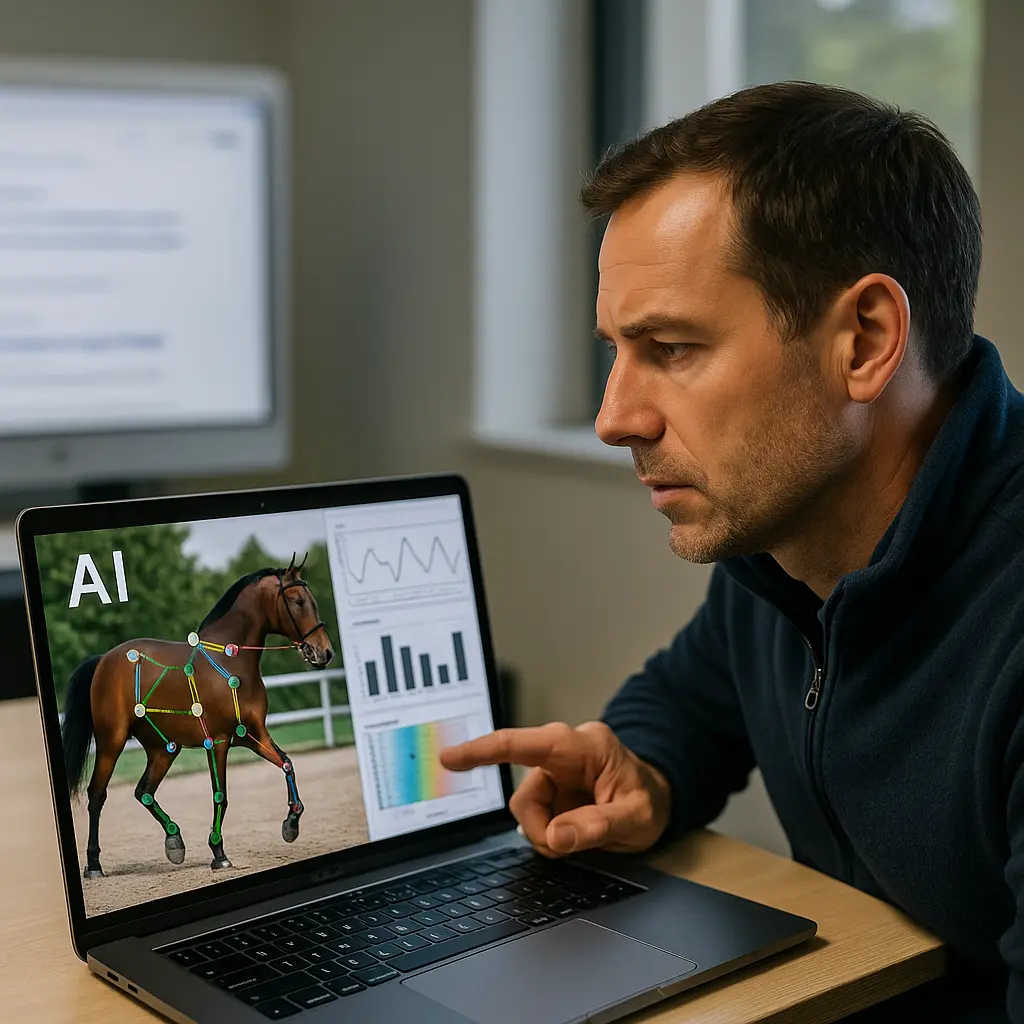
AI is coming to the stable yard. From slow‑motion smartphone clips to advanced algorithms that measure stride symmetry, technology is beginning to change how we monitor movement, train, and talk about judging. Here’s what UK riders need to know right now — and how to put it to work sensibly for your horse.
Key takeaway: Use AI gait tools to track patterns and spot changes, but base welfare and competition decisions on skilled human eyes — your vet, coach and judges come first.
What is AI gait analysis?
AI gait analysis uses video or wearable sensors to quantify stride length, symmetry and timing, turning your horse’s movement into measurable data you can compare over time. In practice, that means filming your horse on straight lines and circles, then letting software calculate objective movement metrics that the naked eye can miss, especially at speed or over longer distances.
These systems typically track limb positions frame by frame, look for left–right differences, and report on parameters like rhythm regularity. The promise is consistency: the same movement measured the same way again and again, helping you notice small changes early. Think of it as a structured journal of how your horse is going, not a replacement for your own feel or professional assessment.
How can riders use it today?
You can start now with clear smartphone videos on level ground and simple analysis apps, using the output as training feedback rather than a diagnosis. Set up a routine: film the same lines (for example, 30 metres of straight walk and trot in both directions, plus a 20‑metre circle) every few weeks, in similar footing and conditions, and label the files by date, gait and rein.
This creates a baseline you can compare after shoeing, a saddle check, time off, or a change in workload. Riders often notice that the process alone — filming, reviewing slow‑mo, and discussing with a coach — sharpens their eye and makes schooling more deliberate. If you use leg protection to train, keep it consistent so it doesn’t skew stride length or swing on the day you film. Protective boots can help you train confidently; see our curated range of horse boots & bandages to suit hacking, schooling and competition routines.
Quick tip: Film in bright, even light against a plain background where possible, and stand far enough away that the whole horse is in frame from hoof to ear. Clean limbs and a tidy tail make it easier for software — and you — to see joint movement clearly; a quick once‑over with tools from our grooming collection helps.
What are the benefits and limits for welfare?
AI can flag subtle movement changes before they’re obvious to the eye, but decisions about lameness and welfare remain the job of qualified professionals. Used well, it can prompt timely conversations: “This looks a shade shorter on the right rein this week — let’s check feet, saddle balance and workload, and ask the vet if it persists.”
Here’s a sensible way to think about it:
- Good for trends: tracking improvement after a rehab plan, noticing consistent left–right differences, or seeing how fitness changes rhythm and stride.
- Not a diagnosis: numbers don’t replace palpation, hoof testers, flexions, nerve blocks or imaging. They point; your vet decides.
- Context matters: footing, temperature, shoeing, and rider balance all influence movement data. Compare like with like.
Pro tip: Pair data with management you control every day — even small touches count. Joint and hoof support can be part of an overall plan; explore our targeted supplements to support everyday mobility alongside good farriery, saddle fit and sensible workload progression.
Cold, wet British winters and hard summer ground both affect how freely horses move. A warm‑up that genuinely raises muscle temperature and gradual exposure to firm going help the body cope. On frosty mornings or after a clip, a well‑fitted rug around the yard can keep muscles supple before work; browse breathable, weather‑ready turnout rugs and cosy stable rugs to match your horse’s routine.

How is AI being explored in judging and competition?
In competition settings, AI is being explored to add objective movement metrics alongside human judging, not to replace judges. The practical idea is a hybrid: human judges assess harmony, way of going and correctness, while technology offers consistent reference points on regularity or rhythm to support training, stewarding and post‑event review.
For competitors, the best preparation remains unchanged: train the scales of training diligently, present a horse that is fit, straight and supple, and ride accurate lines. If you use tech in schooling, aim for stability over spikes — a test that tracks regular, relaxed strides from bell to final halt will always score well. At Just Horse Riders, we recommend dressing for the job too: comfortable, grippy legwear helps you sit quietly and influence rhythm without tension. Explore performance-fit women’s jodhpurs & breeches that move with you from warm‑up to centre line.
Safety note: whether you’re schooling at home or reviewing a test video at the lorry, protect yourself. A modern, properly fitted hat is non‑negotiable; see our certified riding helmets for everyday schooling and competition.
How do you prepare your horse for accurate assessment?
Clean limbs, balanced feet, correctly fitted tack and a calm, straight warm‑up produce the clearest, most reliable gait information. Before you film or assess, pick a safe, level surface with consistent footing, check your horse moves freely in hand, and remove distractions where possible.
Run through this quick pre‑assessment checklist:
- Feet first: recent, balanced trimming/shoeing; pick out feet so the sole and frog are clear.
- Tack check: saddle sits level, girth tension even, bridle comfortable; any pressure points will show as irregular steps.
- Protect and present: well‑fitted boots if you use them in work; avoid anything new that could alter stride on the day.
- Warm‑up with purpose: 10–15 minutes building from active walk to supple trot with transitions, then film the first consistent, relaxed moments — not the final, tired passes.
- Routine matters: try to film at a similar time of day and stage of your training week to minimise variation.
On blustery days or in low light, visibility and safety go hand in hand. If you’re filming near lanes or bridleways on darker afternoons, kit yourself out with bright, reflective layers from our rider-safe hi‑vis collection.
What about data and privacy when filming at the yard?
If you film at a yard or event, get permission from the people who appear and store your files securely with clear labels. Many riders share clips for coaching and welfare discussion; a little courtesy keeps everyone comfortable and protects minors and bystanders.
Adopt simple habits:
- Ask first: a quick “Mind if I film this line?” goes a long way, especially if others are in view.
- Frame thoughtfully: position the camera to avoid faces and vehicles where practical.
- Name and file: use a consistent format (for example, “2026‑03‑19_Trot_LR_Arena‑A_Shoes‑On”) so you can find and compare clips quickly.
- Share wisely: when posting online, crop, blur faces, and consider private links for coaches and vets rather than public posts.
Pro tip: Back up regularly. A simple cloud folder by horse and gait keeps your hard‑won baseline safe and ready for comparison after any change in routine or health.

What kit actually helps you support sound movement?
Consistent management still beats gadgets: protect limbs, manage temperature and footing, and keep on top of grooming, tack fit and nutrition. The right kit makes these basics easier day to day and helps you gather cleaner, more comparable movement data.
Here’s a rider‑tested checklist to pair with your training and any AI tools you use:
- Limb protection that fits: choose breathable brushing boots or tendon boots appropriate to your discipline, and use them consistently during training and filming. Explore our proven horse boots & bandages.
- Weather management: comfortable horses move better. Keep muscles warm to and from the arena with season‑appropriate stable rugs, and turn out in reliable, waterproof turnout rugs when the heavens open.
- Grooming for clean lines: a tidy coat and tail make it easier to see joint flexion on video. Stock up with practical tools from our yard‑ready grooming range.
- Everyday support: if you and your vet agree a joint or hoof supplement suits your horse, pick a reputable brand and feed consistently. Browse our curated supplements selection.
- Rider stability: your balance changes your horse’s rhythm. Choose well‑fitting, grippy legwear for a quieter seat — our women’s jodhpurs & breeches are rider‑favourites for schooling and show days.
- Head protection: whether you’re schooling for smoother strides or filming on a breezy afternoon, ride in a modern, well‑fitted hat — see our trusted riding helmets.
At Just Horse Riders, we recommend keeping your kit list simple and consistent so your horse’s movement — not changing equipment — drives the data you collect. If you’re unsure about fit or function, our friendly team is here to help you choose what suits your horse and your routine.
FAQs
Can AI tell me if my horse is lame?
No — AI can highlight asymmetries and changes in movement, but only a qualified professional can diagnose lameness. Use the data to inform a timely call to your vet if something looks off or feels different under saddle.
What’s the easiest way to start with gait analysis?
Film regular straight lines and circles on level ground with your phone, label the clips clearly, and review them in slow motion with your coach. Keep the surface, lighting and routine as consistent as possible for reliable comparisons.
Will boots or bandages affect the results?
Yes — any change to limb weight or feel can influence stride. If you train in boots, keep them the same type and fit each time you film. If you’re comparing barefoot and shod movement, film separate, clearly labelled sets.
Does weather matter when I film?
Absolutely. Cold muscles, deep going, slick surfaces or very hard ground all affect stride length and rhythm. Warm up thoroughly and try to compare like‑for‑like conditions across sessions.
Is AI being used to replace judges?
No — AI is being explored as an objective complement to human judging, offering consistent movement metrics for training and review while judges retain responsibility for overall assessment and artistic elements.
What should I do if my video shows a new asymmetry?
Pause and problem‑solve methodically: check feet and shoes, revisit saddle fit, reduce intensity, and seek professional guidance. If the change persists or you feel anything unusual under saddle, call your vet without delay.
What kit helps me get clearer videos?
Choose a tidy, well‑lit space, wear safe, stable gear, and keep your horse comfortable. Protective boots, appropriate rugs for the weather, and a modern riding helmet all help you work calmly and safely; browse our boots, turnout rugs and helmets to get started.