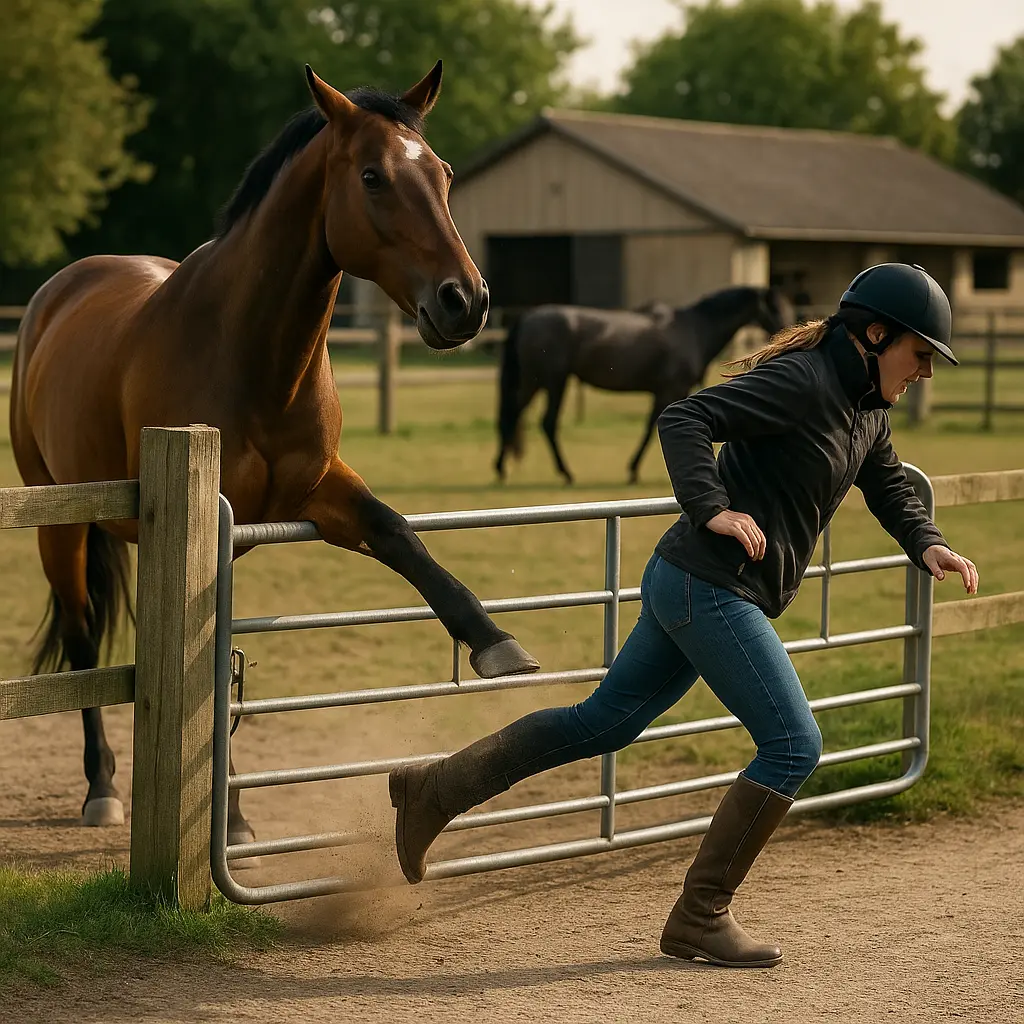
Gate incidents, bolting at turnout, a kick at the field entrance — they happen in seconds and can leave yards and owners facing five-figure claims. The good news: UK law is clear on who’s liable and what you must do to reduce the risk.
Key takeaway: Under the Animals Act 1971, liability follows control — if you’re the keeper in charge when damage occurs, you can be strictly liable, so secure gates, assess risks, and insure properly.
What the Animals Act 1971 means for horse owners and livery yards
The Animals Act 1971 imposes “strict liability” on the owner or current keeper of a horse when the section 2(2) tests are met, even if no one was negligent. In plain terms: if your horse (or a horse in your control) causes injury or damage, you can be legally responsible without proof of fault.
Under section 2(2) of the Act, a keeper is strictly liable where:
- The damage is of a kind the animal was likely to cause, or likely to be severe if it occurred (e.g., a horse’s kick causing serious injury); and
- It resulted from a characteristic not normally found in horses unless in particular circumstances (for example, charging when crowded at a gate); and
- The keeper knew about that characteristic or the circumstances when it might arise.
“Under the Animals Act 1971, ‘strict liability’ for damage or injury caused by animals falls to their owners or current keepers.” — British Horse Society
Crucially, this means yards and individuals cannot rely on the defence of “I did everything right” if the statutory criteria are satisfied. That’s why robust risk management, clear control of gates and turnout, and the right insurance are non‑negotiable for UK livery operations and private owners alike.
Who counts as the ‘keeper’ of a horse at a livery yard?
The keeper is the person in control at the time of the incident — often the yard manager for turnout, gate handling or field moves, even if they don’t own the horse. In practice, a livery yard can be liable for all horses on site if they manage fields, gates or day‑to‑day handling.
Courts and insurers look at who had control and knowledge at the critical moment. If a yard worker is bringing in a horse that’s known to barge when crowded, and a gate‑side kick injures someone, the yard may be treated as the “keeper” for that incident. The same applies where a horse escapes through a poorly latched gate or inadequate fencing.
“So the owner of a livery yard could be liable for the actions of all horses in their yard. What really matters is who was in control (or is supposed to be) at the time of the incident or escape.” — Tozers Solicitors
Remember, riding schools and commercial yards are also subject to licensing and public liability insurance requirements under DEFRA guidelines and local authority licensing — another pointer that “control” brings legal responsibility.
What legal defences can reduce or remove liability?
Defences under section 5 of the Animals Act include: damage wholly due to the victim’s fault, voluntary acceptance of risk, and certain trespass scenarios where the animal was reasonably kept for protection. Used well, they can significantly reduce exposure.
Here’s how they work in practice:
- Victim’s fault (s.5(1)). If the injured person’s own actions wholly caused the damage (e.g., ignoring clear yard rules and entering a restricted gate area), liability may be defeated.
- Voluntary acceptance of risk (s.5(2)). If someone fully appreciated a specific risk and willingly exposed themselves to it (for example, handling a posted “kicks at gate” horse despite training to the contrary), the keeper may have a defence. Note: this defence does not apply where the risk is incidental to employment.
- Trespass and protection (s.5(3)). If the injured party was trespassing and the animal was not kept unreasonably for protection, liability may be reduced or removed.
Practical steps to support these defences include: clear yard rules and inductions; prominent, specific signage (e.g., “Mare in foal — keep 5m from gate”; “Do not crowd the gate — one horse at a time”); documented training; and well‑worded livery agreements with risk acknowledgements. While paperwork won’t excuse poor practice, it evidences knowledge, training and voluntary risk acceptance.
Which insurance do UK yards and riders actually need?
Commercial riding establishments and many livery yards should carry robust public liability insurance — commonly £10–£30 million — plus care, custody and control (CCC) cover for third‑party horses. Owners and riders should maintain personal public liability cover, such as BHS Gold membership with up to £30 million.
Under UK licensing frameworks, riding establishments must hold appropriate liability insurance. The BHS highlights that strict liability under the Animals Act means keepers can face claims even without negligence; its Gold membership provides up to £30 million public liability. For yards taking horses into their care, a CCC policy extension is essential to cover injury or damage to other people’s horses during turnout, catch‑in and stable management.
At minimum, check that your policy explicitly covers:
- Animals Act 1971 strict liability claims;
- Third‑party property damage (e.g., vehicles, fencing, neighbouring land);
- CCC for non‑owned horses in your control;
- Employees and volunteers (if applicable);
- Public access areas and off‑site activity (e.g., roadwork to fields).
Quick tip: Keep your insurer’s 24/7 claims number by the yard first‑aid kit. Call early after an incident — contemporary evidence is gold in Animals Act cases.
What practical controls reduce Animals Act risk at gates, fields and handling areas?
Secure, well‑maintained gates and fencing, documented risk assessments, and disciplined gate protocols cut the majority of foreseeable incidents. Focus first where horses and people compress together — field entrances, alleyways and stable doors.
Priorities that stand up well under legal scrutiny:
- Gates and latches. Fit heavy‑duty catches that can be operated one‑handed; keep hinges capped; ensure gates swing freely and close flush. Replace worn chains, carabiners and baler twine improvisations. Poor fencing and insecure gates are frequent factors in keeper liability cases.
- Fencing. Remove barbed wire from horse areas; mend broken rails promptly; check electric fencing is live and clearly visible. Yard disputes often cite vet bills of £1,000+ from wire injuries — cheap to prevent, costly to ignore.
- Risk assessments. Complete and review written assessments for fields, gates and handling zones. Record known behavioural traits (e.g., “kicks at gate”, “bolts if crowded”, “strikes when clipped”) to meet section 2(2)(c) knowledge requirements and Health and Safety at Work etc Act 1974 s.3 duties to non‑employees.
- Gate protocol. One horse in/out at a time; turn horses to face the field before releasing; use gloves; require competent handlers for known risk horses; stagger turnout times to avoid crowding.
- Rider and handler PPE. Encourage gloves and certified riding helmets for in‑hand work with young or sharp horses, and use hi‑vis layers for roadwork to and from fields.
- Horse protection. For gate‑prone kickers or bargers, consider protective horse boots and well‑fitted winter turnout rugs with secure leg straps to reduce injury if contact occurs. Durable options from Weatherbeeta rugs offer reliable hardware and tail cords to keep rugs secure in UK wind and rain.
- Daily checks. Walk fencelines; test latches; pick up baling twine; remove protruding nails and wire loops; photograph new hazards and log fixes.
- Behaviour management. Use training, consistent handling and, where appropriate, consult your vet about management strategies. Some owners find targeted behaviour and calmer supplements support steadier routines; always introduce alongside training and turnout adjustments.
- Health and fitness. Routine checks with your grooming essentials help you spot rubs, knocks and swelling early, preventing minor scuffs becoming bigger issues at pressure points like gates.
“Employers have a duty to take action where accidents are reasonably foreseeable... if a risk is foreseeable there is a duty to eliminate or reduce it so far as reasonably practicable.” — Chartered Institute of Environmental Health
Pro tip: Label individual gate risks so everyone handles them consistently — “Spring‑loaded latch: mind fingers”; “Soft ground by hinge — lead on hardstanding”. Small instructions, big results.
What should you do after an incident — and what must be reported?
Record the incident immediately, notify your insurer, and report under RIDDOR 2013 where required; personal injury claims generally have a strict three‑year time limit. Acting fast preserves evidence and protects your legal position.
Follow this sequence:
- Make safe. Secure horses and area; provide first aid; call emergency services if needed.
- Document. Take date‑stamped photos of the gate, latch, ground, footwear and any damage; sketch positions; collect names and phone numbers; write down what each witness saw while memories are fresh.
- Log and notify. Complete your yard’s accident book the same day; notify your insurer/broker; keep copies of risk assessments, training records and maintenance logs.
- RIDDOR. Report if a rider or member of the public is taken to hospital, an employee is injured at work, or there is a fatality/dangerous occurrence. For full criteria, see the HSE guidance for riding establishments and livery yards.
- Time limits. Most personal injury claims must be brought within three years from the incident date; seek legal advice early, especially for significant injury. Equine injury specialists such as Blackstone Solicitors outline these timeframes and steps.
Quick tip: Keep a grab‑and‑go “incident pack” at the yard office with forms, pen, disposable tape measure, high‑vis armband, phone power bank and a laminated RIDDOR checklist.
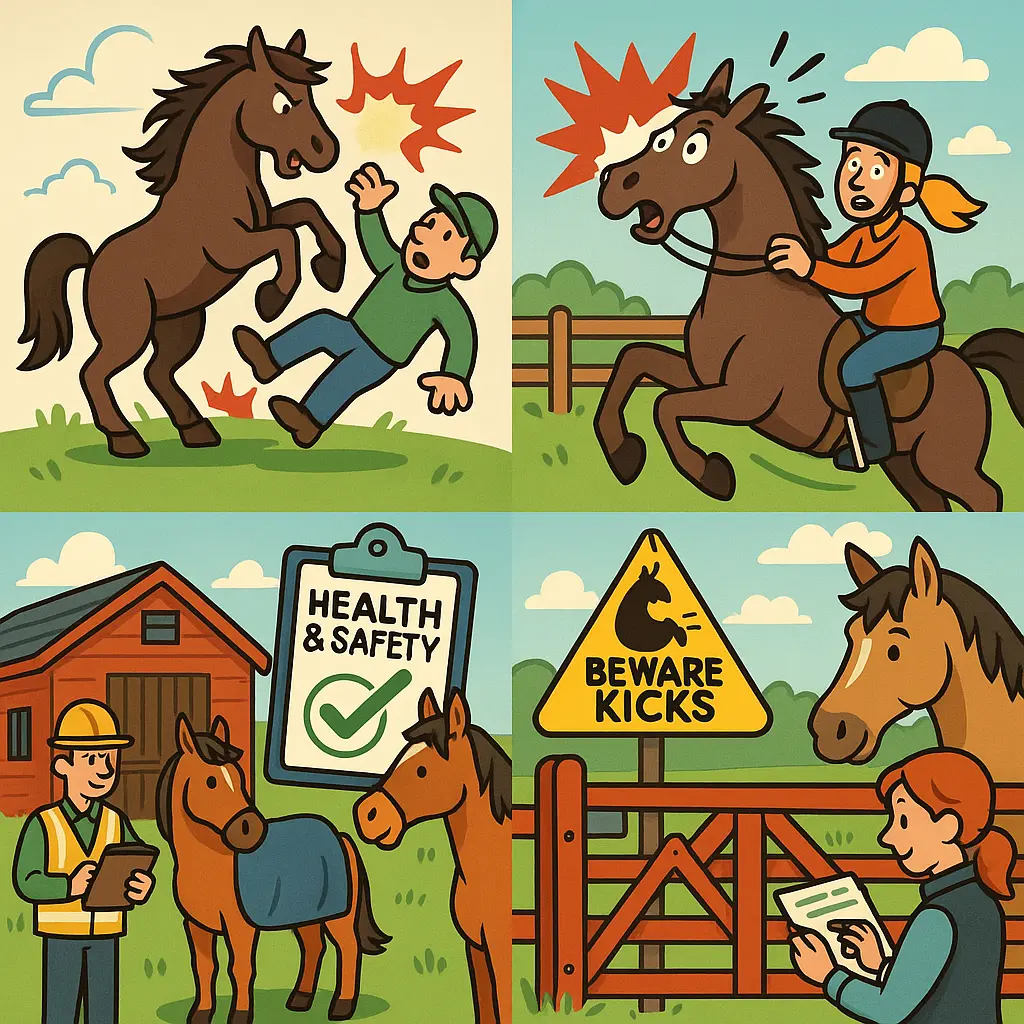
How does liability shift between DIY, assisted and full livery?
Liability follows control: full and many assisted livery models place more responsibility on the yard for gate and field incidents, while DIY arrangements leave more with the owner — but yards can still be the keeper if they control access or facilities at the time.
Consider these common UK scenarios:
- Full livery. Yard staff typically turn out/bring in, manage gates and handle horses — the yard is usually the keeper during these tasks.
- Assisted/part livery. Responsibility varies by contract (e.g., weekday bring‑in by yard). Keeper status may shift day‑to‑day; clarity in the rota and signage is essential.
- DIY livery. Owners generally handle turnout. However, if the yard controls field access (e.g., locking/unlocking gates, shared alleyways) or intervenes at the gate, it can still be the keeper in that moment. DIY does not eliminate Animals Act exposure for yards.
Where multiple horses crowd the gate, a simple “one at a time” rule and enforced time slots can drastically reduce risk — and strengthen your position under both the Animals Act and Health and Safety at Work etc Act 1974 s.3 duties to protect non‑employees.
What’s a simple yard checklist — and which kit genuinely helps?
A short, consistent checklist — inspect, record, control, brief — keeps yards compliant and horses safer. Combine it with durable, high‑visibility gear for handlers and protective kit for horses.
Weekly/seasonal checklist highlights:
- Walk all fencelines and gates; fix or tag and isolate defects the same day.
- Test latches under load; ensure gates close flush and lock without baler twine.
- Update risk assessments after any incident or change (new horse, winter mud, altered field layout).
- Refresh handler briefings; re‑post worn signs; audit PPE supply and sizes.
- Review insurance limits; confirm CCC cover; log who’s the keeper for each task.
Helpful kit to back up your system:
- Well‑fitted riding helmets for in‑hand work with youngsters or known bargers.
- Hi‑vis rider gear for dim winter turnouts and road crossings to fields.
- Turnout rugs with secure leg straps and strong hardware to reduce gate rubs and slips in wet, windy UK weather.
- Protective boots and bandages for known kickers or when leading through narrow gateways.
- Grooming kits to spot nicks and swelling early at high‑risk areas like hocks and knees.
- Behaviour and management supplements to support steadier routines alongside training and turnout changes.
- Durable Weatherbeeta rugs for reliable fit and fixings through the rough and tumble of winter turnout.
At Just Horse Riders, we recommend reviewing this checklist at the start of each season and after any incident. Small, consistent improvements are the most cost‑effective legal defence you can buy.
Pro tip: Photograph “before and after” of maintenance — insurers love evidence, and it shows a live safety system, not a paper exercise.
FAQs
Who is the “keeper” of a horse at a livery yard under the Animals Act 1971?
The keeper is the person in control at the time — often the yard manager or staff during turnout, gate handling or field moves. If the yard manages gates and fields, it can be liable as keeper even for horses it doesn’t own.
Can a livery yard be liable for an injury caused by another livery’s horse at the gate?
Yes. If the yard is the keeper at the time and knew of relevant characteristics (e.g., kicking when crowded) that satisfy section 2(2), liability can attach. Control at the moment of the incident is key.
Does horse insurance cover strict liability at livery yards?
Public liability policies typically respond to Animals Act claims, including BHS Gold membership cover up to £30 million. Yards handling third‑party horses also need care, custody and control (CCC) extensions.
What if the injured person knew the horse was dangerous?
A defence of voluntary acceptance of risk may apply if they fully appreciated the specific risk and chose to proceed — but not if the risk was incidental to their employment. Clear signage and training records help evidence this defence.
Do livery yards need to report gate‑kicking incidents?
Report under RIDDOR 2013 if someone is taken to hospital, an employee is injured at work, or there’s a fatality/dangerous occurrence. Always document all incidents thoroughly.
Can I claim vet bills if my horse injures itself on a faulty gate?
Potentially, yes — especially if negligence is proven (e.g., defective gate or poor maintenance) or the yard was the keeper/bailee. Courts consider the standard of care; wire and gate injuries have led to vet bills of £1,000+ in disputes.
What’s the time limit to bring a horse‑related personal injury claim?
Generally three years from the date of the incident. Seek legal advice promptly to protect your position and gather evidence.
If you manage a yard or keep your horse at livery, today’s best step is simple: walk your gates, update your risk assessments, and check your insurance. If you need practical kit to help keep horses and handlers safer, our team is here — from helmets for in‑hand work to winter‑ready turnout rugs that stand up to UK weather.