
Turn up to a British Eventing or Pony Club gate in 2024 with a purple BETA 2009 label and you’ll be turned away. The rules have changed — and your safety (and eligibility) now depends on one small blue label.
Key takeaway: From 1 January 2024, you need a BETA 2018 Level 3 (blue/turquoise label) body protector for British Eventing, British Riding Clubs and Pony Club. Replace older protectors every 3–5 years as the foam degrades.
What changed in 2024?
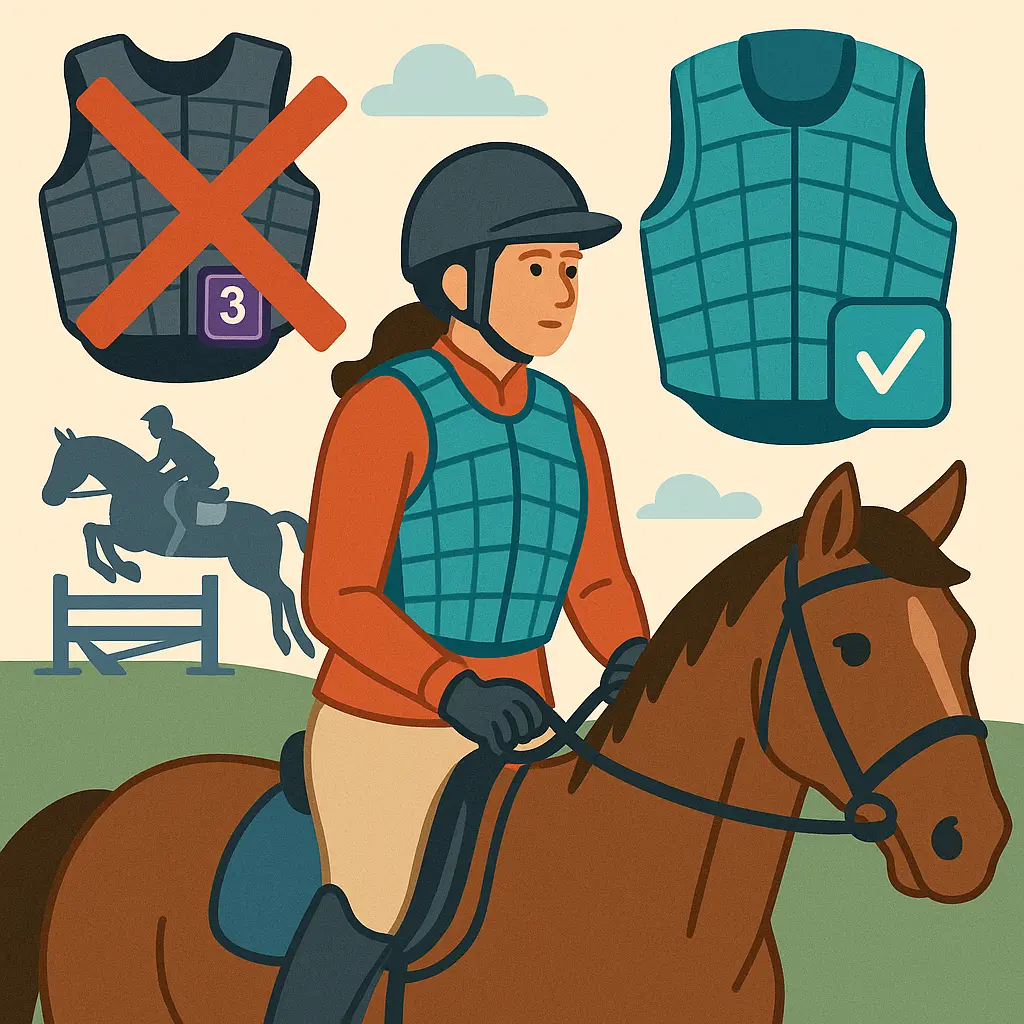
From 1 January 2024, British Eventing (BE), British Riding Clubs (BRC) and the Pony Club only accept body protectors certified to BETA 2018 Level 3 (blue/turquoise label); BETA 2009 labels (including purple Level 3) are no longer permitted.
This update aligns with the current EN13158:2018 European requirement and ensures riders compete in garments that undergo ongoing quality checks. As Horse & Hound states:
“As of 1 January 2024, major governing bodies only accept body protectors that meet the latest BETA level 3 (2018) version of the standard... The BETA level 3 (2018) standard offers the highest level of protection.”
BETA 2018 includes annual re-testing of approved garments for materials and manufacturing consistency, improving trust in real-world performance at British competitions (BETA official standard).
How do you check your body protector is compliant?
Look for a turquoise/blue BETA 2018 Level 3 label; any purple BETA 2009 (even Level 3) or older label is now obsolete at BE, BRC and Pony Club events.
Flip your body protector inside out and find the sewn-in BETA label. Colours and levels you’ll see on current/older garments include:
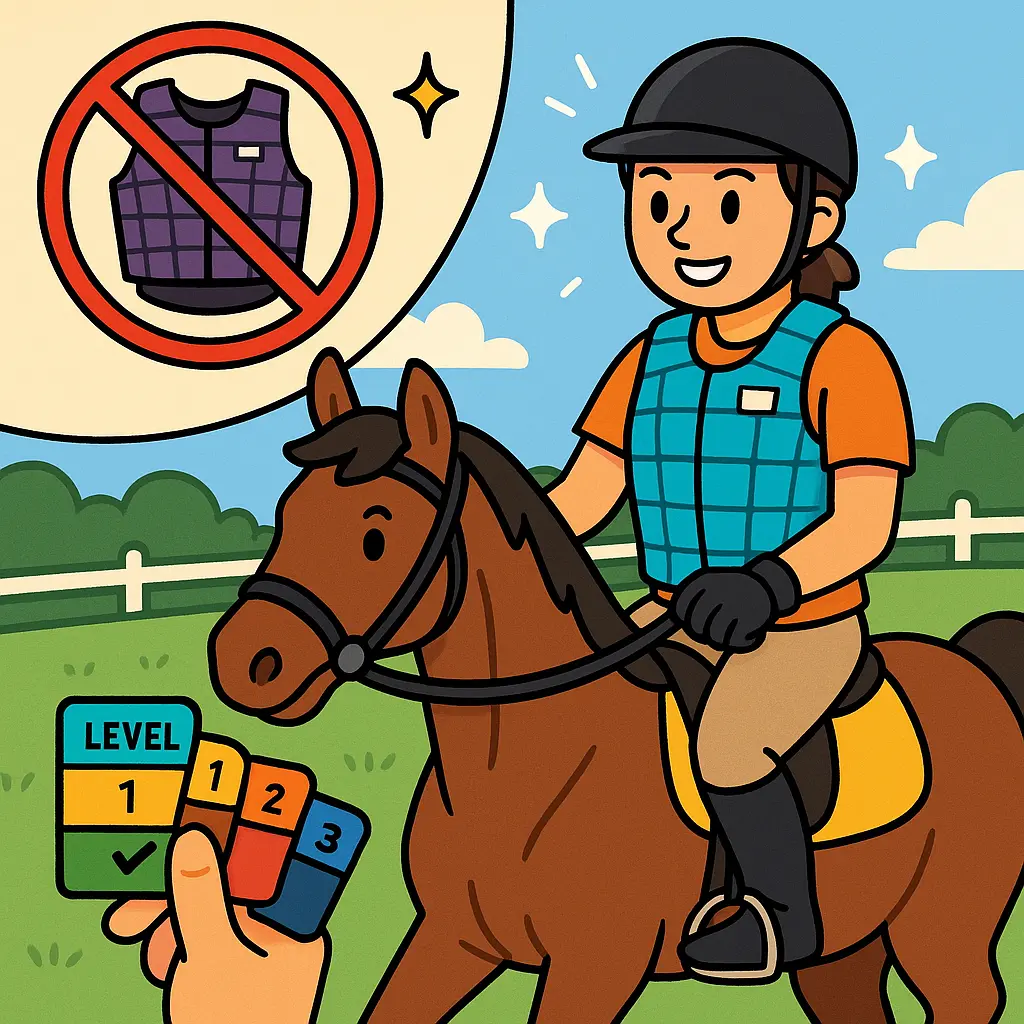
- Level 3 (blue/turquoise) — highest protection for normal riding, competitions and working with horses. Required for BE, BRC, Pony Club from 2024 (BETA 2018).
- Level 2 (orange) — for low-risk situations; not sufficient for eventing (BETA 2018).
- Level 1 (green) — minimal protection for licensed jockeys under weight restrictions (Charles Owen).
Discard or replace if you see purple (BETA 2009 Level 3), orange/black (older Level 2), green/black (older Level 1), or anything pre-2009. These are no longer accepted by the main UK governing bodies and, crucially, their foam will be beyond its recommended service life.
When should you replace your body protector?
Replace every 3–5 years, even if it looks fine; by 2024, all BETA 2009 protectors were 5–14 years old and no longer guaranteed to perform as intended.
BETA and leading manufacturers advise a 3–5 year replacement cycle because the impact-absorbing foams harden or crumble with time, sweat, weather and use. As Racesafe summarises, any 2009-labelled body protector is now outside that safe window. Signs it’s past its best include:
- Foam feels stiff, brittle, lumpy or crumbly
- Cracked panels, loose stitching or distorted shape
- Zips, fastenings or Velcro no longer hold securely
- It’s been in a significant fall or compression (e.g., under a heavy object)
Quick tip: store your vest flat or gently hung in a cool, dry place away from radiators or direct sunlight. Heat accelerates foam degradation — especially after wet winter rides and muddy yard days typical of the UK.
What does BETA 2018 Level 3 actually protect you from?
Level 3 is the highest level available to the public and is designed to prevent minor bruising causing stiffness/pain, reduce soft tissue injuries, and prevent a limited number of rib fractures.
“Level 3 body protectors should prevent minor bruising that would have produced stiffness and pain, reduce soft tissue injuries and prevent a limited number of rib fractures.” — BETA 2018 Official Standard
The BETA 2018 standard aligns with EN13158:2018 and requires annual re-testing of approved garments for material quality and manufacturing consistency. This means the blue label doesn’t just reflect a one-time lab test — it signals ongoing compliance with a robust, current safety benchmark suitable for general riding, competitions and handling horses on the ground.
For UK riders schooling cross-country, hacking on narrow lanes, or handling sharp horses on windy days, Level 3 offers the coverage and impact attenuation you need as your baseline protection.
How should a Level 3 body protector fit?
A correct fit covers your torso with minimal panel gaps, allows full shoulder/hip movement, and matches your chest, waist and back length measurements.
Follow the manufacturer’s sizing chart and measure over a base layer:
- Chest: measure the fullest part of your chest
- Waist: measure your natural waist
- Back length: from the base of your neck (C7) to the just above the saddle when seated
When trying on, adopt your riding position: reach forward, twist at the waist, and simulate jumping. The protector should sit snugly without riding up under your chin or pinching your shoulders. There should be minimal gaps between panels, and hinged sections (if included) should move with you.
Pro tip: check the front zip and side closures are centred and securely fastened with the garment lying flat against your ribcage — no bulging over the abdomen or gaping at the sides. If you wear an inflatable air vest for cross-country, your Level 3 protector goes underneath.
For children, choose child-specific BETA 2018 Level 3 sizes to ensure correct coverage and panel distribution; adult sizes are not an acceptable substitute for growing riders (Charles Owen).
What do UK governing bodies require now?
For British Eventing, British Riding Clubs and the Pony Club, BETA 2018 Level 3 is mandatory from January 2024; British Dressage and British Showjumping make body protectors optional, but Level 3 is strongly recommended for safety.
At affiliated events, your collecting ring steward will check the BETA 2018 Level 3 blue label. If you compete or train cross-country, this is non-negotiable. For BD and BS where body protectors are optional, consider wearing Level 3 for warm-up, young horses, or any ride where falls are more likely.
Always verify the latest rulebook or contact your organisation before a show — especially early season — to avoid last-minute problems. You can find detailed explanations in Horse & Hound’s guidance and the BETA 2018 standard.
UK-specific note: with our wet winters and warm competition days, choose breathable Level 3 designs with vented foams or articulated panels for comfort during long schooling sessions and summer events. Store vests carefully over winter to preserve foam integrity between seasons.
What should you pair with your body protector?
Wear your Level 3 under an air vest for cross-country and pair it with a certified helmet and hi-vis for roadwork to maximise protection.
At Just Horse Riders, we recommend building a complete safety kit that matches your riding:
- Helmet: Always combine your protector with a certified hat for falls involving head impact. Explore our range of riding helmets and hats.
- Air vest: For XC or high-risk training, wear the air vest over your Level 3. The passive protection of foam plus the active cushioning of air gives you the best of both.
- Hi-vis for hacking: Be seen on country lanes and bridleways in low winter sun or drizzle with rider hi-vis.
- Breeches and jodhpurs: A close, comfortable lower-half fit helps your protector sit correctly. See our women’s jodhpurs and breeches and children’s jodhpurs and breeches.
- Competition wear: Make sure your cross-country and show kit complies and lets your protector sit flat underneath. Browse women’s competition clothing.
- Protect your horse, too: For XC and fast work, supportive leg protection matters — check our horse boots and bandages.
- On a budget? Upgrade smartly via our clearance in the Secret Tack Room.
Quick tip: if you regularly hack after work in winter, keep your protector, hat and hi-vis stored together in the tack room so nothing gets missed during dark, rainy evenings.
Bottom line: check your label today. If it isn’t BETA 2018 Level 3 (blue/turquoise), plan your upgrade now — especially if you compete or have juniors in Pony Club. At Just Horse Riders, our team can talk you through sizing, fit checks and kit pairing so you’re comfortable, compliant and confident on every ride.
FAQs
Can I still use my BETA 2009 Level 3 body protector for hacking at home?
Yes, you can use it for leisure or unaffiliated riding, but it will be 5–14 years old by 2024 and the foam may have degraded. Replace every 3–5 years for safety, and remember it’s not allowed at BE, BRC or Pony Club events after 31 December 2023 (Horse & Hound).
What’s the difference between BETA 2018 Level 2 and Level 3?
Level 2 (orange) is for low-risk situations; Level 3 (blue) is the highest public protection level suitable for normal riding, competitions and working with horses, and is required by BE, BRC and Pony Club (BETA 2018).
Do I need to upgrade if my body protector is less than five years old but still marked BETA 2009?
Yes, if you ride at British Eventing, British Riding Clubs or Pony Club, because only BETA 2018 Level 3 is accepted from January 2024. Even for non-affiliated riding, consider upgrading due to foam ageing (Racesafe).
Is there a newer standard coming soon after BETA 2018?
No next update has been announced as of 2024. BETA 2018 includes annual re-testing of approved garments, so upgrading now meets current rules and ongoing quality checks (BETA 2018).
How should I store my protector to extend its life?
Keep it flat or gently hung in a cool, dry place away from direct heat and sunlight. Avoid compressing it under heavy items, especially after wet winter rides when foam is more vulnerable.
Can children wear adult Level 3 protectors?
No. Children should wear child-specific BETA 2018 Level 3 sizes to ensure correct coverage and fit across the ribs and spine (Charles Owen).
Can I wear my air vest without a foam body protector?
For cross-country and high-risk riding, wear your Level 3 body protector under the air vest. The air vest is an additional layer, not a replacement for the baseline foam protection recommended by BETA and required by many organisers.