

How to Effectively Manage Your Horse's Weight Without Compromising Its Health: Tips and Strategies for Horse Owners
Managing your horse’s weight effectively requires a strategic balance of proper nutrition, gradual exercise, and careful monitoring to ensure that your equine companion remains both healthy and comfortable. Abrupt weight changes can be harmful, so implementing any adjustments under veterinary guidance is crucial for success over time.
Understanding the Importance of Healthy Weight Management
The necessity of maintaining an ideal body condition in horses cannot be overstated. This is key in preventing health concerns such as insulin resistance, laminitis, arthritis, and metabolic disorders. Obesity is just as detrimental as underweight conditions, leading to decreased lifespan and performance. The esteemed Henneke Body Condition Scoring (BCS) system, which ranges from 1 (emaciated) to 9 (extremely obese), assesses and tracks weight, with a score of around 5 considered optimal for most horses.
1. Assess and Monitor Your Horse’s Weight Regularly
Begin any weight management plan by accurately determining your horse’s current BCS and weight. Monthly assessments using weight tapes, scales, or body condition scoring help track progress while keeping records reveals any plateaus or changes [Source]. Since different breeds have natural variations in fat distribution, consult your veterinarian to correctly interpret scores for your horse.
2. Implement a Nutritionally Balanced Diet
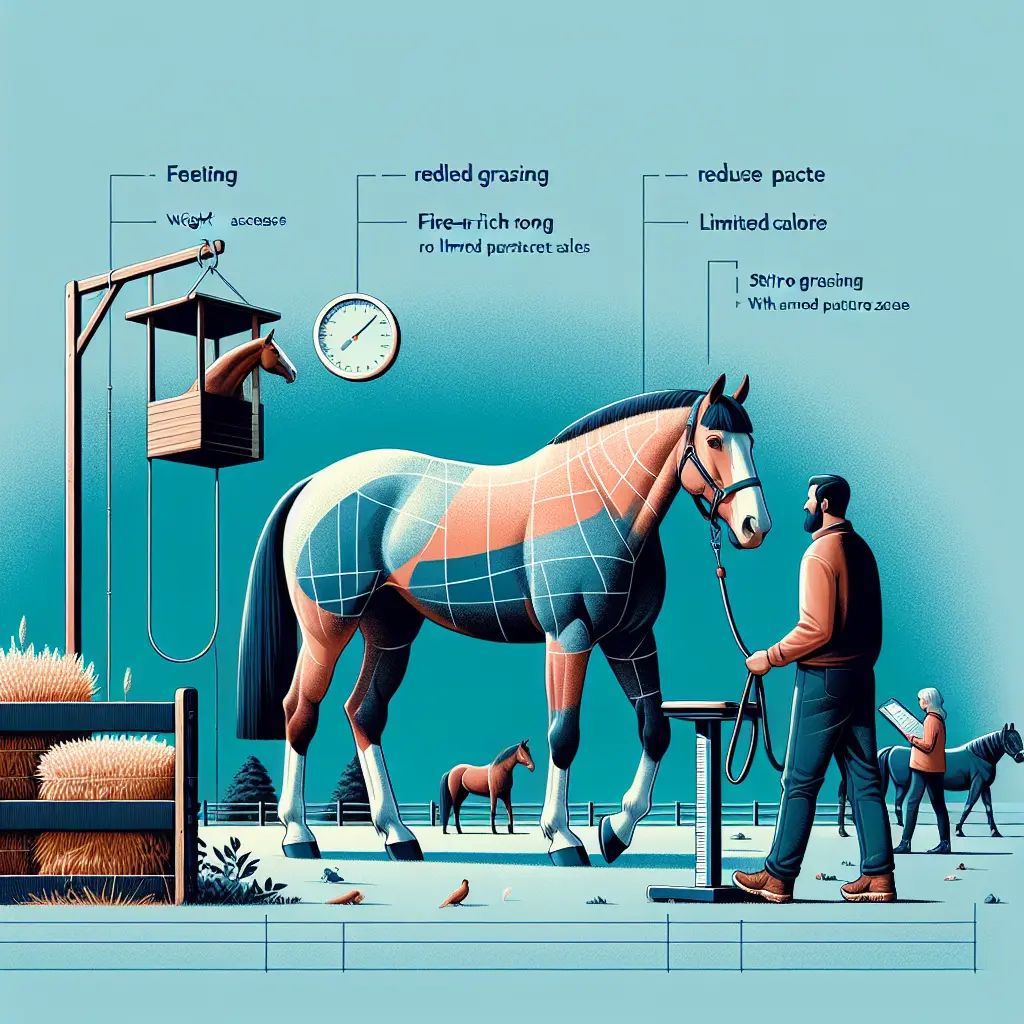
Limit Calories Gradually
Reduce your horse’s total caloric intake slowly, ideally by no more than 10% over 7 to 10 days, to avoid metabolic disruptions [Source]. Gradual changes are key.
Focus on Roughage, Not Grain
Switch out high-calorie grains and concentrates with fiber-rich forages, such as mature grass hay or oat hay, which are lower in calories but maintain satiety and gut health. Limiting treats and pasture time may be necessary to maintain steady weight management [Source].
Use Ration Balancers
When reducing grains or concentrates, supplement with a ration balancer or vitamin/mineral additions to meet nutritional requirements minus the extra calories.
Feed According to Body Weight
Start by feeding approximately 2% of your horse’s body weight in forage, gradually reducing to about 1.5% as advised by your equine nutritionist.
3. Design a Tailored Exercise Program
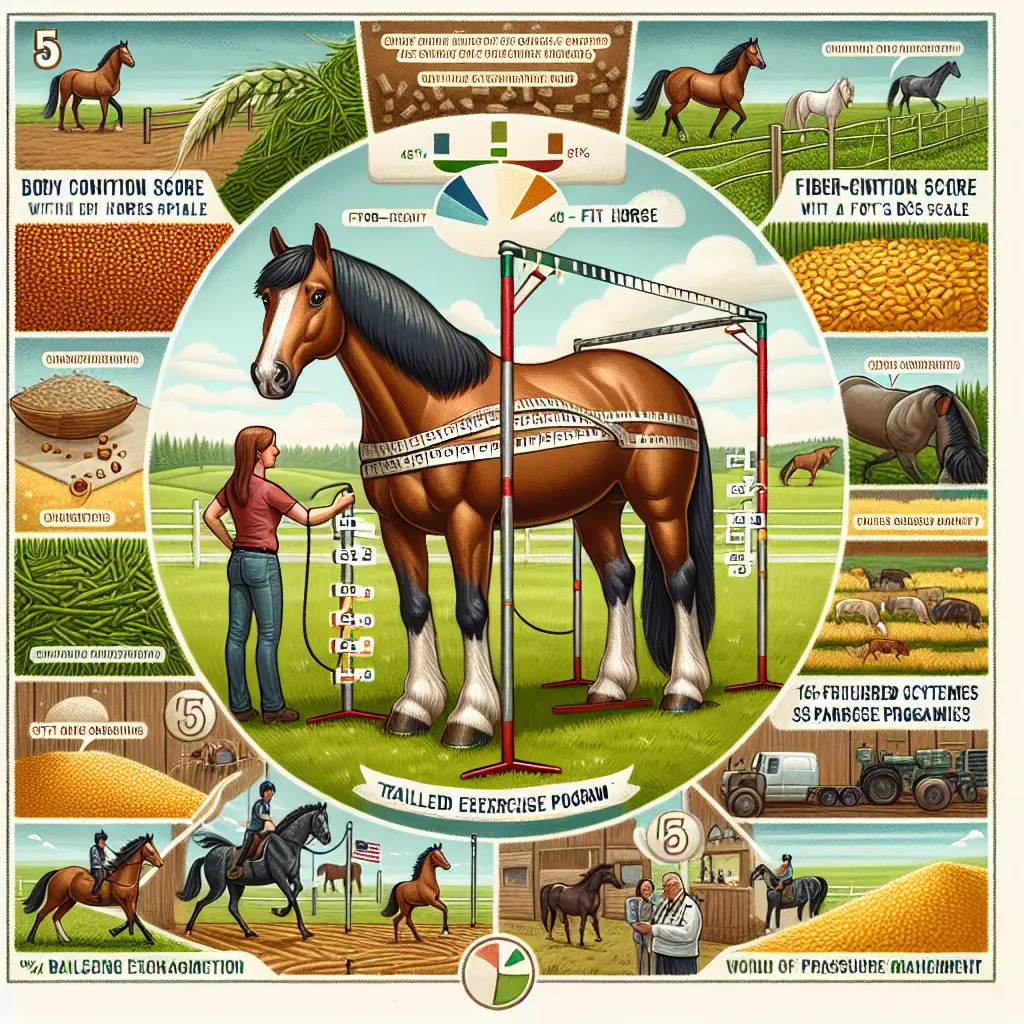
Exercise is a vital component of weight management, helping to burn calories while improving metabolic health. However, several considerations need attention:
Start Gradually
Especially for overweight horses, begin with low-intensity work, such as walking or lunging, to reduce the risk of joint stress or injury [Source].
Incorporate Variety
Use activities like stretching and walking over poles to engage muscles safely, while improving flexibility and coordination.
Build Up Exercise Time and Intensity
Aim for 20-30 minutes of varied gait work 5 days per week, increasing both intensity and duration as your horse’s fitness improves.
Include In-Hand Exercises
If riding isn’t possible, activities like brisk walking that raise the heart rate or horse agility help maintain motivation and improve overall fitness [Source].
4. Use Pasture Management Strategies
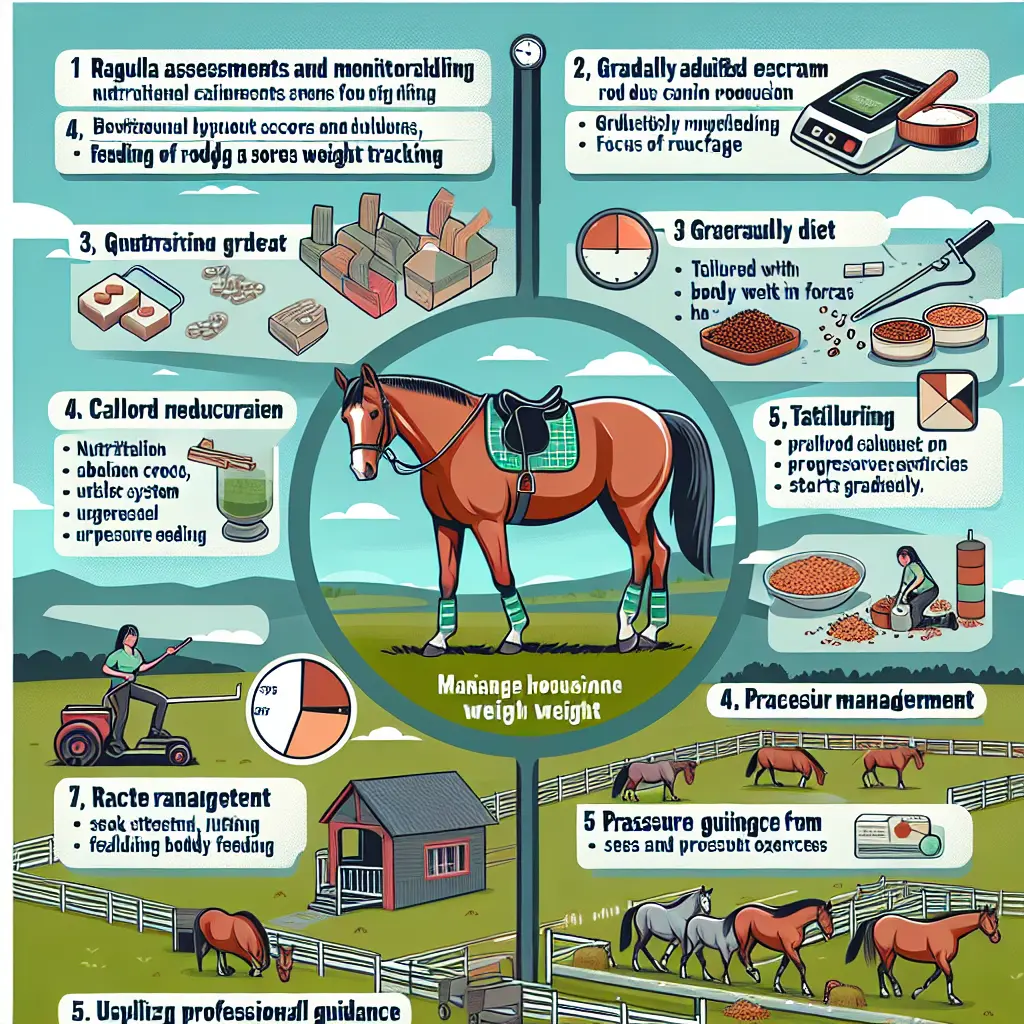
Pasture is both a source of nutrition and potential excess calories. Strategies include:
Strip Grazing
Control the grazing quantity by allowing access to small sections.
Track Systems
Creating a walking track that limits access to lush pasture can encourage exercise while managing grazing time [Source].
Separate Feeding
Feed restricted ration hay away from other horses to prevent overeating or feed stealing [Source].
5. Work Closely with a Professional Team

An equine veterinarian and nutritionist can offer tailored advice, ensuring that your horse’s diet and exercise plan aligns with its health needs. This teamwork approach is vital to preventing metabolic issues and adapting plans as needed [Source].
Key Facts and Figures
- Feeding rates: Start at 2% of body weight in forage, reducing to about 1.5% if weight loss is required.
- Recommend shedding no more than 1-2% of body weight weekly to avoid metabolic stress.
- Exercise recommendation: Aim for 20-30 minutes per session, 5 days per week.
- Body Condition Scoring: 1 (emaciated) to 9 (obese) scale, with a target around 5.
In conclusion, by employing gradual dietary adjustments, consistent exercise, and professional guidance, horse owners can manage their horses’ weight effectively without compromising health. Continuous monitoring and patience are essential in maintaining an ideal weight and enhancing the quality of life for your equine partners.
Explore More: Looking for the best Jodhpur Collection? Discover a range of Horse Riding Boots, Horse Riding Gloves, and Horse Riding Socks to complement your equestrian wardrobe. Don't miss our Horse Treats And Gifts for some delightful surprises for you and your horse.