

Introduction
As any equestrian knows, keeping your horse's coat healthy is just as important as regular workouts or a balanced diet. Unfortunately, one of the most common skin conditions horses face is rain scald, and if you've ever spotted those crusty scabs on your equine buddy, you know just how alarming it can be. But fear not! This guide is here to help you manage and prevent rain scald to keep your horse comfortable and galloping smoothly into the drier months.
What Is Rain Scald?
Rain scald, scientifically known as Dermatophilus congolensis infection, shares its bacterial roots with mud fever. This condition thrives in environments that are consistently warm and moist—conditions your horse might encounter during long, wet autumn and winter days when they love to roll in the mud and splash in puddles.
Typically manifesting as matted patches of hair with crusty scabs, rain scald is often seen along the back, neck, and hindquarters. Sometimes, these patches can even extend to other parts of the body if the skin is exposed to excessive moisture or insect bites.
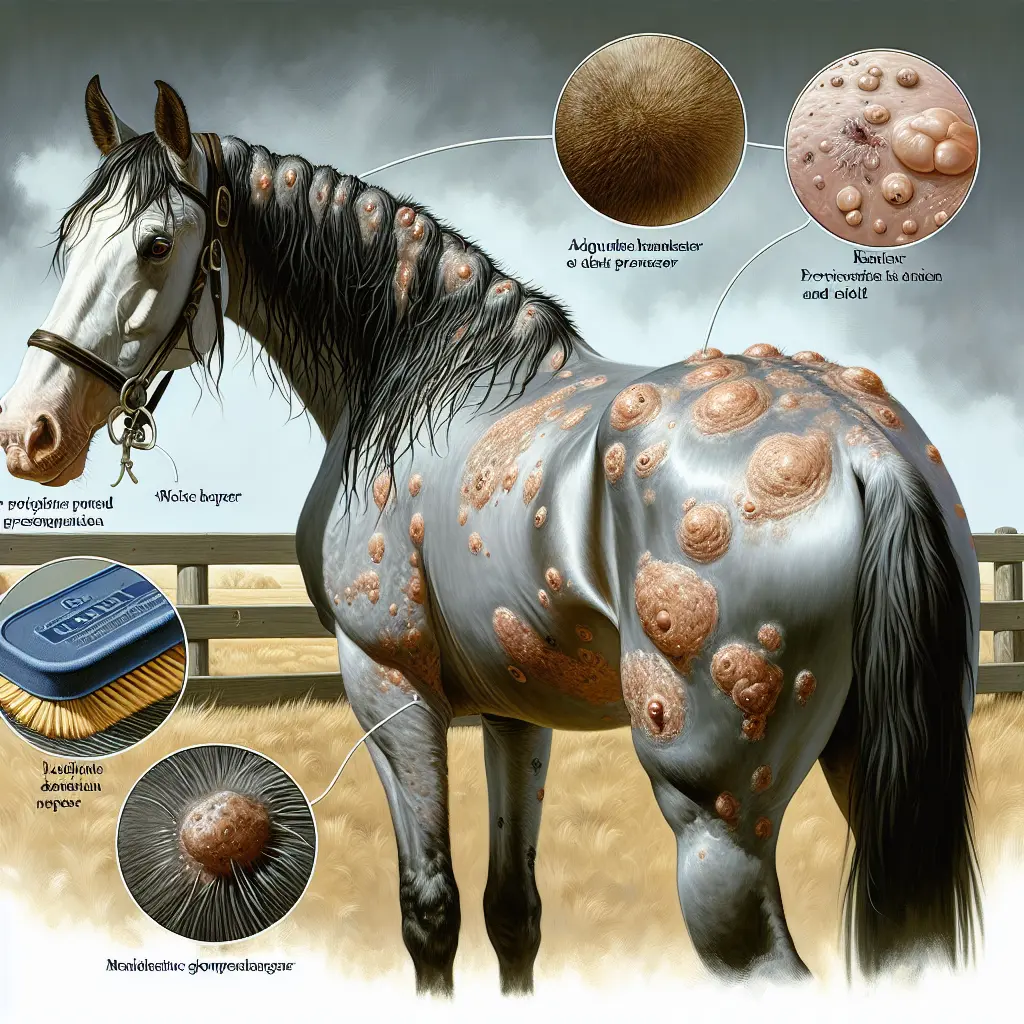
While not generally a grave threat, rain scald can cause significant discomfort and lead to other issues if not addressed in time. It's also highly contagious, which means that sharing grooming tools with other horses without proper cleaning can exacerbate the problem (source).
Recognizing the Signs of Rain Scald
Early detection is your best weapon in treating and managing rain scald. Here are some primary signals to watch out for:
- Matted or clumped hair accompanied by scabs
- Raised bumps or lesions on the skin
- Raw or red skin exposed beneath the scabs
- Signs of discomfort, such as itching or sensitivity
Horses that frequently encounter moist conditions are most at risk. Regular grooming and timely health checkups can help you spot the early symptoms of rain scald, preventing the condition from escalating further (source).
How to Treat Rain Scald
Tackling rain scald involves a three-pronged approach: managing the environment, treating the skin, and involving veterinary attention when necessary. Here's your roadmap to effective treatment:
1. Remove Your Horse from Wet Conditions
First and foremost, move your horse to a dry area. If stabled, ensure their quarters are well-ventilated. Avoid turnout in wet fields until the condition has cleared. This step alone can make a monumental difference, as prolonged wetness is the major instigator of rain scald.
2. Cleanse the Affected Areas
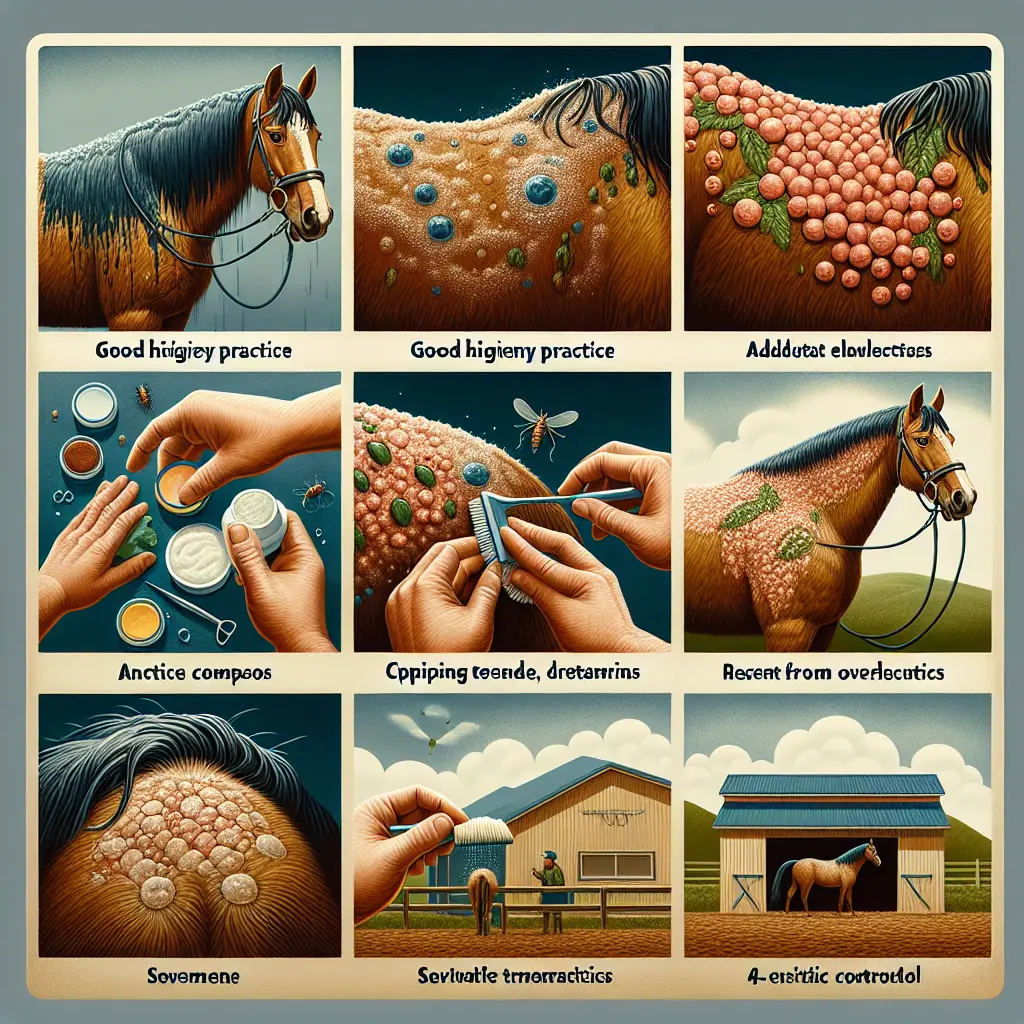
A gentle cleanse using an antibacterial solution like diluted Hibiscrub (chlorhexidine) is necessary. Pat the area dry after cleansing, taking care not to rub, as this can exacerbate the soreness. Repeat this daily until the scabs disappear.
3. Use Topical Treatments
After cleansing, your veterinarian might prescribe antibacterial creams or medicated shampoos to avert secondary infections. When dealing with moderate to severe instances, a course of systemic antibiotics may be required (source).
4. Clip Thick Hair (If Necessary)
If your horse sports a thick coat, clipping the hair around the infected area can aid in drying and make treatment more effective. However, often sedation is necessary to reduce discomfort if scab removal becomes painful.
5. Monitor for Improvement
Keep a close watch on your horse's condition. If symptoms persist or worsen, seek veterinary advice without delay.
Preventing Rain Scald: Practical Tips
Prevention is far better than any cure, and with a few strategic adjustments, you can minimize your horse's risk of falling victim to rain scald.
1. Provide Proper Shelter
Make it a priority to offer your horse a well-ventilated, dry shelter, especially during rainy spells. Adequate protection from the elements can go a long way.
2. Practice Good Hygiene
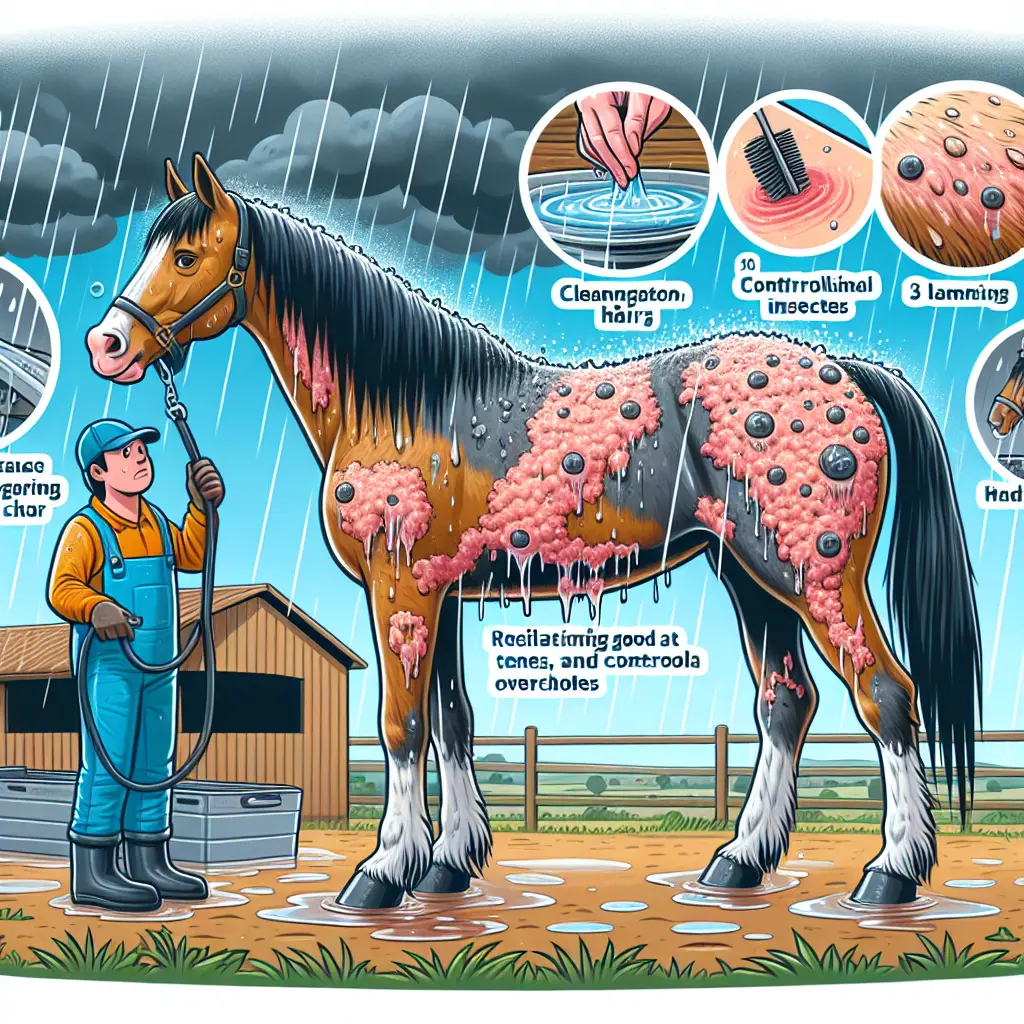
Regular grooming sessions not only keep your horse shiny and neat but also help you monitor their skin health closely. Cleaning grooming tools after each use is another step to prevent cross-contamination.
3. Use Medicated Shampoos and Creams
Consider incorporating medicated products into your regular grooming routine, especially during wetter months.
4. Control Ticks and Insects
A good insect control regime is necessary to protect against bacteria-carrying pests. Regularly check for insects and use appropriate repellents as needed.
5. Keep Your Horse Dry
Over-rugging can lead to excessive sweating, which is best avoided. Use a waterproof rainsheet to keep your horse dry when they're outside during heavy rainfall. Explore our collection of turnout rugs for options.
When to Call the Vet
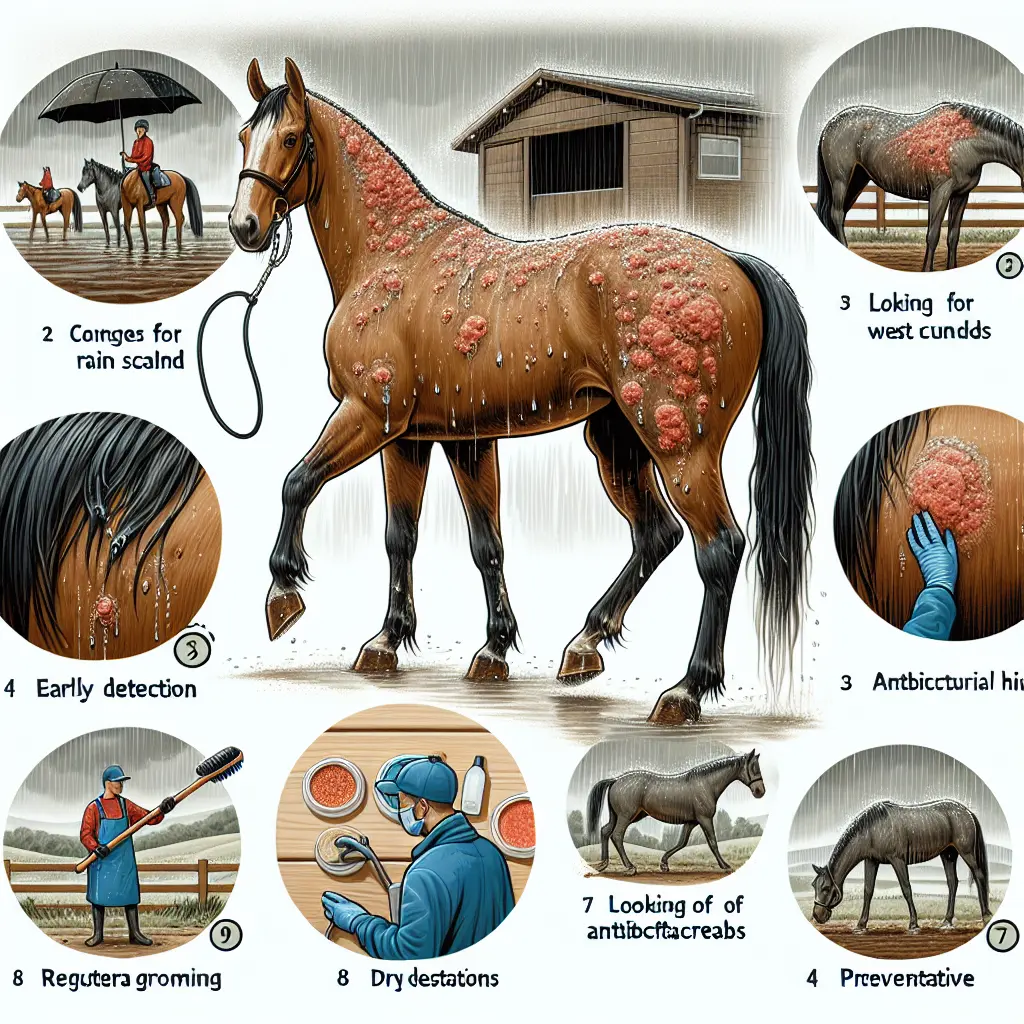
At times, the best course of action involves calling in veterinary support, especially when:
- The infection becomes severe or widespread
- Your horse appears lethargic, in pain, or loses appetite
- Signs of a secondary infection arise, or the condition isn't improving
Prompt veterinary care ensures that if stronger medications or treatments are needed, they can be administered timely (source).
Conclusion: Keep Your Horse Comfortable and Healthy
Rain scald is a common yet manageable affliction of horses, particularly during the wet seasons. But with keen observation, regular maintenance, and a touch of TLC, you can ensure your horse stays comfortable and content. Remember, prevention and early detection are your allies.
We hope you find success with these tips and tricks, and if you enjoyed our guide, share it with fellow horse owners! Together, we can ensure our equine friends remain in great health and high spirits all year round.