

Understanding Sudden Behavioral Changes in Well-Mannered Horses: A Case Study Approach
Introduction
A horse owner arrives at the stable to discover their usually calm mare behaving contrary to her usual demeanor—refusing to cooperate under saddle. Such sudden behavioral changes serve as a signal for underlying issues, whether physical or psychological. Horses often communicate distress through their behavior[4]. In this blog, we will explore what these sudden shifts might mean and how to address them efficiently.
Why Sudden Behavioral Changes Are Warning Signs
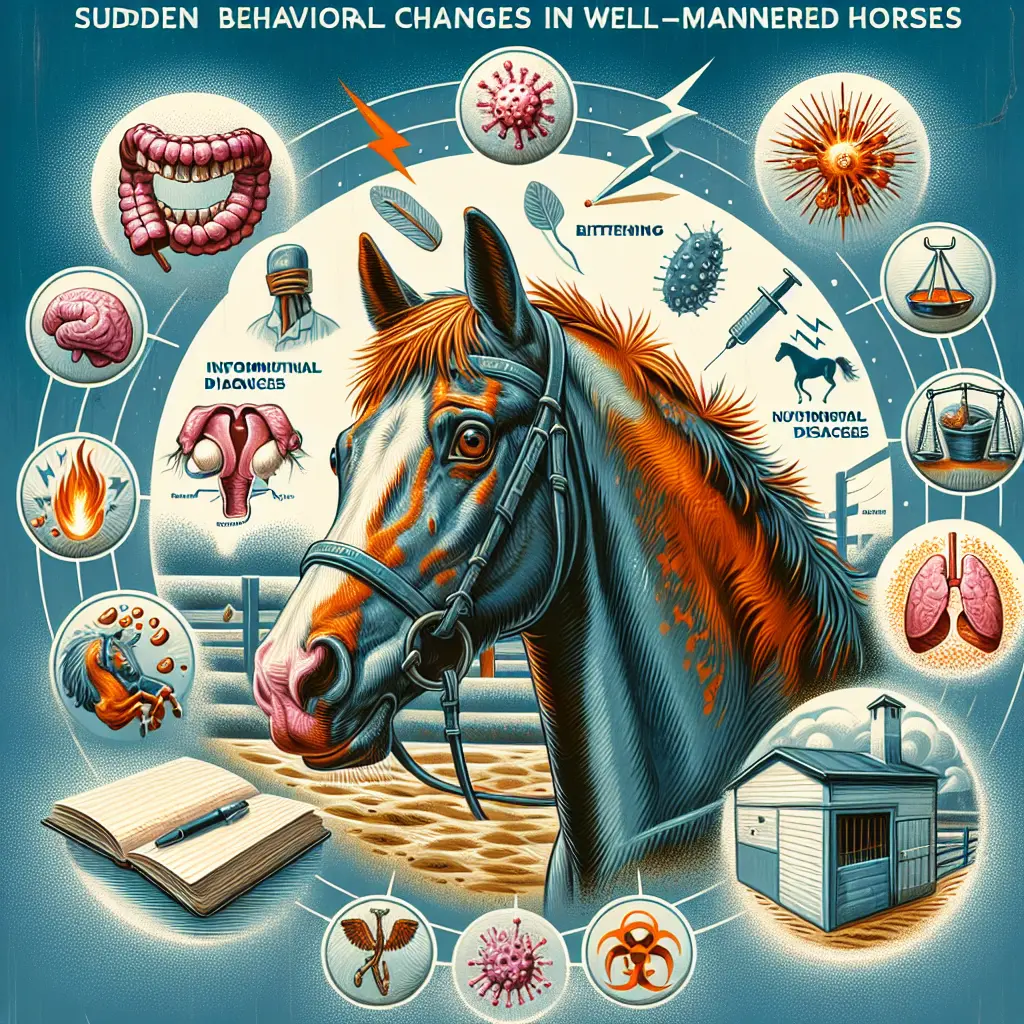
The primary causes of sudden behavior changes in horses are pain, illness, and stress[3]. These changes can be early indicators of underlying issues that require immediate attention. Research shows that only a small percentage of behavioral shifts are due to hormonal factors, emphasizing the need to consider other health and environmental causes first.
The Primary Culprits: Pain and Discomfort
Dental Issues and Oral Pain
One common yet often overlooked cause of behavioral changes is dental problems. Horses with sharp teeth or dental misalignment often experience oral pain, resulting in reluctance to eat or resist bridling[1]. Therefore, a previously cooperative horse may show sudden changes in behavior during tacking or riding due to mouth discomfort.
Gastrointestinal Issues and Colic
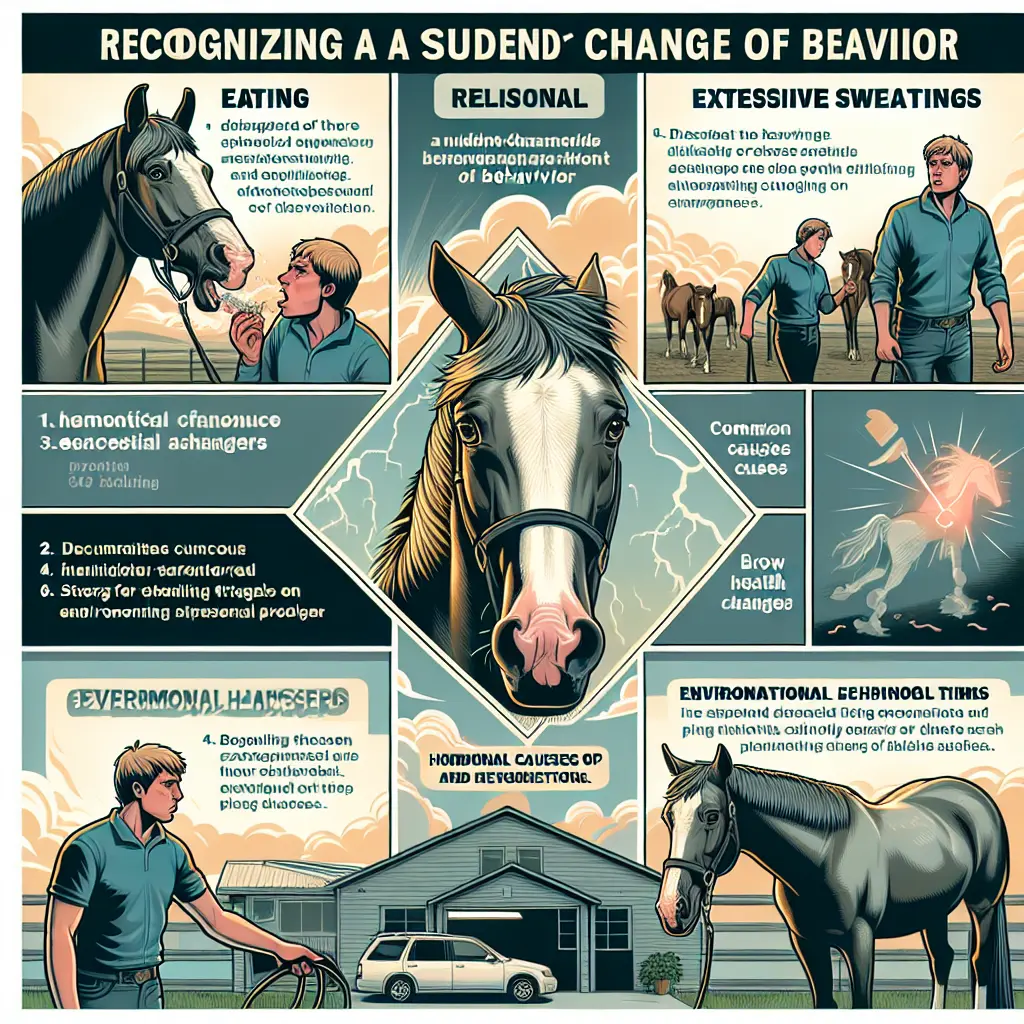
Colic, a common cause of abdominal pain in horses, often presents dramatic behavioral signals, such as pawing or rolling[1]. Additionally, gastric ulcers are a less obvious, yet prevalent cause of behavior changes, particularly under saddle, as horses react to internal pain[8].
Musculoskeletal Pain
Pain from conditions like ulcers, arthritis, or muscle soreness often triggers behavioral shifts. For instance, arthritis can cause a previously active horse to show reluctance in moving or exhibit resistance during exercise[1].
Illness and Systemic Conditions
Infectious Diseases
Respiratory infections and equine influenza are common illnesses that can lead to fatigue and behavioral changes. Often, behavioral changes occur before other physical symptoms, such as nasal discharge or coughing[1].
Nutritional Deficiencies and Anemia

A poor diet lacking in essential vitamins and minerals can result in fatigue, and anemia might cause a horse to feel lethargic, with behavior changes being the first noticeable symptom before other signs, such as weight loss, become evident[1].
Stress and Environmental Triggers
Understanding Equine Stress Responses
Prolonged stress is a significant behavioral modifier in horses. Stress impacts horses due to various triggers, potentially causing weight loss, gastric ulcers, colic, a weakened immune system, and behavior changes[2].
Physical Indicators of Stress
- Weaving and stall walking
- Shaking or trembling
- Eye rolling
- Excessive sweating
- Poor behavior such as spooking or biting
Recognizing these specific stress manifestations allows owners to intervene proactively.
Hormonal Changes and Reproductive Cycles
Mare Estrous Cycle
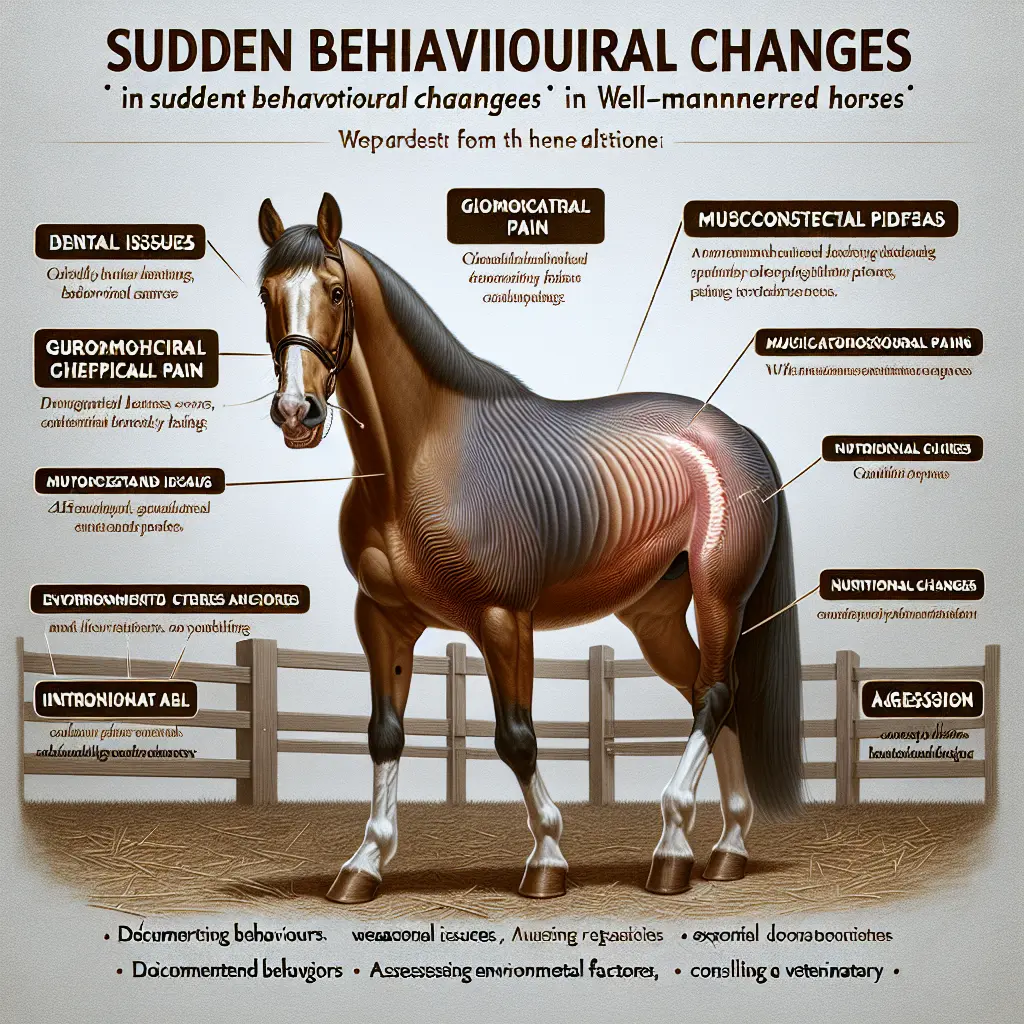
While hormonal changes account for a minority of behavioral issues, they are essential to consider, especially in mares undergoing their estrous cycle. Behaviors such as increased sensitivity or restlessness might be cycle-related[3]. Documenting these changes can help distinguish hormone-influenced behavior from other issues needing veterinary focus.
Aggression: A Behavioral Red Flag
Sudden aggression in a well-mannered horse signals that something could be medically or psychologically wrong. Aggression can include chasing, kicking, or biting, prompting immediate veterinary attention[5].
Developing a Baseline: The Foundation for Early Detection
Establish a behavioral baseline to understand normal versus concerning variations. Knowing your horse's normal temperament, energy level, and social behavior gives a reference point for recognizing significant changes[4].
Creating a Behavior Diary
A behavior diary helps document specific incidents, environmental factors, and resolutions, providing valuable information for veterinarians during assessments[4].
When to Contact Your Veterinarian
Professional evaluation should precede behavioral adjustments. Contact a vet if you notice sudden aggression, lethargy, changes in appetite, or unexplained weight loss[1]. Quick intervention ensures minor issues don't escalate into serious problems.
Case Study Framework: Approaching Behavioral Changes Systematically
Step 1: Establish What Changed
Document the specific shift in behavior and the contexts in which it occurs.
Step 2: Rule Out Medical Causes
Schedule a comprehensive veterinary examination and provide detailed observations[4].
Step 3: Assess Environmental Factors
Evaluate recent changes in barn routines, diet, handlers, or other environmental elements.
Step 4: Evaluate Stress Levels
Identify stress triggers and determine the impact on behavior to address chronic stress[2].
Step 5: Consider Cycle-Related Changes (Mares)
For mares, correlate behavior changes with their estrous cycle to prioritize potential interventions.
Step 6: Implement Changes Based on Findings
Collaborate with your veterinarian and trainer on medical, environmental, or behavioral strategies.
Conclusion
Sudden behavioral changes in horses are not simply shifts in attitude, but critical communications about their health and welfare. By identifying primary causes like pain, illness, and stress, offering systematic approaches to problem-solving, and enlisting veterinary support, owners safeguard their equine companions' well-being.