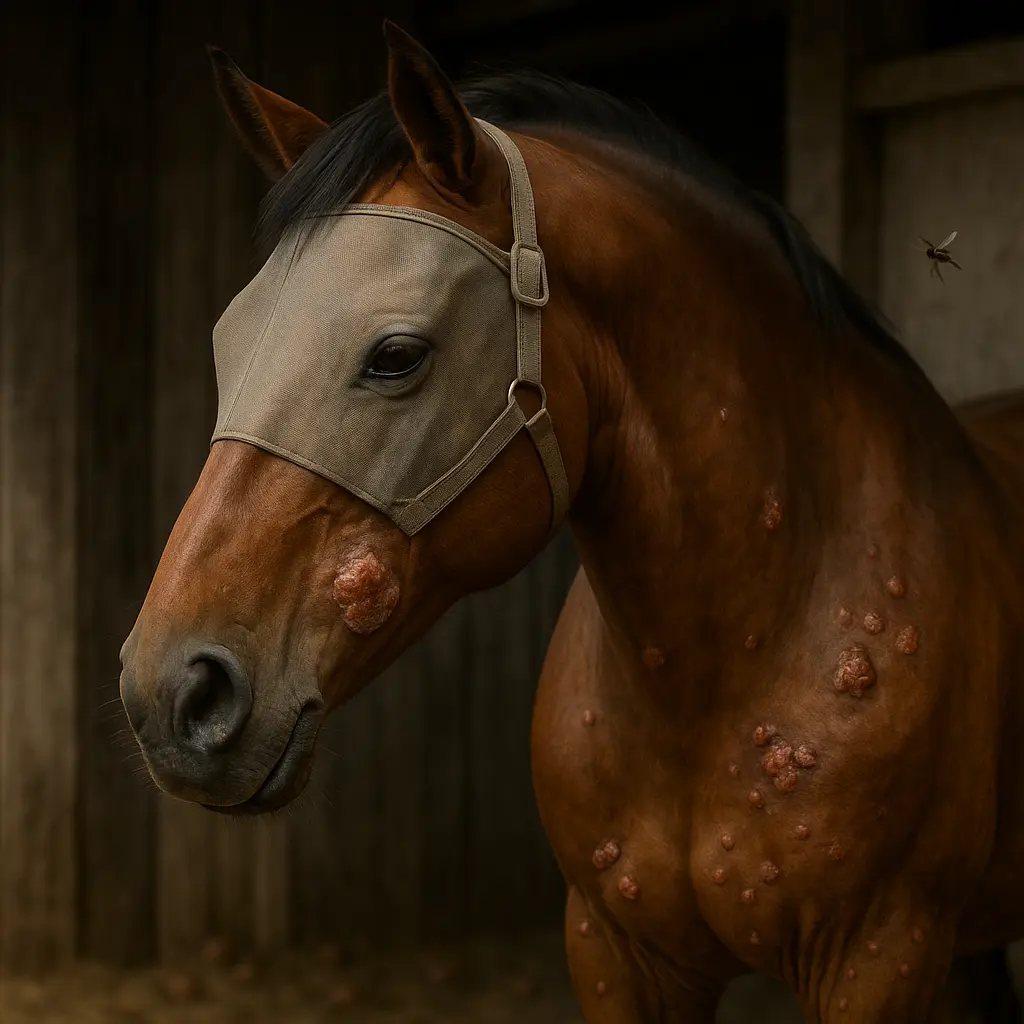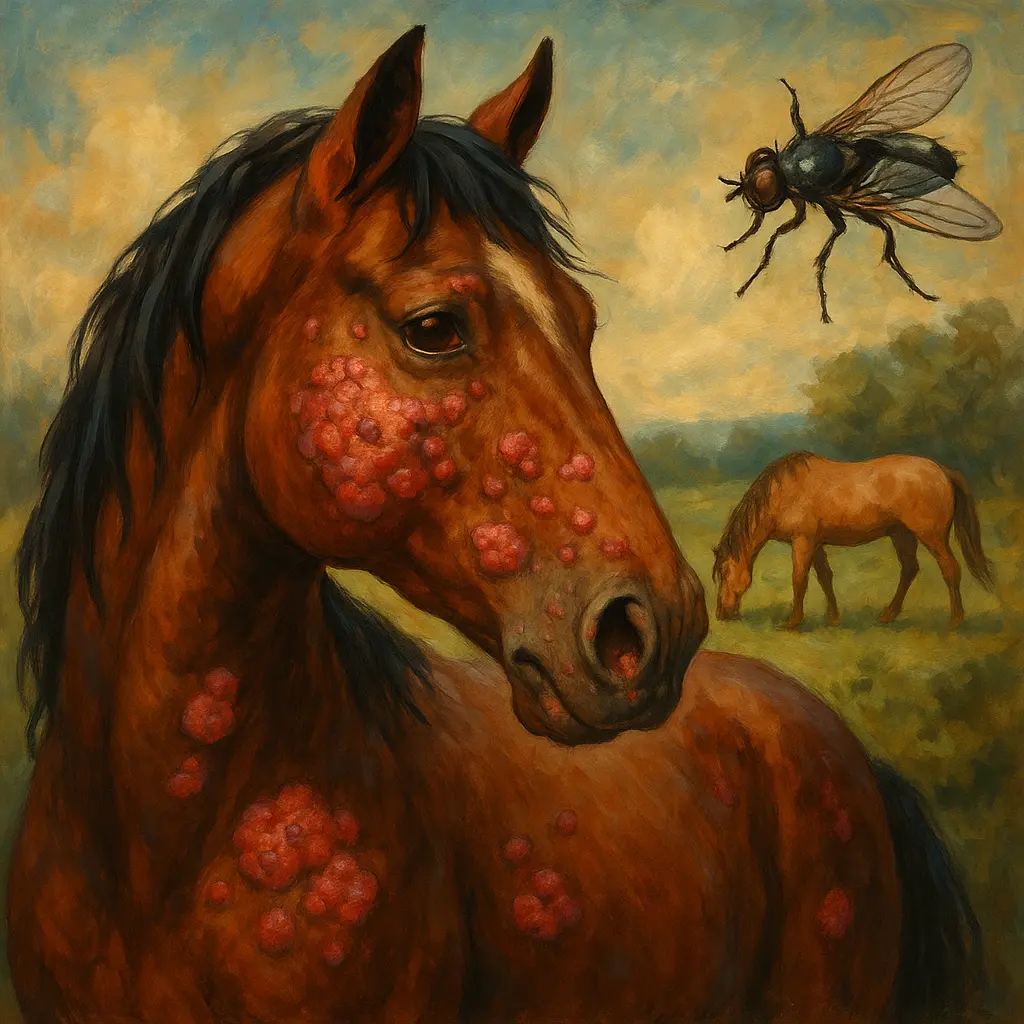
Sarcoids are the most common skin tumour of UK horses — and they’re far from rare. They can look like anything from a flat, scaly patch to an ulcerated mass, and without a plan they tend to multiply, recur and interfere with work and welfare.
Key takeaway: Act early, control flies and work with your vet — not DIY — to keep sarcoids small, reduce spread and lower the risk of recurrence.
What are equine sarcoids?
Equine sarcoids are locally invasive skin tumours and the single most common equine cutaneous neoplasm, accounting for roughly 46% of skin tumour biopsy diagnoses in horses. They affect all breeds, colours and sexes, and behave aggressively in the skin even though they rarely metastasise distantly.
“Equine sarcoids are spontaneous, locally invasive tumours of the skin of horses, mules, and donkeys affecting all breeds, ages, colours and sexes and are the most commonly encountered of all the equine tumours.” (XLEquine (UK veterinary group))
Vets classify sarcoids into types that often guide management. In large studies the distribution is approximately: occult (flat) 5%, verrucose (warty) 25%, nodular 13%, fibroblastic (fleshy/ulcerative) 24%, and mixed 34% (Equine Veterinary Journal — systematic review). Common sites include the groin and sheath, chest, neck, face/eyelids and areas of old wounds, especially where skin stays moist or tack rubs.
How common in UK horses — and who is at risk?
In UK owner surveys, sarcoids affect about 5.8% of horses, with young horses (one to six years) and geldings most commonly affected, particularly in moist areas like the groin, chest, neck and face. When present, horses often carry multiple lesions — on average 20–30 per animal in one UK report.
Large-scale UK research identified 1,414 sarcoid cases among 13,827 equids, underlining how frequently buyers and yards encounter them (Equine Veterinary Journal — epidemiology). Sarcoids frequently originate at wound sites and in damp skin folds — a familiar challenge through British autumn/winter — and they can become infected or irritated where rugs and tack contact the skin.
“Once a horse has developed one sarcoid they are highly likely to develop more... Treatment becomes increasingly difficult with advancing time and following previous recurrence.” (XLEquine)
Should you vet for sarcoids before buying a horse?
Yes — a full BEVA-style pre-purchase examination should screen for sarcoids at typical sites, and ambiguous lesions should be discussed with your vet, including whether biopsy confirmation is worth the small but real risk of making a sarcoid more aggressive. Given a 5.8% UK prevalence and frequent under-rug locations, careful inspection in good light is essential.
Ask the seller directly about any history of “warts”, wounds that won’t heal, or lumps that change with seasons or flies. Your vet will focus on areas that affect riding — girth, behind the elbow, bridle and saddle contact points — and on sites where management is harder (eyelids, sheath, inside thighs). Biopsy is not a routine step because some sarcoids can flare after disturbance, but it has a place when a lesion’s identity will materially change management — make that call with your vet.
If sarcoids are discovered after purchase and were not disclosed, UK buyers may have recourse for misrepresentation under the Sale of Goods Act 1979 if the defect materially affects value or usability; get a contemporaneous veterinary report and photographs. At Just Horse Riders, we recommend formal pre-purchase vetting to BEVA guidelines precisely because sarcoids can influence future costs, work and welfare.
Do sarcoids spread — and how can you reduce risk?
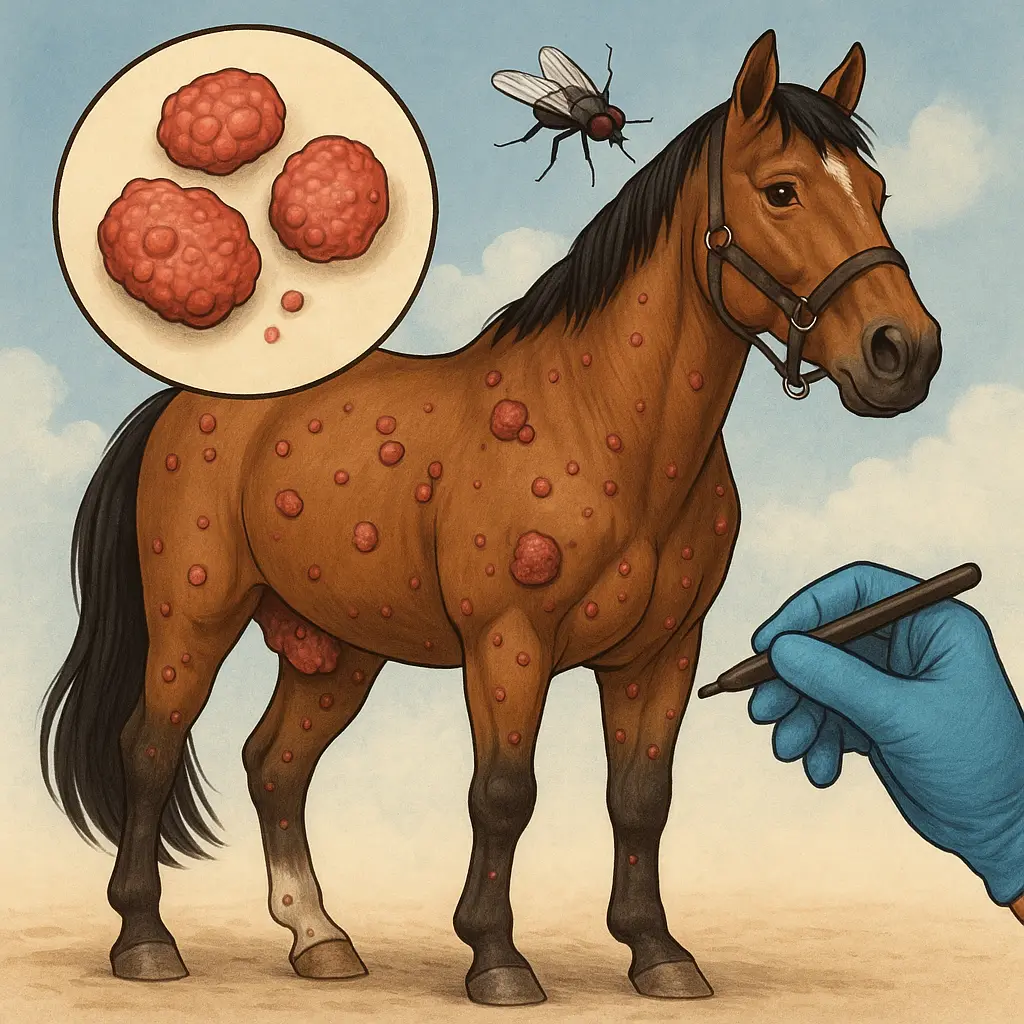
Yes — UK epidemiological evidence supports equid-to-equid spread, likely mediated by flies, so isolation and robust fly control are key, especially from late spring through summer. Keep affected horses separate where feasible and implement yard-wide biosecurity during fly season.
In the 1,414-case UK analysis, clustering patterns supported horse-to-horse transmission (EVJ — epidemiology). Flies are implicated as mechanical vectors, moving between wounds and sarcoid surfaces and other horses. Practical steps:
- Stable or separate at peak fly times (dawn/dusk), and remove horses from poached, wet gateways that attract flies.
- Use physical barriers such as a well-fitting fly rug or fly sheet and fly masks whenever flies are active.
- Adopt single-horse grooming kits; disinfect clippers and blades; don’t share girths, pads or nosebands across horses with lesions. A dedicated grooming kit speeds good hygiene.
- Keep wounds covered and clean; prompt wound care lowers the chance of a sarcoid developing at the site later on.
Quick tip: Rug choice matters. Breathable meshes with belly flaps protect typical sarcoid hotspots. Our customers rate brands like WeatherBeeta for durable, horse-friendly fly protection in busy UK livery yards.
Should you treat straight away — or watch and wait?
If a small sarcoid is stable and not in a risky location, careful monitoring is reasonable because around one-third of untreated horses show spontaneous regression. But any evidence of growth, a limb location, or interference with tack calls for early, vet-led treatment.
Spontaneous regression (~33%) appears immune-mediated (clinical and epidemiological study — PMC). However, the longer a lesion has been present and the larger it grows, the harder it becomes to remove without seeding new lesions and the more likely it is to recur. After a first treatment (most often excision), overall recurrence is about 35%, and most recurrences happen within four months (PMC).
Avoid DIY or “try-it-and-see” interventions. Some methods can worsen disease: for example, cryotherapy has been reported to accelerate growth in 91% of fibroblastic sarcoids in one analysis, with some cases deteriorating severely (EVJ — systematic review). Biopsy can also stimulate aggression in certain types — don’t sample without a clear veterinary plan.
Pro tip: Photograph and measure lesions monthly and schedule rechecks at 4 and 8 months after any treatment — the windows when most recurrences declare themselves.
What treatments work best — and what should you expect?
No single treatment is invariably effective, but early, wide surgical excision under general anaesthesia in recumbency — allowing clean margins and meticulous handling to prevent autoinoculation — offers lower recurrence than delayed, piecemeal approaches. Cases on limbs, large or long-standing lesions, and those previously disturbed tend to have higher recurrence risk.
Why recumbent excision? It lets your surgeon achieve wider margins, prevents the horse from moving contamination across the skin, and reduces the chance that instruments or blood seed other sites. Many vets will combine surgery with adjuvant therapies depending on type and location. Your vet will also caution that some sarcoids are better left unbiopsied until a full plan is in place, because disturbance can trigger explosive regrowth in certain subtypes.
“The prognosis for all cases is very guarded and there are many approaches to the management of equine sarcoids suggesting no one treatment is invariably effective and recurrence remains.” (XLEquine)
Aftercare matters as much as the operation:
- Shield limb and girth-area wounds from knocks with thoughtfully applied boots and bandages your vet approves for the site.
- Prevent rug rubs around shoulders and belly with well-fitted, smooth-lined turnout rugs (summer showers) or liners; in winter, choose appropriate fill and fit to avoid moisture build-up over healing skin.
- Keep the site clean and dry; in the UK’s damp months, controlled stable periods help wounds mature without maceration.
- Use only vet-recommended topical care; some harsh chemicals aggravate sarcoids.

Everyday management for UK owners
Day-to-day success is about fly defence, gentle hygiene and reducing friction on vulnerable skin, adjusted to our wet winters and midgey summers. A consistent routine lowers spread risk and helps you spot change early.
- Fly season plan (April–October): Fit a breathable fly rug or sheet with a belly flap and a mask; stable at high-risk times; clear droppings daily; and avoid turnout in boggy, fly-rich corners.
- Rugging for the weather: In rain and wind, choose correctly fitted, seam-taped turnout rugs; in colder stabling, pick moisture-wicking stable rugs to prevent sweating and rubs over lesions.
- Gentle hygiene: Use soft brushes and clean cloths from a dedicated grooming kit for the groin, sheath and elbow areas; cleanse dried sweat after work so salt doesn’t abrade sarcoids.
- Protect from rubbing: Pad girths, adjust tack fit, and use breastplates or girth sleeves if they help keep pressure off a lesion. For limbs, your vet may approve light bandaging when hacking to prevent knocks.
- Skin and general support: Ensure balanced nutrition and discuss targeted supplements with your vet. Many UK owners choose trusted ranges like NAF as part of a wider management plan.
- Don’t pick or scrub: Disrupting a sarcoid can stimulate growth. If a lesion ulcerates or smells, call your vet; don’t cauterise or freeze at home.
- Yard biosecurity: Don’t share tack, pads or grooming kit with horses that have active lesions; disinfect clippers; wash hands between horses.
Quick tip: Photograph lesions on the first of each month against a ruler. A simple phone album becomes an invaluable clinical timeline if treatment is needed.
The bottom line
In the UK, sarcoids are common, locally aggressive and prone to recur — but early identification, fly control and a vet-led plan can keep them small, manageable and less disruptive to your horse’s work and comfort. At Just Horse Riders, we recommend proactive management and stock the practical essentials — from fly protection to gentle grooming gear — to support your vet’s plan.
FAQs
These are the most common UK owner questions on equine sarcoids, answered with evidence from BEVA-affiliated and peer‑reviewed sources.
How common are sarcoids in UK horses?
Owner-reported prevalence is 5.8% in the UK, and sarcoids make up about 46% of equine skin tumour biopsy diagnoses (EVJ — systematic review). In one UK dataset, 1,414 cases were logged among 13,827 equids (EVJ — epidemiology).
Can sarcoids appear after buying a horse?
Yes. Sarcoids most commonly affect younger horses (one to six years), often first appearing in early adulthood, and once a horse has one, more are likely to follow (XLEquine). That’s why thorough pre‑purchase vetting and post‑purchase monitoring matter.
Do sarcoids ever go away without treatment?
Sometimes. About one-third of untreated horses show spontaneous regression, likely driven by the immune system (PMC — clinical study). However, growth, limb location or interference with tack are red flags for early treatment instead of waiting.
What’s the recurrence risk after treatment?
After an initial treatment (commonly surgical excision), around 35% of cases recur, with most recurrences appearing within four months (PMC). Early, wide excision in recumbency and careful aftercare can reduce that risk compared with delayed or fragmented approaches.
Are sarcoids contagious to other horses?
Evidence supports equid-to-equid spread, likely via flies and contaminated surfaces (EVJ — epidemiology). Isolate affected horses where practical, enforce fly control and don’t share grooming kits, pads or clippers.
When should I call the vet urgently?
Contact your vet promptly if a lesion is rapidly enlarging, bleeding, painful, on a limb, near eyes or genitals, or being rubbed by tack/rugs; or if there’s foul odour, heat or discharge suggesting infection. Avoid manipulating or “testing” sarcoids yourself.
Can I ride or compete a horse with sarcoids?
Often yes, provided lesions don’t sit under tack, ulcerate, bleed or cause pain. Use protective measures (tack adjustments, approved bandaging) and keep up fly control. If a sarcoid interferes with welfare or performance, pause schooling and seek veterinary treatment.
If you need practical kit to support your vet’s plan, explore breathable fly rugs, soft-lined turnout rugs, gentle grooming tools and protective boots and bandages — chosen by UK riders and backed by 13,500+ verified Just Horse Riders reviews.