

How to Protect and Heal Keloid Scars on Horse Legs: A Comprehensive Guide to Boot Options and Management Strategies
Keloid scars on horse legs can be a persistent issue for horse owners due to *exuberant granulation tissue* (EGT). Contrary to human keloids, EGT involves an irregular healing process that often leads to raised scars. This article provides insights into protecting and treating keloid-like scars and explores various boot options and management strategies to aid recovery.
Understanding Keloid Scars and Proud Flesh in Horses
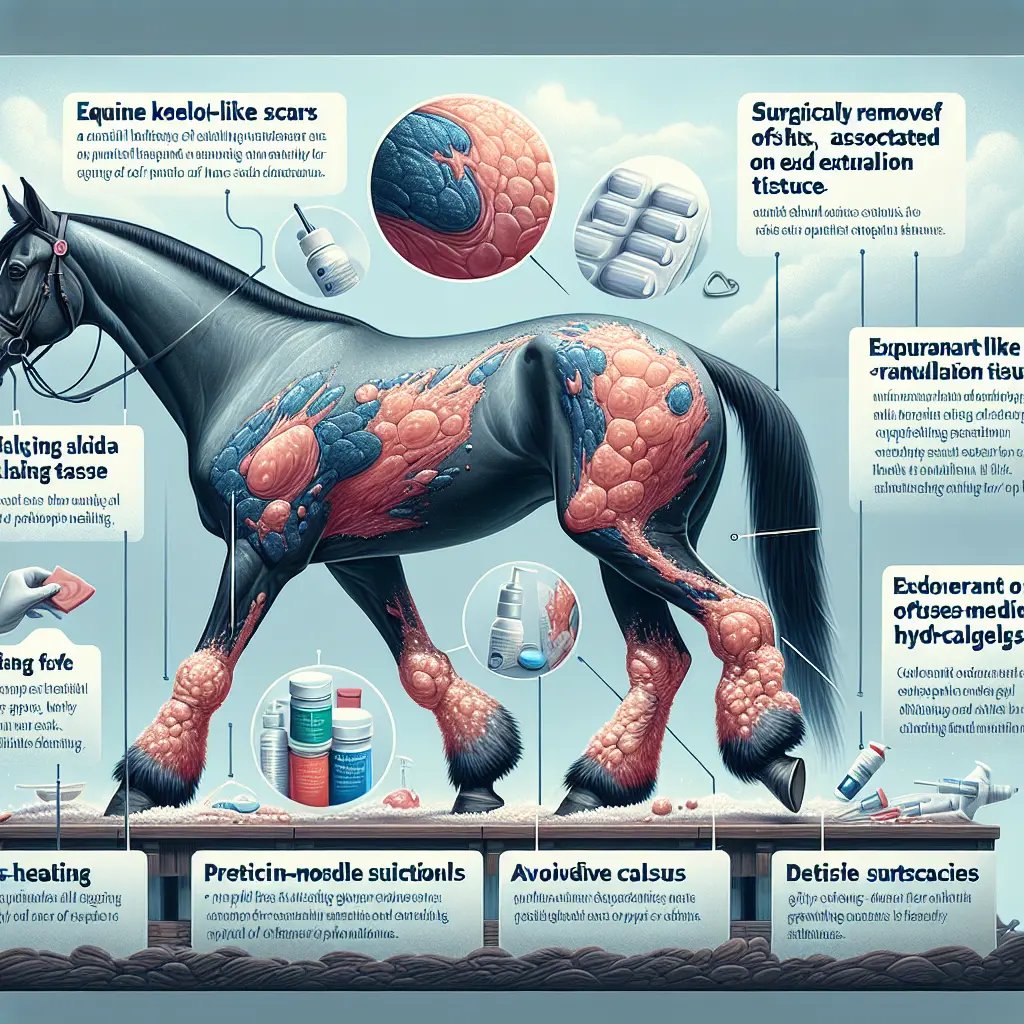
Definition
In horses, the equivalent of keloid scars is referred to as *proud flesh*. It manifests as an overgrowth of tissue that extends beyond the bounds of the original wound, often hampering proper healing.
Causes
This condition arises from wounds, particularly on **distal limbs**, that struggle to heal due to continuous movement or infections. Good circulation is critical for optimal healing.
Differences from Human Keloids
Despite a similar appearance, equine EGT lacks the dense collagen matrix of human keloids. Both, however, involve inflammation and a stunted healing process.
Effective Treatment Approaches
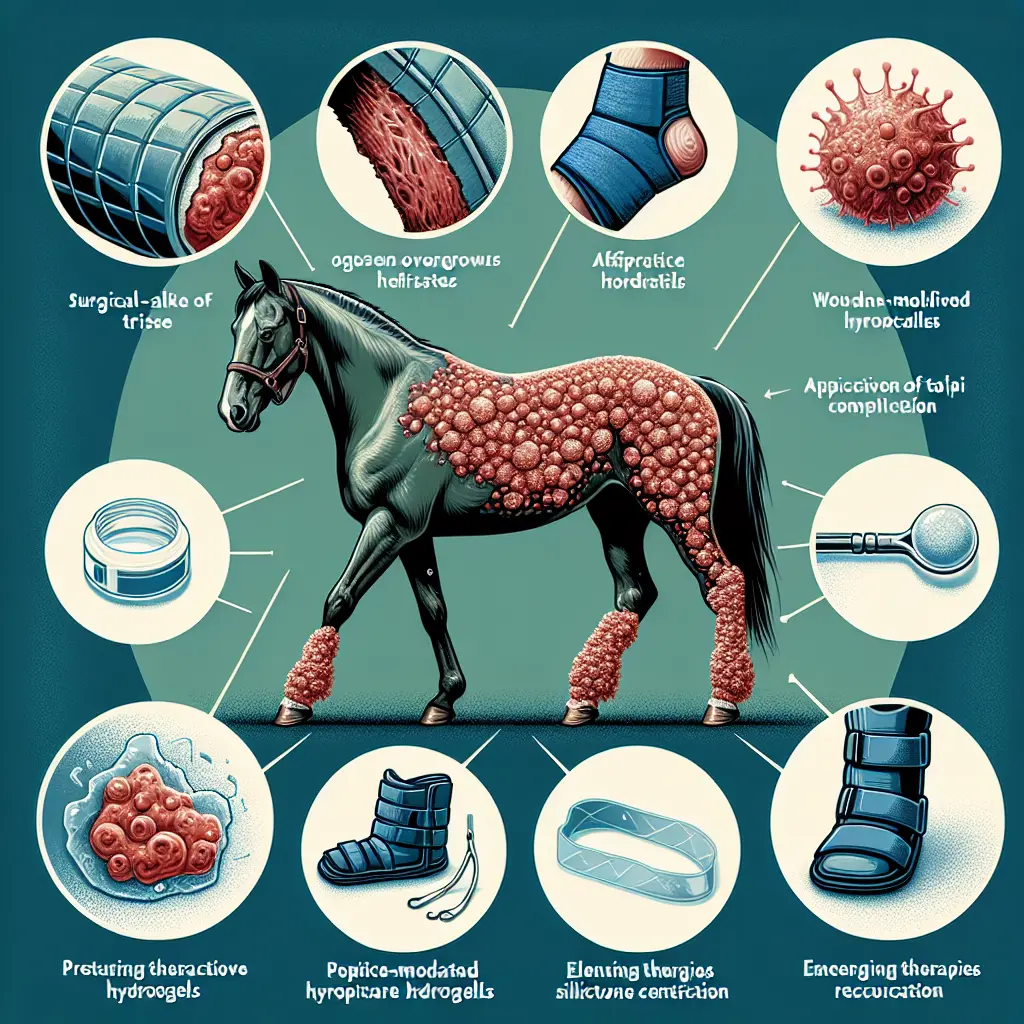
Surgical Removal
The gold standard remedy involves surgical excision. This process, which a veterinarian performs under sedation, entails removing exuberant granulation tissue while preserving healthy margins. Read more.
Topical Medications
Corticosteroids and targeted anti-inflammatory ointments are commonly used treatments that minimize inflammation and tissue overgrowth. Caution is advised due to potential adverse effects on healing. Learn more.
Avoidance of Caustic Substances
Despite being traditional remedies, substances like copper sulfate or silver nitrate should be avoided, as they can injure healing tissues, prolonging the condition.
Elastic Ligature Constriction Method
This involves applying an elastic band to cut off blood supply to the overgrown tissue, causing it to die and detach. With proper care, this technique can be very effective. Explore the method.
Emerging Therapies
Innovative solutions, such as peptide-modified hydrogels, are in development. They show promise for enhancing healing without increasing scarring. Such advancements indicate exciting new treatment pathways.
Silicone Sheeting
Already used in human medicine, silicone gel sheeting is being explored for its potential to prevent the recurrence of scar tissue in horses by influencing how scars form over time.
Managing and Protecting the Healing Limb: Boot Options and Strategies
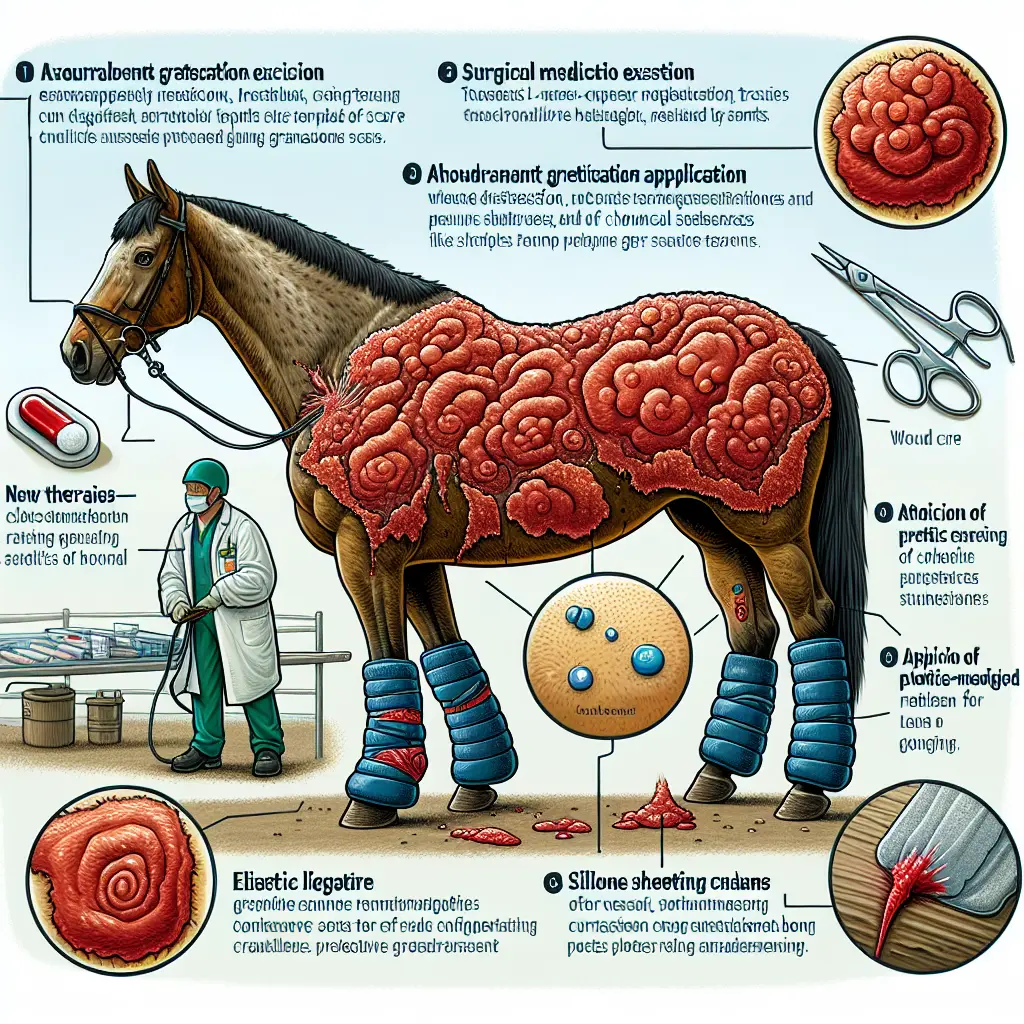
**Protective boots** play a key role in managing EGT recovery by safeguarding the healing wound from external trauma and contaminants.
Ideal Boot Characteristics
Support and Stability: Effective boots should securely support the limb to prevent additional irritation from movement.
Breathability and Waterproofing: Maintaining a dry and clean wound environment is paramount, so boots should be breathable yet waterproof.
Ease of Cleaning and Reapplication: Allowing for regular inspection and dressing changes, boots must be easy to remove, clean, and reapply.
Recommended Types of Boots
**Soft, Padded Protective Boots**: These provide necessary cushioning, reducing knocks and abrasions during turnout or rest.
**Therapeutic or Wound Care Boots**: Specially designed to accommodate bandages and offer compression, these boots assist in swelling reduction and protect the wound.
**Custom-fit or Adjustable Boots**: Boots that can be adapted ensure a perfect fit, preventing pressure sores.
Best Practices in Scar Management for Horse Legs

Regular Wound Cleaning and Dressing Changes
Infection control and keeping inflammation in check are critical to *preventing excessive scarring*.
Bandaging Techniques
When pairing bandages with topical medications, cleanliness and sterility are vital for promoting effective healing.
Environmental Management
Maintaining a clean and dry environment for the horse, such as in a well-kept stable with soft bedding, can help reduce mechanical irritations that might exacerbate scarring.
Monitoring and Veterinary Follow-Up
Consistent veterinary assessments are important to check for any resurgence of proud flesh and to intervene before complications worsen.
Facts & Figures Enhancing Credibility
Surgical excision remains the cornerstone for handling exuberant granulation tissue, though vigilantly monitoring the site post-surgery helps avoid relapses source.
Silicone sheeting is backed by evidence in reducing hypertrophic scar occurrences by up to 70% source.
Studies have highlighted the efficiency of elastic ligature constriction in stopping blood circulation, resulting in tissue necrosis and encouraging safe detachment source.
In Summary
Tackling keloid-like scars on horse legs necessitates a multi-faceted approach focusing on *accurate diagnosis and tailored treatment*. Using a blend of surgical, topical, and new-age medical solutions, alongside effective protective gear like well-designed boots, can dramatically alter healing outcomes. Decisive wound and environmental management, under veterinary supervision, is key to preserving equine health and minimizing these challenging scars.
For expert guidance on horse care and high-quality products like horse riding boots, visit the Horse Riding Boot Collection at Just Horse Riders.