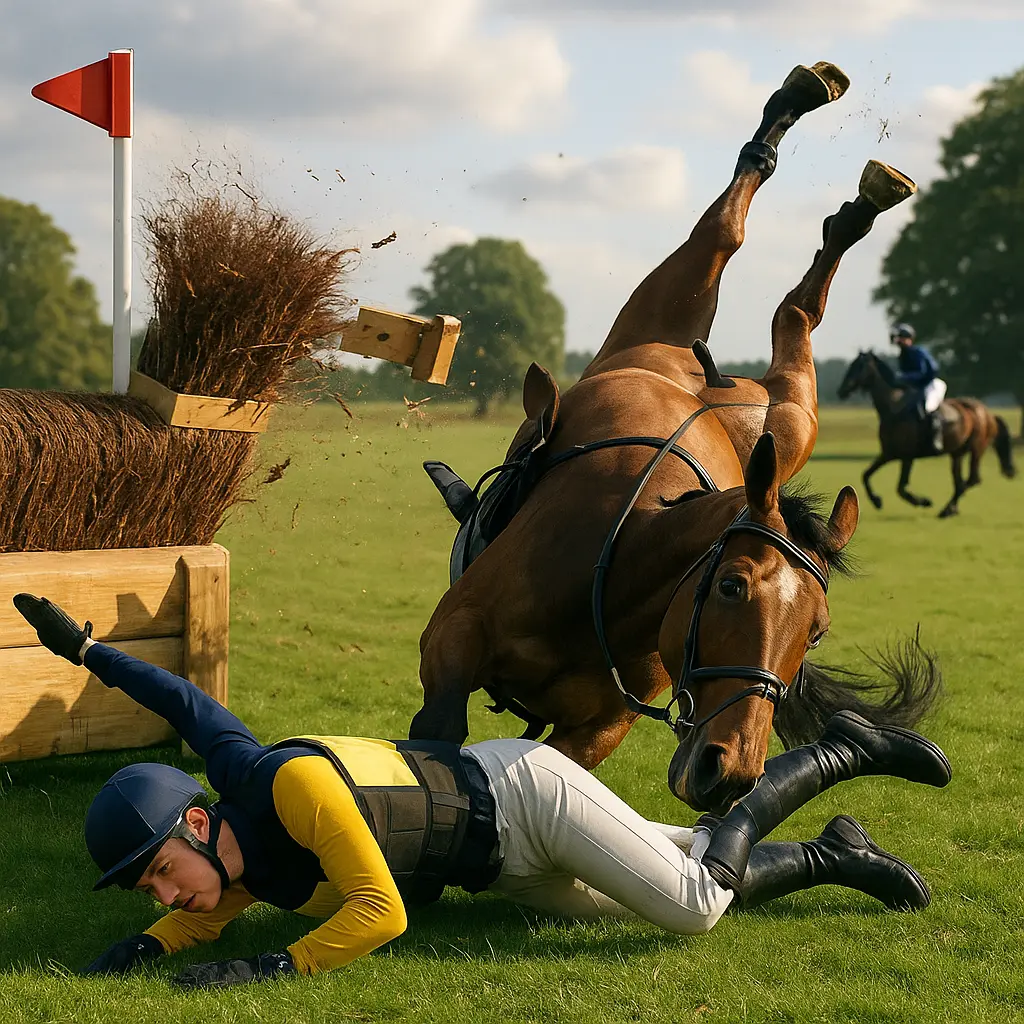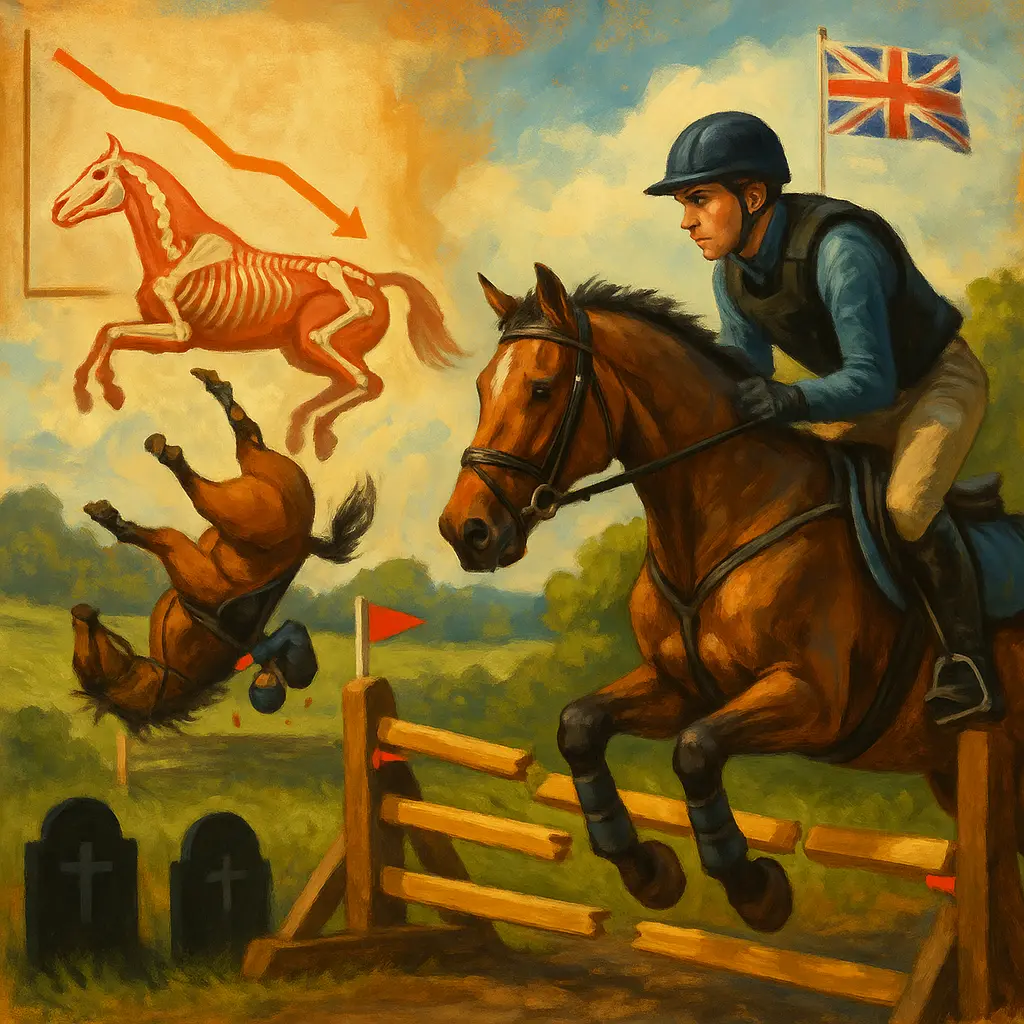
Eventing is one of the most exhilarating tests of horse and rider — and one of the most scrutinised for safety. The good news is that UK eventing has made measurable progress, but the real picture is more nuanced than “safer fences equal a safe sport.”
Key takeaway: UK national-level eventing is safer today than 20 years ago, driven by frangible fence technology and better data — but elevated risks remain at international level and from non-fall-related causes, so your safety plan must go beyond fences to fitness, behaviour, kit and course choice.
Is eventing safer in the UK now?
Yes — at UK national level, somersault falls have dropped from 0.2% (2002–2003) to 0.05% (2020), and serious or fatal rider injuries from 0.27% to 0.07% over the same period. Internationally, the decline is less marked, reflecting tougher physical and technical demands.
Those national figures are the clearest sign that targeted safety reforms are working where they’ve been consistently applied. The shift began after a watershed 1999 season, when five rider fatalities — four from rotational (somersaulting) falls — catalysed a new era of course design, fence technology and risk analysis. Yet at international competitions, where speeds are higher, combinations are more intense and technicality ramps up, the data shows a flatter improvement curve. That means your risk assessment should always consider the level you’re entering, not just the discipline label.
Context matters beyond rider risk, too. While much of the public conversation focuses on cross-country falls, recent research highlights that equine fatalities in eventing also occur from musculoskeletal injury and sudden death — causes not inherently prevented by collapsible fences. Understanding this broader risk picture is essential to responsible decision-making for your horse.
What changed to make eventing safer?
The single biggest change has been the widespread adoption of frangible (collapsible) fence technology, which reduces rotational falls by allowing elements to give way so a horse can recover its balance. Course design, data collection and rider education have also advanced since 1999.
Frangible pins, MIM clips and intelligently profiled fences are designed to lower the chance of a horse “pole-vaulting” when it meets a solid obstacle. When combined with modern course-building principles — clearer questions, more forgiving profiles and better ground preparation — they’ve driven the measurable fall reductions seen at UK national level. British Eventing (BE), the sport’s UK governing body, has also strengthened data capture on incidents at BE-affiliated events, which feeds into rule updates and course guidelines.
“The availability of large-scale and up-to-date research that has highlighted risk factors for horse falls is crucial for the sport of eventing... Fence design, horse/rider behaviour and technique, and rider psychology are all areas that need more research in this field.” — Nottingham Trent University
In other words, the story is not only about hardware. Safer fences help, but safer outcomes also depend on how horses and riders approach them — fitness, technique, mindset, and the decisions you make about preparation and pace on the day.
Why do fatalities still occur if safety has improved?
Because many equine fatalities in eventing are not caused by cross-country fence falls; musculoskeletal injuries and sudden death account for a substantial proportion. These risks sit outside the direct control of frangible technology and demand a wider welfare lens.
Recent analysis underscores that we’ve sometimes looked in the wrong place for answers by focusing almost exclusively on fence mechanics. Conditioning, orthopaedic soundness, cardiovascular health, recovery management and cumulative training load all influence risk — and not all of these are visible at the fence line.
“The fact a lot of the fatalities were not associated with [cross-country] fences shows we may be missing something, and that there are other important factors we should have been looking into, but we haven’t been up to now because we weren’t aware.” — Heather Cameron-Whytock, Lead Researcher, University of Central Lancashire (Horse & Hound)
For riders and owners, the practical implication is clear: build your safety plan around the whole horse, not only the jump phase. That means pre-season veterinary checks, progressive conditioning, careful scheduling (avoiding back-to-back high-intensity runs), and post-competition recovery protocols tailored to your horse.
Supportive equipment has a place, too. Protect tendons and ligaments during schooling and competition with well-fitting horse boots and bandages, and consider targeted recovery aids and evidence-led supplements for joint and muscle support as advised by your vet. Day-to-day, consistent monitoring — picking up subtle changes in gait, recovery heart rate, appetite and demeanour — is one of the most powerful safety tools you have.
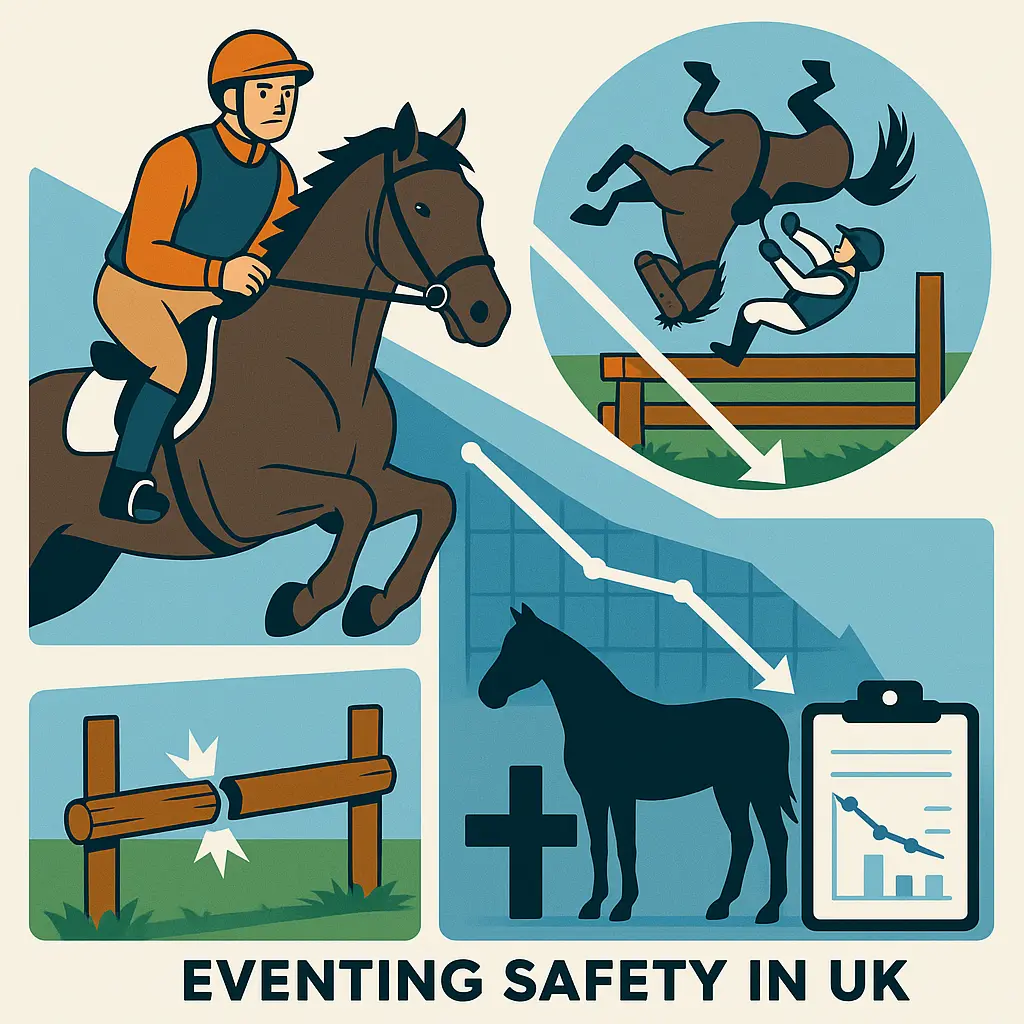
How should you assess risk by level and course?
Start by recognising that international events carry higher risk than national ones, then drill down into course design, terrain, going, weather and your horse’s current form to decide whether the question fits your partnership today.
Practical steps:
- Benchmark by level: Treat international (FEI) classes as a step up in intensity even if the nominal height is similar, and plan a season that builds to them rather than bouncing between levels.
- Study the course: Walk with a coach, watch earlier riders, and assess profiles that historically cause issues (angled lines, open corners, downhill combinations, light-to-dark questions).
- Factor in British weather: Heavy going after rain or firm summer ground changes the metabolic and orthopaedic load. Adjust speed and lines, or choose a different run if conditions are unsuitable.
- Check the data: Review British Eventing’s annual safety reports (published since 2010) for incident trends at your target venues and levels — they’re invaluable context for planning and post-run reflection.
Quick tip: Make a simple post-event log for time, penalties, jumping feels, recovery heart rate at 10 and 20 minutes, and any niggles. Over a season, patterns emerge that help you choose the right runs and rests.
On the rider side, protective kit is non-negotiable. Invest in a correctly fitted, up-to-standard body protector or impact vest and a current-standard helmet. Explore our curated range of certified riding helmets and ensure they’re replaced after a fall or any significant impact.
What are UK governing bodies doing right now?
British Eventing records detailed incident data at BE-affiliated national events and has established a new equine welfare committee, while British Equestrian is implementing the FEI’s animal welfare action plan in the UK from 2025. These measures aim to turn research into rules, guidance and better on-the-day decision-making.
BE’s strengthening of safety governance over the past decade includes systematic data capture and annual safety reporting, which inform course standards and rules. The addition of a dedicated equine welfare committee in 2024 — bringing veterinary, scientific and rider expertise to the table — is a significant step toward addressing non-fall-related risks across the sport.
“We are committed to analysing and improving horse safety in eventing, and progress is being made all the time in reducing horse falls through frangible technology and course design... At all BE-affiliated national events, we record detailed incident data, including all horse injuries and fatalities, which informs our safety strategy and policy development.” — British Eventing spokesperson (Horse & Hound)
At the same time, researchers continue to stress that evidence must drive action:
“The next steps towards a safer sport, however, rely on the commitment of governing bodies to not only engage with the findings of science but also to act on them.” — Nottingham Trent University
As a UK rider, keep an eye on BE and British Equestrian updates as the FEI animal welfare plan is rolled out, and expect evolving guidance on training loads, veterinary checks and on-event best practice.
What practical steps can you take this season?
Build a layered plan that covers equipment, training, horse welfare and course choice — because safety gains come from the sum of small, consistent decisions, not a single silver bullet.
- Protect the rider: Wear a current-standard helmet and a tested body protector/air vest for jumping. Explore our riding helmets and pair them with secure, supportive horse riding boots for grip and stability across phases.
- Protect the horse: Use breathable, well-fitted cross-country boots and bandages to support tendons and protect from knocks, and remove promptly post-phase to aid cooling.
- Condition smartly: Periodise your training and compete selectively. Avoid stacking demanding runs without adequate recovery, and track recovery heart rates to guide intensity.
- Dress to focus: Choose comfortable, rule-compliant competition clothing that doesn’t distract you or restrict movement.
- Manage the going: Pack stud kits, hydration, coolants and sponges, and adjust warm-up based on ground and temperature. Aftercare matters — meticulous cooling, grooming and limb care reduce inflammation risk.
- Support recovery: Discuss targeted support with your vet, and consider joint and electrolyte supplements appropriate for your horse’s workload.
- Be seen and safe: For roadwork or hacking to condition between runs, wear hi-vis rider gear to improve visibility in variable UK light and weather.
- Control costs wisely: Budget for fit-for-purpose safety kit first; keep an eye on our rotating offers in the Secret Tack Room clearance to stretch your spend without compromising standards.
At Just Horse Riders, we recommend pencilling in two short “audit” points during your season — one after your first event and one mid-season — to review kit, fitness, results and horse wellness. Small tweaks now often prevent bigger problems later.
Pro tip: Write the replacement date inside your helmet and on your body protector label. Sun, sweat and storage degrade materials; a simple date reminder helps you stay current without guesswork.
How do you use safety data well as a rider or owner?
Pair British Eventing’s annual safety reports with your own training and competition logs to make season-by-season decisions rooted in evidence, not hunches. Then involve your vet and coach to interpret patterns and adjust your plan.
BE has published detailed safety reporting since 2010, giving you year-on-year insight into incident types and trends at national level. While horse injury and fatality data are not comprehensively reported publicly by governing bodies, the available information still helps contextualise your choices. Cross-reference venue conditions you’ve experienced with report trends and your own notes, then plan runs that suit your horse’s strengths.
Two further UK-specific considerations for 2025–2026:
- As British Equestrian implements the FEI animal welfare action plan, expect incremental updates on training loads, vet checks and competition protocols; staying current will help you make compliant, welfare-first decisions.
- Public access changes mean unrecorded bridleways will be lost after 1 January 2026, potentially increasing pressure on training venues. Book schooling slots early and vary surfaces to manage limb load.
Finally, use kit checks and rider prep to convert data into action. If your logs show late-run gymnastics getting messy, build targeted schooling blocks and consider whether your current studs, fitness or pacing strategy need adjustment. If nerves spike results, dedicate time to mental skills training — rider psychology is a recognised piece of the safety puzzle.
Our customers often tell us that having a streamlined competition kit bag reduces stress on the day. Keep essentials together — helmet, body protector, studs, cooling gear, spare gloves — so your focus stays on riding the plan.
FAQs
Has eventing actually become safer, or is the data misleading?
At UK national level, eventing has demonstrably become safer: somersault falls dropped from 0.2% to 0.05%, and serious or fatal rider injuries from 0.27% to 0.07% since the early 2000s. At international level the decline is less obvious, reflecting tougher physical and technical demands.
What specific changes made eventing safer?
Frangible (collapsible) fences and improved course design have significantly reduced rotational falls by allowing fences to give way so horses can recover their balance. Better incident data and education have reinforced these gains.
Are horse fatalities being properly tracked in the UK?
Comprehensive public reporting of equine injuries and fatalities is lacking at both national and international level. British Eventing records detailed incident data for BE-affiliated events, but full public documentation of horse injury and fatality rates is not yet standard.
Why do fatalities still occur if frangible fences work?
Because many equine fatalities are unrelated to cross-country fence falls, arising instead from musculoskeletal injuries and sudden death. That means welfare, conditioning, veterinary oversight and recovery management are as important as fence safety.
Is international eventing significantly more dangerous than UK national events?
Yes. Safety improvements are less apparent at international level, which carries greater physical and technical demands than most national classes. Plan your season to build to FEI runs and avoid frequent level-hopping.
Where can I find official UK eventing safety information?
Start with British Eventing’s annual safety reports (published since 2010) for incident trends and insights at BE-affiliated national events. Also follow updates from British Equestrian as the FEI animal welfare action plan is implemented.
What rider and horse kit should I prioritise for safety?
Prioritise a current-standard helmet and body protector/air vest, supportive cross-country boots, and reliable riding boots. Between runs, use considered grooming and cooling routines and vet-advised supplements to support recovery.