

Introduction: Embracing Solar Solutions for Stable Lighting
Keeping our trusty steeds in the best environment possible is every equestrian's dream. But, providing adequate lighting without skyrocketing your energy bill can be a nightmarish task. Enter solar solutions for stables! Not only do they provide unequaled lighting options, but they also support an eco-friendly lifestyle. In this guide, we'll explore how to effectively light stables using solar power, manage battery storage, and incorporate cutting-edge lighting technologies.
Why Choose Solar Lighting for Horse Stables?
Solar lighting significantly cuts down on electricity costs, providing a sustainable lighting solution that is both reliable and cost-effective. This is especially beneficial for rural or off-grid locations where the reliability of traditional power sources might be in question. Additionally, solar lighting enhances security and safety, crucial aspects of animal care.
The Monetary and Ecological Benefits
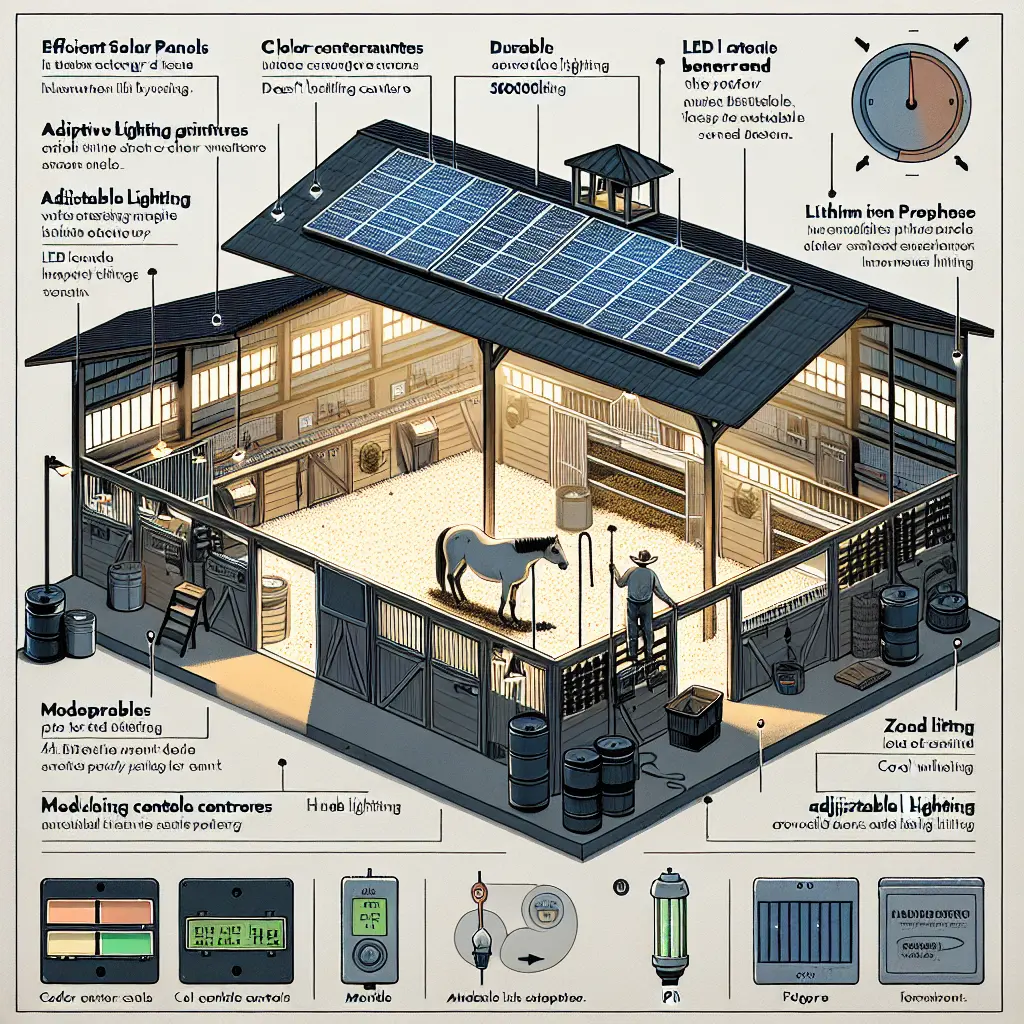
A solar lighting system can significantly reduce electricity bills and is an environmentally responsible choice. As renewable energy becomes more mainstream, more stable owners are transitioning to these sustainable lighting solutions. Explore sustainable horse products with us.
Key Components of a Solar Stable Lighting System
Stables require consistent and reliable lighting – a feat solar systems can achieve using three main components: solar panels, LED fixtures, and battery storage.
Solar Panels
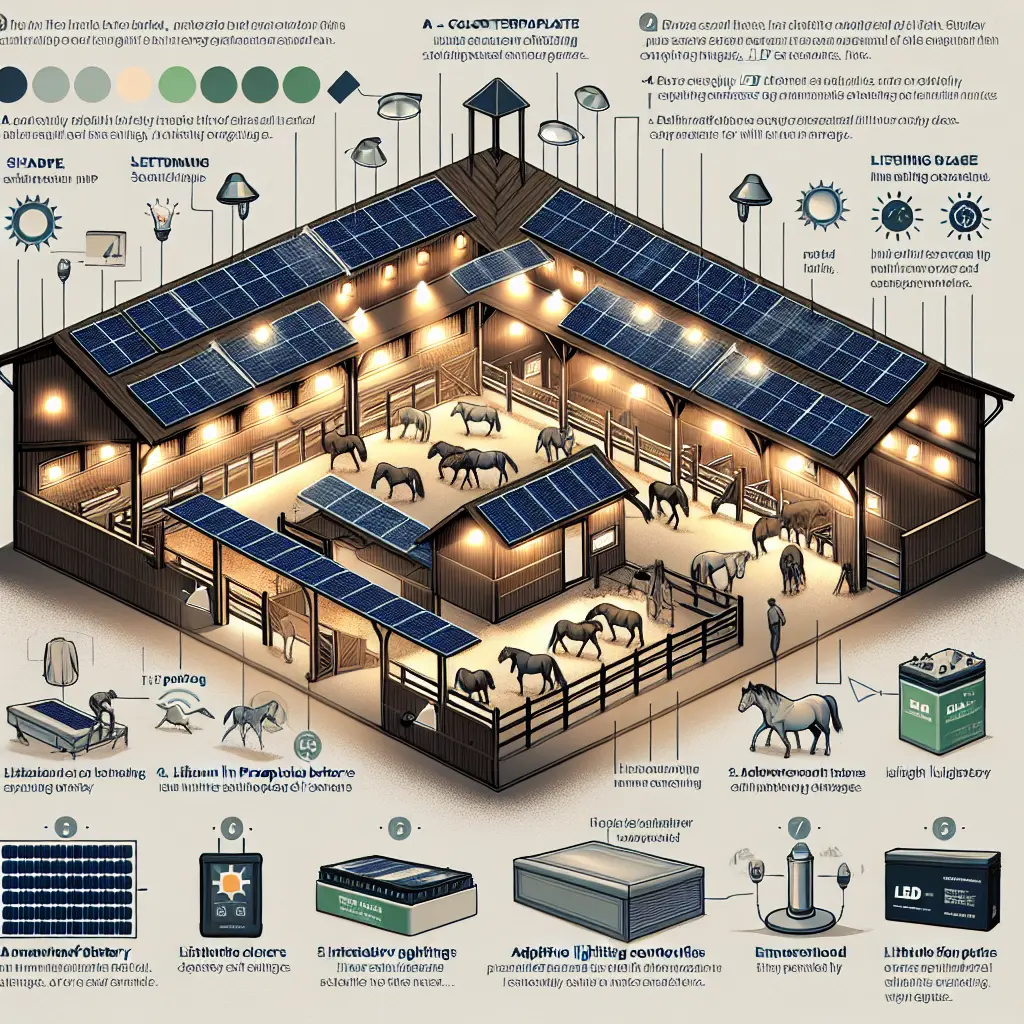
Efficient solar panels collect sunlight during the day to power lights at night. It's crucial to install panels where they can absorb maximum sunlight and avoid obstructions like roofs and tall trees. According to Solar Energy International, selecting high-quality panels that are resistant to weather changes ensures their longevity, often surpassing two decades.
LED Light Fixtures
LEDs are an excellent choice for solar lighting due to their energy efficiency. They convert more electricity into light, consuming less power compared to traditional bulbs. LEDs provide bright but soothing light crucial for stress-free environments for horses.
Battery Storage
Batteries are the heart of any solar lighting system, storing energy for nighttime use. The recommended choice is Lithium Iron Phosphate batteries, known for their long lifespan and wide temperature tolerance. Proper energy management using charge controllers increases energy efficiency by 30% by adapting to varying sunlight conditions.
Importance of Charge Controllers
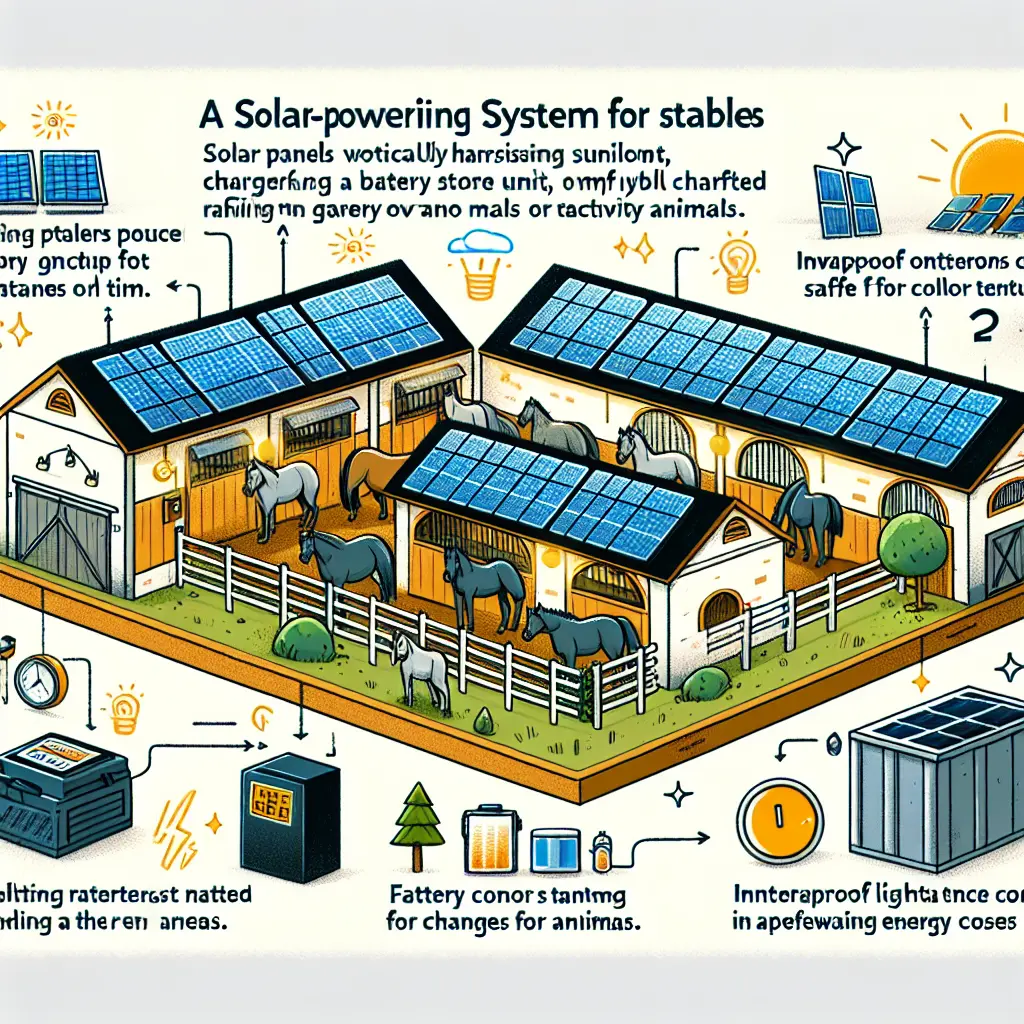
Charge controllers maintain system efficiency, preventing overcharging and excessive discharging of batteries. Maximum Power Point Tracking controllers are crucial for optimizing the energy harvested.
Innovative Lighting Options for Modern Stables
Going beyond traditional solutions, modern lighting systems incorporate adaptive and modular technologies.
Adaptive Lighting Controls
Lighting systems equipped with adaptive controls alter their brightness in response to stable activities or times of day, thus conserving energy while ensuring proper illumination.
Waterproof and Durable Fixtures
To handle the challenging waste-filled and wet stable environment, use IP67-rated water-resistant fixtures with designs built for longevity.
Zoning Lighting
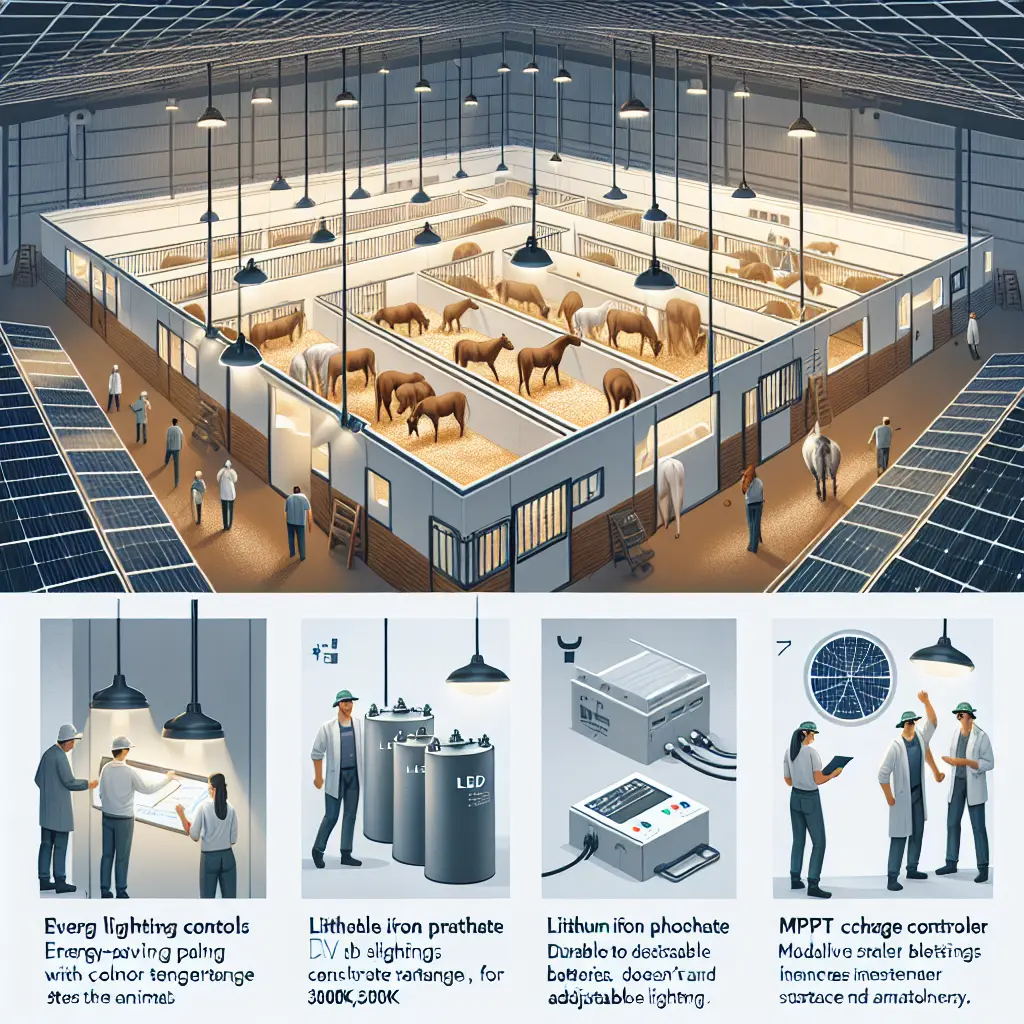
Creating lighting zones allows for specific sections of the stables to illuminate as needed, optimizing energy consumption while maintaining a safe, navigable environment for both animals and handlers.
Installation and Maintenance: Practical Tips
Implementing a solar stable lighting system requires strategic planning and consistent maintenance. Here are essential tips:
Conduct a Site Assessment
Optimize lighting by positioning solar panels and lights to capitalize on sunlight, avoiding shading from overhead tree canopies or structural designs.
Ensure Battery Care
Proper storage of batteries in temperature-protected areas reduces degradation, resulting in a longer life span. For instance, consider underground placement in low-temperature areas.
Monitor LED Output
Select LEDs based on lumen output requirements. Efficient and compelling lighting should firmly address stable needs without spooking the sensitive animals.
Regular Maintenance Schedule
Frequent check-ups are vital. Clean panels often, inspect wiring yearly, and replace components as necessary to ensure dependable system performance.
Conclusion: Harnessing the Sun for a Greener Future
Solar lighting systems not only ensure safe illumination but also contribute to eco-friendly practices by significantly saving on energy costs. Their efficiency is critical in off-grid areas, improving the quality of life for horses and their handlers alike. Choose durable, sustainable solutions for your stables today, and enjoy greener pastures tomorrow!