

Understanding Your Horse's Reluctance: When Allergies Impact Riding Enjoyment
Riding a horse that suddenly becomes reluctant or unsettled can be a perplexing and frustrating experience for any equestrian. While many factors can contribute to such behavior, **allergies**—both in horses themselves and their human handlers—often remain an overlooked cause. Grasping the nuances of how allergies affect horses and riders is key to enhancing the riding experience and ensuring equine well-being.
How Allergies Affect Horses

Horses, much like humans, can suffer from a range of allergies, including reactions to dust, mold, pollen, and stable mites. These allergens can trigger symptoms such as:
- Respiratory issues like coughing, nasal discharge, and difficulty breathing.
- Skin problems including itching, hives, or hair loss.
- Eye irritation causing discomfort and a reluctance to be ridden.
Respiratory allergies, often grouped under "equine asthma," can significantly lower a horse’s performance and comfort during rides. Studies highlight that stable air quality plays a critical role; airborne dust, molds, and other particulate matter can exacerbate symptoms. Poor stable ventilation or dusty bedding increases allergen exposure, leading to increased respiratory distress in horses.
Allergies Impact on Human Riders

Not only horses but also their riders and caretakers frequently experience allergic reactions related to horses. Around 10-20% of horse handlers and riders develop sensitivities to horse allergens, primarily proteins found in dander and saliva. Symptoms in humans include itchy, watery eyes, sneezing, nasal congestion, coughing, wheezing, and sometimes asthma attacks.
A study among horse farm workers found a 10% sensitivity rate to horse allergens, alongside a notable drop in lung function among those sensitized. For riders, allergy-induced respiratory distress or eye irritation can decrease riding enjoyment and may affect their ability to control the horse effectively. You can learn more about this study here.
Signs Your Horse May Be Suffering from Allergies
If your usually willing horse shows reluctance during rides, consider possible allergy-related causes:
- Frequent coughing or labored breathing after turnout or during exercise.
- Nasal discharge or constant head shaking.
- Itchy skin, rubbing against objects, or visible hives.
- Eye redness or excessive tearing.
Since these symptoms can mimic other conditions, a veterinary examination is necessary to confirm allergies. For additional relief, explore our selection of Everyday Horse Vitamins & Supplements.
Practical Steps to Manage and Prevent Allergy Issues
For Horses
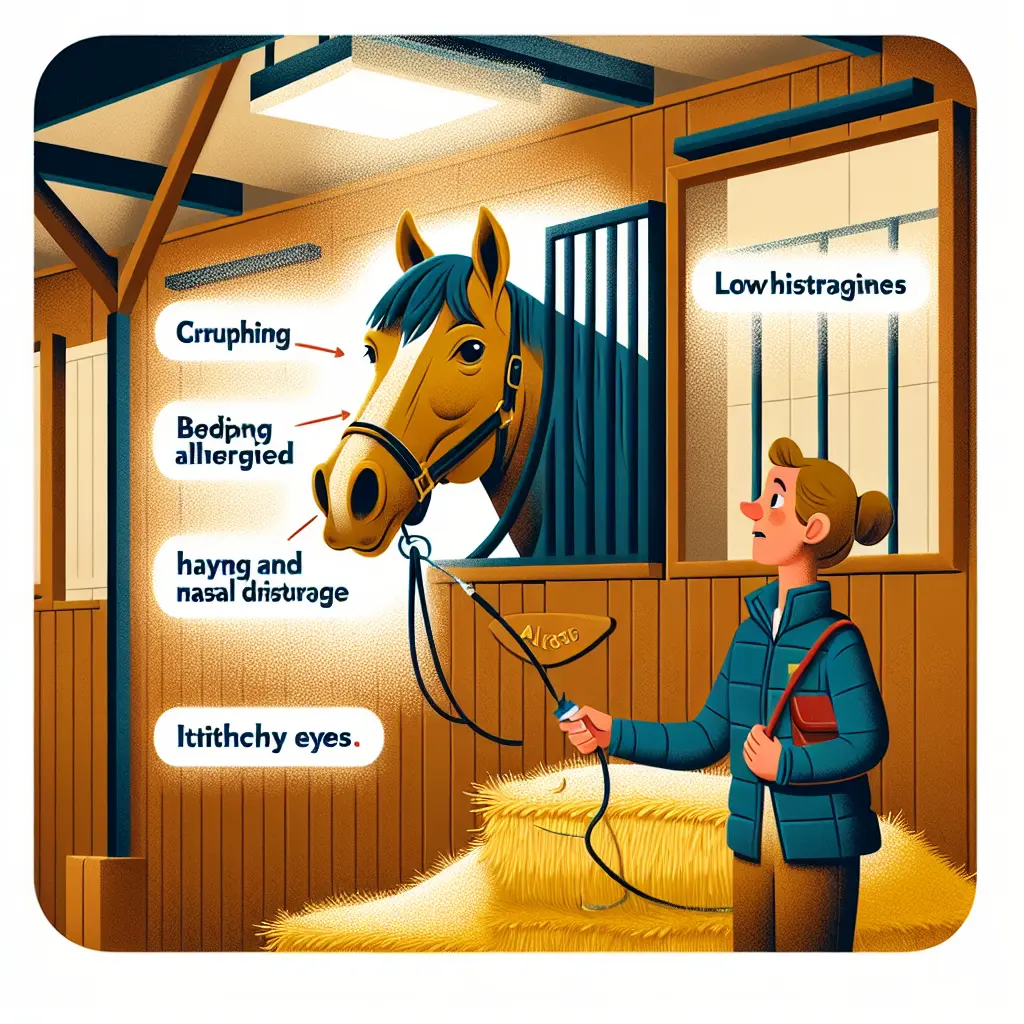
Effective management of horse allergies requires a combination of stable management and veterinary care:
- Ensure stables are well-ventilated and regularly cleaned to reduce dust and mold.
- Choose low-dust bedding materials.
- Avoid moldy hay by storing hay properly or soaking it to reduce dust.
- Use dust masks for handlers and riders where appropriate.
- Veterinary treatment with antihistamines or corticosteroids may be necessary in severe cases.
For the comfort of your horse during cooler seasons, consider investing in a Stable Rug or a Turnout Rug.
For Riders

Riders can also take practical steps to manage allergies:
- Minimize direct contact if allergic symptoms appear.
- Consider allergy testing to identify specific triggers.
- Use antihistamines or prescribed medications to manage symptoms.
- Wear protective gear such as masks or goggles during chores or riding.
- Wash riding clothes frequently to remove allergen residue.
For gear to support your riding experience, check out our collections of Jodhpurs, Horse Riding Boots, Riding Gloves, and Riding Socks.
Why Understanding Allergies Matters
Ignoring allergy symptoms in either horse or rider can lead to increased discomfort, reduced performance, and a less enjoyable riding experience. Acknowledging these concerns early enhances welfare and safety for both. According to research, regular exposure to horse allergens without intervention can increase the risk of respiratory diseases in humans and exacerbate chronic allergy conditions in horses.
Moreover, allergen levels drop rapidly outdoors—being mindful of stable placement and environmental controls can dramatically reduce allergenic exposure for both horse and rider.
Conclusion: Ensuring a Safe and Enjoyable Riding Experience
By recognizing the **impacts of allergies and implementing proactive measures**, horse owners and riders can create healthier interactions with their horses. Ensuring riding remains a safe and pleasurable experience is possible with informed care and appropriate precautions. For further support and to explore equestrian essentials, visit Just Horse Riders.