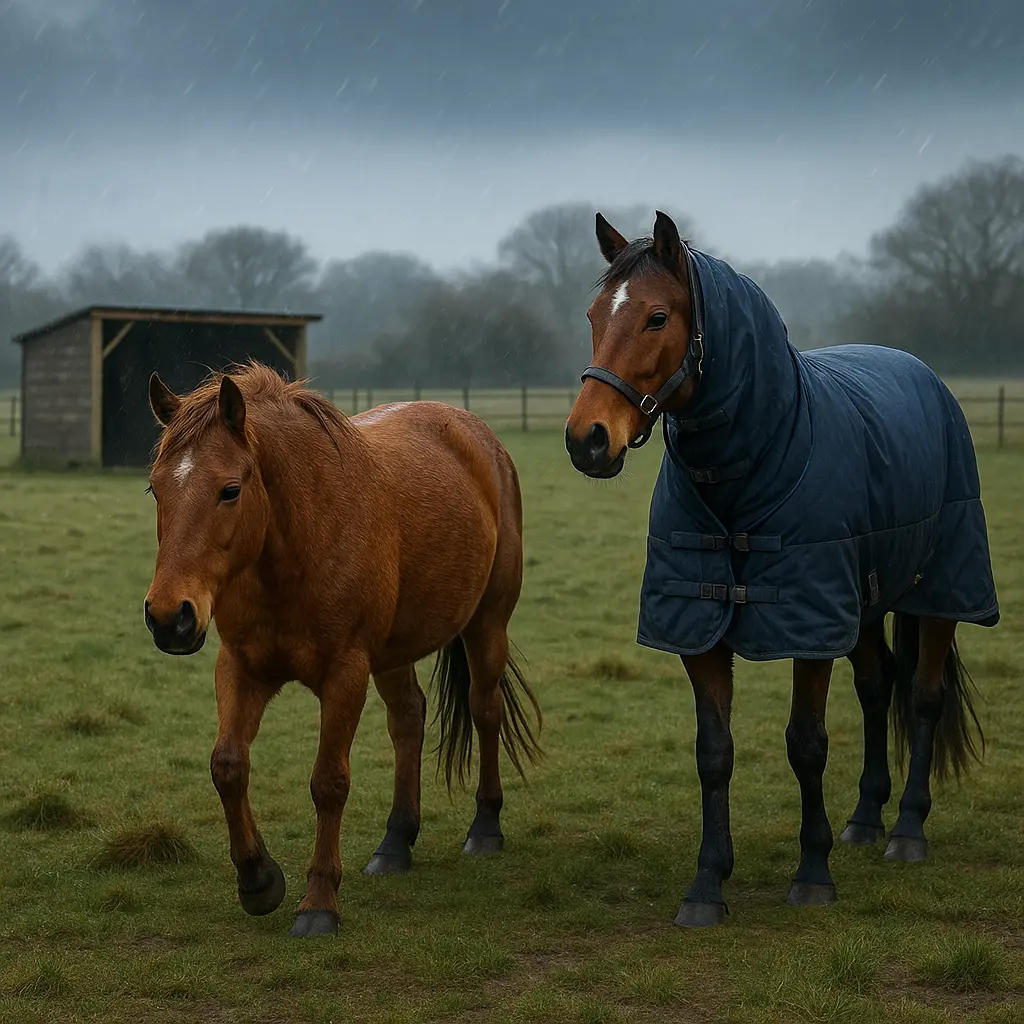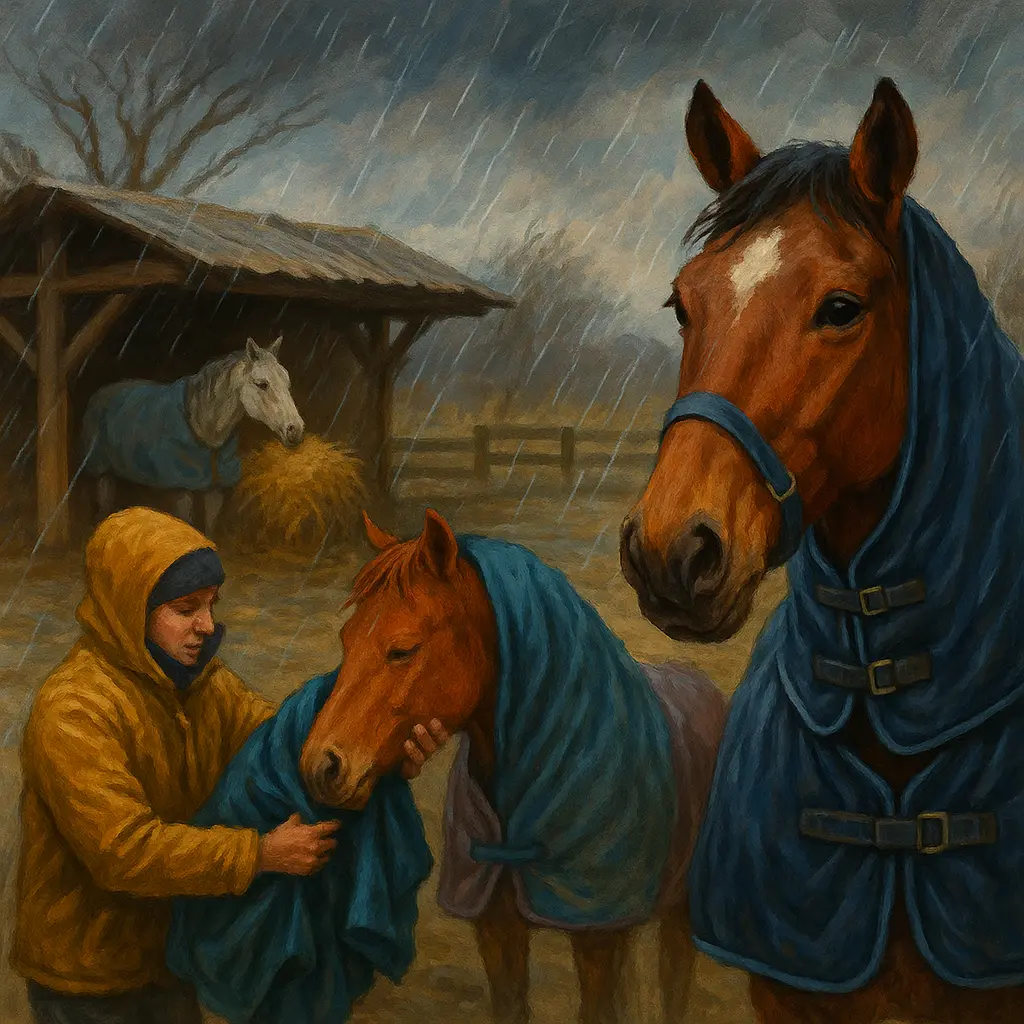
Cold snap incoming? Before you reach for the heavyweight, remember your horse doesn’t feel the chill like you do. Rugging well is about temperature, wind and rain, your horse’s type and clip — not your goosebumps.
Key takeaway: Most healthy, unclipped UK horses don’t need a rug until night-time temperatures drop to 5–10°C, and many cope to freezing with shelter and forage — but clipped, elderly, young or underweight horses need rugging sooner and heavier.
When do UK horses need a rug?
For UK winters, most healthy, unclipped horses don’t need a rug until night-time temperatures are consistently between 5–10°C, and many cope to freezing with shelter and ad-lib forage.
Horses have a far lower thermoneutral zone than humans. According to guidance from the British Horse Society (BHS), many horses — especially hardy native types — adapt well to winter if they’re healthy, have constant forage and access to shelter. They warn against rugging based on how cold you feel. Petplan Equine’s welfare team adds that “until the temperature drops below 10°C, it’s very rarely necessary to rug a healthy, unclipped horse that has access to shelter and forage,” with many staying comfortable right down to 0°C. See the BHS advice on seasonal rugging here: BHS: Types of rugs and rugging a horse, and Petplan’s guidance here: Petplan Equine: When to rug your horse.
In the UK, this typically means you’ll start thinking about rugging from October through February as nights swing between 5–10°C. Always adjust for wind and rain: a breezy, wet 7°C night can feel like freezing to your horse’s skin without cover and shelter.
Quick tip: Check the “feels like” temperature on your weather app — wind and rain drive the biggest heat loss and change the rugging answer even when the number on the thermometer looks mild.
Which horses need rugs sooner (or heavier)?
Clipped, elderly, young, underweight or unwell horses need rugs earlier and often heavier, especially in wind and rain or overnight lows.
Coat, body condition, age and health dictate how fast heat is lost. A fully clipped TB in work is a different proposition to a fluffy native pony. The BHS emphasises assessing the individual horse’s needs and management rather than following a yard rule. As Your Horse gear specialists put it:
“Don’t rug your horse based on how cold you feel. They can cope with a dip in temperature much better than you can. Old, young, underweight and clipped horses will feel the cold more.” — Your Horse
Who needs what, sooner?
- Clipped horses: Start light at 10–12°C if wet/windy, move to 150–250g in the 5–10°C band, and 250g+ with a neck for near-freezing nights.
- Underweight or poor doers: Rug a step heavier than a healthy counterpart to help maintain condition.
- Veterans and youngsters: Offer earlier protection to reduce energy spent on thermoregulation.
- Hardy natives and cobs (unclipped): Often manage without rugs above 5°C if sheltered with forage; add a lightweight waterproof in persistent rain or strong wind.
Pro tip: Hay is heat. Forage fermentation in the hindgut generates internal warmth — a constant hay supply can reduce the need for heavier rugs overnight.
What weight rug should you choose at different temperatures?
Use a lightweight 0–150g turnout for mild, wet weather above ~10°C, a medium 150–250g for 5–10°C, and a heavyweight 250g+ (with liners as needed) for near-freezing or clipped horses.
Match rug weight to the conditions and your horse’s profile:
- Above ~10–12°C (wet/windy): A breathable lightweight turnout (0–150g) keeps the rain off without cooking your horse.
- 5–10°C: Medium weight (150–250g) suits many horses, with natives at the lighter end and finer types or clipped horses at the heavier end.
- 0–5°C or colder: Heavyweight (250g+) helps finer or clipped horses; add a liner for sub-zero spells.
Layering beats guessing. Start with a versatile outer turnout and add/remove liners (100–200g) as the forecast swings — far easier than juggling three separate rugs. High-denier, waterproof outers and good breathability are your allies through wet and windy UK winters. Explore durable, waterproof turnout rugs built for changeable British conditions.
At Just Horse Riders, we recommend building a “winter core” of one quality outer turnout plus one or two liners. That way you can step from 100g to 300g+ in minutes without compromising fit or freedom of movement.
Brand tip: Weatherproof specialists like WeatherBeeta turnout rugs and yard favourites from Shires offer reliable waterproofing and robust outers that stand up to wind, rain and playful field mates.
How do wind, rain and shelter change the rugging plan?
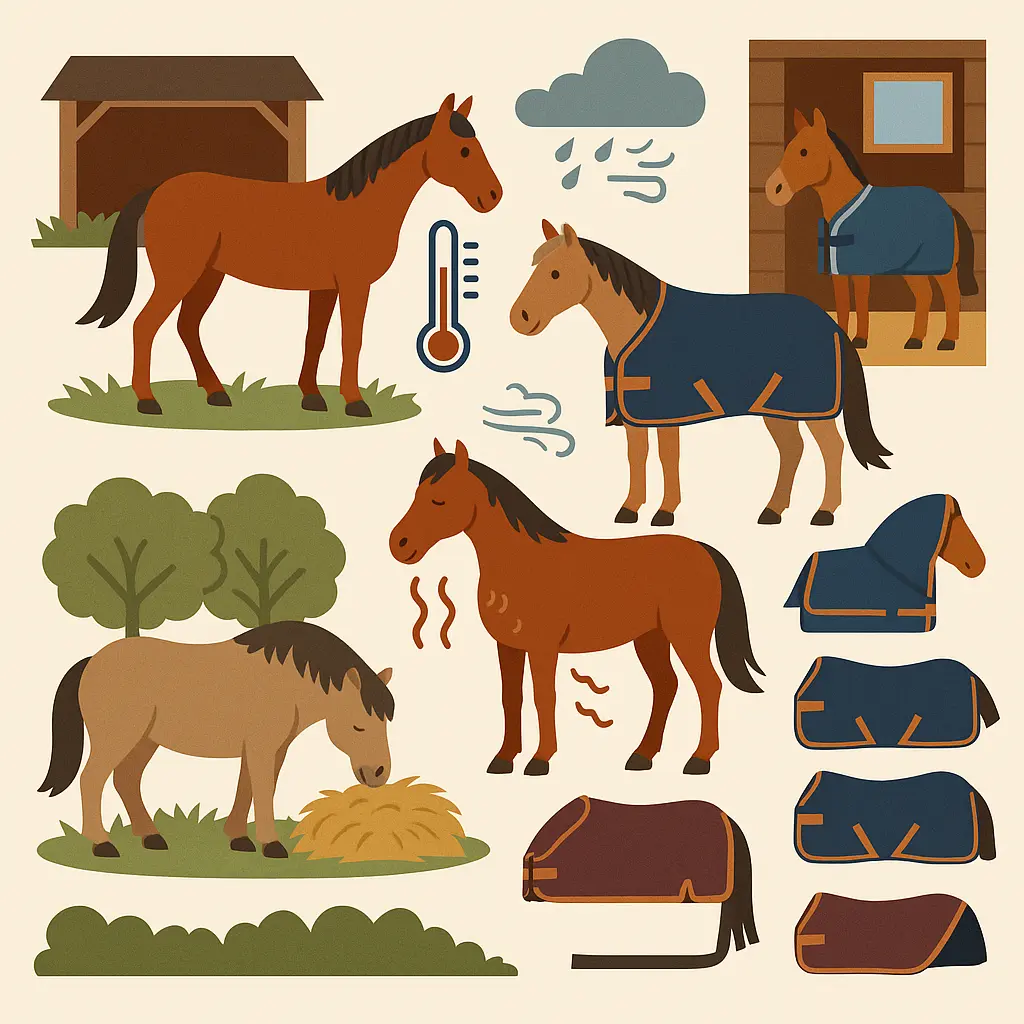
Wind and rain together strip heat fastest; provide field shelter or natural windbreaks if using no rug or a lightweight rug.
A dry, still 5°C can feel comfortable to a woolly native. A wet, windy 7°C can feel punishingly cold, even to a hardy type. That’s why access to a hedge line, woodland edge or a three-sided field shelter is a welfare essential in winter. If your field is exposed, budget for a shelter — and check local authority planning rules if you’re on a livery yard or protected land.
Giving ad-lib forage in the field boosts internal heat via the digestion of fibre, meaning many horses stay cosy with less rugging. Conversely, a clipped horse standing in sleet without a windbreak will need more protection sooner than the temperature alone suggests.
Quick tip: If you’re hacking on short winter days, visibility is safety. Pair smart rug decisions for your horse with your own winter kit, including hi-vis for riders and a properly fitted riding helmet for those blustery, low-light rides.
How should you fit, check and layer rugs day-to-day?
Check under the rug behind the withers daily; if it’s cool and your horse is tucked up, add warmth, and if it’s warm or sweaty, remove or lighten layers immediately.
Daily hands-on checks are non-negotiable in Britain’s changeable weather. Here’s a simple routine:
- Morning: Feel under the rug at the base of the neck/withers — it should be comfortably warm and dry, never damp or hot. Look for shivering, a tucked posture or lethargy (too cold), or sweating and panting (too hot).
- Midday swings: If the sun breaks through or the wind drops, peel off a liner or step down a weight to stop overheating that can mimic colic.
- Night: Recheck before turnout or lights-out. Add a liner if the forecast drops several degrees or the wind picks up.
Fit matters as much as fill. A correctly sized rug lies smooth over the shoulders without pulling, allows two to four fingers at the chest fastenings, and stays stable over the withers and quarters without rubbing. Measure from the centre of the chest to the point of the buttock to choose the right size. Autumn is the time to launder and repair rugs so they’re ready when the first Atlantic front barrels in. A clean, well-fitting outer plus snap-in liners is the stress-free winter system.
Preserve your horse’s natural waterproofing if they’re not fully clipped. Avoid over-grooming the coat to keep those oils intact, and keep brushes clean — our grooming essentials make it easy to care for skin and coat without stripping natural protection.
Neck covers and hoods extend protection in driving rain or sub-zero snaps, especially for fully clipped horses. Choose breathable designs and only add them when conditions warrant it to avoid unnecessary heat build-up.
What over-rugging mistakes should you avoid?
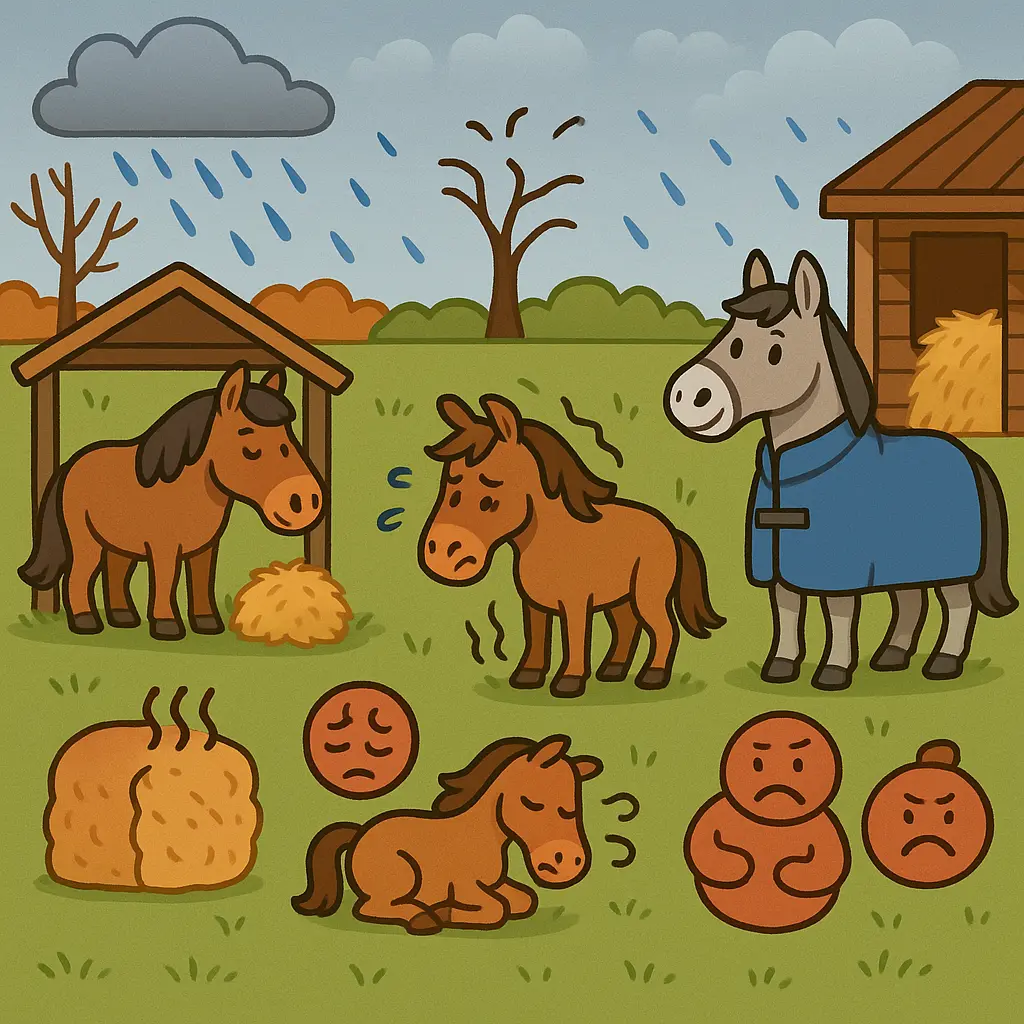
Over-rugging risks overheating, colic-like signs, skin issues, and prevents natural winter weight loss — raising spring laminitis and obesity risks.
The goal isn’t to keep your horse toasty; it’s to keep them comfortable. Horses are designed to drop a little weight over winter. If heavy rugs keep them too warm, you may lock in autumn condition you planned to lose before spring grass arrives. Petplan Equine warns that overheating can also present as lethargy or discomfort, sometimes mimicking colic — another reason to feel under that rug daily and step down layers as soon as the weather lifts. Read more from Petplan here: Petplan Equine: When to rug your horse.
Other pitfalls to dodge:
- Rugging by the calendar, not the forecast — UK cold snaps and warm spells can swap places in 24 hours.
- Ignoring wind and rain factors — they matter as much as temperature.
- Using a heavy stable rug in the field — stables rugs aren’t waterproof; use turnout-specific fabrics outside. Shop purpose-made stable rugs for inside use.
- Skipping fit checks — rubs at shoulders or withers often mean the wrong size or cut.
What’s a simple UK rugging checklist I can follow?
Decide daily based on temperature (and “feels like”), horse type/condition, clip, shelter/forage, wind/rain, and workload — then start light, layer up, and re-check at midday.
Use this five-step flow each morning and evening:
- Temperature and “feels like”: Is it above 10°C, 5–10°C, or sub-5°C? Is it dry/still or wet/windy?
- Your horse: Native/cob or finer Thoroughbred/Arab? Good condition or needs to hold weight? Elderly/young? Any health issues?
- Clip and workload: Full clip needs more warmth; half clip slightly less; no clip often far less. Horses in harder work need assistance post-exercise to dry without chilling.
- Shelter and forage: No windbreak = add protection; ad-lib hay = you can often keep weights lighter.
- Choose the layer:
- Dry and >10°C: Usually no rug if unclipped; or a 0–100g waterproof for rain/showers.
- 5–10°C: 100–200g for unclipped finer types or clipped horses; hardy unclipped may stay naked with shelter, or use a lightweight rain sheet.
- 0–5°C: 200–300g for many; add a 100–200g liner for clipped or poor-doers.
Pro tip: Keep one quality outer and two liners (e.g., 100g and 200g). That combo covers most UK winter swings. Browse versatile, waterproof turnout rugs designed for layering.
Cooling and drying after exercise: Throw on a breathable lightweight or wicking layer while your clipped horse dries, then swap to the appropriate turnout or stable rug. Inside, choose purpose-built stable rugs that regulate warmth without waterproofing bulk. For horses needing a little extra support through winter, condition-focused options in our horse care supplements range can help alongside forage and sensible rugging.
Customer tip: Our yard regulars love sturdy brands with consistent fits. Check out winter-proof designs from WeatherBeeta and classic cuts from Shires to build your reliable winter system.
Bottom line: start light, layer smart, check daily
Rugging isn’t a one-and-done decision — it’s a daily check-in with your horse and the forecast. In the UK, most healthy, unclipped horses won’t need a rug until 5–10°C nights, but wind, rain, clip, age and condition can swing the dial. Start light, add liners when the weather turns, and remove layers fast when it brightens. If you need a refresh, build a flexible setup with a quality outer plus liners from our curated turnout rugs and indoor-ready stable rugs.
FAQs
When should I start rugging in UK autumn/winter?
For most healthy, unclipped horses, start considering a rug when night temperatures sit between 5–10°C, earlier if it’s wet and windy. Clipped, elderly, young or underweight horses will need protection sooner and often heavier. This typically falls between October and February in the UK.
How do I tell if my horse is too cold or too hot under a rug?
Check behind the withers. Too cold: cool skin, shivering, a tucked posture, lethargy or huddling. Too hot: sweating, panting, warm/damp skin under the rug and restlessness. Adjust layers immediately to prevent chills or overheating, which can mimic colic-like signs.
Can I rug less if my horse has shelter and hay?
Yes. Wind and rain create the biggest heat loss, so a shelter or natural windbreak plus ad-lib hay can keep many horses comfortable with fewer or lighter layers above 5°C. Forage fermentation produces internal heat and is your best winter heater.
Do native UK ponies need rugs in winter?
Often no — if they’re healthy, unclipped, in good condition and have access to forage and shelter. Many natives and cobs are adapted to cope with UK winters; add a lightweight waterproof only in prolonged rain or strong wind.
What rug weight should I use at different temperatures?
Above ~10–12°C with rain: lightweight 0–150g turnout. Between 5–10°C: medium 150–250g for many horses. 0–5°C or colder: heavyweight 250g+, with liners added for clipped or poor-doers. Always adjust for wind/rain and your individual horse.
How do I layer rugs efficiently in changeable weather?
Start with a waterproof outer turnout and add 100–200g liners as needed. Secure liners properly to prevent slipping and preserve shoulder freedom. This gives you a 100g, 200g, 300g+ system without owning multiple full-weight rugs.
Should I use a stable rug outside?
No. Stable rugs aren’t waterproof. Use a turnout rug with a waterproof, breathable outer for the field, and reserve stable rugs for indoor use. If you’re riding on dark winter days, pair sensible rugging with hi-vis rider gear for safety.
Further reading and expert guidance: BHS (UK), Petplan Equine, and Your Horse. If you’re building a winter kit, explore our curated turnout rugs and winter-ready brands like WeatherBeeta — and don’t forget consistent condition support from our horse care supplements.