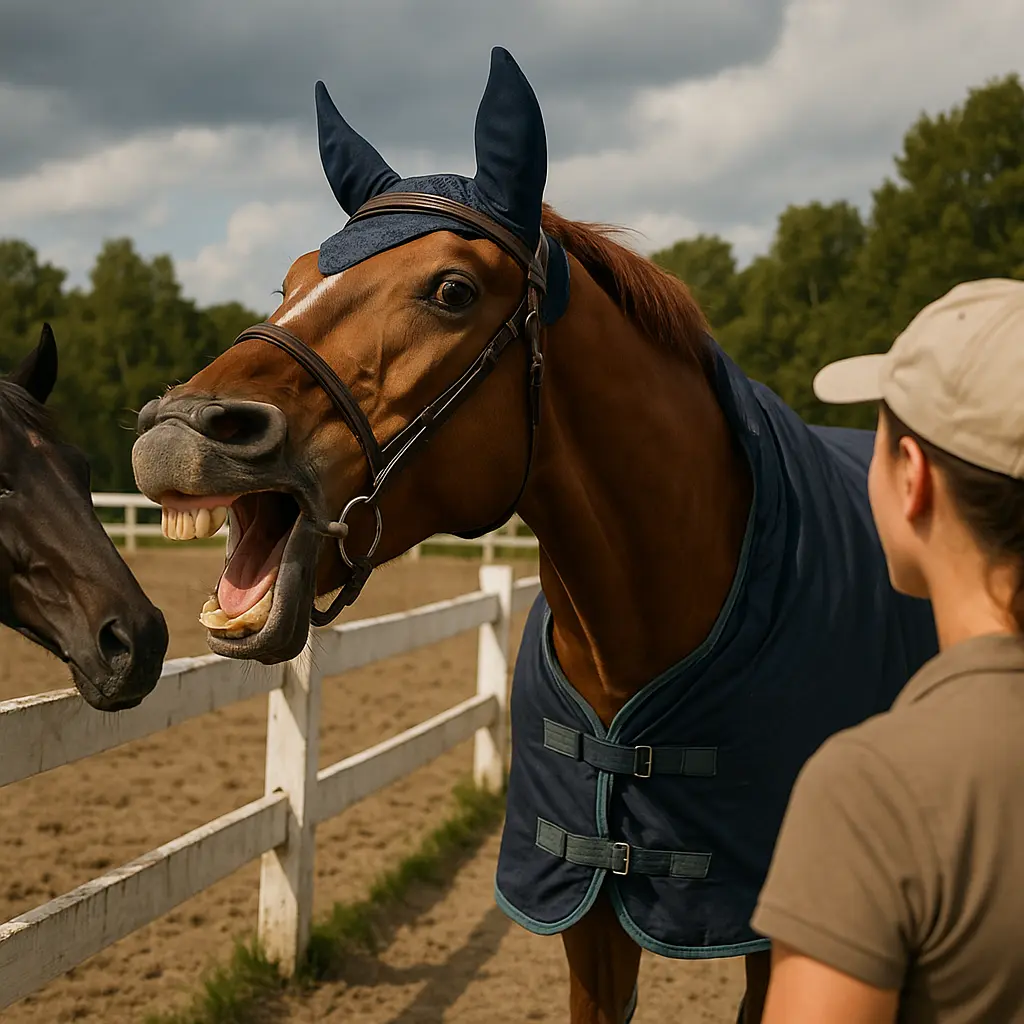
Your horse’s voice is richer than it sounds. New research shows a whinny carries two separate “notes” that reveal both how worked up your horse is and whether the feeling is positive or negative — and you can learn to hear the difference.
Key takeaway: A horse’s whinny encodes two emotional dimensions — arousal and valence — so you can use pitch and duration to read mood, reduce stress, and ride more safely.
What your horse’s whinny really says
Horse whinnies contain two independent fundamental frequencies (F0 and G0) that signal emotional arousal and valence respectively. Practically, the higher and more energetic the whinny, the more aroused your horse is; changes in G0 and longer calls indicate whether the emotion skews positive or negative.
Veterinary acoustics research has shown that horses produce “biphonation” — two fundamental frequencies that are not harmonically related — a rare phenomenon now documented in equine vocalisations. F0 closely tracks arousal (how activated the horse is), while G0 and the duration of the whinny signal valence (whether the feeling is pleasant or unpleasant). In plain terms: a short, bright, high-energy whinny can be excitement; a longer call with a distinct secondary pitch can indicate frustration or worry. You can read the full open-access study on the National Library of Medicine site: Stomp et al., 2015.
“Our results show that the presence of two fundamental frequencies can also function as a means of emotion expression, with each frequency encoding one emotional dimension (i.e. arousal and valence).” — Mathilde Stomp et al., veterinary acoustics researchers (NCBI/PMC)
Understanding this matters on the yard and in the saddle. It gives you an early-warning system for stress and an easy way to confirm when your horse is genuinely relaxed and ready to learn.
Spotting arousal vs valence in everyday handling
Higher F0 and more energy in a whinny mean higher arousal, while a longer call with G0 changes points to negative valence such as frustration. Use this to decide whether to pause, regroup, or proceed with your plan.
During grooming, tacking up, or leading to turnout, listen for:
- High, bright, quick whinnies (high arousal): could be anticipation at feed time or separation stress; pair with body cues like a tight back or dancing feet to judge if it’s positive or edgy.
- Longer whinnies with an audible second pitch (negative valence): often align with frustration — for example, when stable mates leave or the horse is confined on a wet, windy day.
- Nickers (short, low, friendly): affiliative greetings, especially at feed or when a favourite human appears; relaxed ears and a soft eye confirm positive valence.
- Squeals: commonly linked to aggression, pain, or boundary-setting; if you also see ears pinned, tail swishing, or striking, step back and reassess the environment.
In UK winters, cold rain, mud, and gusty conditions increase environmental stress. If your horse starts producing frequent, high-arousal whinnies when you open the stable door on a blustery afternoon, that’s your cue to slow down: adjust the plan, allow a few minutes of in-hand settling, or keep work light and familiar.
Quick tip: Keep a few notes on your phone about “typical” nickers and whinnies during calm activities (quiet turnout, hand-grazing). These become your baseline for comparison when the weather turns or the schedule changes.
Soundscapes at UK yards and shows: what stresses horses
Horses show distinct changes in behaviour and heart rate when exposed to different competition sounds, and noise-damping ear covers can reduce these responses. This effect varies by sound type, with strong benefits reported for feed-related clatter and other sharp yard noises.
Peer-reviewed work from the University of Cambridge measured horses’ heart rate and behaviour across complex auditory stimuli common at competitions—crowd noise, announcements, equipment sounds—and found that responses differed by sound, confirming that “noise” is not a single category for horses. Importantly, ear covers reduced both physiological and behavioural reactivity, particularly to feed-associated clatter; read more via the Cambridge repository: study summary.
“Differences in physiological and behavioural responses to different complex auditory stimuli were shown... responses are reduced when wearing ear covers with varying effectiveness for different sounds.” — Study authors, University of Cambridge (Cambridge Repository)
In the UK, wet, windy showgrounds and packed warm-up rings amplify sound and vibration. British Equestrian Federation (BEF) and British Horse Society (BHS) welfare guidance consistently emphasise monitoring for stress signals like squeals and agitated whinnies, especially in poor weather and busy lorry parks. If you’re competing under British Eventing or British Dressage rules, choose ear covers that comply with visibility and fit requirements; brands such as LeMieux ear bonnets and WeatherBeeta hoods are popular with UK riders for both function and style.
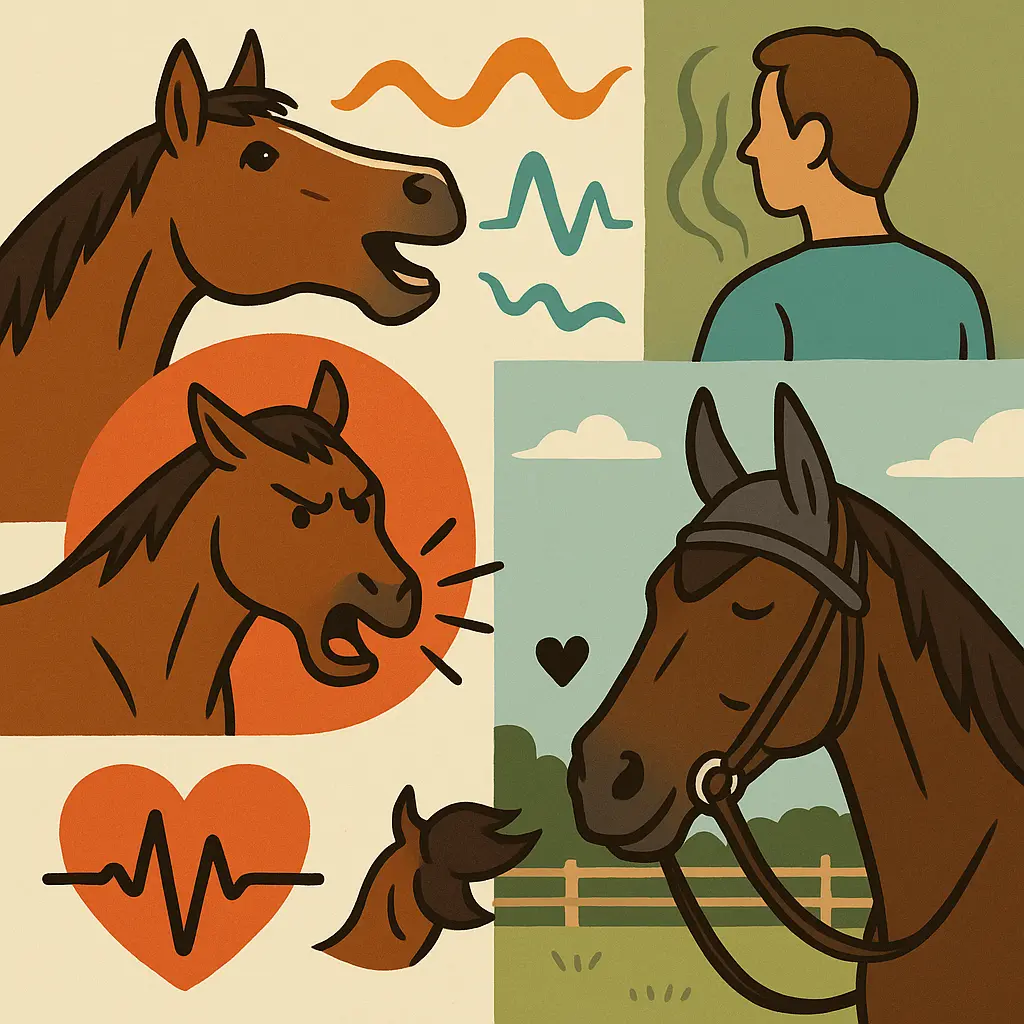
Harnessing ear covers, rugs and calm training to reduce vocal stress
Use noise-damping ear covers, weather-appropriate rugs, and gradual sound desensitisation to reduce arousal and bring vocal stress down. Combine equipment with a structured training plan and clear welfare checks to keep improvements consistent.
Here’s a practical framework you can follow this season:
- Fit noise-damping ear covers for travel, warm-up, and prize-giving. Expect to spend £20–£50 and ensure the bonnet sits flat under the bridle without pinching. For competition-friendly choices, explore LeMieux and WeatherBeeta.
- Desensitise to specific sounds in low-stress settings. Start in-hand on a quiet day, introducing low-volume versions of the target sound (feed scoops, PA announcements on a phone, clatter) and reward calm. Keep sessions under 10 minutes and finish on a success.
- Rug for comfort to remove weather-related irritants. A well-fitted rug prevents cold rain or wind-chill from adding “background stress” that can tip arousal into negativity. See our curated winter turnout rugs and lighter-weight stable rugs for the changeable UK climate.
- Track heart rate alongside voice. If you have access to an equine heart rate monitor (£200–£400), use it to validate what you hear in the whinny. Falling HR with shorter, softer calls confirms your plan is working.
- Support calm from the inside. Many riders find winter nerves settle with targeted nutrition; our calming supplements range (£15–£40) can help take the edge off during busy yard hours or first outings of the season.
Pro tip: Don’t mask pain with equipment. If squeals or long, negatively valenced whinnies persist with pinned ears or head-high posture, checks for saddle fit, gastric comfort, and musculoskeletal pain come first. When in doubt, call your BEVA-accredited vet.
Your scent and body language matter
Horses can detect human fear odours and become more alert, reactive, and less inclined to approach even without visual or vocal cues. Your own calm, consistent presence can therefore change how your horse vocalises and behaves.
Research at Anglia Ruskin University (ARU) Writtle found that exposure to fear-related human odours produced clear autonomic and behavioural shifts: head-high postures, ears back, increased alertness, and elevated maximum heart rate — all without any visual or auditory signals. Read the summary here: ARU news release.
“Horses showed distinct behavioural and physiological changes when exposed to fear-related odours... They were more alert, more reactive to sudden events and less inclined to approach humans.” — Roberta Blake, Lecturer in Animal Science, ARU Writtle (ARU)
On a noisy livery yard in November, your breathing, posture, and even scent (sweat chemistry changes with anxiety) can nudge a borderline whinny towards either excitement or worry. Before mounting, take 60 seconds for slow nasal breathing and a quiet hand-graze. Pair your calm body language with affiliative cues your horse understands — a soft nicker back, relaxed shoulders, and gentle grooming strokes. If you need a structured start routine, keep a small grooming kit ready by the door; our yard favourites live in the grooming collection for quick access.
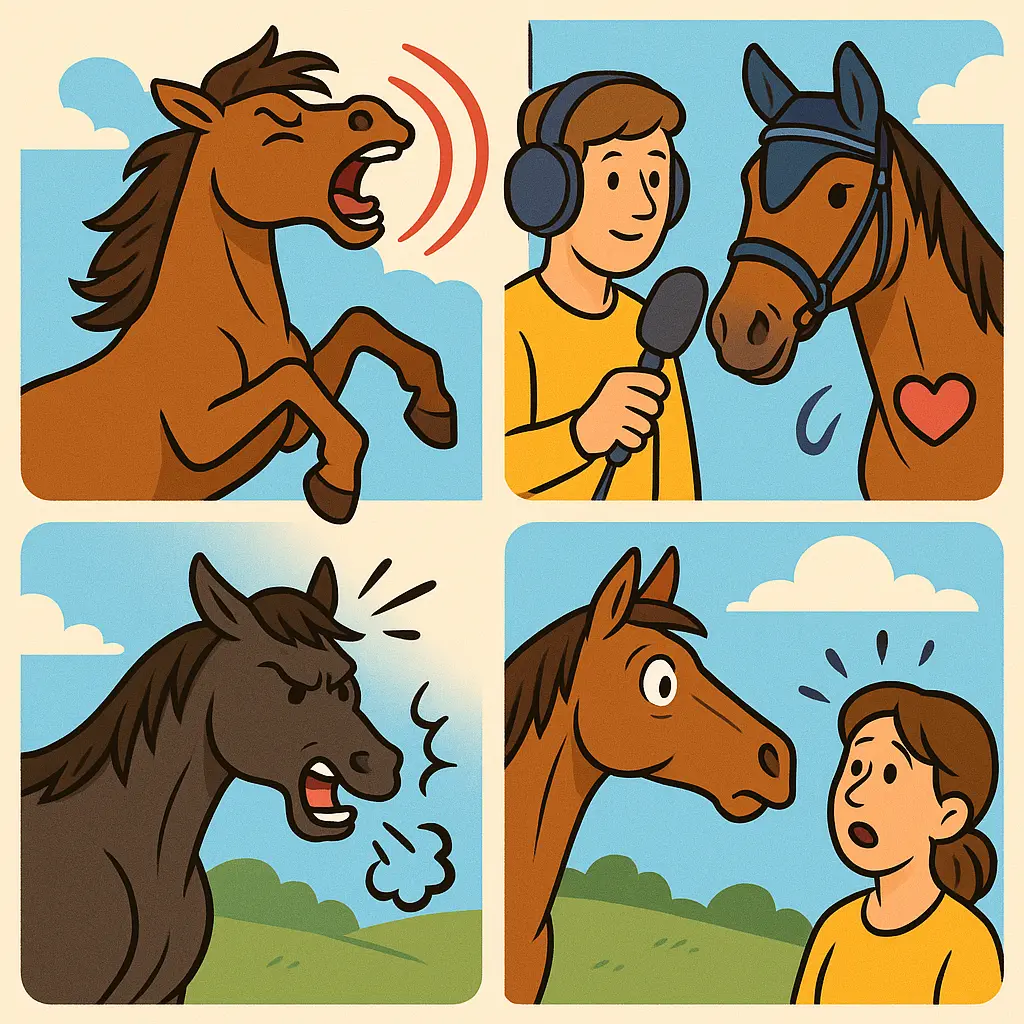
A simple yard plan to track and interpret vocalisations
Record baseline nickers and whinnies in calm conditions and compare them across seasons and settings to catch stress early. A simple log makes patterns visible and helps you make better decisions on training, turnout, and kit.
Use this four-week template:
- Baseline week: Note the typical “good mood” sounds (short nickers at feed, minimal whinnying at turnout) during quiet times. Jot down ear position, head carriage, and any HR if available.
- Weather-watch: In wet or windy spells, log any increase in high-arousal whinnies. If you see a spike, add comfort (rug change, earlier turnout, or quick in-hand leg stretch) and reassess.
- Sound trials: Introduce one mild sound trigger per session (e.g., bucket clatter) and record changes. Add ear covers if needed and compare responses; the right bonnet should shorten call duration and reduce startle.
- Review: If long, negative-valence calls persist, book a physical check. Gastric discomfort, dental pain, or poorly fitting tack often show up first as vocal or behavioural friction.
At Just Horse Riders, we recommend pairing your log with small, consistent reinforcers to anchor positive states. A scratch at a favourite spot or a low-sugar nibble from our healthy treats range can help your horse associate training sounds with good outcomes.
Quick tip: If yard acoustics are harsh (echoey aisles, metal clatter), simple environmental tweaks help — rubber matting or partition screens can soften reverb (£100–£300) and reduce squeal-triggering surprises.
When to worry and who to call
Frequent high-arousal whinnies with stress signs, especially in bad weather, warrant a call to your BEVA-accredited vet. Don’t wait if vocal changes appear alongside colic flags, sudden aggression, or a drop in appetite.
Red flags to act on now:
- Repeated long whinnies with pinned ears, tail swishing, or striking at the door (pain or frustration).
- Escalating vocalisations in wind/rain with a tight, head-high posture and hard eye (environmental stress tipping into risk).
- Any vocal change paired with colic signs (pawing, looking at flank, no manure, inappetence) — call the vet immediately.
- New squealing under saddle or when girthing, suggesting saddle/ulcer/back issues.
BHS welfare guidance encourages owners to recognise stress early; British Eventing and British Dressage riders should also factor rules on equipment fit and visibility when choosing ear covers. Remember, equipment supports training — it doesn’t replace pain investigation. If you need to keep your horse warm and comfortable while you troubleshoot, our turnout rugs and stable rugs offer reliable coverage for the UK’s changeable seasons, helping remove weather as a confounding stressor while you seek professional advice.
If you’re on a budget, check our seasonal offers for quality kit at sensible prices — our buyers regularly add event-ready pieces from trusted brands to help you prepare without overspending.
FAQs
Why does my horse whinny with two pitches, and what does it mean?
Horses produce biphonation: two fundamental frequencies (F0 and G0) that aren’t harmonically related. F0 signals arousal (how “keyed up” your horse is) and G0 with call duration signals valence (positive vs negative) — see Stomp et al., NCBI/PMC.
What do squeals or nickers tell me about my horse’s mood?
Squeals commonly mark negative valence (aggression, pain, or strict boundary-setting), especially with pinned ears or striking. Nickers are affiliative greetings; pair the sound with relaxed ears and a soft eye to confirm positive mood, often around feeding in UK stables.
Do ear covers help with a vocal or stressed horse at shows?
Yes. Peer-reviewed research shows noise-damping ear covers reduce heart rate and behavioural reactivity to common competition sounds, with strong effects for feed-related noises; effectiveness varies by sound (University of Cambridge). For compliant options, explore LeMieux bonnets and WeatherBeeta hoods.
Can my anxiety make my horse more vocal or reactive?
Yes. Horses detect human fear odours and respond with increased alertness, reactivity, head-high posture, and higher maximum heart rate — even without visual cues (ARU Writtle). Build calm with a short pre-ride breathing routine and steady, relaxed handling.
How can I use this science during daily handling?
Before riding, listen: a short, bright whinny suggests high arousal; a longer call with a second pitch leans negative. If in doubt, pause for in-hand walking, pop on ear covers, and adjust comfort (for example, switch to a warmer rug if it’s 5°C with wind-chill). Consider targeted calming supplements during busy yard hours.
When should I worry about excessive neighing in UK weather?
Act quickly if frequent high-arousal whinnies appear with colic signs, aggression, or reduced appetite, especially in windy autumn or icy winter conditions. Call your BEVA-accredited vet and rule out pain before resuming training changes.
What simple kit helps reduce vocal stress without overhauling my routine?
Start with competition-legal ear covers (£20–£50), season-appropriate rugs (£50–£150), and a basic grooming-and-breathing pre-ride ritual. Keep a few low-sugar rewards from our treats selection for reinforcing calm, and log changes to your horse’s voice week by week.
At Just Horse Riders, we’re here to help you build a calmer, clearer conversation with your horse — from science-backed training tips to yard-tested kit that makes UK seasons more comfortable for both of you.