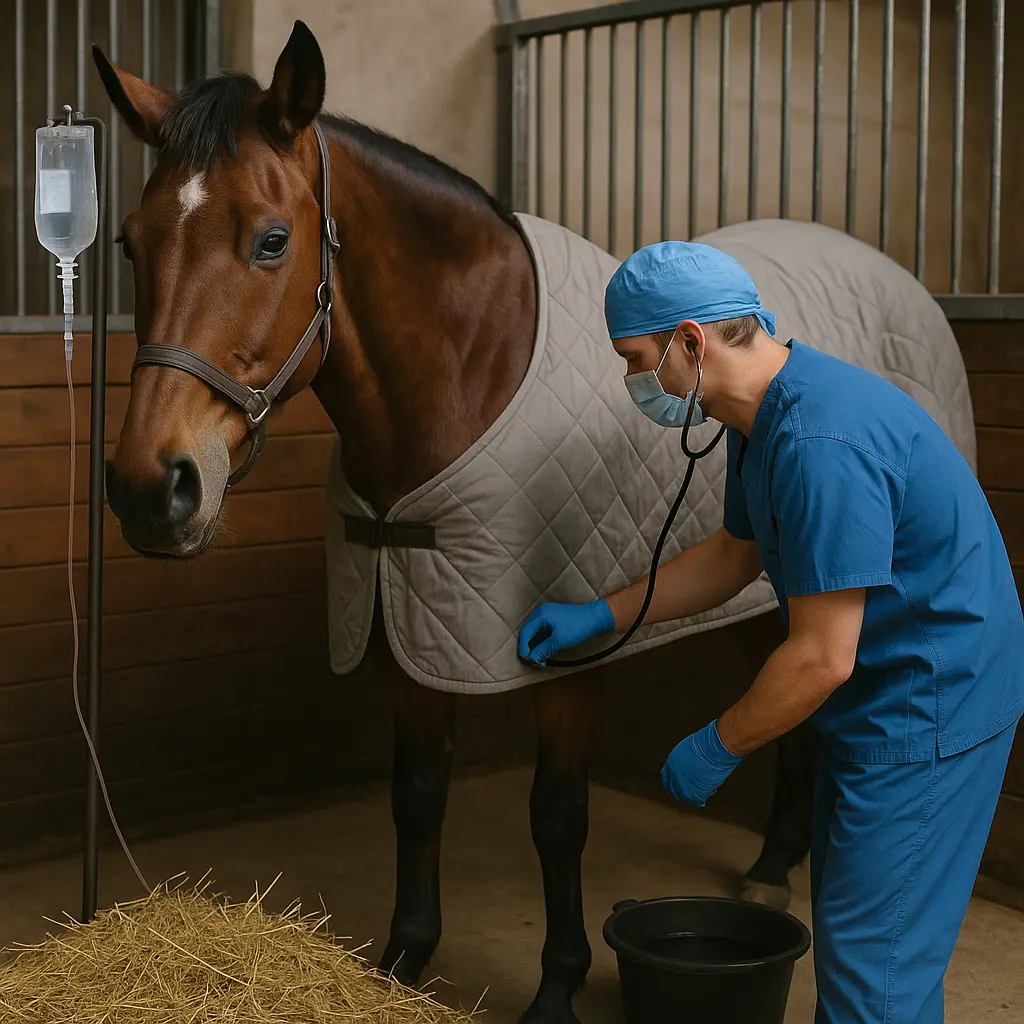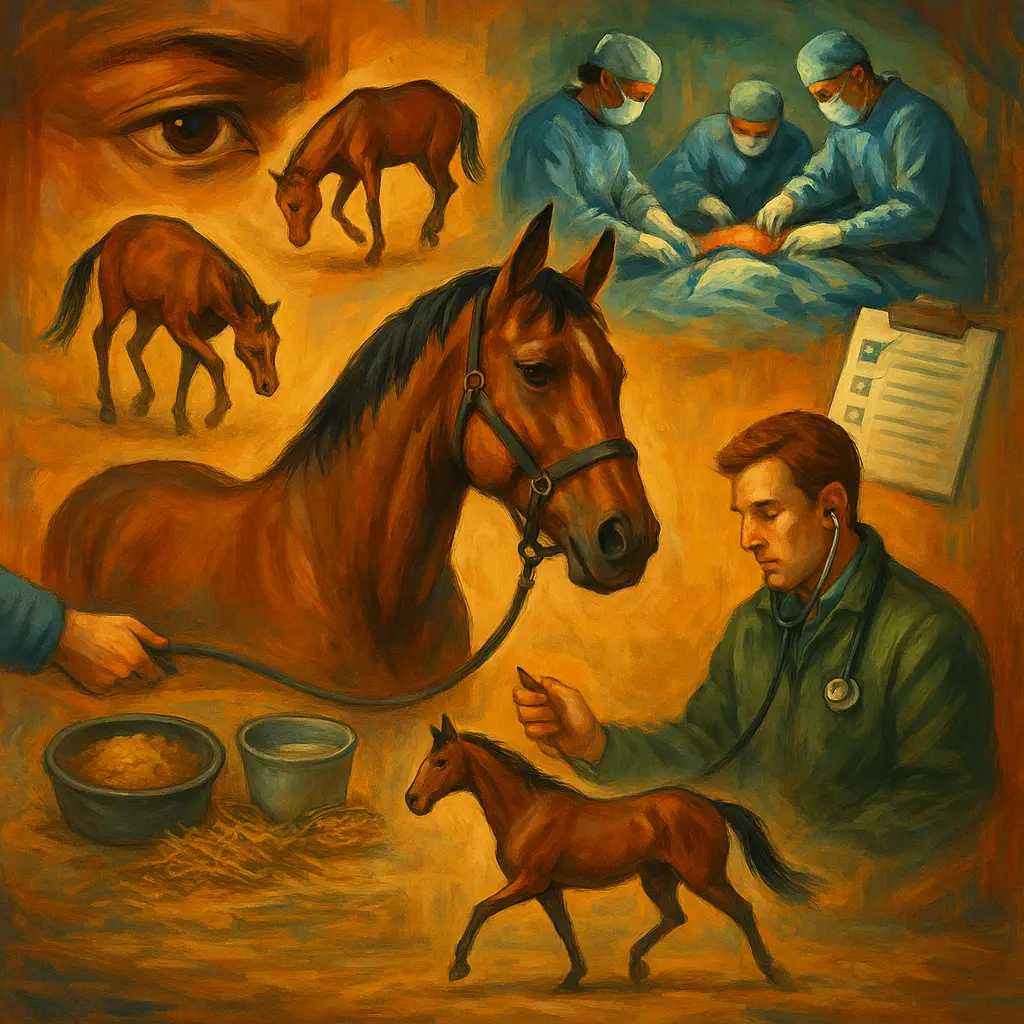
Loss of appetite after colic is worrying, but the right early decisions make a big difference. Here’s how to judge what’s normal, when to call the vet, and how to feed, hydrate, and exercise your horse back to form — with UK-specific tips for autumn and winter.
Key takeaway: Brief inappetence can be part of recovery if your horse is comfortable and passing faeces; no appetite plus fewer droppings or distress is a colic warning — contact your vet immediately.
Is loss of appetite after colic normal?
Yes — a short-lived dip in appetite can be normal in early recovery if your horse is comfortable and producing faeces; ongoing inappetence alongside reduced droppings, restlessness or depression-like behaviour is a red flag. The British Horse Society (BHS) advises using REACT and contacting your vet at the first sign of deterioration.
After any colic episode, your first job is to watch behaviour and manure output closely. Key REACT signs include restlessness or agitation, eating less, reduced droppings, and clinical changes like raised heart rate or pale gums. As the BHS puts it:
“Colic cases can quickly deteriorate so early recognition and prompt veterinary attention is vital to increase the chance of recovery for the horse.”
In the UK, risk often rises in autumn and winter when wet weather, mud, and sudden forage changes (e.g., grass to hay) are common. Stable and livery yard routines should include extra checks in prolonged rain and during diet transitions. Learn more about REACT from the BHS: BHS colic guidance.
When should you feed after colic or surgery?
Only reintroduce feed once your horse has passed a significant amount of faeces; for many surgical cases, small amounts of hay and wet mash are offered 24–48 hours post-op, then increased gradually. Start with forage-first, wet, easily digestible feed, and feed on the ground to reduce aspiration risk.
After medical management or surgery, the gut needs time to regain motility. Use your vet’s plan, but the practical framework is consistent:
- Wait for manure: Do not reintroduce feed until your horse passes a meaningful quantity of faeces. Vets sometimes use mineral oil as a transit marker.
- Start small: Offer a handful to a flap of hay with a wet mash (e.g., beet pulp or bran) and increase the quantity over several days.
- Go forage-first: Keep concentrate feeds minimal to avoid overload while the gut recovers.
- Feed on the ground: This helps drainage and reduces aspiration risk in the early phase.
Evidence from BEVA respondents (Diplomates of the European College of Equine Internal Medicine) indicates many horses with small intestinal strangulating or small colon lesions are offered feed 24–48 hours after surgery. Expect a gradual return to normal rations over 1–3 weeks, guided by faeces production and comfort. See: BEVA feeding practices.
Which complications should you watch for at home?
Fever over 38.6°C is the most common post-operative problem (27.7% of cases), and recurrent colic can occur in 20–50% of horses. Monitor temperature and gut sounds daily and call your vet immediately if REACT signs return.
What to check twice daily at home:
- Temperature: >38.6°C indicates pyrexia and needs a call to your vet (post-op data).
- Behaviour: Restlessness, rolling, sweating, depression-like signs, or reluctance to move.
- Manure: Quantity, consistency, and frequency — fewer droppings are a concern.
- Heart rate and gums: An increasing heart rate, pale or tacky gums, or a prolonged capillary refill time indicate clinical change.
- Incision: Heat, swelling, discharge, or pain around surgical sites.
The Merck Veterinary Manual lists loss of appetite, depression, and decreased bowel movements among the most common colic signs; these may persist briefly, but worsening signs need urgent assessment. Reference: Merck: Colic in Horses.
Quick tip: Keep a digital thermometer and a basic stethoscope on the yard so you can report accurate readings to your vet. In wet UK weather, do checks under shelter to get reliable measurements.
What are the chances of survival and return to work?
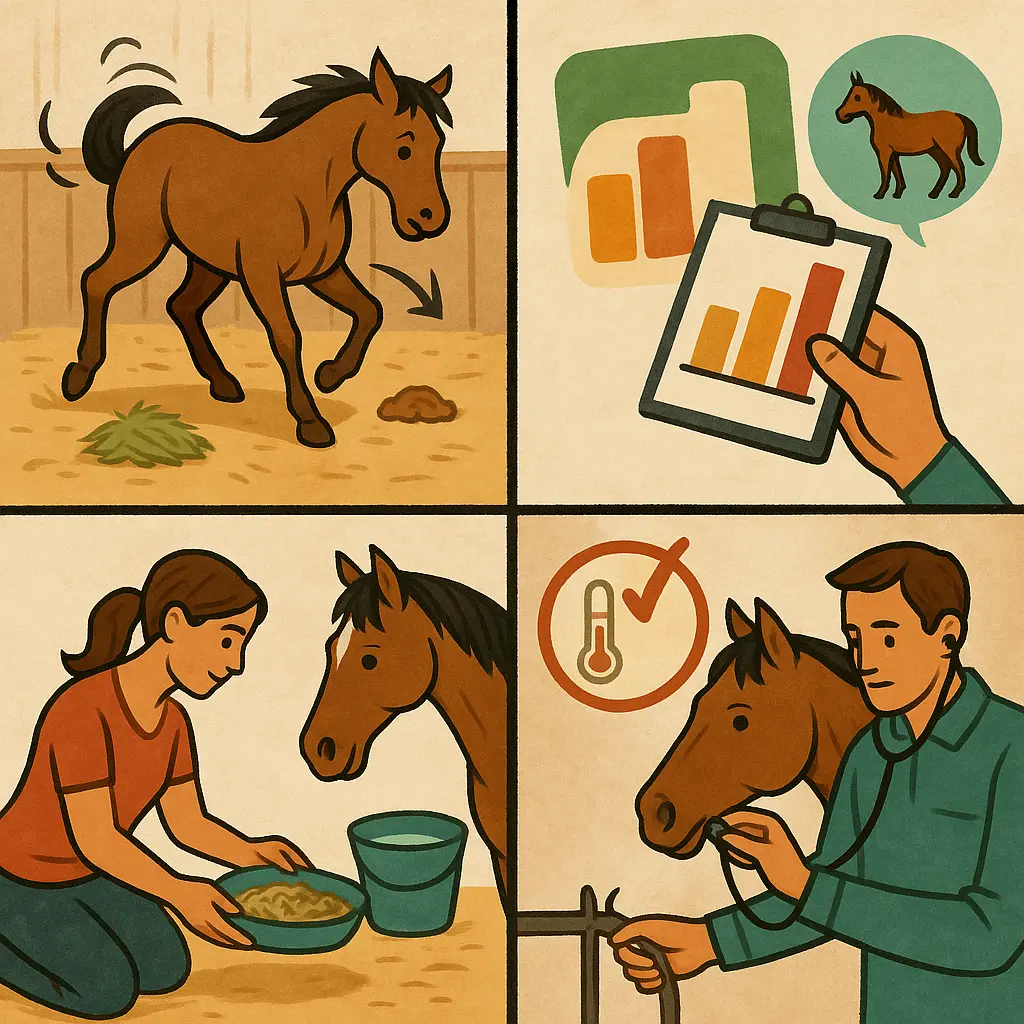
Short-term survival after colic surgery is around 68.5% across all horses and approximately 80% in those that recover from anaesthesia; of these, 79.1% survive to discharge and 85.9% are alive one year later, with 76.4% returning to their previous or intended function. Survival varies with lesion type and severity, and early intervention improves the outlook.
Recent studies give a realistic, encouraging picture:
- Short-term survival: 68.5% for all horses undergoing surgery; around 80% for horses that recover from anaesthesia (PMC).
- Hospital discharge: 79.1% of those recovering from anaesthesia leave hospital alive; one-year survival is 85.9% (Frontiers in Veterinary Science).
- Return to use: 76.4% return to intended function (athletic or breeding) within a year (Frontiers).
- Pain severity matters: Survival rates range from around 50% to over 80%, highest in mild pain and lowest with severe distension or cardiovascular compromise (Merck).
Pro tip: Don’t “wait and see” if your horse looks uncomfortable. Early recognition — per the BHS REACT protocol — and prompt veterinary care genuinely shift these percentages in your horse’s favour.
How to manage nutrition and hydration in the first month
Horses commonly lose about 8% of bodyweight during recovery, so prioritise hydration and forage-based calories delivered in small, frequent meals. Reintroduce soft wet mashes and good-quality hay gradually over 1–3 weeks, guided by faeces output and your vet.
Evidence and practice points to use with your vet’s plan:
- Hydration first: Provide constant fresh water; use wet mashes and discuss electrolyte supplements to support rehydration, especially in cold UK weather when drinking may drop. Elevated plasma lactate and free fatty acids are common after anaesthesia, so replacing fluids and salts is helpful (metabolic data).
- Feed timing: Many surgical cases can be offered feed 24–48 hours post-op (per BEVA respondents), but only after passing faeces (BEVA).
- Forage target: Once fully recovered from anaesthesia, aim towards around 8 kg/day of hay initially, adjusted to size and vet advice (PMC).
- Meal structure: Start with small hay portions and soft mashes (beet pulp or bran), then increase over days. Use hay nets or slow feeders to prevent gorging.
- Feeding position: Feed on the ground early on for safety and normal posture.
- Supplements: Consider electrolyte and gut-support products; many owners use trusted brands like NAF supplements during recovery as advised by their vets.
Quick tip: If your horse goes off water in winter, offer slightly warmed water and wetter mashes. A salt lick plus measured electrolytes (as directed by your vet) can encourage better drinking.
How much exercise and turnout is safe during recovery?
Hand-walk several times daily once your horse has recovered from anaesthesia, then reintroduce turnout and ridden work gradually under your vet’s guidance. Keep your horse warm and dry in UK weather to support comfort, movement, and gut motility.
Movement helps the gut and the mind. Early on, walk in-hand in short, regular sessions on good footing, avoiding situations that might trigger rolling. As healing progresses, your vet may approve controlled turnout, then light ridden work.
Comfort and safety kit that helps in UK conditions:
- Rugs for warmth and dryness: Choose breathable, weather-appropriate layers — e.g., winter turnout rugs for wet, windy days and stable rugs for cosy nights. Many owners trust brands like Weatherbeeta rugs for reliable fit and protection.
- Visibility for hand-walking: Short winter days demand hi-vis gear for you, especially if you must use yard lanes or bridleways.
- Leg protection: Use horse boots and bandages if your vet advises, particularly during early, careful exercise.
- Grooming and skin care: Regular, gentle grooming keeps skin healthy under rugs and helps you spot swelling or incision changes early.
At Just Horse Riders, we recommend laying out a weekly plan with your vet, adapting for UK weather. Damp, cold days can stiffen muscles and reduce motivation to move — suitable rugs and a brief warm-up on the yard before walking out can make sessions smoother.
When to call the vet — and what to tell them
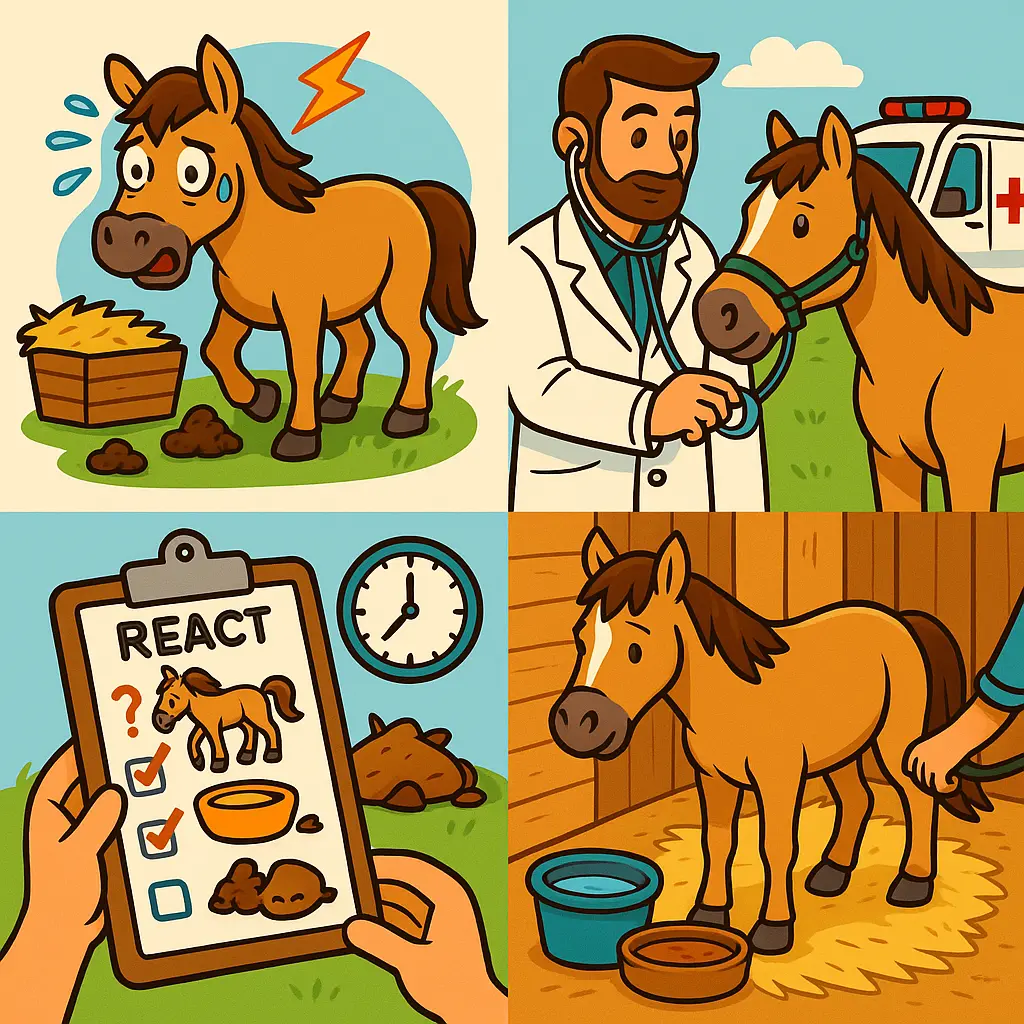
Call immediately if pain persists despite analgesics, your horse rolls or sweats, appetite doesn’t return after passing faeces, there are few or no droppings, temperature exceeds 38.6°C, heart rate rises, or gums look pale. Early recurrence can signal complications; a small minority (around 4.6%) require a second surgery (relaparotomy).
When you ring your vet, have these details ready:
- Temperature, heart rate, respiratory rate, and gum colour/capillary refill time.
- Time and amount of last feed, water intake, and any supplements.
- Faeces: when last passed and how much.
- Behaviour changes: restlessness, rolling, sweating, reluctance to move.
- Medication given: name, dose, and time.
Remember the BHS REACT framework (BHS guidance) is aligned with UK veterinary standards (RCVS) to prevent suffering through prompt intervention.
Quote this to your yard team so everyone acts fast:
“If you notice any signs of distress or changes in a horse’s behaviour, think REACT and immediately contact your vet.” — BHS
Brief conclusion: Act early, feed smart, and monitor closely. With timely veterinary care and careful home management, most horses recover well — and many return to full work within a year.
FAQs
How long until my horse eats normally after colic surgery?
Many horses are offered small amounts of feed 24–48 hours post-op (for specific lesions, per BEVA), but only after passing faeces. Expect a gradual return to normal over 1–3 weeks with forage-first, wet mashes and careful increases (BEVA).
What temperature is considered a fever after colic surgery?
Anything over 38.6°C is classed as pyrexia and warrants a call to your vet; it’s the most common post-operative complication, occurring in around 27.7% of cases (PMC).
Can colic return after surgery?
Yes. Recurrence rates between 20–50% are reported; one large study found 29.6% over 1 month to 7 years. Early recurrence during hospitalisation may require reassessment and, rarely, a second surgery (Frontiers).
Is depression a normal recovery sign or a problem after colic?
Mild, short-term dullness can occur, but depression-like behaviour is also a core colic sign alongside inappetence and fewer droppings. If dullness persists or worsens, think REACT and contact your vet (Merck; BHS).
What should the first meals be after colic?
Small amounts of good-quality hay plus a wet mash (such as beet pulp or bran) are standard. Increase gradually over days, feed on the ground, and only start once meaningful faeces have passed.
How much hay should I offer early in recovery?
Once fully recovered from anaesthesia and with your vet’s go-ahead, work towards around 8 kg/day initially (adjusted to your horse), delivered in small, frequent portions and increased as tolerated (PMC).
What’s the overall survival chance after colic surgery?
About 68.5% for all horses undergoing surgery and around 80% for those that recover from anaesthesia; 79.1% of these survive to discharge, 85.9% are alive at one year, and 76.4% return to intended function (PMC; Frontiers).
At Just Horse Riders, we’re here to help you put a practical plan in place. For safe winter walking and comfortable recovery, explore turnout rugs, supportive boots and bandages, cosy stable rugs, high-visibility rider hi-vis, and recovery-supporting supplements — with trusted options from brands like Weatherbeeta and NAF.