

How to Manage and Mitigate Horse Bucking in Open Spaces: Tips and Techniques
Introduction
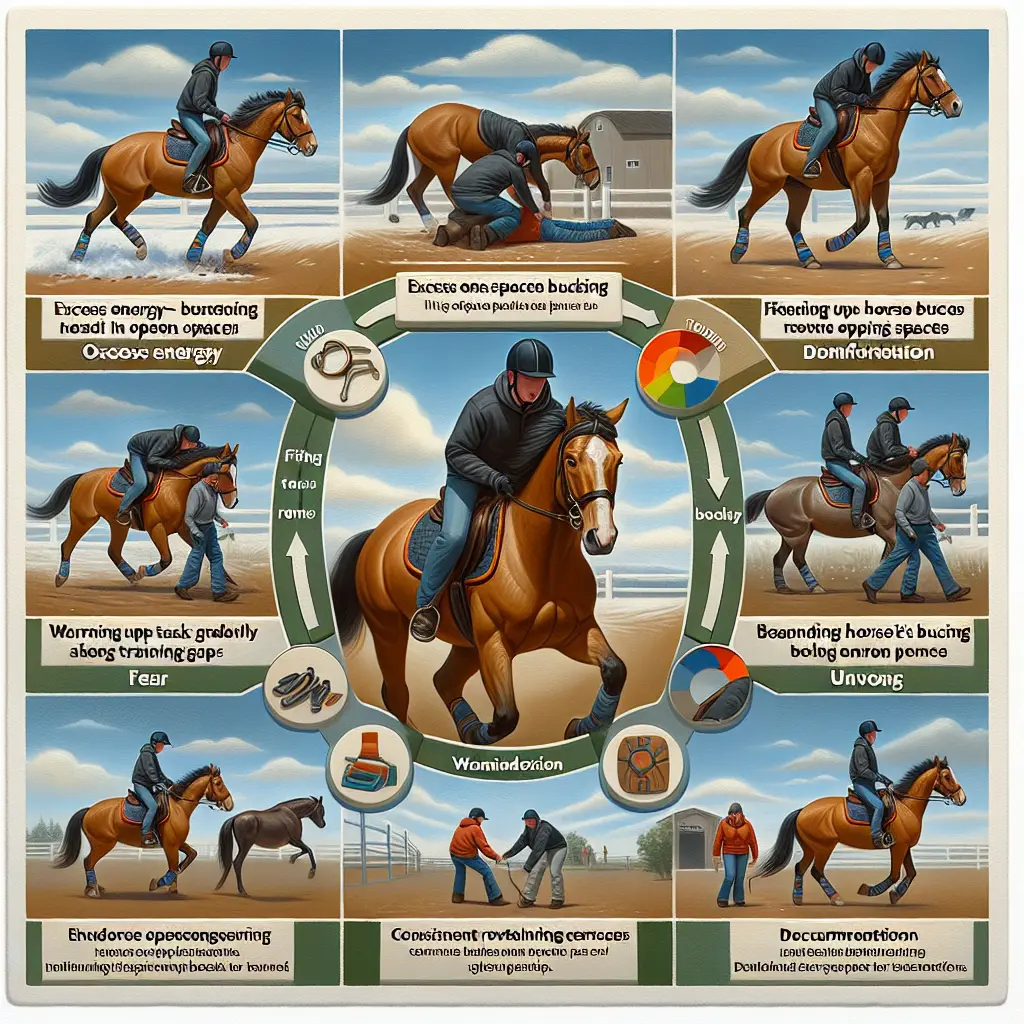
Every horse rider eagerly anticipates the joy of galloping through open fields. Yet, this liberating experience can be disrupted by the unexpected bucking that some horses indulge in when given too much freedom. Understanding the causes and learning how to manage and mitigate these reactions is crucial for both safety and enjoyment. In this blog, we delve into strategies for understanding and managing horse bucking in open spaces, ensuring you and your equine friend can trot forth with confidence.
Understanding Why Horses Buck in Open Spaces
Imagine being a horse let loose in a vast field, full of energy, and possibly overwhelmed by adrenaline. Naturally, this can lead to bucking—a behavior where horses kick backward with their hind legs. But why do they do it? Let’s explore some common triggers.
- High Spirits or Excess Energy: Fresh and well-rested horses may exhibit bucking out of sheer exuberance, especially when in the company of other horses or near downhill slopes.
- Discomfort and Tack Issues: According to equine experts, between 30-50% of bucking cases can be attributed to ill-fitting saddles, tight cinches, or improperly adjusted tack. It's crucial to check saddle fit and other equipment before setting off.
- Fear or Distrust: Horses that are not adequately desensitized to their environment or view their rider from a distrustful perspective are prone to bucking.
- Training Deficiencies: Horses lacking practice in handling stress often default to defensive behaviors like bucking or bolting.
Step 1: Rule Out Physical Issues Before Riding
Before climbing into the saddle, ensure your horse is physically comfortable. Tack adjustments alone can resolve up to 40% of bucking issues based on numerous rider testimonials and expert observations.
- Saddle and Tack Check: Have a professional fitter evaluate the saddle's position and the shape of its tree on your horse’s back. Pay attention if your horse flinches when the girth is tightened, as this can be a sign of discomfort.
- Health Assessment: Collaborate with a veterinarian to rule out any physical conditions or soreness that might cause distress or lead to bucking.
- Gradual Warm-Up: Begin your ride with walking and light trotting, avoiding high-speed activities until your horse has settled into the environment.
Step 2: Build Trust with Groundwork Exercises
Groundwork is the bedrock of developing a trusting and responsive horse. Through these exercises, horses learn how to manage pressure situations calmly, diminishing the tendency to buck.
- Fencing Drills: Practicing with a fence line can help your horse acclimate to the presence of weight above, just like a rider.
- Mashing for Stress Response: Introduce gentle stimuli to your horse's environment, rewarding calm responses to pressure, such as light taps and flapping stirrups.
- Backing and Yielding Exercises: Techniques like Clinton Anderson’s methods can prepare your horse in regulated spaces before moving to open areas.
Step 3: Improve Riding Skills for Open-Space Control
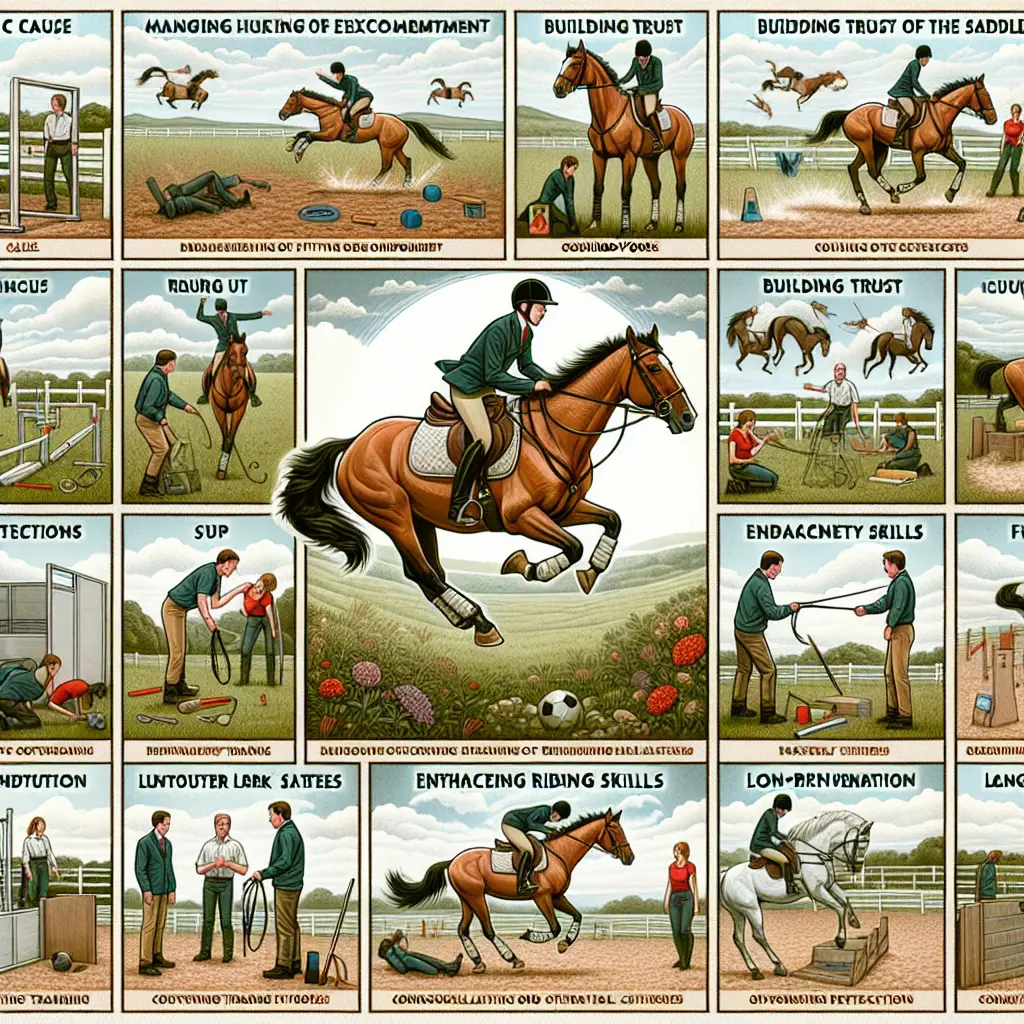
A solid riding technique is integral to preventing bucking from escalating. Practical training methods like the “ask-tell-demand” approach can amplify effective communication between rider and horse.
| Technique | How to Apply | Why It Works in Open Spaces |
|---|---|---|
| Ask-Tell-Demand Transitions | Apply a gentle leg squeeze, followed by a firmer nudge, and finally, use spurs or a stick if needed. This cycle of halt-walk, walk-trot, trot-canter transitions establishes communication. | Encourages prompt obedience and assertive movement, disrupting the bucking cycle. |
| Maintain Head Up | Use upward rein nips if the horse's head drops, keeping your body posture alert with deep heels. | Horses can’t easily buck with an elevated head position. |
| Circle to Redirect | Redirect the horse’s head to break the sequence, using circular motion to regain control. | Prevents bucking by messing up the horse’s focus, like an unexpected plot twist. |
| Lean and Leg Positioning | Position your upper body back, with legs forward, to enhance security. | Provides better balance and stability during unexpected movements. |
Step 4: Advanced Open-Space Strategies
As your skills and the horse’s comportment improve, these advanced strategies can be incorporated.
- Ride Through Bucks: Persist with forward leg aids, encouraging the horse to maintain motion. Experienced trainers suggest most horses abandon bucking after a few attempts.
- Balance Checks: Pay attention to your horse’s stride balance, regularly cueing leads and movements to maintain gait control.
- Progressive Exposure: Encourage slow and steady canters in safe, open spaces after completing groundwork, gradually increasing speed and confidence.
Long-Term Prevention and When to Seek Help
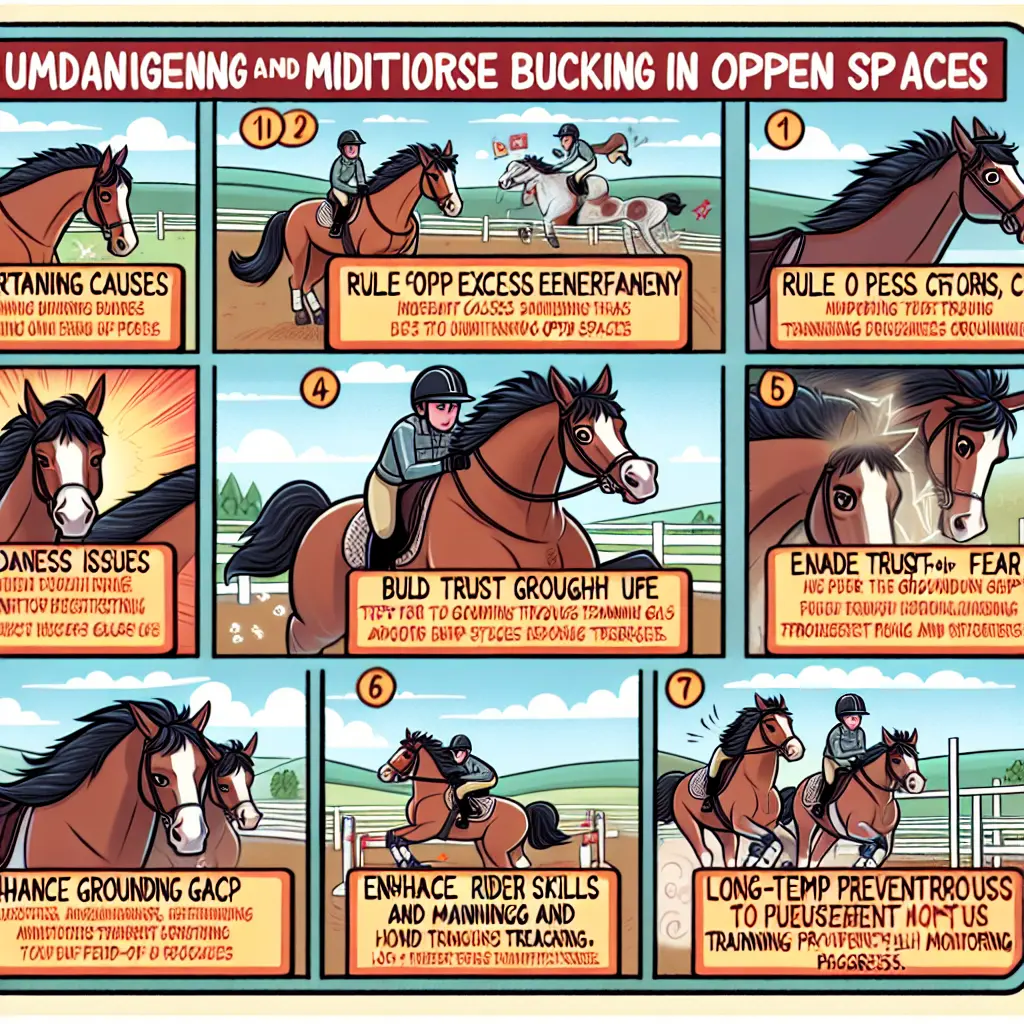
For sustained improvement, consistency is key. Develop a routine, noting any triggers or improvements in a journal. This process is reminiscent of a boot camp where consistent routine builds a robust foundation.
If bucking persists despite employing these techniques, consulting with certified trainers or vets is advisable. Never hesitate to seek professional guidance. Prioritize safety equipment, like helmets, and practice riding with a security net of professional help when necessary. Remember, tackling a challenge like horse bucking alone can be daunting, but with structured precautionary measures and expertise, your trust with your horse will only strengthen.
Conclusion
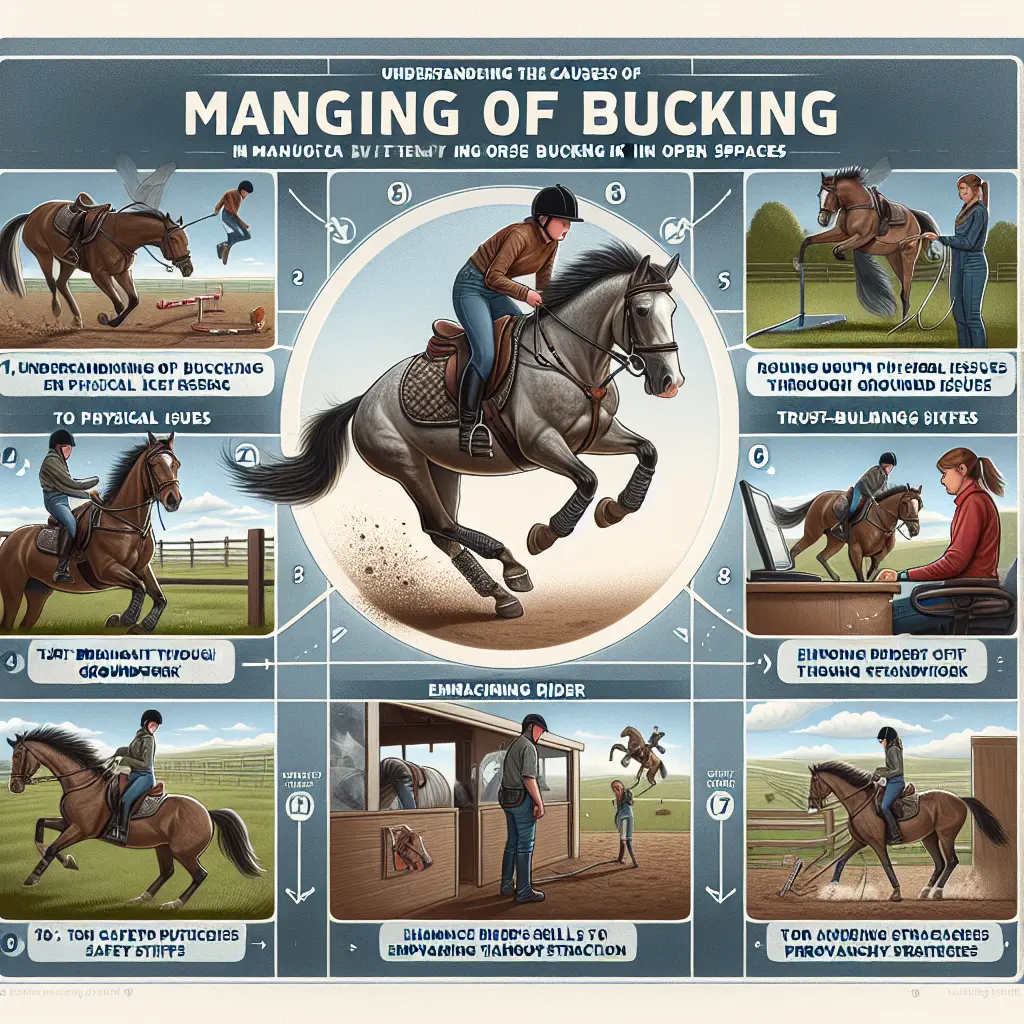
While the prospect of bucking in open spaces might initially seem daunting, a deeper understanding and systematic approach can transform this fear into an opportunity for growth. Through physical checks, trust-building exercises, skilled riding techniques, and advanced strategies, your relationship with your horse can achieve new heights of harmony. By prioritizing safety, consistent practice, and professional support when needed, horse riders can continue to experience the joy of equestrian pursuits without unease. Venture into the open fields with confidence, saddle secure and spirits high, knowing that a little preparation can keep you both on solid ground.
Explore more gear and apparel at Just Horse Riders, and consider browsing our Jodhpur Collection or our Horse Riding Boot Collection for all your equestrian needs.