

How to Calm Your Horse When Riding Under Lights: Tips and Strategies
Riding a horse under artificial lights, whether in an arena or on trails during dusk or nighttime, can be challenging for both horse and rider. Horses are naturally more alert in low-light conditions, and artificial lighting can create unfamiliar shadows, reflections, or glare that may disturb them. Calming your horse in these conditions requires preparation, understanding, and the right techniques to ensure safety and enjoyment.
Understanding Why Horses React to Lights
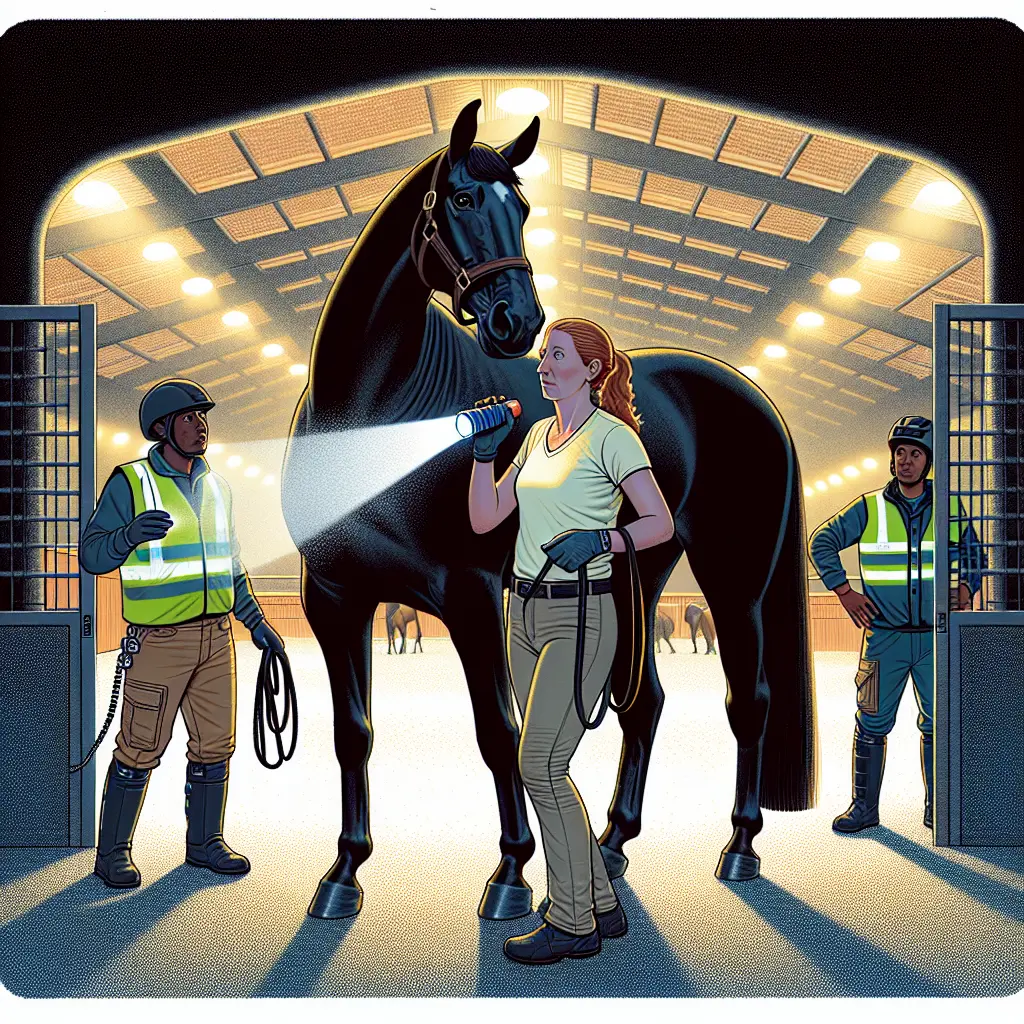
Horses have large eyes optimized for low-light vision, but their eyes are particularly sensitive to sudden or inconsistent light sources such as flashlights, arena floodlights, or car headlights. Unexpected beams or flickers may startle them because they appear as moving threats or shadows. The goal is to desensitize your horse to these stimuli and build their confidence.
Tips and Strategies to Calm Your Horse Under Lights
1. Gradual Desensitization to Light Beams
As recommended by riding experts, familiarize your horse with handheld lights gradually before riding under lights.[1] Start at dusk in a calm, enclosed area:
- Hold a flashlight and gently "bathe" the horse’s legs and body with the light, moving the beam slowly while speaking in soothing tones.
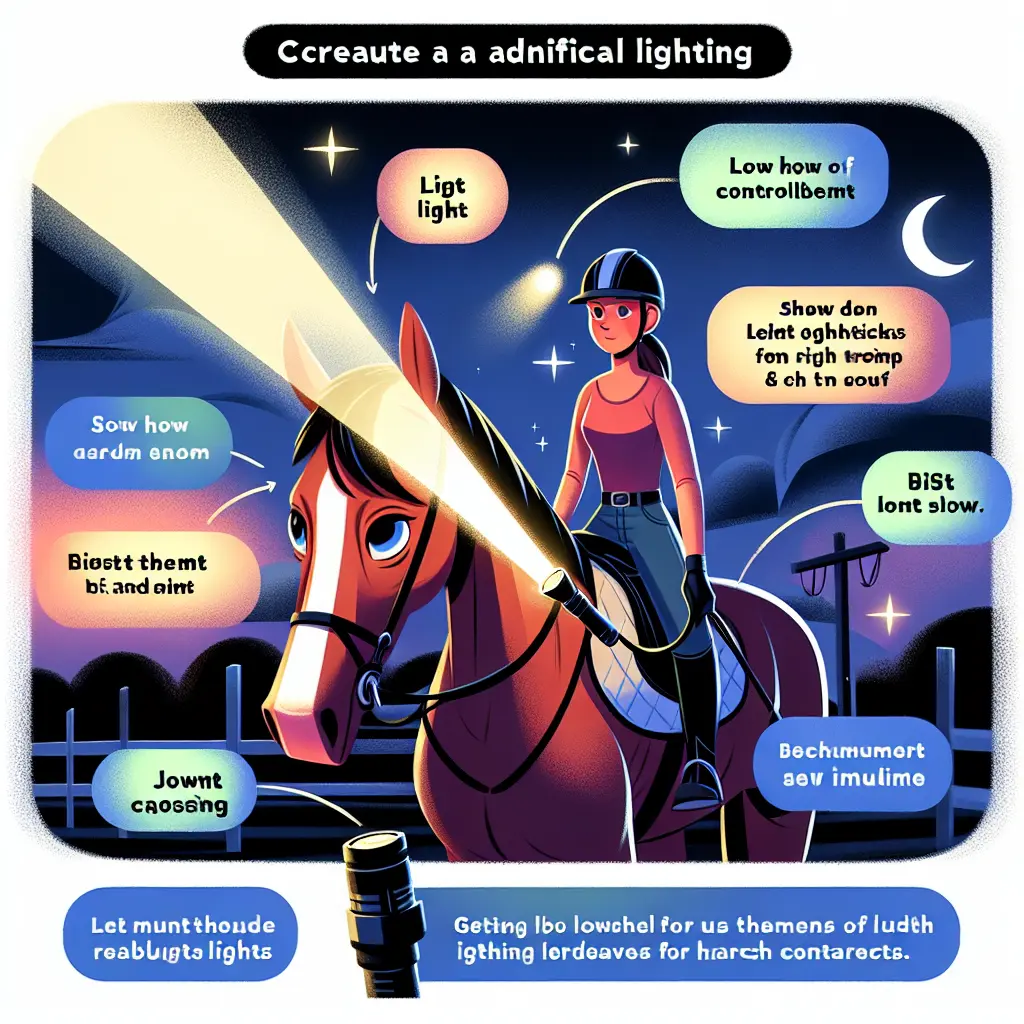
- Sit on your horse and aim the light downwards, gradually moving the beam faster as your horse becomes more comfortable.
- Repeat this in complete darkness if possible, so the horse adjusts to brighter or erratic light beams while remaining calm.
2. Routine and Familiarity
Horses feel safer when riding routines are consistent. If you plan to ride under lights often, always approach and prepare your horse in the same way. Allow about 15 minutes for your horse’s eyes and mind to adjust to changes in lighting conditions when moving from bright to dim areas.[4]
3. Ride During Favorable Natural Lighting
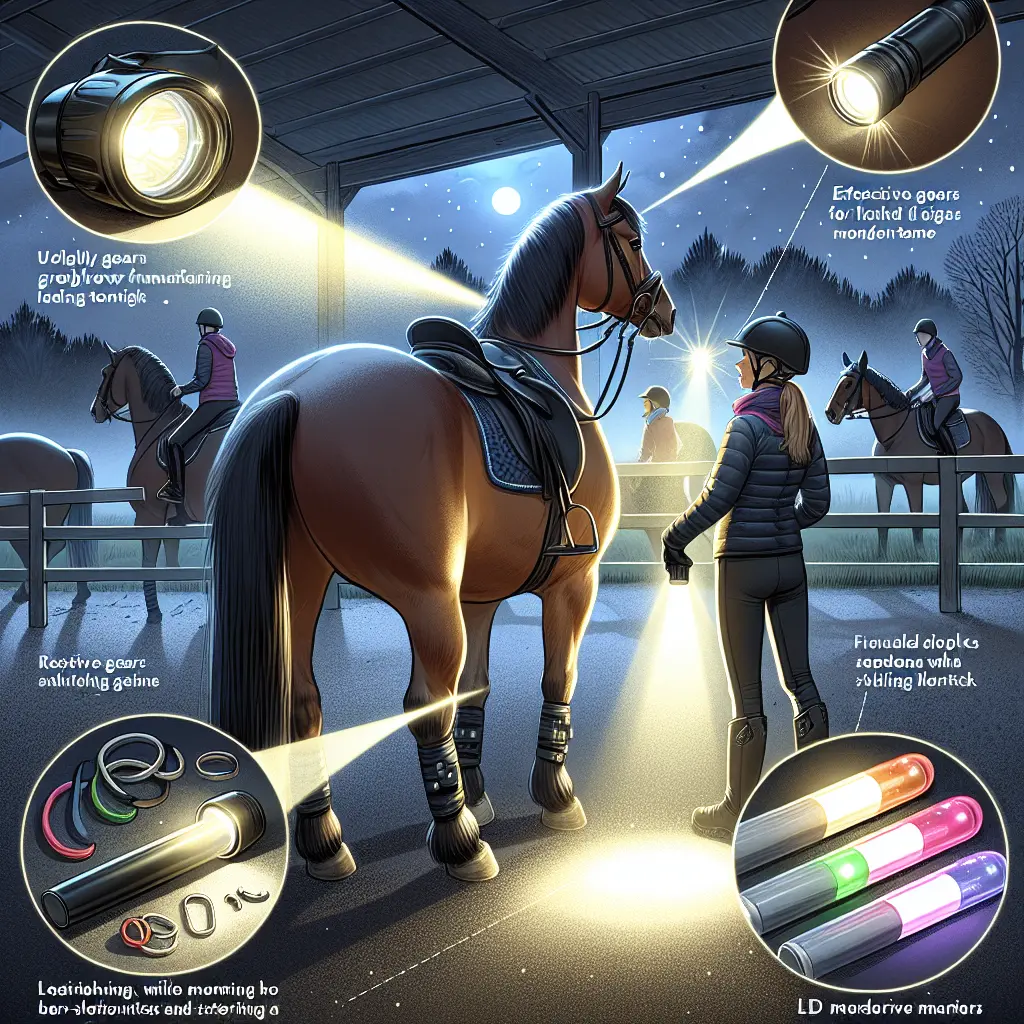
Whenever possible, choose times close to dusk or with moonlight. Moonlight can help outline the terrain softly, making visibility easier for both horse and rider.[3] This reduces harsh lighting contrasts that may spook your horse.
4. Equipment and Lighting Choices
Avoid wearing headlamps, as their flashing light can distract your horse and cause it to follow the beam rather than the trail.[1] Instead, use:
- Handheld flashlights used sparingly.
- Glowsticks or high-intensity LED markers attached to saddlery for better visibility without harsh beams.[2]
- Reflective or brightly colored tack and rider clothing to ensure visibility without startling the horse with sudden lights.[2]
5. Safe Riding Practices
- Ride in safe, familiar areas to reduce surprises in the environment.[3]
- Always be aware of your surroundings and anticipate approaching vehicles or other riders, especially on roads or shared trails.[2]
- When possible, ride with companions; horses often feel more secure and less anxious when among their peers.[3]
6. Calming Riders Help Calm Horses
Your own calmness directly influences your horse’s behavior. Use soft, reassuring vocal tones, maintain relaxed but confident body language, and avoid showing nervousness. Horses are adept at reading rider emotions and tend to mirror them.
7. Progressive Exposure to Arena Lighting
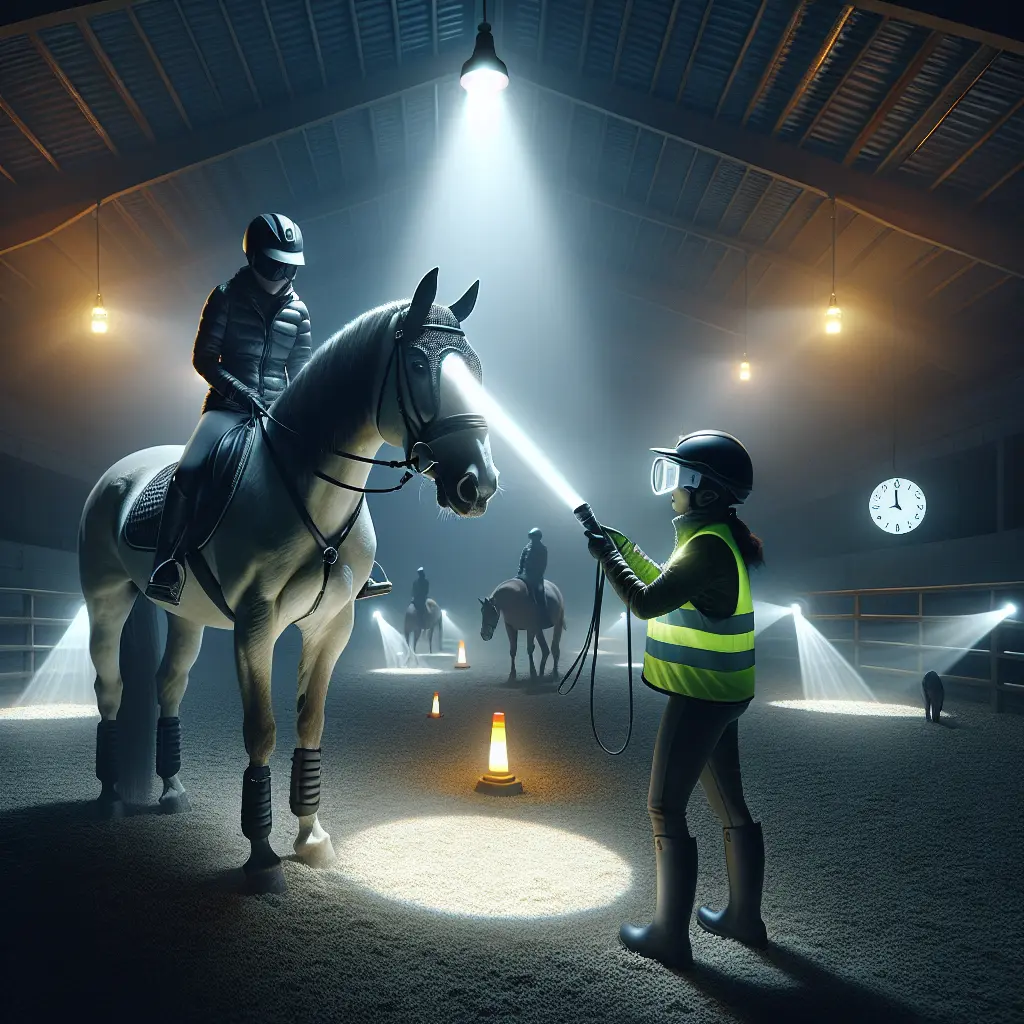
If riding indoors or in arenas with floodlights:
- Introduce your horse to the lights when empty, allowing it to explore the environment calmly.
- Gradually increase the intensity or length of exposure each session.
- Combine this with normal riding activities so the horse associates the lights with positive experiences.
Facts and Figures Supporting Safety and Horse Welfare
Studies indicate that horses’ night vision, though superior to humans, adapts over about 15-20 minutes, so abrupt light changes can impair rather than improve their vision.[4]
Colored or reflective gear can improve rider visibility by up to 70% during night rides, reducing road accidents.[2]
Group rides at night decrease stress in horses, likely due to social calming effects and shared vigilance.[3]
Useful Resources for Further Learning and Authority Links
- Horse & Rider provides detailed guidance on flashlight desensitization and safe night riding techniques, including avoiding headlamps and allowing eye adjustment time.
- Nevada Horse Trails covers visibility tactics such as wearing bright colors and situational awareness when riding on or near roadways at night.
- Horse Listening offers practical safety tips, including riding in moons’ light and choosing suitable horses for night riding.
- Young Rider Magazine emphasizes allowing horses’ eyes to adjust to dark environments gradually.
By carefully preparing your horse with these proven strategies, you can enjoy calm, confident riding under artificial lights and at night. Remember, safety starts with knowledge, calm leadership, and respect for your horse’s natural instincts.