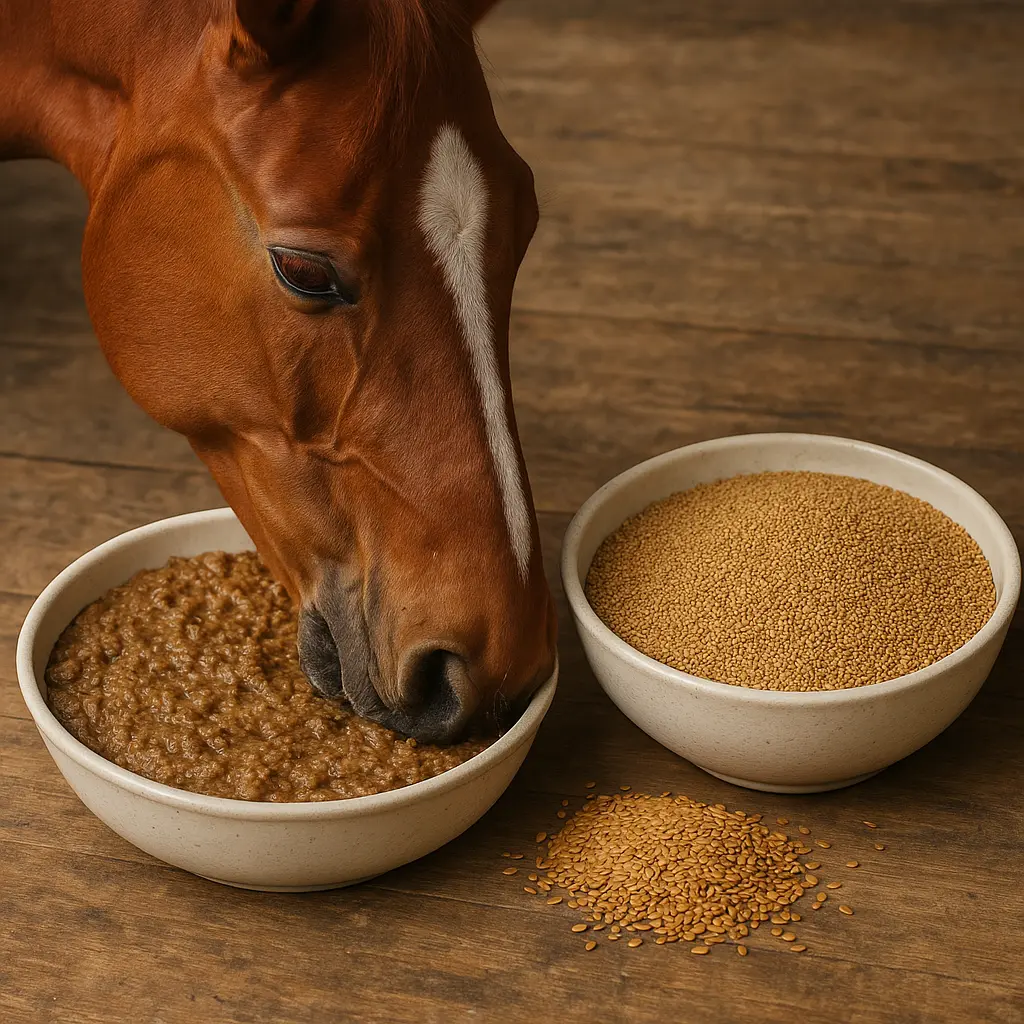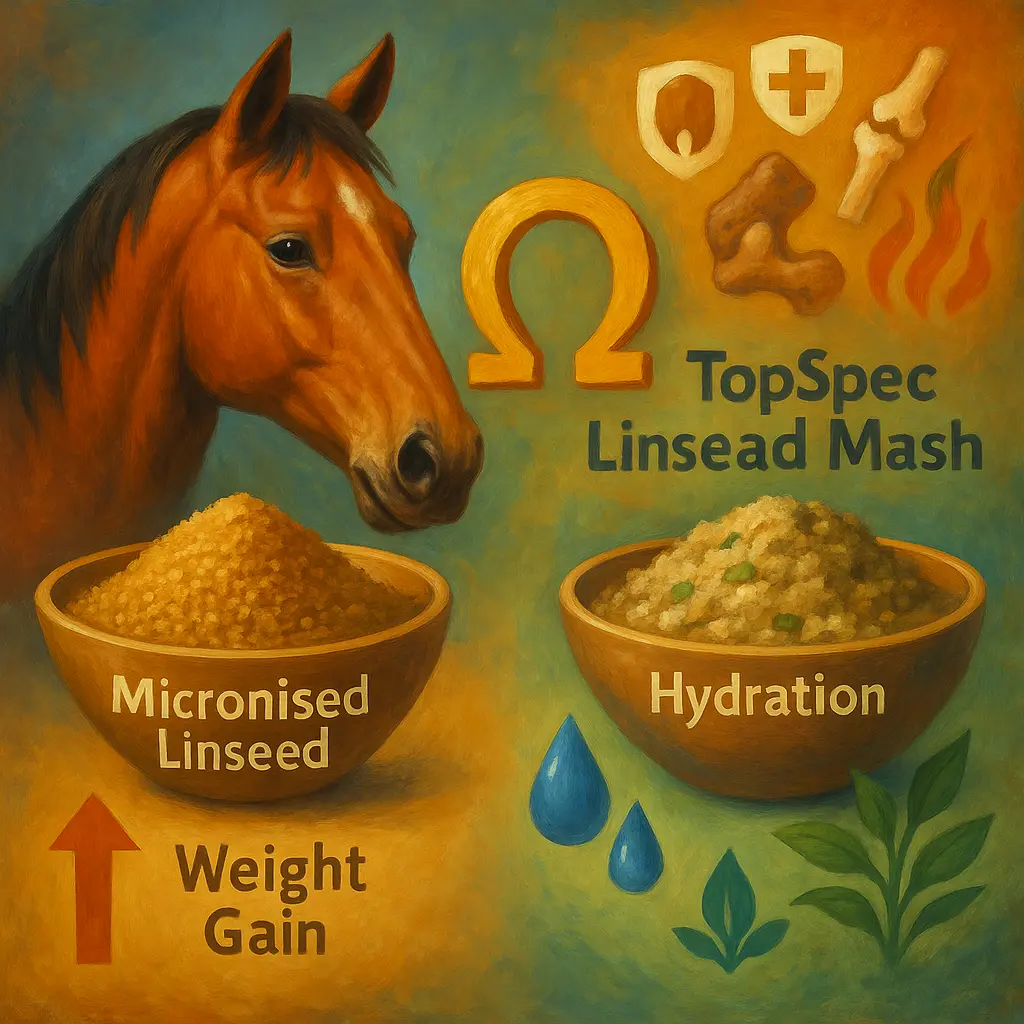
Winter diets, restricted turnout and laminitis management all push omega‑3 to the top of the priority list for UK horses. Two popular routes are pure micronised linseed and TopSpec Linseed Mash — but they don’t do the same job.
Key takeaway: For concentrated calories and omega‑3 in small daily amounts, choose micronised linseed; for hydration and digestive support with added fibre, choose TopSpec Linseed Mash.
What’s the difference: TopSpec Linseed Mash vs pure micronised linseed?
Pure micronised linseed is more calorie‑dense and richer in omega‑3 per gram, while TopSpec Linseed Mash is a fibre‑rich, hydrating conditioning mash. Micronised linseed can be fed in smaller quantities for the same or better caloric value; mash includes multiple fibre ingredients for gut motility and palatability.
Micronised linseed is whole linseed that’s been cooked and micronised to optimise digestibility and nutrient availability, making it a slow‑release oil‑based energy source that won’t fire up excitable behaviour (British Horse Feeds; Dengie). It’s the superior choice if you want to add calories and omega‑3 without bulk.
TopSpec Linseed Mash, by contrast, is built as a conditioning mash with added fibre and moisture. Ingredients include soya hulls (GM), micronised linseed meal, linseed expeller, beet pulp, grass and a high‑fibre oat by‑product, creating a gut‑friendly, soakable feed that encourages hydration and supports hindgut bacteria (Wadswick Country Store). Owners often report that mash needs to be fed in larger volumes to match the calories and omega‑3 of pure micronised linseed, because it’s “bulked out” with additional fibre sources (Horse & Hound forum discussion).
In short, both can sit in a smart UK ration: use micronised linseed as your concentrated omega‑3 and condition boost; use linseed mash when the priority is hydration, fibre and a soft feed that’s easy to eat.
How much should you feed? Simple daily linseed dosing
Feed around 42 g micronised linseed per 220 kg bodyweight (about 100 g/day for a 500 kg horse) for baseline omega‑3 support (Forageplus). Scale up gradually for work and weight gain based on appetite and condition.
For harder work or to drive condition, British Horse Feeds suggests 40–120 g per 100 kg liveweight when fed alongside hard feed or a balancer, or 10–70 g per 100 kg liveweight with fibre‑based diets (British Horse Feeds). For a 500 kg horse, that’s roughly 50–350 g/day depending on workload and the rest of the ration.
TopSpec Linseed Mash feeding rates depend on the manufacturer’s guidelines and your horse’s calorie needs. Because mash contains additional fibre ingredients, expect to feed a bigger volume than pure micronised linseed to deliver the same oil calories. Always introduce any linseed source over 7–10 days to allow the hindgut to adapt.
Quick tip: Horses stabled on hay or haylage through the UK winter (November–March) benefit from at least 100 g/day of micronised linseed because dried forage contains virtually no fresh omega‑3. This small daily feed is a simple, effective insurance policy for skin, hooves and joints.
When to choose micronised linseed
Choose micronised linseed when you want concentrated calories, omega‑3 support and slow‑release energy in small daily amounts. It’s ideal for horses on restricted grazing, in harder work, needing weight gain, or those with inflammatory or metabolic concerns.
Why it earns its place in UK rations:
- Energy without fizz: The oil in linseed provides slow‑release calories to support weight gain and condition without excitable behaviour (Dengie).
- Daily omega‑3 top‑up: Horses should receive 2–4× more omega‑3 than omega‑6 to support anti‑inflammatory balance (SmartPak). Linseed is the best practical non‑marine omega‑3 source for horses with little fresh grass (Forageplus).
- Winter must‑have: UK horses on hay or haylage for months need supplemental omega‑3 because conserved forages are virtually devoid of it.
- Laminitis‑friendly: Long‑term micronised linseed is widely recommended in laminitis management frameworks as a low‑starch, omega‑3 support alongside strict sugar control.
- Senior and sport support: Omega‑3 assists joint comfort and respiratory health, with additional benefits for fertility and immunity (UFAC UK).
“Omega-3 fatty acids fight inflammation, while omega-6 fatty acids promote it, so if the balance is upset in favour of the latter, then the beneficial effects are lost.” — Mr Bateson, UFAC UK
At Just Horse Riders, we recommend starting most hay‑fed horses at ~100 g/day of micronised linseed, then increasing by 50 g steps every 7–10 days until you hit the desired weight, coat bloom and rideability.
When to choose TopSpec Linseed Mash
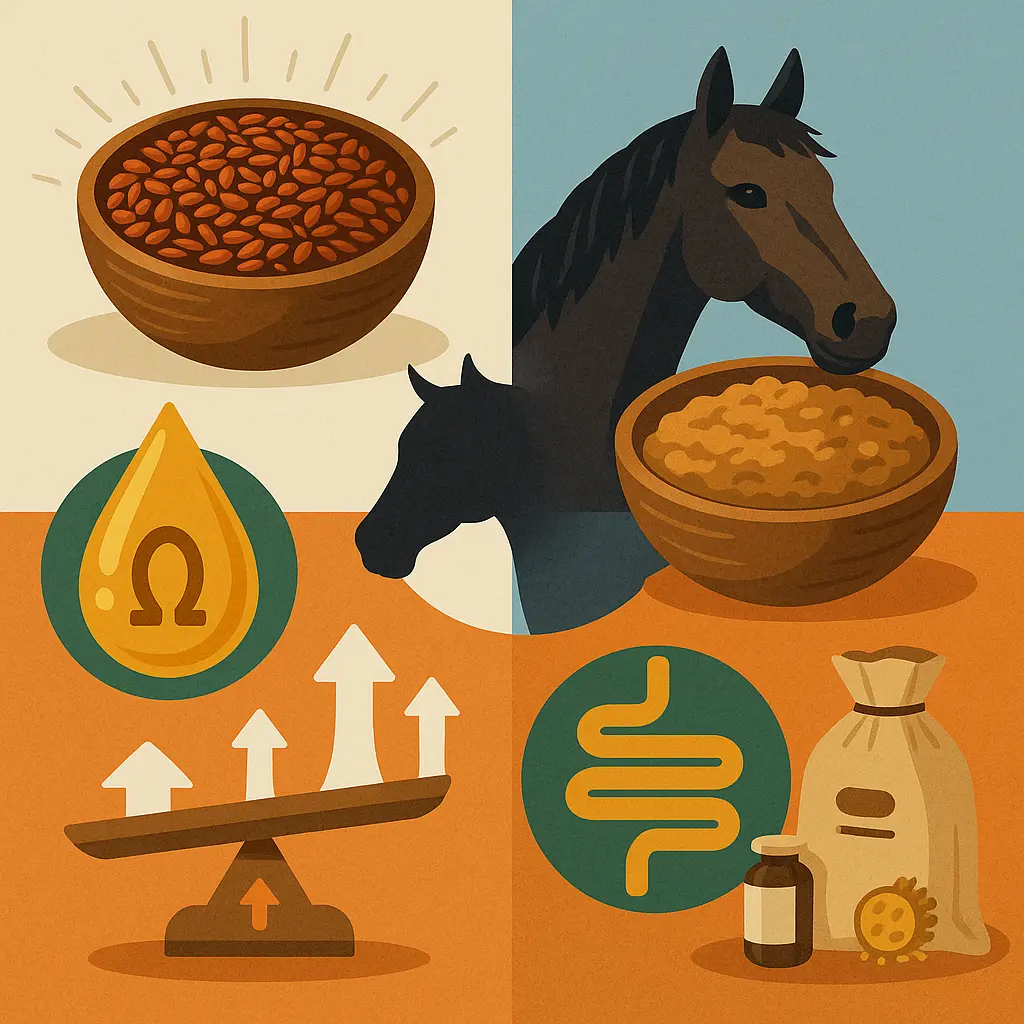
Choose TopSpec Linseed Mash when hydration, hindgut‑friendly fibre and palatability are your top priorities. It’s a smart option for fussy eaters, post‑exercise rehydration, dentition challenges and as a supplement carrier.
What the formulation offers:
- Hydration and gut motility: A soakable, soft mash encourages water intake and supports hindgut function — useful after schooling, travel or in cold snaps when water intake dips.
- Diverse fibre sources: Soya hulls, beet pulp, grass and a high‑fibre oat by‑product provide fermentable fibre to nourish beneficial bacteria (Wadswick Country Store).
- Palatability: Many horses relish warm mashes in winter, making TopSpec Linseed Mash a reliable vehicle for medications or powdered supplements.
Because the mash includes several fibre ingredients, it’s less concentrated in oil calories and omega‑3 than pure micronised linseed gram‑for‑gram. If omega‑3 intake is the goal, you’ll need to feed a larger mash portion to match the ALA contributed by a small serving of micronised linseed (Horse & Hound forum discussion).
Pro tip: In very cold weather, offer a warm linseed mash after hacking and make sure your winter turnout rugs and stable layers are appropriate so your horse doesn’t burn condition keeping warm.
Omega‑3 vs omega‑6: getting the ratio right for UK horses
Aim for 2–4 times more omega‑3 than omega‑6 in the overall diet, with an ideal ratio around 1.5:1 to 3:1 for most horses. This supports the body’s natural anti‑inflammatory balance, especially important when cereal‑based feeds push omega‑6 higher.
Fresh spring/summer pasture is rich in omega‑3, but UK horses commonly spend long stretches on conserved forage and limited turnout, skewing the ratio in the wrong direction. Micronised linseed is a practical fix because it’s rich in alpha‑linolenic acid (ALA), the plant omega‑3 horses can partially convert to EPA and DHA (Forageplus).
“These essential fatty acids are anti-inflammatory and can improve calcium deposit and bone strength. Omega-3 fatty acids have been proven to aid horses with many conditions including stomach ulcers, arthritis, auto-immune diseases, hoof quality, reproduction, joint health, and lowering the risk of colic and pulmonary bleeding.” — Mr Bateson, UFAC UK
Marine oils (fish or algae) supply pre‑formed DHA and EPA with stronger anti‑inflammatory effects, but they are more expensive; many owners prefer plant‑based options for cost or ethical reasons (TheHorse.com). As Kathleen Crandell, Ph.D., notes, DHA and EPA also support cardiovascular and reproductive processes (Kentucky Equine Research). For most UK horses, micronised linseed offers the best value day‑to‑day, with marine sources reserved for targeted cases.
Quick tip: If you feed cereal‑based cubes/mixes or plenty of vegetable oils high in omega‑6, consider increasing micronised linseed to keep your omega‑3:6 ratio in the 1.5–3:1 sweet spot.
Practical UK feeding scenarios and sample rations
For UK horses on hay or restricted turnout, add 100 g/day micronised linseed to fibre rations year‑round, increasing for harder work or weight gain. Use linseed mash tactically for hydration, palatability and gut comfort.
Scenario 1: Good‑doer on winter hay, minimal work
- Ad lib hay or soaked hay as required
- Low‑calorie balancer or vitamin/mineral supplement
- Micronised linseed 100 g/day for omega‑3 and coat health
- Warm TopSpec Linseed Mash 0.5–1 kg, 2–3 times per week after cold rides to support hydration
Scenario 2: Underweight horse needing condition, moderate work
- Ad lib hay/haylage; ensure suitable stable rug layering to reduce calorie loss
- Fibre‑first bucket feed (beet pulp/alfalfa) plus balancer
- Micronised linseed 200–300 g/day, adjust weekly to weight score
- Optional TopSpec Linseed Mash 1–2 kg/day split feeds if appetite or hydration need a boost
Scenario 3: Laminitis‑prone, restricted grazing
- Soaked hay to target sugars, balancer with no added cereals
- Micronised linseed 100–150 g/day as low‑starch omega‑3 support
- Small linseed mash feeds as a safe supplement carrier for medications
Scenario 4: Older horse with creaky joints
- Soft fibre mash base for dentition, balancer
- Micronised linseed 150–250 g/day for anti‑inflammatory support
- Consider adding a joint supplement (e.g., glucosamine, MSM) from our curated horse supplements collection
At Just Horse Riders, our customers often report stronger hoof horn and a deeper coat bloom within 4–6 weeks of consistent linseed feeding. Pair it with regular grooming using quality brushes from our horse grooming range to lift scurf and distribute natural oils for a next‑level shine.
Pro tip: Winter management is a whole‑horse equation. Alongside omega‑3 support, check your winter turnout rugs fit and fill so your horse isn’t burning valuable calories to keep warm. If you’re refreshing kit, our Secret Tack Room clearance often has great‑value seasonal finds.
Common mistakes to avoid with linseed
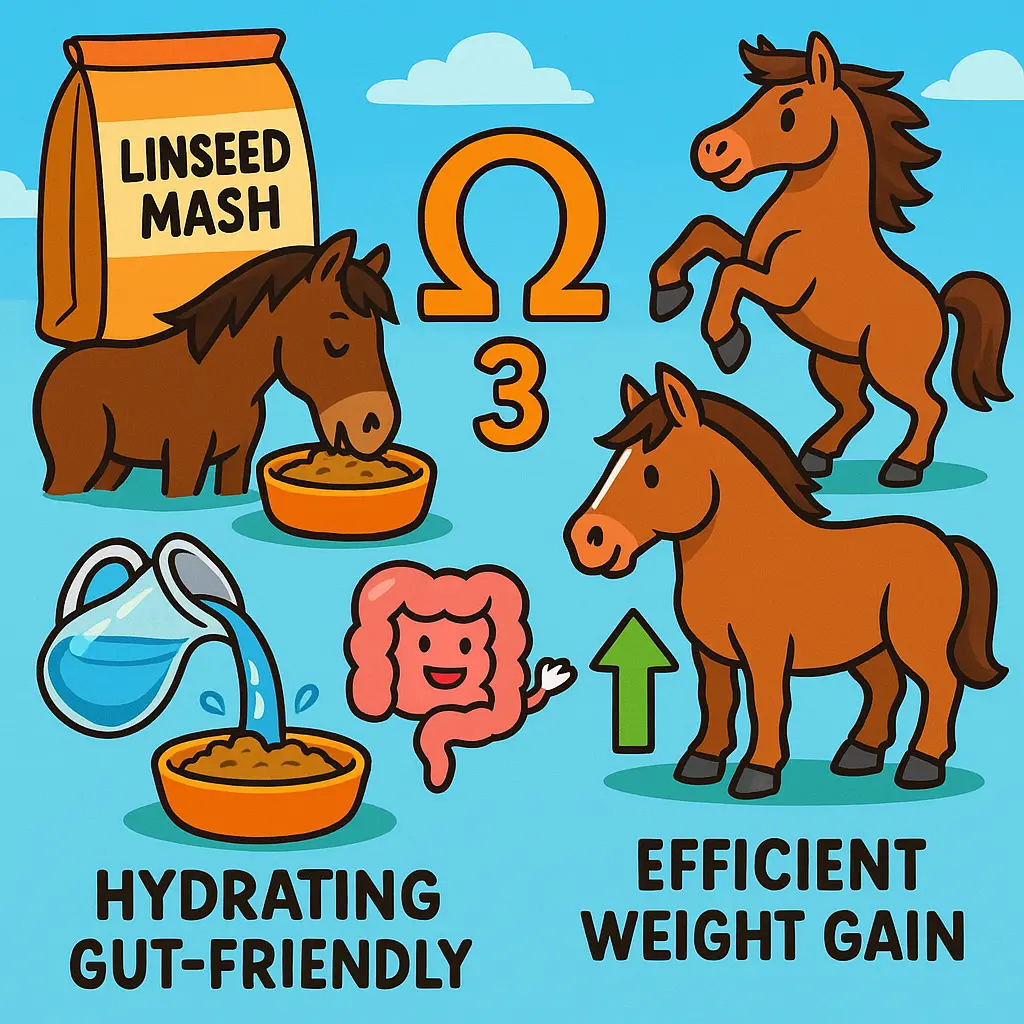
The biggest mistakes are underfeeding micronised linseed, chasing shine with high‑starch feeds, and ignoring the omega‑3:6 balance. A few more watch‑outs make all the difference:
- Feeding too little: 50 g/day won’t move the needle for a 500 kg horse. Start at ~100 g/day and adjust.
- Overlooking the rest of the diet: High cereal or vegetable oil inclusion can swamp omega‑3 benefits. Balance the whole ration.
- Expecting mash to match oil calories: TopSpec Linseed Mash is excellent for hydration and fibre, but it isn’t as calorie‑dense as pure micronised linseed. Feed enough for your goal.
- Inconsistent feeding: Omega‑3 benefits are cumulative. Make it a daily habit, especially November–March.
- Rushing introductions: Add any linseed source gradually over 7–10 days to keep the hindgut happy.
Quick tip: Track body condition score and girth measurements every fortnight. Small, steady increases in micronised linseed are safer and more effective than big jumps.
What to buy at Just Horse Riders
Buy micronised linseed for daily omega‑3 and condition, and keep linseed mash for digestive hydration or fussy feeders. Then round out your winter routine with the right kit.
- Micronised/cooked linseed: Your everyday omega‑3 and slow‑release calorie top‑up. Ideal for hay‑fed, restricted‑grazing and harder‑working horses.
- TopSpec Linseed Mash or similar conditioning mashes: Use as a soakable, palatable base to support hydration and gut comfort, or to carry other supplements.
- Joint, hoof and overall health: Browse proven options in our horse supplements collection. Brands like NAF are popular with riders managing mobility and hoof quality alongside omega‑3 support.
- Winter management essentials: Keep condition on with correctly fitted turnout rugs and cosy stable rugs that match your horse’s clip and stable temperature.
- Coat care and finishing touches: For that linseed‑powered glow, team daily grooming with quality brushes from our grooming range, and keep motivation high with low‑sugar horse treats.
If you’re unsure where to start, keep it simple: 100 g/day micronised linseed for a 500 kg horse on hay, plus a balanced fibre bucket feed. Build from there.
FAQs
What results differ between TopSpec Linseed Mash and pure micronised linseed?
Pure micronised linseed delivers more oil‑based calories and omega‑3 per gram, so you can feed smaller daily amounts for weight gain and anti‑inflammatory support. TopSpec Linseed Mash is a fibre‑rich, soakable conditioning feed designed for hydration, palatability and gut health; you’ll generally feed a larger volume to match the omega‑3 contribution of pure linseed (Horse & Hound forum; Wadswick Country Store).
How much micronised linseed should I feed daily?
As a baseline for omega‑3 balance, feed around 42 g per 220 kg bodyweight — about 100 g/day for a 500 kg horse (Forageplus). For condition and work, many horses do well on 200–300 g/day; British Horse Feeds suggests 40–120 g per 100 kg liveweight with hard feed, or 10–70 g per 100 kg with fibre‑only rations depending on workload (British Horse Feeds).
Can horses get too much omega‑3, or is long‑term supplementation safe?
Equine studies have not demonstrated adverse effects from omega‑3 supplementation, and there’s no established upper limit. The priority is balancing omega‑3 and omega‑6 in the diet — aim for 2–4× more omega‑3 overall rather than maximising omega‑3 alone (SmartPak Equine).
Is micronised linseed suitable for all horses?
Yes. Cooked, micronised linseed is recommended “in any situation,” adding protein, oil and fibre to support a wide range of conditions, activities and ages (British Horse Feeds). Introduce gradually and adjust to body condition and workload.
Does linseed mash work as well as micronised linseed for omega‑3?
Both contain micronised linseed; however, because mash includes additional fibre ingredients, it’s less concentrated. You’ll generally need to feed a larger mash portion to reach the same omega‑3 intake you’d get from a small serving of pure micronised linseed (Wadswick Country Store; Horse & Hound forum).
How does micronised linseed compare to fish oil or algae?
Linseed provides ALA (plant omega‑3) that horses can partially convert to EPA/DHA; it’s cost‑effective and widely accepted. Fish or algae oils supply pre‑formed EPA/DHA with stronger anti‑inflammatory effects and additional cardiovascular/reproductive benefits, but they’re pricier and not always preferred by owners (TheHorse.com; KER).
When should I start feeding micronised linseed, and is it a year‑round thing?
Start now and keep it consistent year‑round, especially through the UK winter housing period when hay‑based diets are almost devoid of omega‑3. Horses with limited or no pasture access should receive it daily as a dietary essential, not just seasonally (Forageplus).