You’ve received an osteopathy report that mentions “mild asymmetry” and you’re wondering what to do next. Here’s a clear, UK-specific plan that keeps you on the right side of the law, protects your horse’s comfort, and helps you make steady, measurable progress.
Key takeaway: In the UK, mild asymmetry means subtle gait or alignment imbalances identified by dynamic assessment and palpation; contact your vet first, then follow a structured 14‑day rest-and-reassess plan with your osteopath and wider care team.
What does mild asymmetry mean in an equine osteopathy report?
Mild asymmetry means small but consistent differences in movement or alignment—like a shortened stride on one rein, slight pelvic tilt, or poll stiffness—found via gait observation and hands-on assessment. It’s often a pre-lameness finding that responds well to rest, targeted exercises, and collaborative care.
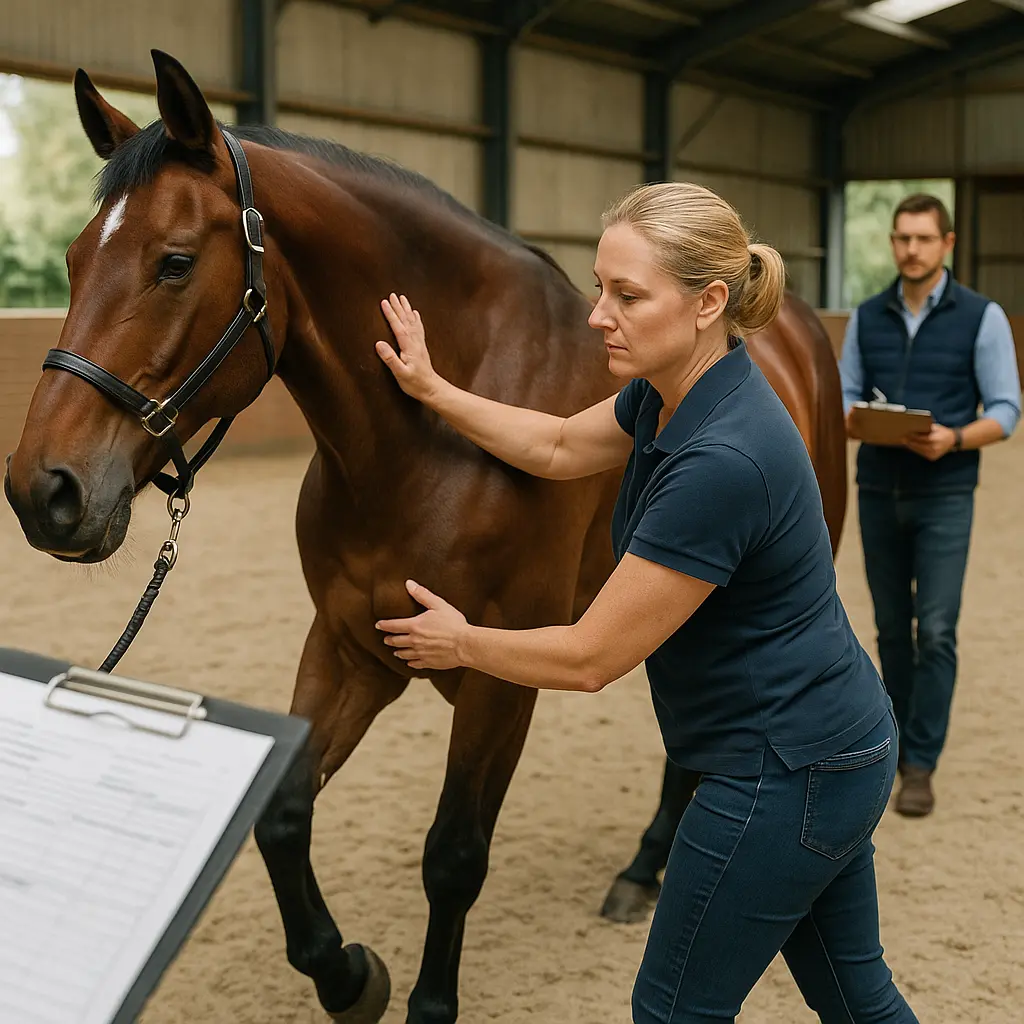
Equine osteopathic assessments typically begin by observing your horse in dynamic motion at walk and trot on both reins, ideally in-hand on a firm, hard surface. Practitioners look for shortened stride, drifting, head tilt, toe-dragging, or compensatory patterns. They then use palpation and motion testing to assess spine and pelvic alignment, poll and jaw (TMJ) mobility, shoulder and hip range of motion, muscle and fascial tension, joint stiffness, hoof balance, and limb loading patterns. This whole-horse approach is standard in UK osteopathic practice, where 81% of presenting complaints relate to musculoskeletal pain or dysfunction and are addressed by identifying and correcting imbalances.
Put simply, “mild asymmetry” flags something to act on early—before it becomes a performance-limiting issue.
“Following the assessment, we provide a clear explanation of findings and a personalised equine osteopathic treatment plan. This may include manual therapy, stretches, rest recommendations, or collaboration with your vet, farrier, saddle fitter, or equine dentist.” — East Sussex Osteopaths
What should you do first in the UK?
Contact your vet first, because veterinary assessment is the legal starting point for any equine osteopathic treatment in the UK. Your vet will rule out red flags (e.g., fractures, infection, acute lameness) and coordinate diagnostics and therapeutic oversight.
This isn’t just best practice—it’s the law. Osteopathy for animals in Britain is optimised when overseen by veterinarians and integrated with other therapies such as farriery and saddle fitting. Share the osteopathy report with your vet, record a short video of your horse walking and trotting on a hard, level surface from front, side, and behind, and note any training or behavioural changes. Ask your vet to advise on referral to a qualified equine osteopath who meets UK training standards (Level 6–7 postgraduate animal osteopathy pathways) and aligns with the General Osteopathic Council (GOsC) standards of proficiency. The British Equine Veterinary Association (BEVA) and British Horse Society (BHS) also promote multidisciplinary care and can help you find appropriately qualified professionals.
“In the UK, [veterinary assessment] would be the first port of call, and... a legal requirement... Osteopathy is optimised when overseen by veterinarians combined with appropriate diagnostics and integration with other therapies.” — Nevin et al.
Quick tip: Typical equine osteopathy sessions cost £60–£120 per visit (market range). Budget for vet input too; it’s money well spent to prevent a “domino effect” of compensations.
How professionals assess your horse’s symmetry
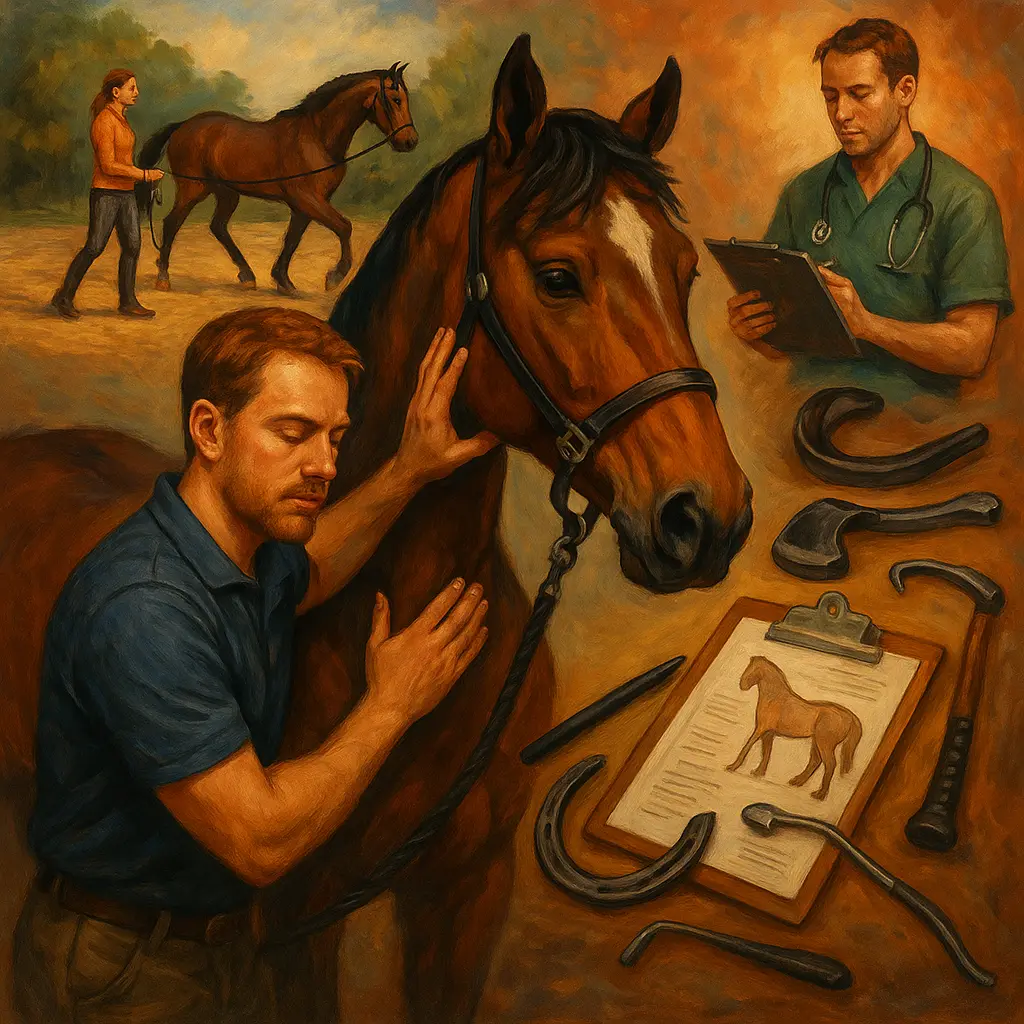
Equine osteopaths watch your horse at walk and trot on both reins, then palpate the spine, pelvis, TMJ, poll, shoulders, hips and soft tissues to pinpoint where asymmetry originates. They also consider hoof balance, limb loading patterns and saddle fit within a whole-horse framework.
Here’s what a standard assessment includes:
- History-taking: training regime, recent behaviour changes, past injuries, performance issues. This context helps interpret mild asymmetries such as a subtly shortened stride or slight pelvic imbalance.
- Dynamic observation: in-hand on a hard, level surface, with the horse walked and trotted on both reins. If needed, observation on the lunge in a sand school may follow. The goal is to identify asymmetry, shortened stride, drifting, toe-first landings, or compensatory head/neck carriage.
- Hands-on palpation and motion testing: spine and pelvic alignment; poll and TMJ mobility; shoulder and hip range of motion; muscle density/tension; fascial glide; joint stiffness; hoof balance; and limb loading. Findings are mapped to primary and secondary (compensatory) issues.
- Integrated plan: for mild presentations, aftercare often combines manual therapy, stretches, 2 weeks of rest, and referral to your vet, farrier, saddle fitter or equine dentist where indicated.
“Riders can notice things like unevenness... if you find it difficult to look over your left... this is going to affect how the horse is working.” — Equine osteopath training discussion
Pro tip: Video your horse consistently (same surface, handler, speed, angles) so your vet and osteopath can compare like-for-like over time.
A practical 14-day plan for mild asymmetry
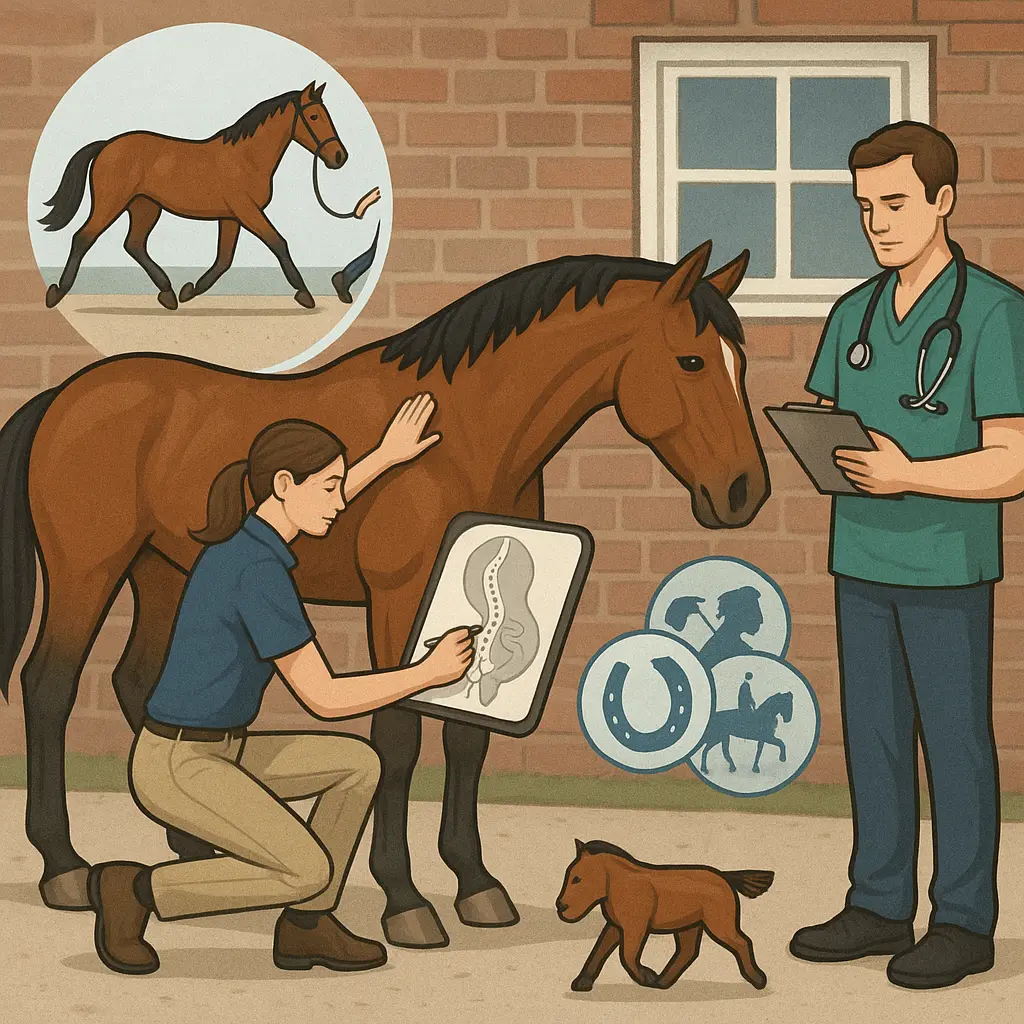
Give your horse two weeks off ridden work, follow your osteopath’s stretches and manual therapy guidance, and reintroduce exercise gradually under veterinary oversight. This simple approach helps most mild asymmetries settle and prevents compensation becoming entrenched.
Use this framework alongside your vet/osteopath’s personalised instructions:
- Days 1–2: Rest and settle. Limit turnout if fields are slippery; aim for a calm, warm environment. In cold, wet UK weather, reduce muscular tension with appropriate rugging. For box rest or yard time, a well-fitted stable rug helps maintain warmth; if turned out, consider a midweight rug in winter (many UK horses need 200–300g when temperatures drop below 5°C). Explore our curated stable rugs and weather-ready winter turnout rugs, including reliable options from Weatherbeeta.
- Days 3–7: In-hand walking 15–25 minutes daily on firm, level ground. Add prescribed dynamic mobilisation exercises (DME) such as baited stretches to each side, chin-to-chest, and belly lifts. Ensure you have written instructions with reps/sets; a common weekly target is around 26–27 total reps spread across sessions. Record exactly what you do (sets, reps, photos). If hoof balance or limb loading issues were noted, discuss interim support (e.g., hoof boots for protection) and use appropriate horse boots and stable bandages during rest, following your vet’s guidance.
- Days 8–14: Progress in-hand work to include gentle straight-line trot sets if your vet/osteopath approves, or short, controlled lunge sessions on a large circle in a well-surfaced school. Keep sessions short and symmetrical to both reins. Continue DME with precise reps and quality of technique—correct form matters more than volume.
- End of Day 14: Reassess gait on both reins on a hard surface, recheck softness in the poll and jaw, and note changes in stride length and pelvic movement. Share your notes and videos with your vet/osteopath to decide on the next step (e.g., gradual return to ridden work).
Expect a mild “healing reaction” in the first 24–48 hours after manual therapy (temporary stiffness or tiredness). If signs worsen or persist, pause work and update your vet.
Quick tip: For in-hand walking on yard tracks or quiet lanes, stay safe and visible with high‑visibility rider gear, and consider a well-fitted riding helmet for handlers on the ground.
Reassessing progress: what improvement looks like
Improvement shows as even stride length to both reins, a level pelvis through the swing phase, softer poll/TMJ responses, and more consistent hindquarter engagement. Reassess on a hard, level surface and compare like-for-like videos to confirm change.
Use this simple check-list at Day 14 (and again at 4–6 weeks):
- Walk/trot symmetry: Is the stride length equal left vs right? Does the horse track up evenly? Is there less drift to one side?
- Pelvis and tail: Does the pelvis move evenly without a hitch or drop? Is tail carriage neutral rather than clamped or carried to one side?
- Poll and jaw comfort: Can the horse flex and bend softly to both sides without head-tilt or resistance? Reduced sensitivity at the poll/TMJ is a good sign.
- Footfalls and limb loading: Are landings consistent heel-to-toe on a firm surface? Is there less toe-drag or scuffing?
- Behaviour and performance markers: Easier transitions, better straightness, improved willingness to bend are all positive.
If you’re unsure, compare your Day 1 vs Day 14 videos frame-by-frame. No improvement—or any new lameness—warrants prompt veterinary review and a possible referral for imaging or further diagnostics.
Your kit list for safer recovery in UK conditions
Use appropriate rugs, supportive boots/bandages, and safe groundwork gear to keep your horse warm, comfortable and controlled during rest and gradual reintroduction of work in typical UK weather.
- Rugs for warmth and muscle comfort: For box rest or overnight stabling, choose well-fitted stable rugs to prevent chill-induced tightness. For turnout, pick season-appropriate turnout rugs; in winter, a 200–300g fill suits many horses below 5°C. Trusted ranges from Weatherbeeta balance durability and fit in wet, windy conditions.
- Support for limbs and hooves: Use horse boots and bandages to protect during controlled exercise or to provide warmth at rest. If hoof balance or soreness is flagged, discuss temporary hoof boots with your care team for comfort on hard or stony tracks.
- Soft-tissue care you can do: Add gentle owner‑led massage and mobility prep with grooming mitts or rollers to your warm‑up routine. Explore our practical grooming tools for daily maintenance alongside your osteopath’s programme.
- Nutritional support: Consider evidence‑based joint and muscle support agreed with your vet. Our supplements selection includes options designed for connective tissue and recovery periods.
- Groundwork safety: For in‑hand walking on dark afternoons, wear hi‑vis and handle on grippy footing. A correctly fitted cavesson and lunge line (as advised by your professional) helps maintain straightness and symmetry on a large circle.
At Just Horse Riders, we recommend building a simple recovery kit you can grab at the yard: in-hand lead, gloves, hi‑vis, boots/bandages, thermometer, notebook, and your exercise plan with reps/sets.
Common mistakes to avoid with mild asymmetries
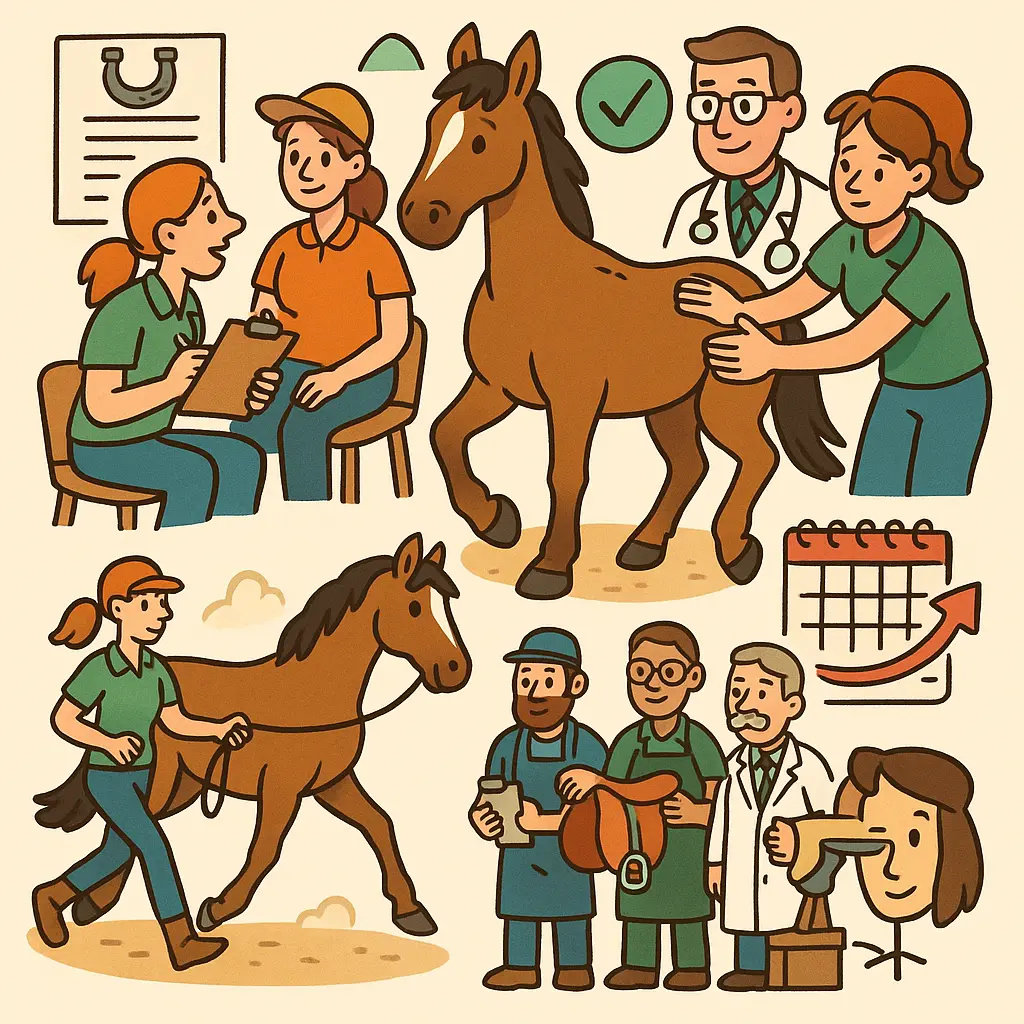
The biggest mistakes are riding too soon and failing to document exercises and changes. Avoid both with a two-week reset and meticulous records you can share with your vet and osteopath.
- Skipping the legal step: Never start hands‑on treatment or corrective exercise without vet oversight. This protects your horse and keeps you compliant with UK law.
- Riding too early: Even “mild” pelvic asymmetry needs two weeks off ridden work, then a gradual return once reassessment is positive.
- Poor record‑keeping: A UK re‑audit found only 62% compliance with teaching correct DME technique at first appointment and highlighted gaps in recording. Fix this with written exercises, clear reps/sets (aim for ~26–27 total reps/week across prescribed DMEs), and photos/videos.
- Ignoring the team: Untreated hoof balance, an ill‑fitting saddle, or sharp teeth will keep feeding asymmetry. Loop in your farrier, saddle fitter and equine dentist promptly.
- Assessing on the wrong surface: Always include a hard, level surface to reveal subtle limb loading asymmetries that a deep arena can mask.
- Winter slips and chills: Slippery yards and cold rain tighten muscles and provoke compensations. Use suitable rugging and choose safe footing for in‑hand work.
Pro tip: Keep a one‑page exercise sheet in the tack room listing each DME, target reps per session, total weekly reps, and a tick‑box for completion. It keeps everyone—from sharers to yard staff—on the same page.
FAQs
What does “mild asymmetry” actually mean?
It signals small but consistent gait or alignment differences—like a shorter stride on one rein, slight pelvic imbalance, or poll/TMJ tightness—found through dynamic assessment and palpation before overt lameness.
Should I ride after a report notes mild pelvic asymmetry?
No. Allow two weeks off ridden work, follow your osteopath’s stretches and manual therapy guidance, and reassess with your vet/osteopath before getting back on.
How do I know if the asymmetry is improving?
Look for equal stride length on both reins, balanced pelvic movement, freer poll flexion, and better hindquarter engagement. Reassess on a hard, level surface and compare videos from Day 1 and Day 14.
Can I treat mild asymmetries myself?
No. UK law requires veterinary oversight. Osteopathy integrates with physiotherapy and other modalities, but self‑treating risks missing structural problems and delaying appropriate care.
What if my horse gets stiffer after treatment?
A short‑lived “healing reaction” can occur in the first 24–48 hours. If signs persist or worsen, pause exercise and consult your vet and osteopath to adjust the plan.
How much does equine osteopathy cost?
Expect £60–£120 per session for specialist visits, plus veterinary consults. Costs vary by region and case complexity.
How do I find a qualified practitioner in the UK?
Ask your vet for referral and look for GOsC‑registered osteopaths with recognised Level 6–7 animal osteopathy training. BHS and BEVA support multidisciplinary approaches; your vet can coordinate the right team for your horse.
If your horse’s report mentions mild asymmetry, start with your vet, set up a clear two‑week plan, and kit out for safe, weather‑proof progress. With accurate records and the right team, most mild presentations resolve smoothly—so you can get back to confident, comfortable riding.