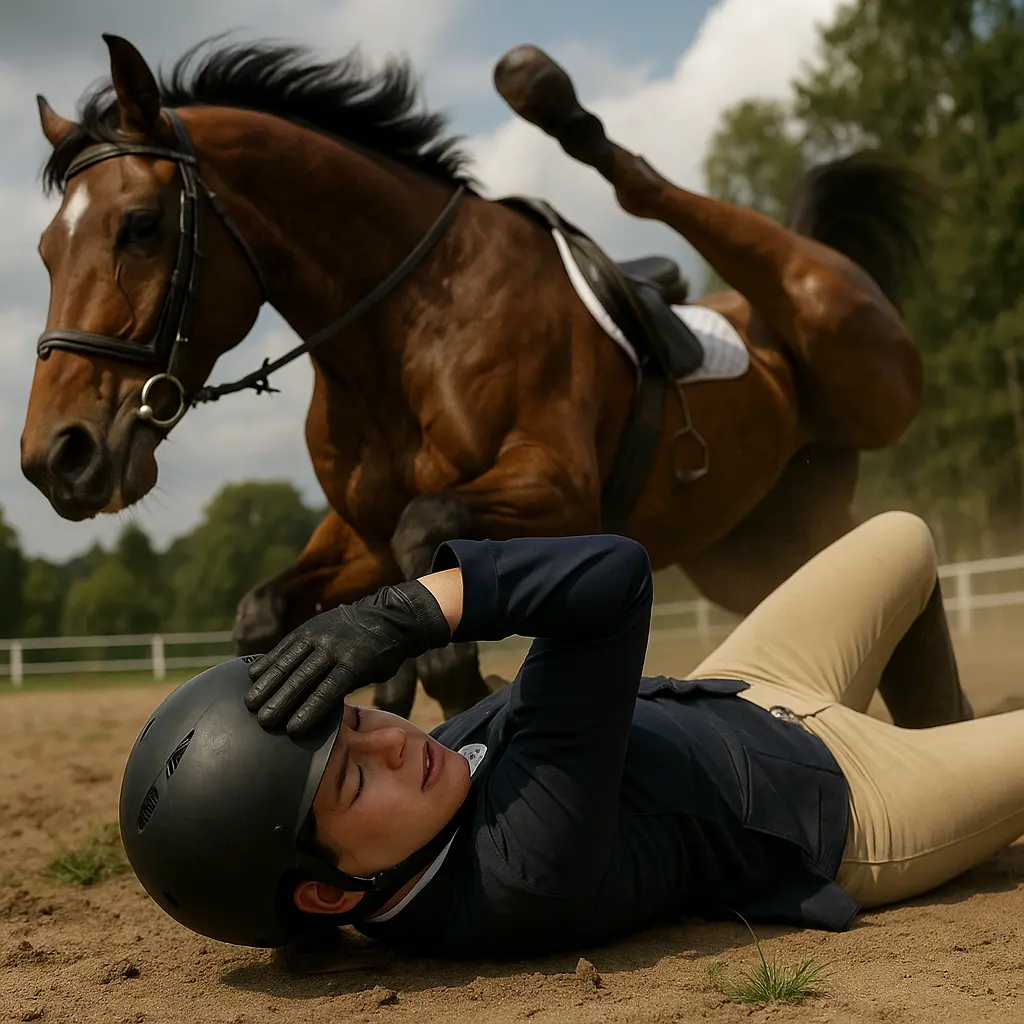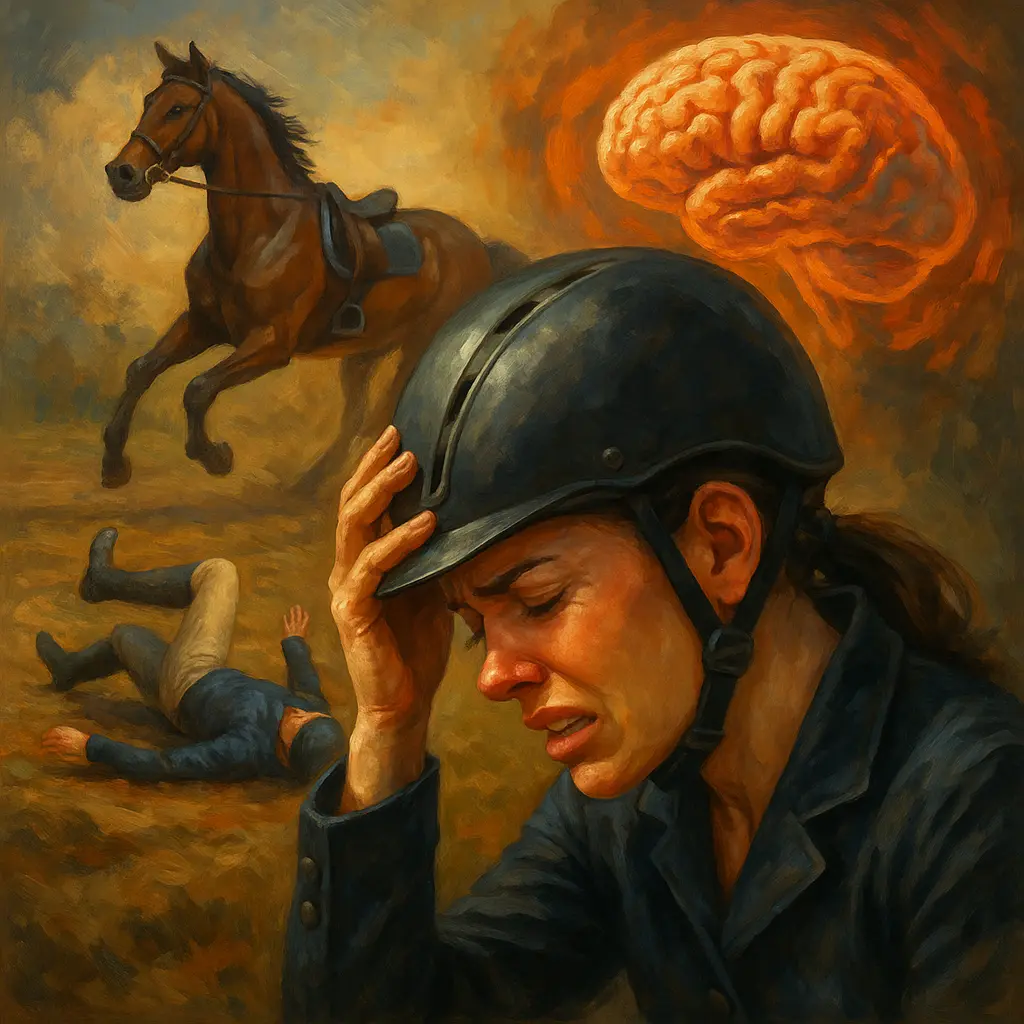
You can do everything right around your horse and still take an unexpected fall. When that happens, what’s inside your helmet matters — especially for the most common outcome of a head impact: concussion.
Key takeaway: MIPS-equipped helmets reduce harmful rotational head motion and may lower concussion risk in certain falls, but no helmet can prevent concussion. For UK riders, choose a Kitemark PAS015:2011 helmet (ideally with multiple certifications), make sure it fits perfectly, prioritise rotational impact protection, and replace it after any fall.
Do MIPS equestrian helmets reduce concussion risk?
Yes — MIPS reduces rotational head motion during oblique impacts, which may reduce concussion risk — but helmets do not prevent concussion. Research shows helmets reduce the severity of head injury and protect well against skull fracture, yet concussion remains common in real-world falls.
In a retrospective analysis of 216 real-world accidents, 70% of equestrian falls resulted in a head injury, and an astonishing 91% of those were concussions (study link). That tallies with what biomechanics tell us: concussion typically occurs around 70G acceleration, while horse-related accidents can generate forces up to 500G (USEF summary). Helmets aim to bring those peaks down to survivable levels — not to zero.
“Our brain doesn’t have protective mechanisms to take severe blows. When we experience an impact to the head it’s believed certain proteins are released, which impair normal brain function... Helmets aim to reduce the peak G below life-threatening levels.” — Matt Stewart, Head of Innovation at Charles Owen (source)
Traditional helmet standards mainly assess linear acceleration from straight-down impacts. In the real world, riders usually hit soft, uneven ground at an angle, which produces rotational acceleration — a key driver of concussion. That’s where technologies like MIPS (a low-friction layer that allows the helmet to move relative to your head) come in: they’re designed to reduce rotational forces in these oblique hits.
Bottom line: a helmet with modern rotational impact protection is a smarter choice for UK riders who regularly land on grass or arena footing, but you should still ride as though no helmet can make you concussion-proof.
Why do so many riders get concussions even when wearing a helmet?
Because most helmet tests emphasise linear impacts on hard anvils, while real equestrian falls often involve oblique impacts on softer, uneven ground that create rotational acceleration.
Certification tests have changed little in 30 years and continue to focus on linear acceleration, despite evidence that rotational forces are critical in concussion (overview). In UK conditions — grass, wet soil, deep arena surfaces — the head often strikes at an angle and digs in, twisting the head/neck. These “oblique” impacts are the ones most likely to spin the brain inside the skull, stretching delicate tissues.
There’s also evidence many current helmets are optimised to stop catastrophic injury rather than milder brain trauma. In the same retrospective study, 46% of helmets associated with a head injury showed no visible damage (source). This suggests some shells/liners may be too stiff to meaningfully absorb energy in lower-severity impacts that still cause concussion.
None of this means helmets “don’t work”. They save lives. But it does explain why concussion remains stubbornly common — and why you should look for designs tested and engineered to address oblique, rotational impacts as well as straight hits.
Which helmet safety standards should UK riders choose?
For UK competition, the British Horse Society requires PAS015:2011 Kitemark helmets; for broader protection, select helmets that also hold VG1 01.040 2014-12 and SEI ASTM F1163:2015 certifications.
PAS015:2011 is a rigorous, UK-specific standard and is the benchmark for many British events and riding schools (BHS reference). Helmets that carry multiple certifications have been designed and tested across different impact scenarios, which is valuable given the variety of falls riders experience (comparison overview).
At Just Horse Riders, we recommend starting your shortlist with Kitemark PAS015:2011 models, then prioritising modern rotational impact protection (such as MIPS). Explore our curated range of certified options in our riding helmets collection.
Quick tip: always check the label inside the helmet for the exact standard(s) and the Kitemark where applicable. If you compete, cross-check with your discipline’s rulebook each season.
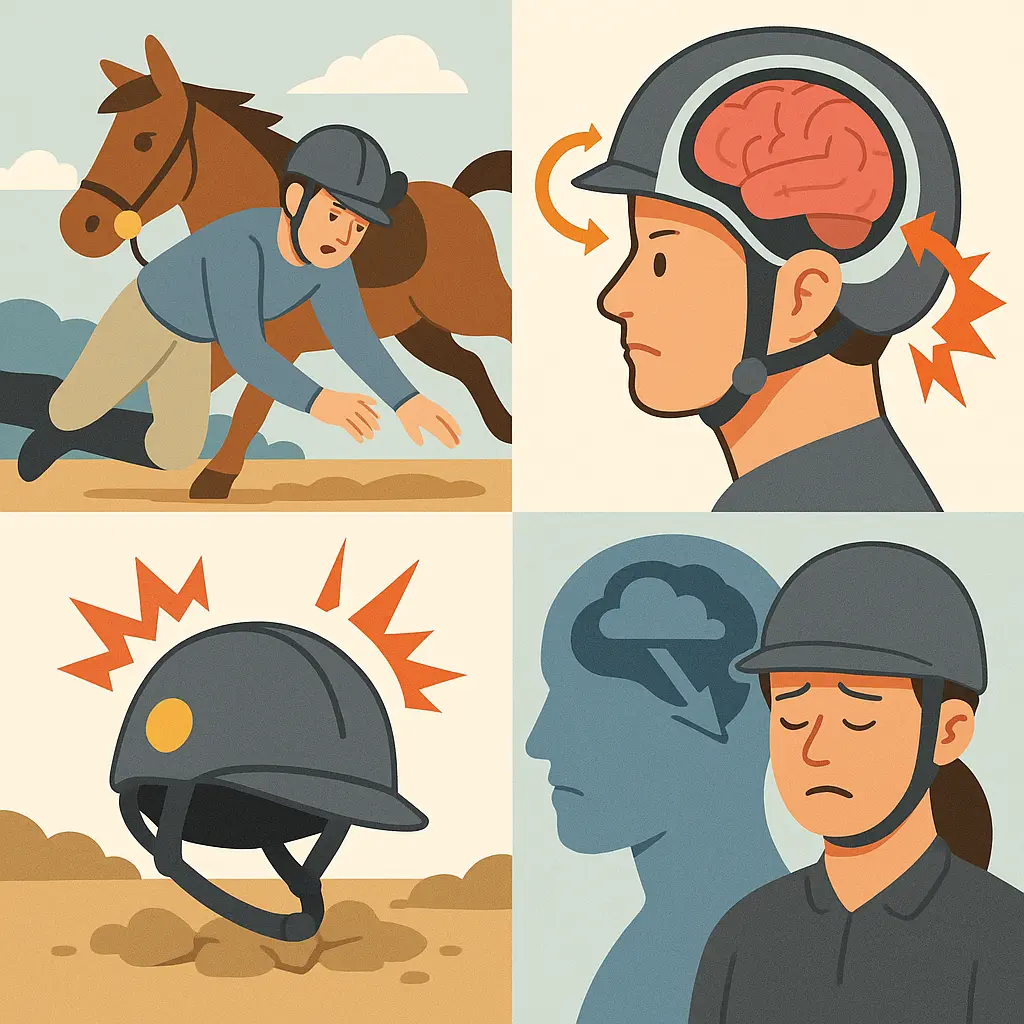
How do the 2025 Virginia Tech ratings help you pick a safer helmet?
The updated 2025 Virginia Tech STAR ratings add oblique impacts and adjust impact weightings to better reflect real racing and cross-country falls, giving riders an independent way to compare concussion risk reduction.
For years, the Virginia Tech Helmet Lab has provided consumer-friendly STAR ratings in other sports. In 2025, the equestrian protocol was updated to include angled hits and scenarios with horizontal velocity — exactly the kinds of impacts UK riders experience on grass and arena surfaces (Horse & Hound report).
“Rotational motion of the head is very important... falling off a horse at high speed can put a large force across the helmet and generate rotation in a different way than our previous testing.” — Dr Steve Rowson, Director, Virginia Tech Helmet Lab (source)
“Mips welcomes the updates that Virginia Tech has made to its equestrian STAR test... a better representation of actual accident scenarios.” — MIPS spokesperson, 2025 (source)
Use the STAR results alongside certification labels: standards tell you a helmet meets a minimum bar, while STAR helps you rank models by their tested ability to reduce concussion risk in oblique impacts. It’s a powerful combination for smarter buying.
How should you fit, replace and care for your helmet?
Get a snug, stable fit with a securely fastened harness, replace your helmet every 3–5 years or immediately after any fall, and store it carefully to avoid heat and knocks.
Fit first: an ill-fitting helmet cannot do its job. It should sit level, just above your eyebrows, with firm contact all around and minimal movement when you shake your head. The harness must be comfortably snug, with the chin strap allowing a finger or two, not more. If the helmet tips forward/back or rotates easily, it’s the wrong size or shape.
Replacement matters: riders frequently underestimate hidden damage. In real accident analyses, 46% of helmets linked to a head injury showed no visible damage — yet riders still sustained concussions (study). Replace immediately after any significant fall, even if your helmet “looks fine”, and refresh every 3–5 years depending on use (Riders Minds).
Care basics: avoid storing your helmet in hot cars or damp tack rooms; keep it dry and clean, and never modify the liner or drill/screw accessories into the shell. If you’re unsure between sizes or shapes, explore multiple fits within our riding helmets range and, if possible, try them on with your usual hair arrangement for riding.
Quick tip: take a quick selfie (side and front) when the fit is correct. After a fall or a new haircut, use the photos to re-check position and strap length.
Which helmet features suit your discipline and typical ground?
Match your helmet to your fall risks: if you ride on grass and arena footing or do cross-country and fast hacking, prioritise rotational protection and broad certification; for disciplines on firmer surfaces, ensure high-impact protection and a rock-solid fit.
Soft, uneven UK ground (grass, arenas) tends to produce angled, “dig-in” impacts with rotational acceleration. Here, helmets with technologies designed to mitigate rotation (like MIPS) and those performing well in oblique tests add meaningful value. If you regularly ride on firm, compacted surfaces, stiffness that protects against severe linear impact remains critical — again, multiple certifications help you cover more scenarios.
Think whole-risk, not just helmet: if you hack on the roads, make yourself conspicuous with certified hi-vis so drivers see you sooner — reducing the chance of an impact in the first place. Explore rider-approved options in our hi-vis collection. For cross-country and schooling over solid fences, consider pairing your helmet with appropriate body protection and leg protection for your horse; see our horse boots and bandages for support and strike protection. If you compete under British rules, ensure your show outfit and headgear meet the latest regs; our competition clothing selection makes staying compliant straightforward.
Pro tip: always re-check your discipline’s tack and attire rules pre-season; standards lists can change, and stewards will look for correct labels and visible Kitemarks.
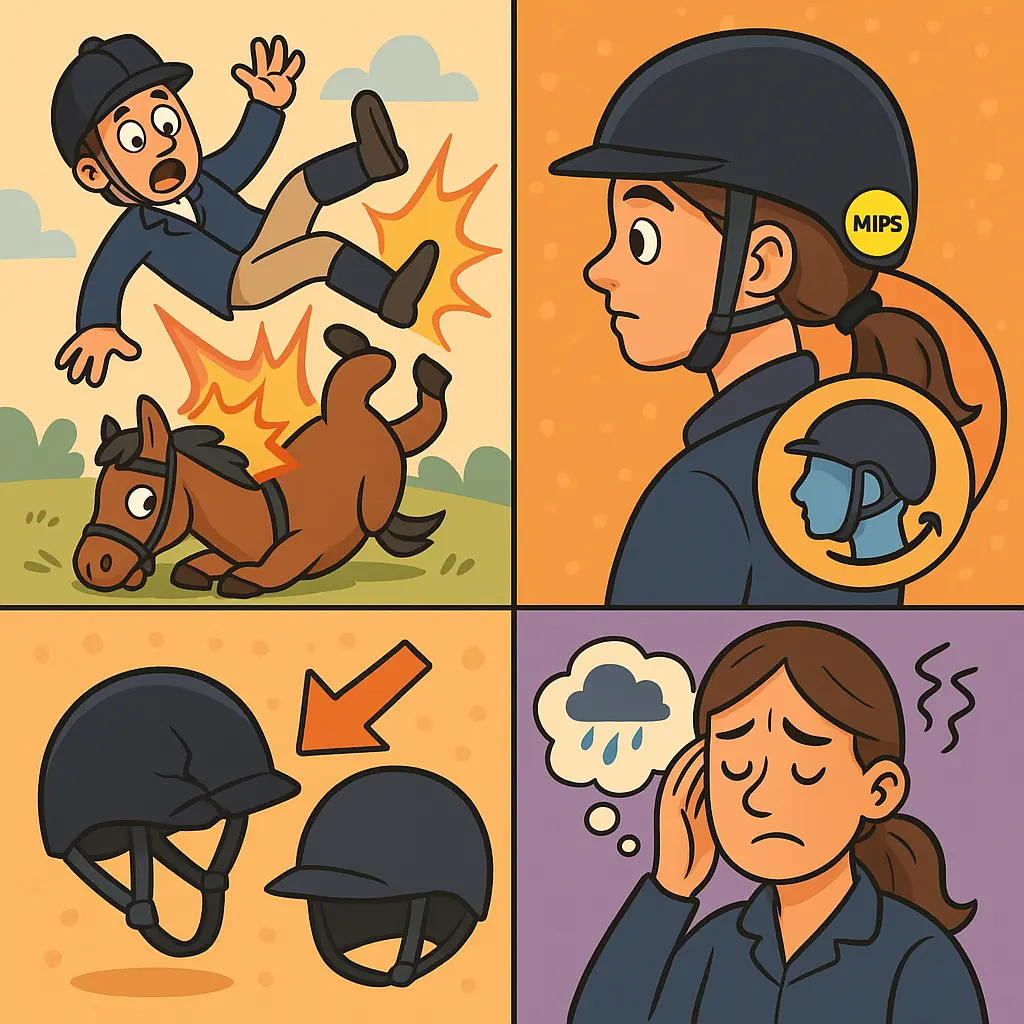
What’s the link between head injury and rider mental health?
Concussion is strongly linked with mental health changes in riders: 58% report significant increases in depression and anxiety after a head injury, and riders with 5+ concussions are twice as likely to suffer a mental health condition.
Riders Minds’ “Head First” research highlights how the aftermath goes beyond physical symptoms: more than half of concussed riders experienced marked rises in depression and anxiety scores, and 25% of riders have suffered from depression overall (source). The more concussions you’ve sustained, the higher the risk of ongoing mental health challenges.
At Just Horse Riders, we encourage a rider-first approach: seek medical advice promptly after a head impact, rest fully, and use dedicated support resources such as Riders Minds. A measured, stepwise return-to-ride plan — with a new, correctly fitted helmet — helps protect both your brain and your confidence.
Your practical shopping checklist
Use this focused checklist to choose and maintain a safer riding helmet:
- Start with a Kitemark PAS015:2011 helmet; if possible, add VG1 01.040 2014-12 and SEI ASTM F1163:2015 certifications for broader protection.
- Prioritise rotational impact protection (e.g., MIPS) to address oblique, real-world falls on UK ground.
- Consult the 2025 Virginia Tech STAR ratings to compare concussion risk reduction in angled impacts (overview).
- Insist on a secure, stable fit and snug harness. If it rotates easily or tips, try another size or model.
- Replace after any fall and every 3–5 years depending on frequency of use; remember hidden damage is common.
- Store away from heat, damp and knocks; avoid any DIY modifications.
- If you need to replace a helmet on a budget, check our value picks in the Secret Tack Room clearance — safety first, always.
Quick tip: keep your purchase receipt and note the replacement due date inside the helmet (e.g., “Replace by March 2029”).
Strong safety habits don’t end with buying the right hat. Pair your helmet with sensible visibility on the roads via our rider hi-vis essentials, and make sure your competition wardrobe meets current regs with our approved competition clothing.
Smarter choices, consistent fit checks, and timely replacements are the simplest ways to stack the odds in your favour.
Ready to upgrade? Explore certified, modern designs in our riding helmets collection and ride with confidence.
FAQs
Do MIPS helmets prevent concussion?
No. MIPS reduces rotational head motion and may lower concussion risk in certain falls, but no helmet can prevent concussion. Helmets primarily reduce the severity of head injury and effectively prevent many skull fractures (study).
Why are helmeted riders still getting concussions?
Because most standards test linear impacts, while real falls often produce oblique, rotational hits on soft, uneven ground. Many helmets are also quite stiff to protect against catastrophic injury, which can limit energy absorption in lower-severity impacts that still cause concussion (overview).
Which safety standard should I look for in the UK?
Choose a helmet with the Kitemark to PAS015:2011 for UK competition compliance and robust protection. For broader coverage, look for helmets that also meet VG1 01.040 2014-12 and SEI ASTM F1163:2015 (comparison).
How often should I replace my riding helmet?
Immediately after any fall (even with no visible damage) and every 3–5 years depending on use, due to material degradation and hidden impact damage (Riders Minds).
Does paying more guarantee better safety?
No. Price isn’t a safety guarantee. Prioritise certification (PAS015:2011 in the UK), modern rotational protection, and independent performance data such as Virginia Tech’s 2025 STAR ratings (update).
How do I know if my helmet fits correctly?
It should sit level, just above your eyebrows, contact evenly around your head, and stay stable when you shake your head. The harness should be comfortably snug with minimal slack. If in doubt, try alternative sizes or head shapes in our helmet range.
What else can I do to reduce risk when hacking?
Be seen sooner by drivers with certified hi-vis for rider and horse, choose safer routes and times, and keep your helmet in top condition. Browse proven options in our rider hi-vis collection.