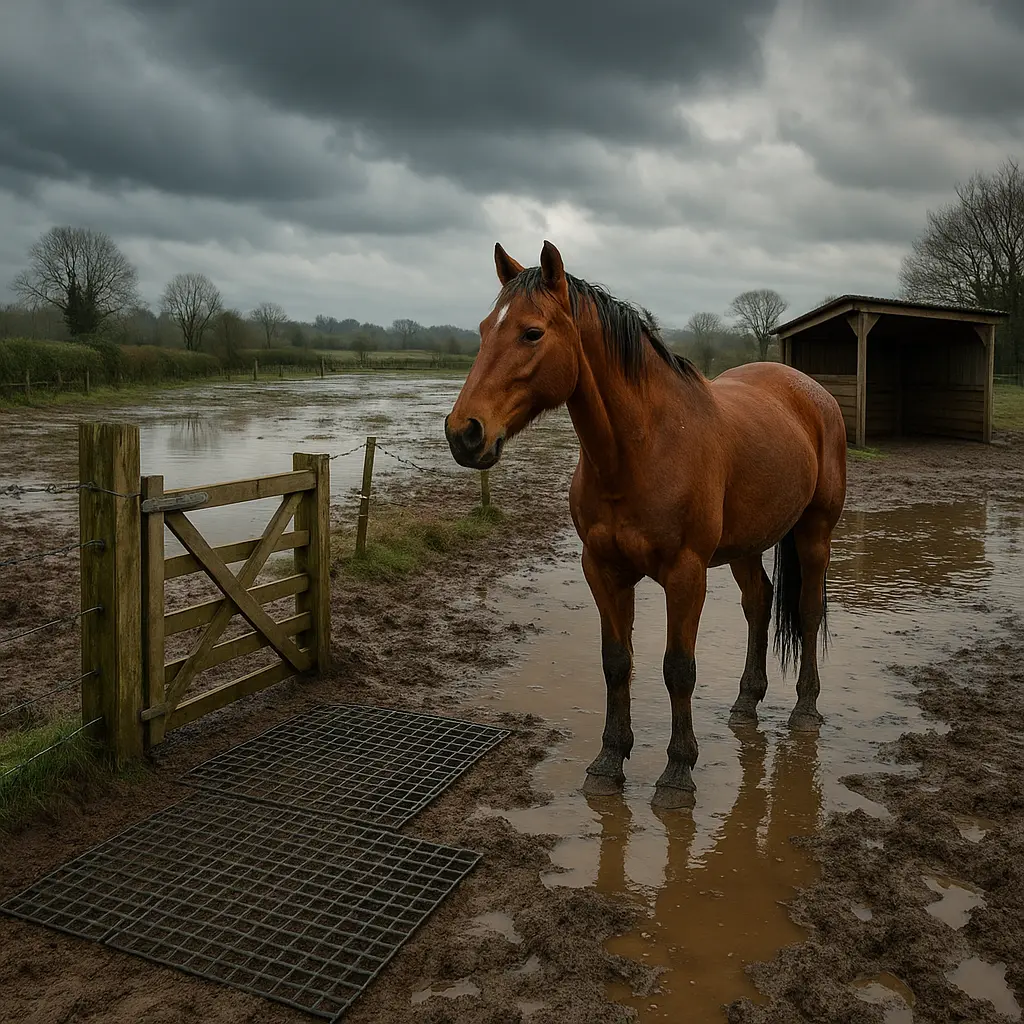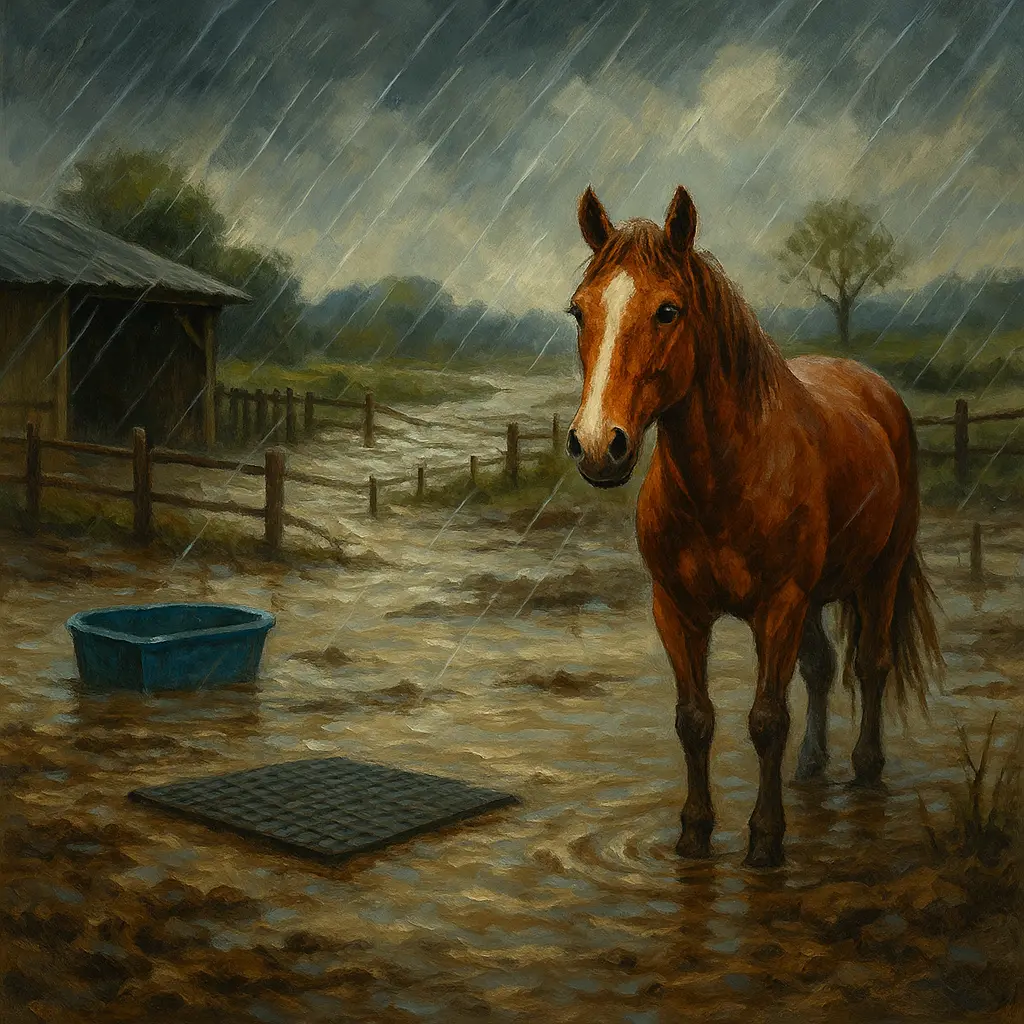
When the rain doesn’t stop and gateways turn to soup, your horse still needs safe turnout, clean water and a plan if the worst happens. With a few smart changes and an early-action checklist, you can keep horses comfortable and your land resilient through the UK’s wettest spells.
Key takeaway: Act early on flood warnings, protect high-traffic areas with proper surfaces and drainage, and have a clear emergency plan that puts human safety first.
What to do when flooding threatens
Move horses to high ground before water rises, and check Floodline on 0345 988 1188 or gov.uk/check-flooding for live warnings so you can act early. In an emergency where horses are in floodwater, call the RSPCA on 0300 123 4999 — emergency services will always prioritise human life.
UK weather can turn fast, and waterlogged fields are sometimes unavoidable. The aim is to get ahead of the rain. If your paddock drains slowly or sits on heavy clay, have an “early move” threshold — for example, if a Met Office warning or rising river level is forecast overnight, relocate horses the same afternoon rather than waiting until morning. Keep escape routes clear and unlocked, and if necessary add an extra gate so you can lead horses out without crossing the worst mud.
Prepare a spare turnout area on higher ground, even if smaller, so you’re not choosing between standing horses in deep mud or stabling for days. Stock a reserve of forage and clean water you can shift quickly. Quick tip: save your best-drained paddock for winter, and rest low-lying fields for summer grazing when water levels are lower.
“Move livestock and horses to high ground if heavy rain is anticipated; thoroughly clean troughs and water buckets after flooding and refill with clean water, as flood water can pollute and harm animals.” — Dr Mark Kennedy (veterinary professional), via Horse & Rider UK: Planning ahead for flooding
At Just Horse Riders, we also recommend keeping a few essentials by the gate: torches, spare headcollars and ropes, hi-vis layers, and a printed emergency contacts sheet in a waterproof wallet.
Make your yard shed water, not mud
Install mud mats or high‑traffic pads, keep ditches and grips clear, and add drains and gutters to move run‑off away from gateways, water points and stables. These simple upgrades prevent poaching, protect your topsoil and make winter handling safer.
Start with the hotspots: gateways, water troughs, feeders and paths to and from the stable block. A high-traffic pad is straightforward to build — lay a permeable geotextile fabric then top with a compacted layer of gravel or crushed stone. This spreads load, improves drainage and stops hooves churning through to clay. The British Horse Society (BHS) also advises positioning gateways in the driest part of the perimeter and saving your best-drained paddocks for wetter months; avoid siting access in low-lying corners where water naturally collects. See the BHS’ mud management guidance: Mud Management.
Direct roof run-off away from yards with clear gutters and downpipes. Where surface water races across hardstanding into fields, add a French drain (a gravel-filled channel) to intercept and disperse the flow. Buffer strips of vegetation along fence lines also soak up excess water and filter silt before it hits your paddocks.
“Install mud mats or hard-standing in areas that become waterlogged; ensure run-off ditches are unobstructed and invest in mole drains if on very heavy soil; use lower lying fields in summer to save higher ground for poor weather.” — Sam Chubbock, Head of UK Support, World Horse Welfare, via Horse & Rider UK: Planning ahead for flooding
Pro tip: check ditches and grips weekly in winter. A single blocked outlet can turn a passable gateway into a bog overnight. Keep a rake and spade by the field entrance so you can clear leaves and debris after every storm.
Turnout without trashing the paddock
Create all‑weather turnout areas on hardstanding with mats or compacted stone so horses can move and stretch without poaching the field. This protects your sward while maintaining vital daily exercise during prolonged wet spells.
An “exercise pen” can be as simple as a stable-sized pen on a prepared base next to a field shelter, or a widened, matted track along the driest fence line. Use ground/grass mats (rubber or high‑strength plastic) or a geotextile-plus-stone build for load bearing. Place hay on rubber mats to minimise waste and mud mixing. If you use a shelter, install it on hardstanding so the entry/exit stays firm.
Keep water points on hard base too to prevent a churned crater forming. If troughs flood with silt, a small submersible pump is invaluable for removing dirty water without dumping it into the paddock (which just moves the mud). For handling horses on slick surfaces, supportive lower leg protection helps — browse horse boots and bandages for everyday turnout and post-exercise care.
When cold and wet combine, prioritise warmth after turnout. A well-fitting rug helps horses dry and hold condition in wind-chill; explore our range of winter turnout rugs from trusted brands that stand up to UK downpours.
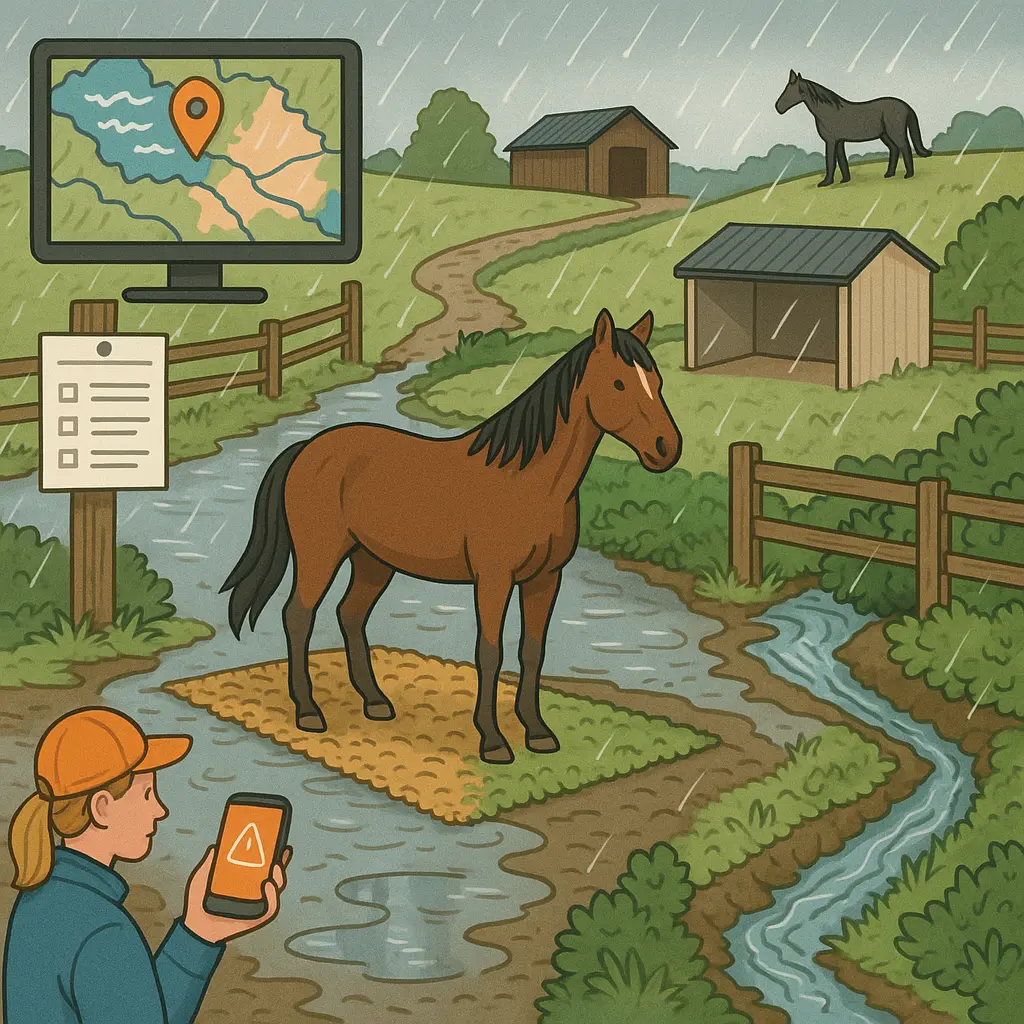
Water, feed and health after flooding
Discard contaminated water, clean and refill troughs immediately, and move cold‑soaked horses to dry shelter to prevent hypothermia. Flood water can carry silt, fuel, faecal bacteria and other contaminants harmful to equines.
After any overtopping event, scrub troughs and buckets and refill from a mains or tested source. Never tip dirty trough water into the field — decant into containers and dispose via a suitable drain or away from grazing. Inspect feed stores for damp or rodent ingress; anything that’s wet or mouldy must go. Walk the pasture as the water drops: silt deposits can conceal hazards and may expose toxic plants or tree roots.
Monitor for post-flood issues such as stiffness from prolonged cold, skin infections where mud accumulates, and signs of chilling. If a horse is cold-soaked, get them into a dry, sheltered area with forage; a breathable rug aids recovery once they’re towelled off. Our turnout rugs are designed to keep horses warm in the wind and rain, while regular care of legs and feathers with the right tools can help prevent mud-related skin problems — see our curated grooming essentials for washing, drying and detangling after wet turnout.
Quick tip: keep a “mud kit” by the door — a bucket of warm water, gentle shampoo, clean towels and a soft brush — to deal with legs as soon as horses come in. Consider targeted nutritional support during stressful, wet periods; our selection of supplements includes options to support skin, hooves and general wellbeing when grazing quality dips.
UK laws and who to call
You are legally required under the Animal Welfare Act 2006 to provide a suitable environment during floods, and the RSPCA handles equine flood rescues on 0300 123 4999. Always prioritise human safety and follow emergency services’ instructions.
Anyone responsible for an equine — permanently or temporarily — must meet their duty of care, which includes shelter, safe footing and access to fresh water even in extreme weather. Where horses are on land without permission, the Control of Horses Act 2015 puts responsibilities (and powers) on the landowner; in flood situations, that can complicate rescue and care arrangements, so act early to avoid trespass scenarios.
Stay informed with Floodline (0345 988 1188) and gov.uk/check-flooding. If horses are trapped by floodwater, do not enter fast or deep water — call the RSPCA for equine rescue and give precise location details. Download the what3words app so you can share a three‑word address to the nearest metre, plus note visible landmarks and access points for responders.
For day-to-day handling in storms and low light, elevate safety for you and your helpers with bright, reflective layers and head protection. Explore our rider-safe hi‑vis clothing and certified riding helmets for confident handling on slippery yards.
Long-term field layout and drainage
Reserve well‑drained higher paddocks for winter, site gateways on the driest perimeter, and use mole drains, buffer strips and French drains to move water away from heavy soils. This strategic layout suits UK winters and reduces repair costs.
Many UK pastures sit on clay that seals under hoof traffic. To protect structure, rotate grazing so low-lying fields rest in winter and carry lighter summer use. Put fixed access points where ground naturally dries first; curved fencelines and double gates can spread traffic and reduce a single mud pit forming.
On very heavy land, agricultural drainage like mole ploughing helps water reach a collector drain, but only if maintained and used with surface measures (pads, mats, sward cover). Combine this with edge-of-field buffer strips or a new hedgerow to slow and absorb run-off. Along buildings and tracks, install French drains to intercept sheet flow, and ensure outfalls are clear before autumn storms. Keep boundary ditches free of blockages so surface water has a defined escape route rather than pooling across your grazing.
BHS guidance reinforces the principle: save your best-draining fields for the wettest weeks, avoid concentrating traffic in low spots, and plan gateways and tracks with drainage in mind. Over time, these measures mean fewer lost turnout days and safer handling for both horse and handler.
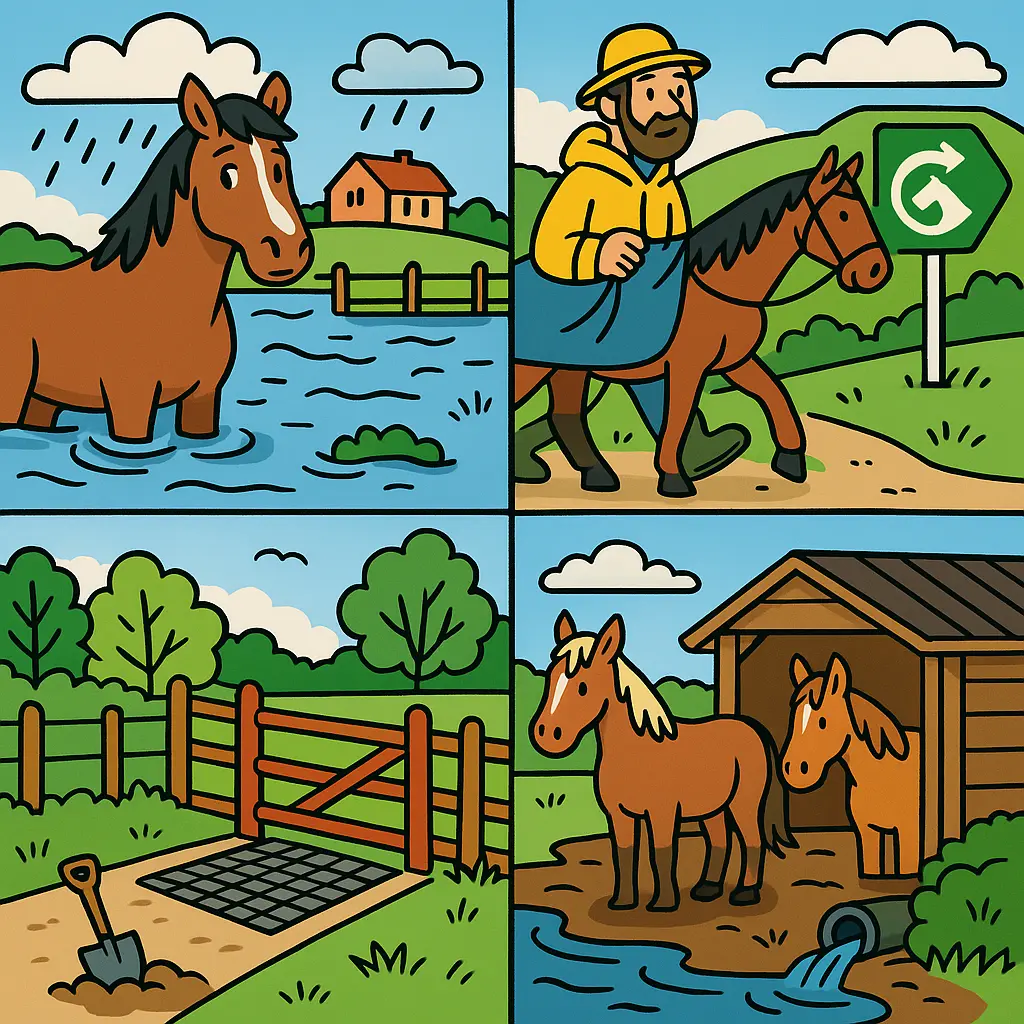
Build and practise your extreme weather plan
Write a simple flood plan with evacuation sites, contact lists and mapped escape routes, and practise moving horses quickly and safely before you need to. A laminated, barn‑door copy ensures anyone on site can act if you’re away.
Your plan should include:
- Evacuation options: name and address of higher, drier fields or friendly yards.
- Access and routes: which gates to use in flood conditions; where temporary fencing can create a safe corridor.
- Contacts: owners, yard staff, vet, transporters, local farmers with tractors, RSPCA (0300 123 4999) and Floodline (0345 988 1188).
- Location aids: what3words for every key gate, plus OS grid references if you use them.
- Kit list: headcollars/ropes, first-aid supplies, torches, charged power bank, spare rugs, buckets, haynets, and a small submersible pump if applicable.
- Care notes: any special dietary or medical needs per horse.
Run a short “drill” once or twice a season: lead horses via the planned route, check for pinch points, and time how long it takes. At Just Horse Riders, we recommend kitting out handlers for storm moves — sturdy footwear with grip and a helmet reduce slips and knocks; browse supportive horse riding boots and protective riding helmets. Add hi‑vis layers so motorists spot you quickly if you must use a lane.
Finally, label rugs and headcollars, keep a reserve of forage in sealed containers, and maintain a rolling stock of clean water containers. If you regularly battle deep gateways, consider upgrading to a permanent high‑traffic pad this summer so it’s ready before next winter.
FAQs
What should I do if heavy rain is forecast and my paddock might flood?
Act early: move horses to higher ground, stock hay and clean water where you’re moving them to, and check Floodline (0345 988 1188) or gov.uk/check-flooding for updates. Keep escape routes clear and unlocked, and have the RSPCA’s equine rescue number (0300 123 4999) to hand.
Is it safe to let horses graze waterlogged fields in UK winter?
Short periods may be unavoidable, but monitor closely and limit damage by rotating fields, using all‑weather areas for high traffic, and protecting gateways with mats or a gravel‑over‑geotextile pad. Never put yourself at risk in floodwater.
How can I prevent mud at gateways and water points?
Install a high‑traffic pad: lay a permeable geotextile fabric and top with compacted stone or gravel, or use heavy‑duty ground mats. Position gateways on the driest perimeter and keep ditches and grips clear so water has somewhere to go.
What should I do with water troughs after flooding?
Empty, scrub and refill from a clean source immediately; floodwater can be contaminated. Don’t dump dirty trough water into the paddock — remove it to a suitable drain or non‑grazed area away from surface flows.
My horse is cold and soaked after a downpour — what now?
Bring them into a dry, sheltered space, offer forage and towel off wet areas. Once the coat is no longer dripping, use a breathable turnout rug to retain warmth and prevent chilling; see our selection of weather‑ready turnout rugs.
Who should I call if a horse is trapped by floodwater?
Call the RSPCA on 0300 123 4999 and provide precise location details (use what3words if possible). Do not enter deep or fast‑moving water; emergency services will prioritise human life.
What long‑term drainage improvements really help on heavy clay?
Combine surface solutions (mats, high‑traffic pads, French drains, gutters) with strategic layout (winter on higher, free‑draining fields; driest‑perimeter gateways) and, where appropriate, mole drains on very heavy soil. Buffer strips and hedgerows also help slow and absorb run‑off.
With the right groundwork, early decisions and a clear plan, you’ll ride out the worst of the UK’s wet weather more safely. If you’re upgrading kit for the season ahead, our team can help you choose reliable turnout rugs, robust horse boots and bandages, essential grooming tools and practical supplements to keep your horse comfortable until the ground finally firms up.