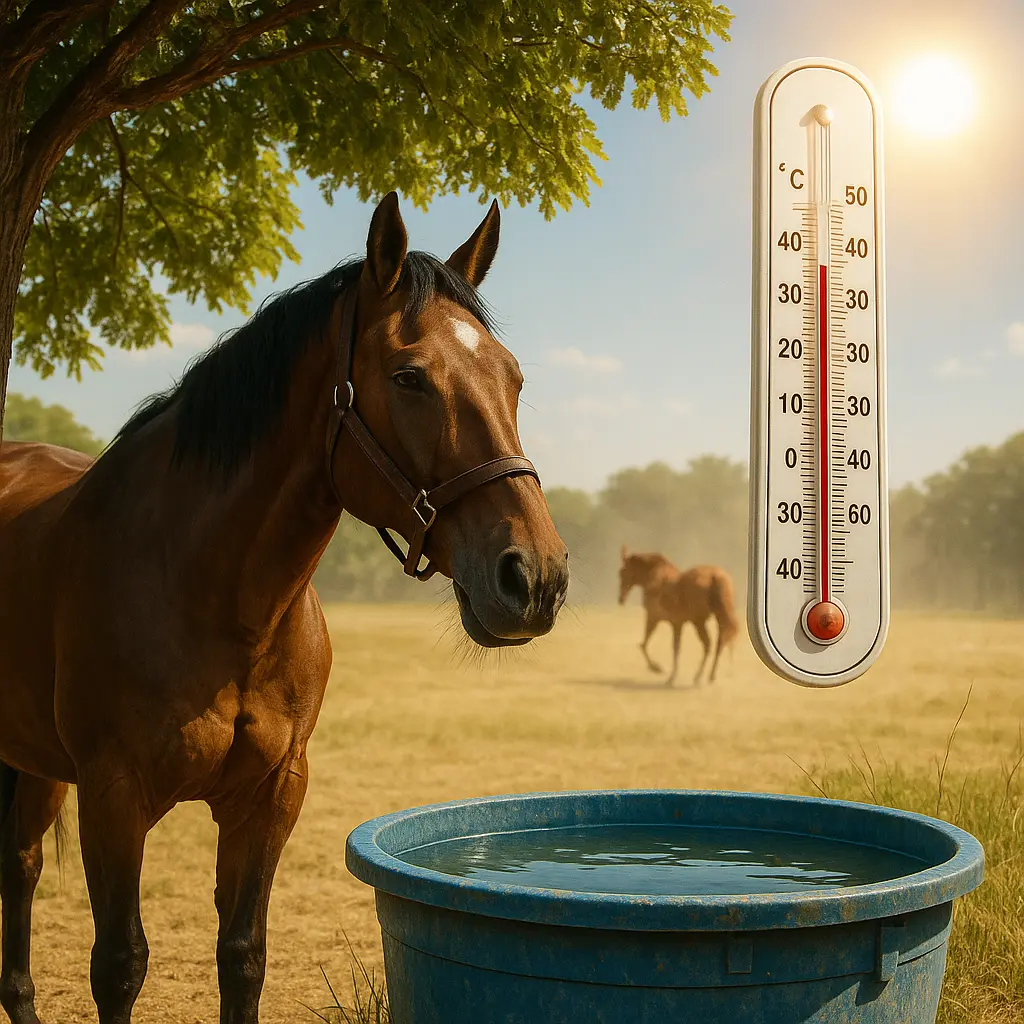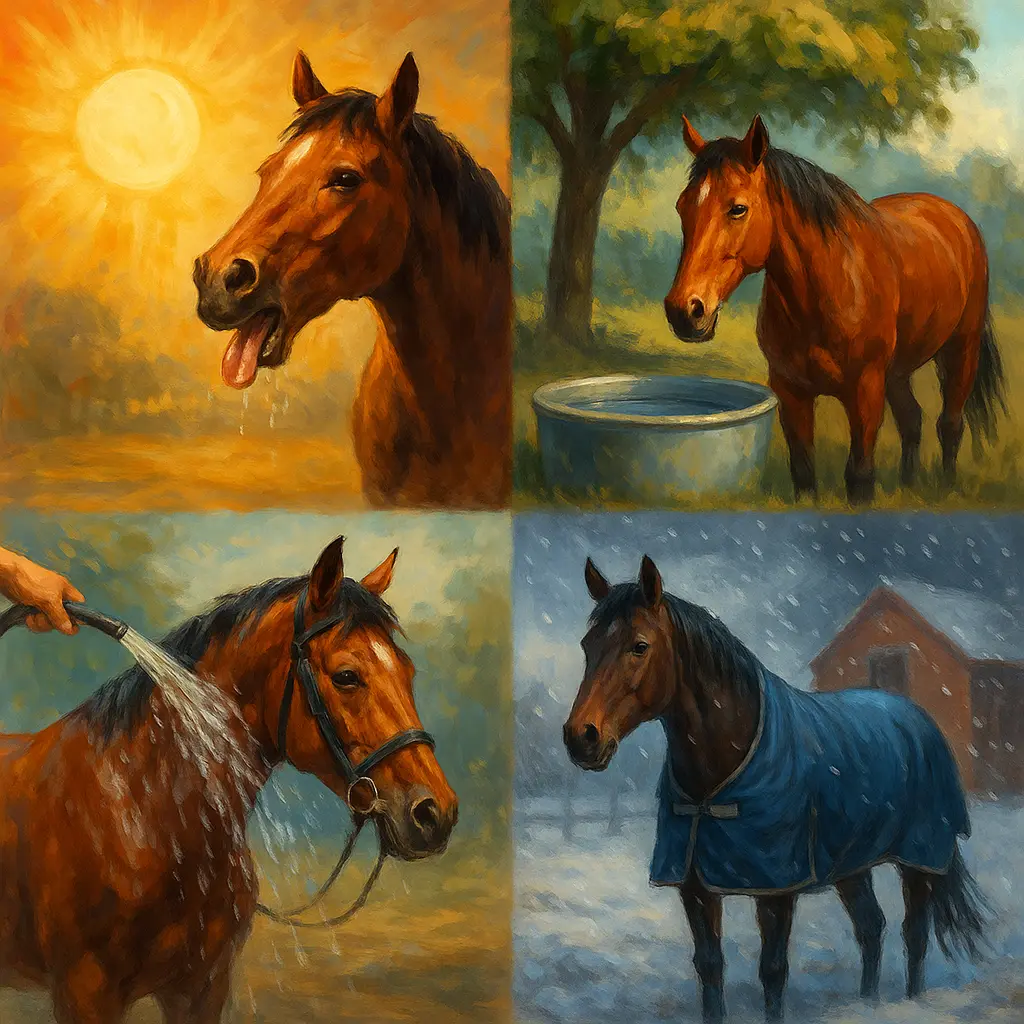
From scorching heatwaves to biting winter storms, UK weather can turn quickly — and your horse’s welfare must turn with it. With clear thresholds and simple routines, you can keep your horse safe, comfortable, and competition-ready in every season.
Main takeaway: Above 28°C you should adapt exercise and management; in extreme cold you must provide constant shelter and ice-free water — and never transport horses in non-temperature-controlled vehicles above 30°C.
When is it too hot to ride or transport?
In the UK, you should adapt riding once temperatures reach 28°C and avoid non-temperature-controlled transport above 30°C. Keep transport compartments below 25°C (ideally 18°C) if you must travel in hot weather.
The Blue Cross advises vigilance for heat stress from 28°C, particularly if humidity is high, and for older or overweight horses. Follow British Horse Society (BHS) guidance to ride early morning or late evening, keep sessions shorter, and build in regular shade breaks. For travel, the British Horseracing Authority (BHA) recommends keeping the horse compartment below 25°C (18°C ideal) and offering water every 4.5 hours; the UK Government states you should not transport horses in non-temperature-controlled vehicles once it exceeds 30°C (check the “feels like” temperature in humidity).
Quick tip: Humidity magnifies risk. If the air feels oppressive, plan groundwork or rest days, even if the thermometer isn’t extreme.
How do I recognise and treat heat stress fast?
Act immediately if you see panting, fast breathing, unsteadiness or collapse: move to shade, continuously apply cold water under 15°C until fully cool, and call your vet.
Heat can escalate quickly because horses sweat at around three times the human rate to cool themselves. The RSPCA notes horses may need up to 55 litres of water per day in summer to keep up with losses. Early signs of trouble include excessive sweating that stops abruptly, hot skin, flared nostrils, and a high respiratory rate that doesn’t settle. If you suspect heat stress, take decisive action.
“If signs of heat stress occur, the horse should be treated through repeated application of cold water until the signs resolve completely and the horse is cool.” — British Horseracing Authority (BHA)
Use a hose, buckets, or large sponges to drench the large muscle groups (neck, shoulders, back, quarters). Keep the water moving and cool — the BHA specifies below 15°C for effective heat extraction. Don’t waste time scraping between applications; repeated cold water is the priority until the horse is cool to the touch and breathing eases.
At home or the yard, ensure you have easy access to hoses and large buckets. A well-stocked wash bay plus a couple of extra containers from your grooming essentials can be lifesavers on hot days. For competition yards or larger events, the BHA recommends at least 400 litres of mobile water availability for emergencies — scale that principle to your set-up.
Daily management in hot, humid UK summers
In hot weather, ride early or late, keep sessions short with shade breaks, ensure constant access to water (up to 55L/day), and provide continuous shade for turnout.
Build your daily routine around the coolest hours. Early mornings and late evenings allow productive work without overloading your horse’s cooling systems. The RSPCA emphasises constant access to shade for all horses, particularly elderly animals and foals; use tree lines, field shelters, or man-made shade.
Water management is non-negotiable. Horses may drink up to 55 litres daily in summer; keep troughs clean, top up frequently, and add extra buckets in stables or shady corners of the field. After exercise, cool your horse with cold water and allow the breeze or a fan (safely positioned) to aid evaporation. Avoid sweat rugs or sheets immediately post-exercise — they trap heat during the critical cooling window.
Practical additions:
- Use breathable, UV-protective layers like modern fly rugs and summer sheets that allow sweat to evaporate while offering shade.
- Replace salts lost through heavy sweating with proven electrolyte supplements (many riders trust brands like NAF).
- Acclimatise over 2+ weeks if you plan to compete in heat: short, regular sessions build tolerance more safely than sporadic hard work.
- Keep manes tidy and use low-bulk, breathable tack pads; heat trapped under heavy or synthetic padding raises core temperature.
Pro tip: Position water and hay in shade so horses don’t have to choose between eating, drinking, and staying cool.
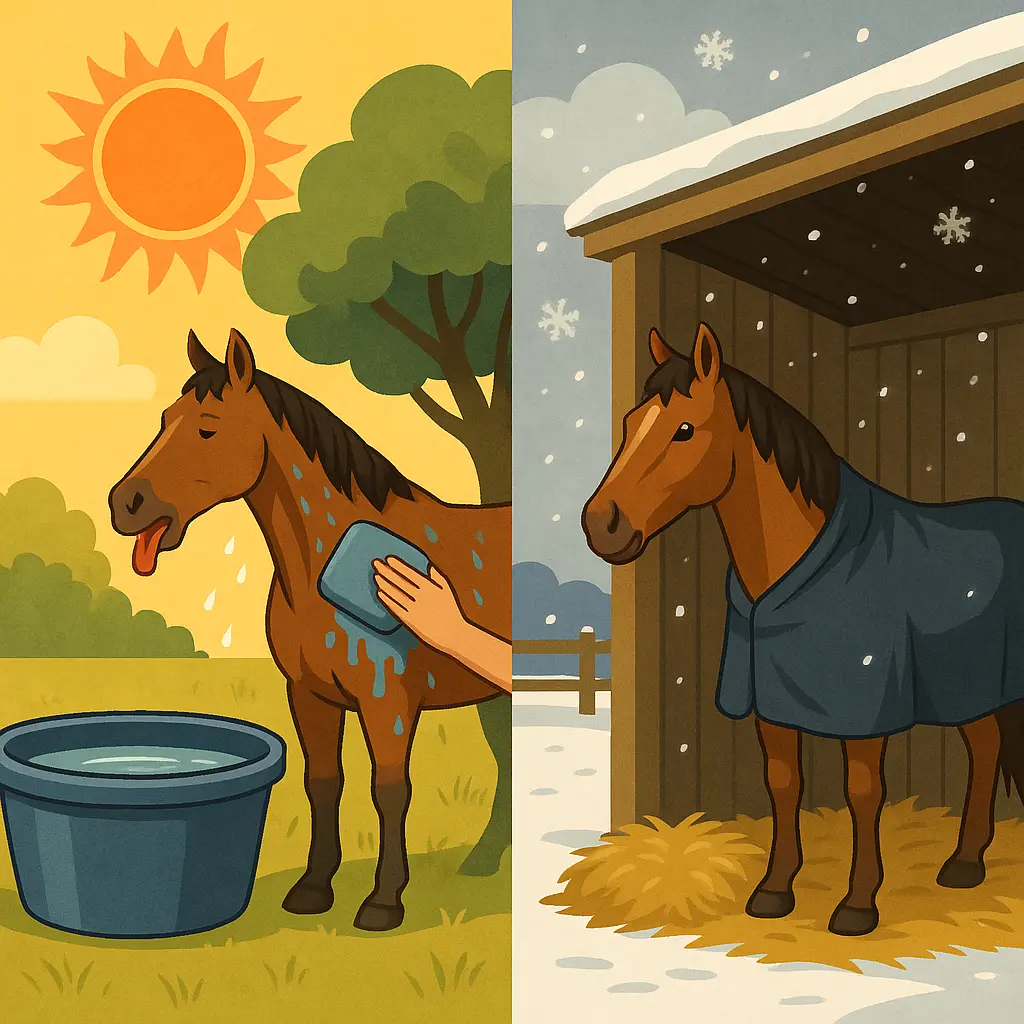
What are the rules for safe travel in hot weather?
Keep the horsebox at or below 25°C (18°C ideal), reduce stocking density by at least 30%, offer water every 4.5 hours, and avoid any non-temperature-controlled travel over 30°C.
The BHA sets clear standards for equine transport in heat, mirrored by UK Government guidance. Before you load:
- Measure inside-compartment temperature with a reliable thermometer — don’t guess.
- Reduce stocking density by a minimum of 30% and increase headroom to improve airflow.
- Plan shaded parking and routes to avoid peak heat. Keep moving air flowing when stationary (ventilation open, park out of direct sun).
- Offer water at least every 4.5 hours; consider soaked fibre before loading to boost hydration without overfilling the stomach.
- Check horses frequently for prolonged sweating, panting, or dullness, and be prepared to unload to a shaded, ventilated area to cool if required.
During travel, avoid rugs unless clinically necessary; rugs trap heat. If you use shipping protection, choose breathable travel boots and bandages and avoid heavy fleece layers in hot weather.
Quick tip: Equip your lorry or trailer with multiple water containers and a spare hose connector, plus a handheld thermometer you can read at a glance.
How do I protect horses in UK winter storms and extreme cold?
Horses kept outside in winter must have constant access to shelter; if that isn’t possible, you must move or permanently stable them, and keep water troughs ice-free.
DEFRA’s guidance is unequivocal:
“You must make sure that any [horses] you keep outside during winter have access to shelter at all times. If you cannot then you must move or permanently stable them.” — GOV.UK
Wind, driving rain and sleet rapidly strip heat, even in hardy types. Provide solid shelter, increase forage (fermentation generates internal warmth), and check horses regularly for shivering, lethargy, or weight loss. Keep troughs ice-free — a hammer and bucket aren’t enough in prolonged freezes, so plan insulated troughs or safe de-icing methods.
Rug only according to need, with fit and breathability front of mind. For turned-out horses with shelter, weatherproof turnout rugs help prevent chilling in wind and rain. For stabled horses during bitter snaps, choose appropriate-weight stable rugs and add extra dry bedding to insulate from cold floors. At Just Horse Riders, we recommend quality builds from trusted brands like WeatherBeeta for durable, weatherproof performance.
When storms like those regularly seen in British winters hit, minimise unnecessary travel. If you must move a horse, plan for snow and ice, carry extra bedding, and ensure ventilation without exposing horses to draughts.
What should riders wear and carry in extreme weather?
In heat, choose breathable, UV-protective clothing; in winter, go waterproof and insulated; year-round, wear hi-vis and a properly fitted helmet.
Your comfort and safety matter as much as your horse’s. In summer, opt for lightweight, ventilated tops and technical legwear such as performance jodhpurs and breeches. In winter, waterproof outer layers and insulated boots keep you functional on long yard days. Always wear a certified, well-fitted riding helmet, and use hi-vis for roadwork or low light — storms and squalls can reduce visibility fast.
Carry a small kit: thermometer, electrolyte sachets, spare lead rope, lightweight towel for cooling, and emergency contact details. For shows, pack extra water and a cooling plan, not just grooming gear.
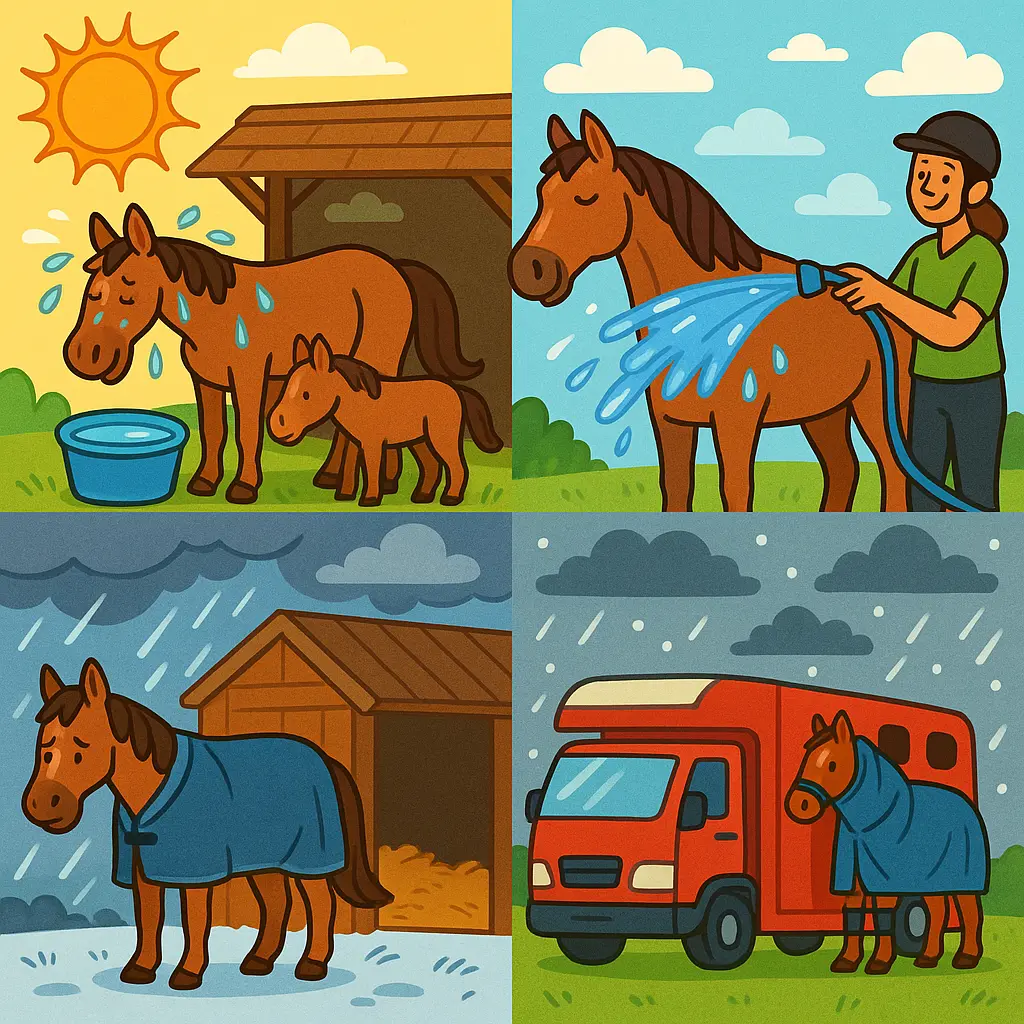
Your extreme-weather yard and lorry checklist
Keep this simple list on your yard noticeboard and in the lorry so everyone knows the plan.
- Shade and shelter: Natural shade or field shelter in summer; solid wind/rain shelter or stabling in winter.
- Water: Multiple clean sources; hose and large buckets ready; de-icer/insulation for troughs in winter.
- Cooling: Hose, sponges, and plenty of containers; repeat cold-water application until cool if needed.
- Rugs: Breathable fly rugs for UV protection; weatherproof turnout rugs and warm stable rugs during wet, windy spells.
- Electrolytes and feed: Stock proven electrolyte supplements; increase forage in winter for internal warmth.
- Transport: Thermometer inside the box; water every 4.5 hours; 30% reduced stocking density in heat.
- Rider safety: Helmet, hi-vis, season-appropriate clothing, and grippy boots.
- Brands you can trust: Weather-ready rugs and layers from WeatherBeeta, Shires, and LeMieux to handle UK conditions.
Pro tip: Run a five-minute “extremes drill” with your yard team before summer and winter — who grabs water, who calls the vet, who clears a cooling area.
Common mistakes to avoid (and what to do instead)
Small errors in extreme weather can quickly snowball; here are the big ones to sidestep.
- Cooling too cautiously: Trickle-cooling or lukewarm water is ineffective. Use cold water under 15°C and apply repeatedly until cool, as per BHA guidance.
- Rugging hot horses post-exercise: Skip sweat sheets and cool uncovered so heat can dissipate.
- Ignoring humidity: “Feels like” can push moderate temperatures into dangerous territory; adjust plans accordingly.
- Underestimating water needs: In heat, aim for up to 55 litres per day and keep multiple sources available.
- Insufficient travel ventilation: Reduce density by 30% and maximise airflow; never travel above 30°C in vehicles without temperature control.
- No winter shelter: UK law requires shelter for outdoors horses in winter; if you can’t provide it, move or stable them.
At Just Horse Riders, we recommend preparing your yard and lorry now — set up your wash area, check rug fit, refresh your emergency contacts, and replace worn kit in the grooming and horse boots and bandages departments before the season turns.
FAQs
When is it too hot to ride my horse in the UK?
Be vigilant once temperatures reach 28°C, especially if it’s humid or your horse is older or overweight. Ride early morning or late evening, keep sessions short, and skip work altogether in heatwave conditions as advised by the Blue Cross and BHS.
What should I do if my horse shows heat stress?
Move the horse to shade, apply repeated cold water under 15°C until fully cool, and contact your vet. The BHA advises continuous cold-water application until signs resolve completely — don’t delay or use small amounts cautiously.
How much and how often should horses drink in extreme weather?
Ensure continuous access to clean water year-round. In summer, horses may need up to 55 litres per day to replace sweating losses (RSPCA). In transport, offer water at least every 4.5 hours per the BHA.
Do horses need rugs in UK winter storms?
Provide shelter first — that’s a legal welfare requirement for outdoor horses. Rug according to individual need: weatherproof turnout rugs for wet, windy turnout and insulated stable rugs for stabled horses during cold snaps. Increase forage to support internal warmth.
Can I transport horses in Storm Bert-like conditions?
Only if essential. Plan routes to avoid snow and ice, add extra bedding for comfort, maintain ventilation without draughts, and prioritise welfare over schedules, as outlined by GOV.UK. In heat, never travel above 30°C in non-temperature-controlled vehicles and keep compartment temperatures below 25°C.
Should I rug my horse for hot-weather travel?
No, avoid rugs unless clinically essential. Rugs trap heat; instead, reduce stocking density by 30%, improve airflow, and keep the compartment at or below 25°C (18°C ideal) with water offered every 4.5 hours.
What products help most in extreme UK weather?
For heat: breathable fly rugs and summer sheets, proven electrolyte supplements, and robust cooling tools (buckets, sponges, hoses). For winter: weatherproof turnout rugs and warm stable rugs. Don’t forget rider safety with helmets and hi-vis.
UK weather will always keep us on our toes. With a clear plan, the right thresholds, and a few smart kit choices, you’ll protect your horse’s welfare and performance whatever the Met Office throws at you. If you need help choosing rugs or building a hot/cold weather kit, our team at Just Horse Riders is here to help.