

Exploring the Pros and Cons of Cordless Clippers for Horse Grooming
Horse grooming is a vital part of equine care, making sure your beloved horse stays good-looking and comfortable. One crucial tool in this routine is the clipper, indispensable for maintaining the appearance and health of a horse. Recently, cordless clippers have become quite popular, primarily due to their convenience and portability. This blog dives into the advantages and disadvantages of cordless clippers, offering you a clear guide to decide whether they are the right choice for your horse grooming needs.
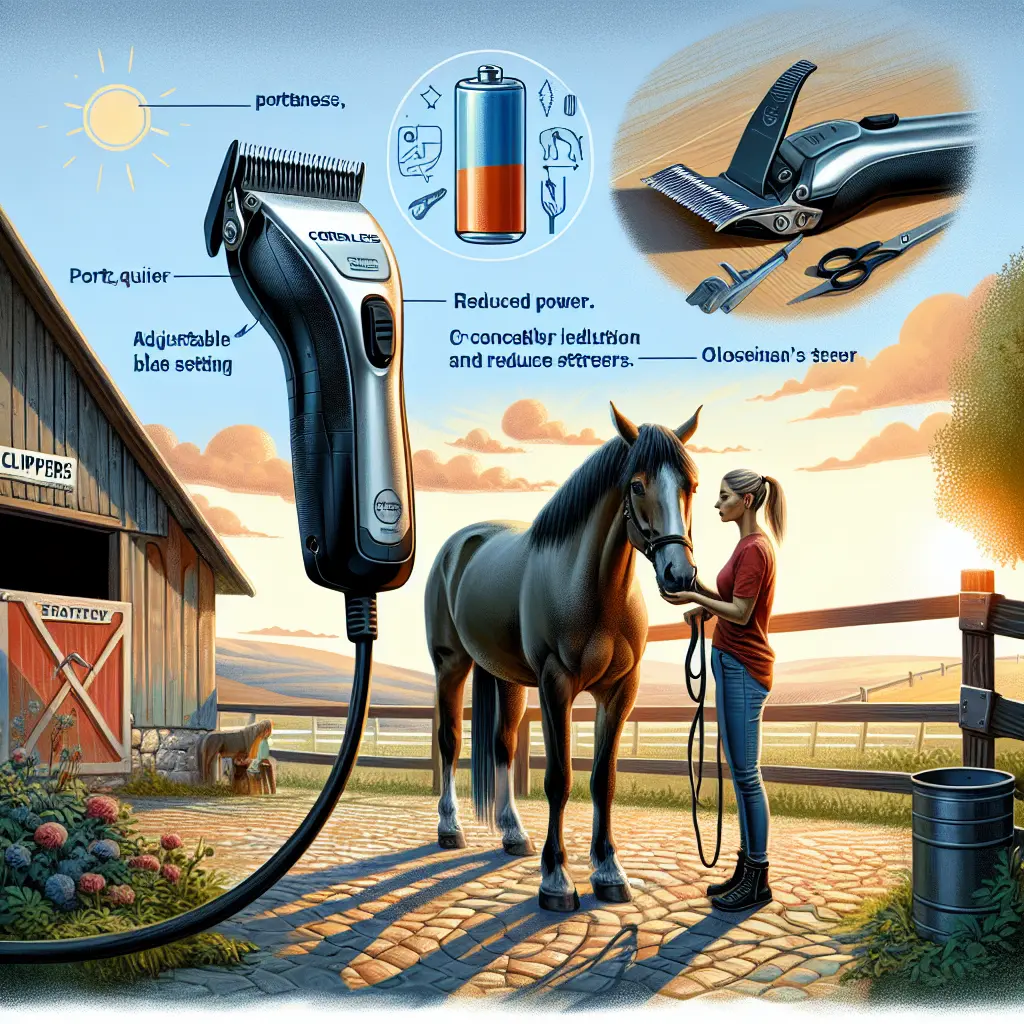
The Rise of Cordless Clippers in Horse Grooming
Cordless clippers operate on rechargeable batteries, which means you don't need a power cord while using them. This provides greater freedom of movement, particularly beneficial when grooming large animals such as horses. The challenge of maneuvering around long cords becomes a thing of the past with cordless models. Advances have also led cordless clippers to become lightweight, quieter, and more efficient[1][5]. These features are especially attractive for owners of sensitive or nervous horses.
Advantages of Cordless Clippers
Mobility and Convenience
Cordless clippers allow for unrestricted movement around your horse, a major perk when grooming in areas with scarce power outlets or in large barns. Those who work in outdoor settings particularly appreciate this flexibility[1][5].
Lightweight and Quiet Operation
Many cordless clippers are designed to be compact and lightweight, reducing hand fatigue during prolonged grooming sessions. Additionally, they often operate more quietly than powerful corded models, which is beneficial for noise-sensitive or anxious horses[1][5].
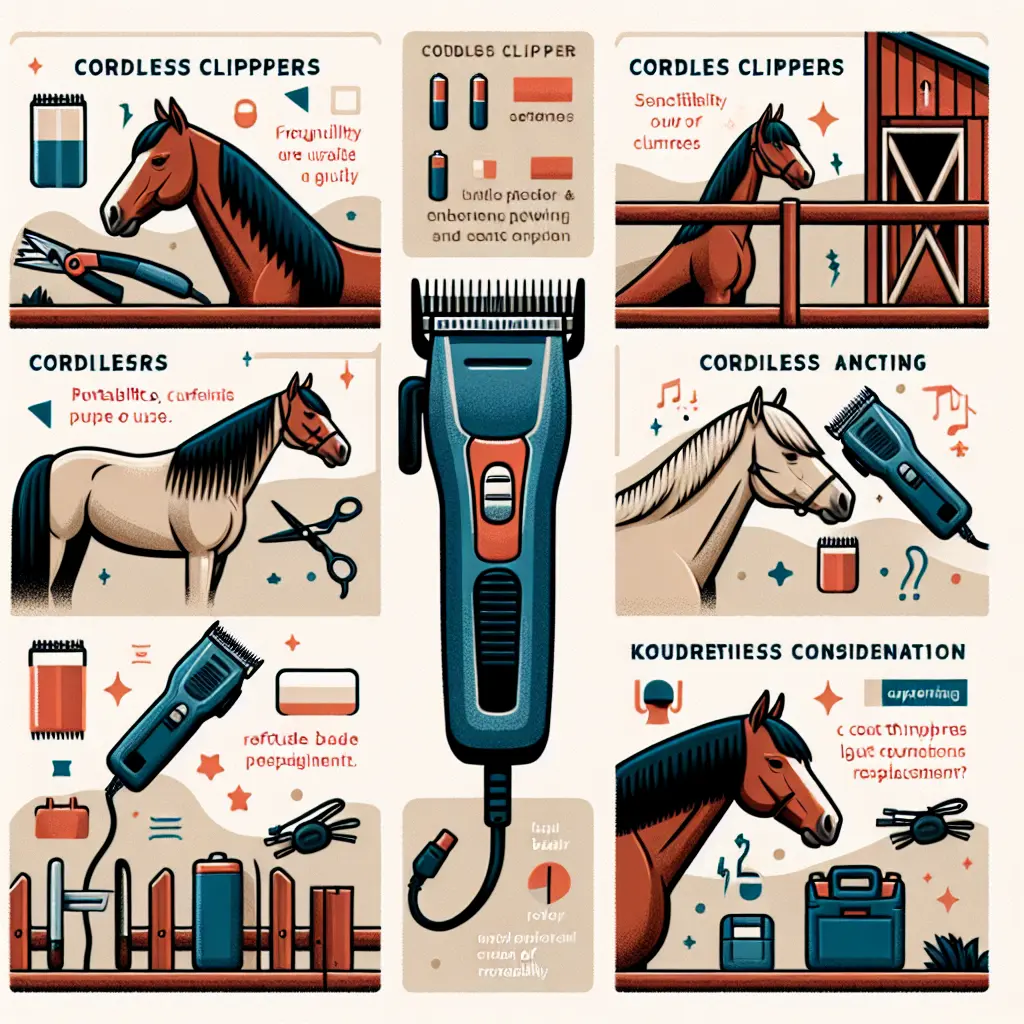
Ease of Use
Top cordless models feature adjustable blade settings and rechargeable nickel-metal hydride batteries for smooth trimming with minimal vibration[1]. This makes them particularly suitable for beginners or casual users, as they eliminate the hassle of handling cords[1].
Disadvantages of Cordless Clippers
Reduced Power and Durability
Typically, cordless clippers offer less cutting power compared to their corded counterparts. This can influence the performance when tackling thick or coarse winter coats. Battery-operated motors might not consistently maintain optimal speed under heavy clipping conditions, potentially leading to uneven clipping or longer grooming durations[1][3].
Battery Life and Maintenance
Over time, a cordless clipper's batteries degrade, reducing their capacity to hold a full charge. Consequently, after multiple uses and charging cycles, the clipper's runtime and cutting efficiency may decline. Battery replacement or upgrades will be necessary occasionally, adding to the long-term cost considerations[1][5].
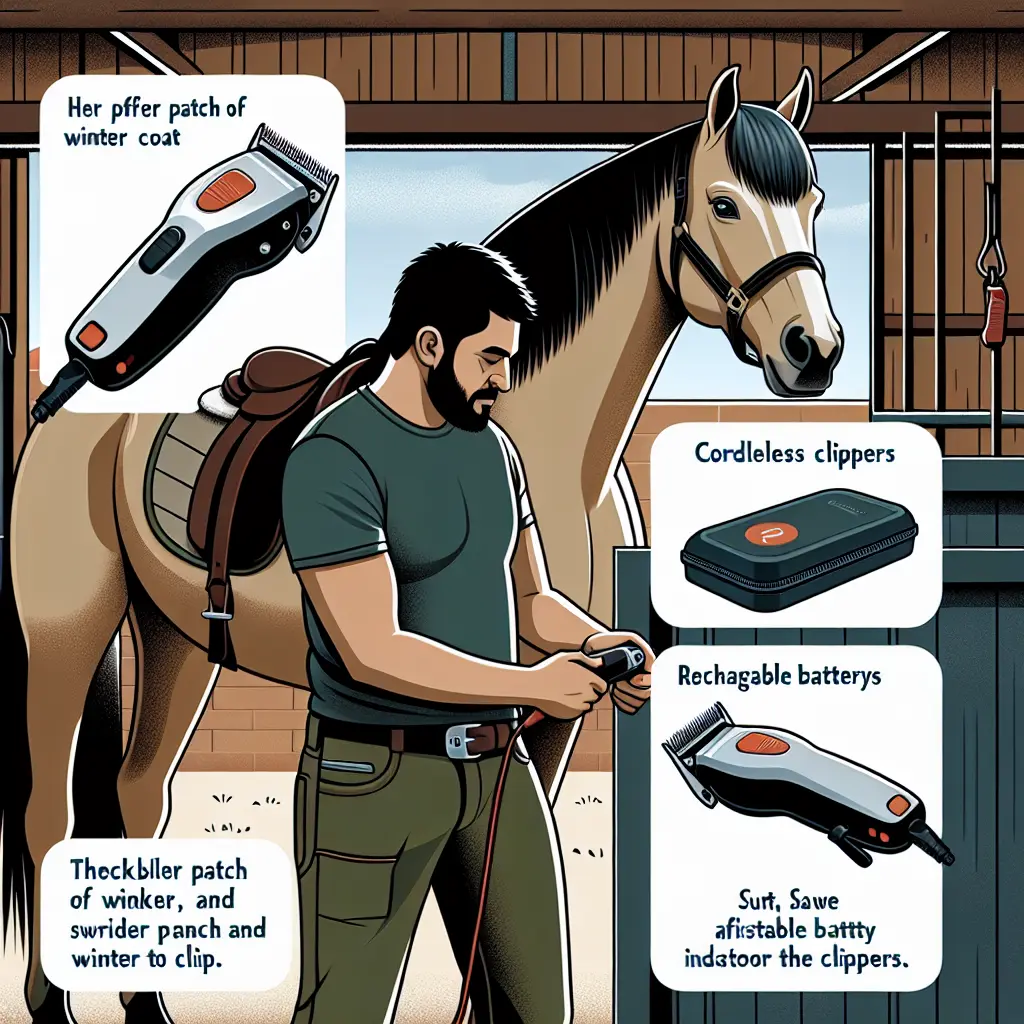
Cost Considerations
Cordless clippers often come with a higher upfront cost compared to similar corded models because of the technology involved in battery power and miniaturization[5]. For budget-conscious horse owners, corded clippers might prove more economical, especially if most clipping occurs where there's easy access to power outlets.
Practical Tips for Choosing Clippers
When deciding whether to invest in cordless clippers, consider the following:
| Factor | Consideration |
|---|---|
| Frequency of Use | Frequent clipping favors more powerful, durable corded clippers. |
| Horse Sensitivity to Noise | Cordless clippers are usually quieter, better for nervous horses. |
| Grooming Location | If you clip outdoors or away from power, cordless is more convenient. |
| Coat Thickness | Thick, coarse coats may need the power of corded or heavy-duty livestock clippers[3]. |
| Budget | Corded clippers are often less expensive upfront; cordless adds battery maintenance costs[5]. |
Expert Insights and Recommendations
- EquiSearch's testing indicated that while cordless trimmers and clippers have improved, they still fall short in power and durability compared to corded models. However, cordless options such as the Forfex BaByliss Pro 670 and the Laube Speed Feed are praised for their quietness, lightweight design, and precision trimming[1]. - Pro Equine Grooms notes that livestock clippers, typically corded and heavy-duty, offer superior power with reduced vibration and work well on horses, especially in thick coat areas. Detachable blades allow customization, but these models are generally corded[3]. - Clippersharp, a reputable retailer, advises that medium to heavy-duty clippers (usually corded) are better suited for frequent or professional use, while lighter and quieter cordless or mains models meet the needs of casual or noise-sensitive horse owners[5].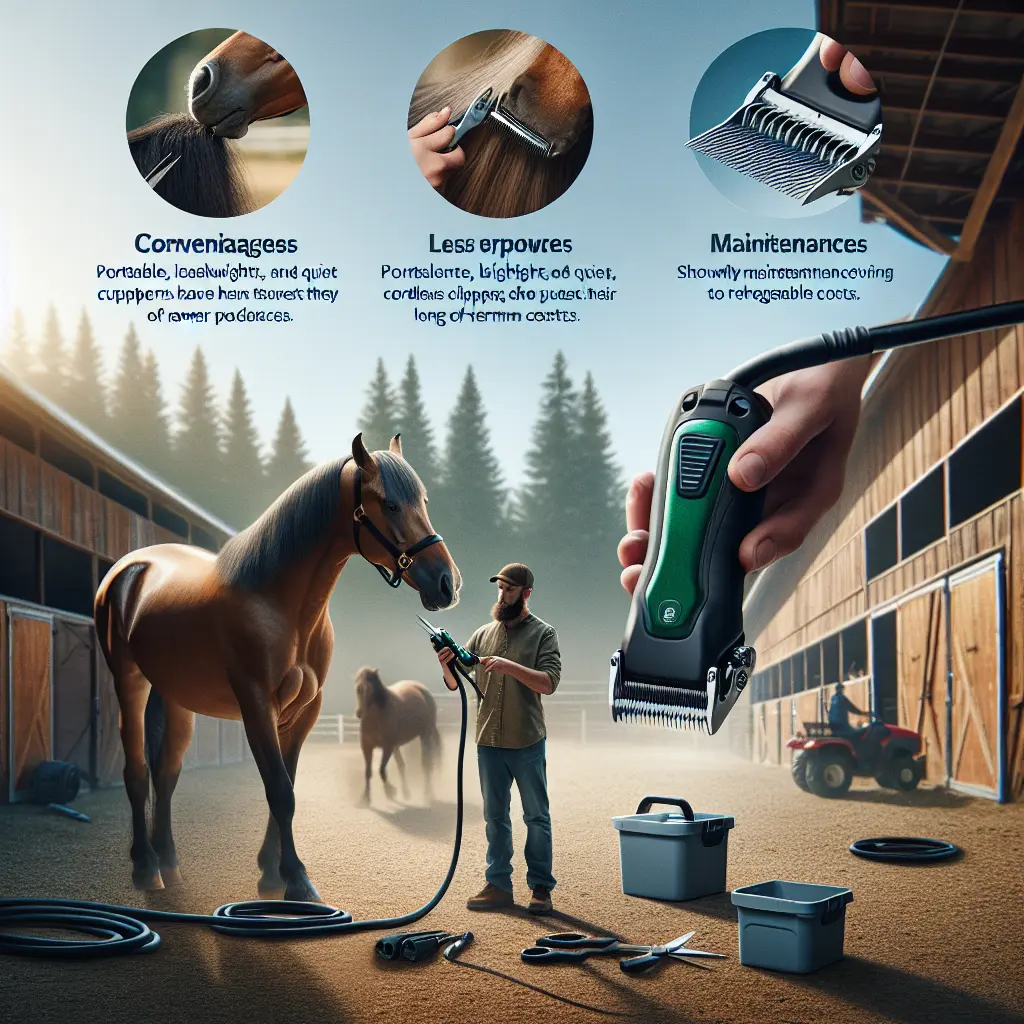
Conclusion
Cordless clippers offer significant mobility, quieter operation, and user convenience, making them ideal for grooming sessions where access to power outlets is limited or for horses sensitive to noise. However, they typically lack the power, durability, and longer runtime of corded clippers, especially necessary for thick or challenging coats. They also come with higher initial costs and battery maintenance requirements.
For many horse owners, the decision comes down to balancing convenience with power needs and budget. Casual groomers and those prioritizing quiet clipping may prefer cordless models, while professionals or those clipping frequently in demanding conditions might opt for corded heavy-duty clippers.
In any case, investing in quality clippers matched to your horse’s coat type, your grooming routine, and your budget will pay off in smoother clipping sessions and a healthier, happier horse.
For more detailed product reviews and expert advice on horse clippers, trusted sites like EquiSearch, Pro Equine Grooms, and Clippersharp provide excellent guidance and up-to-date information.
Further explore our collections for horse grooming and riding essentials: