

The Sweet Surprises of November Grass: Protecting Horses from High Sugar Levels
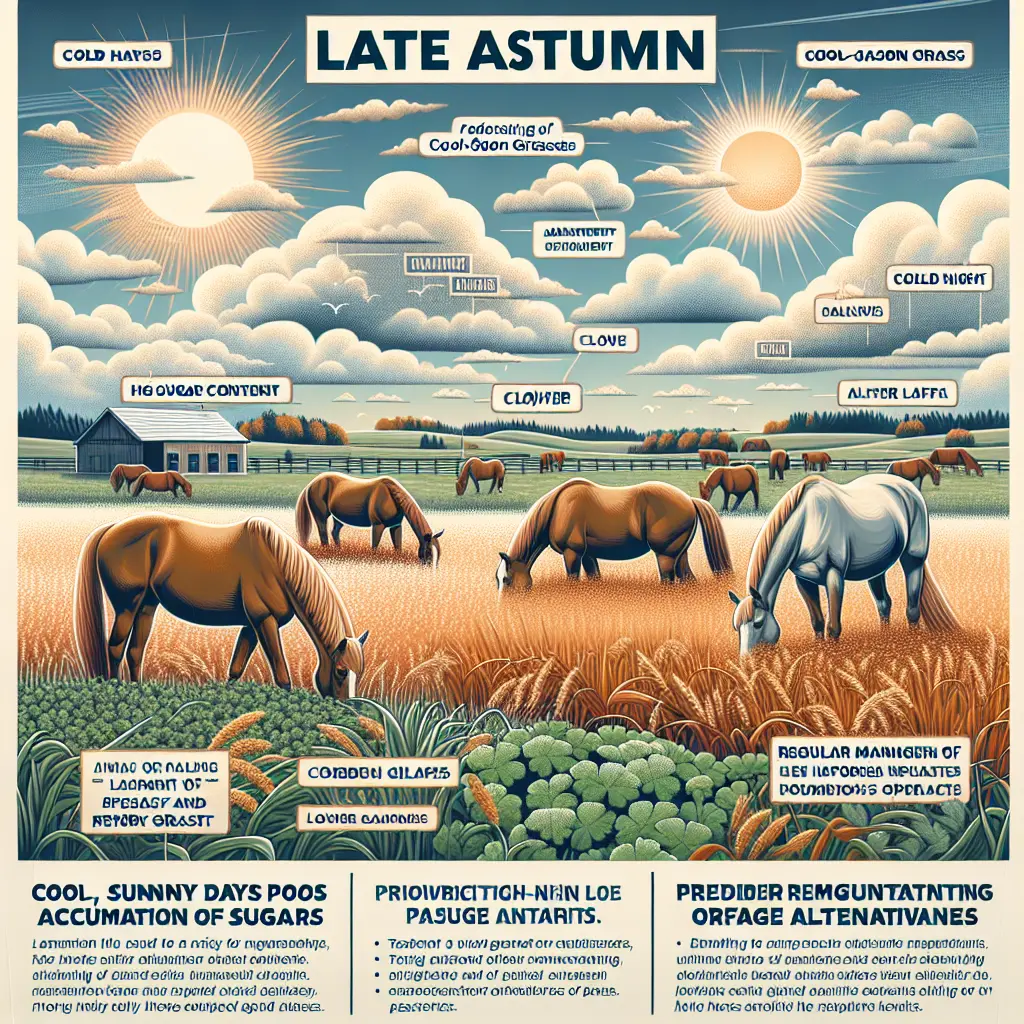
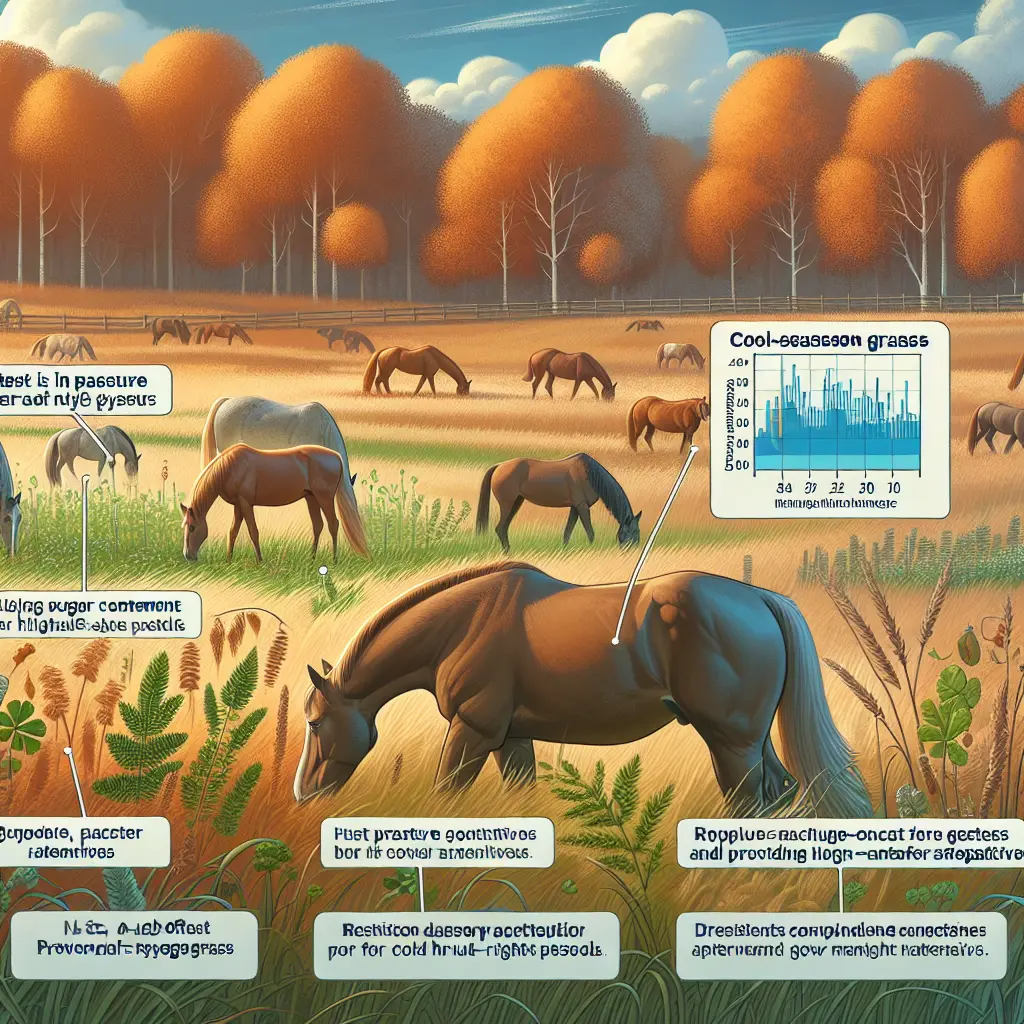 Cold nights and sunny days in late autumn make grass act like a sugar factory with nowhere to spend its product. As a result, November pastures — especially those dominated by ryegrass and other cool‑season species — often accumulate non‑structural carbohydrates (NSC) to levels that can trigger insulin spikes and laminitis in vulnerable horses. MidSouth Horse Review . Pasture testing and conservative turnout strategies are the most reliable ways to keep at‑risk animals safe. UMN Extension.
Understanding the Seasonal Sugar Shift
Photosynthesis and Nighttime Respiration
During daylight, plants make sugars via photosynthesis. When nights are warm, plants use these sugars for growth, which keeps tissue sugar levels low. However, when nights are cold, photosynthesis continues, but nighttime respiration slows, causing sugars to accumulate in plant tissues.
The Warm Day-Cold Night Mechanism
This accumulation usually happens in warm, sunny afternoons when frost events are preceded by cold nights. These textbook conditions create the perfect storm for a late-autumn sugar buildup, often referred to as "frost grass."
Grasses and Conditions: The Culprits
Which Grasses Are Risky?
Cool-season grasses like perennial ryegrass, orchardgrass, timothy, and meadow fescue are the biggest culprits. MidSouth Horse Review. Ryegrass often stands out with the highest sugar levels. Even some warm-season species such as bermudagrass could show higher sugar content during cold months.
Frost Effects
Frost and freeze events can trigger immediate spikes in fructan and sugar content, making brief post-frost grazing hazardous. Therefore, vigilance after frost events is crucial.
Identifying at-Risk Horses
Who Are Most Vulnerable?
Horses with Equine Metabolic Syndrome, Cushing’s disease, insulin resistance, or any horse with a laminitis history are most at risk. UMN Extension. Overweight or obese horses add to the list, emphasizing the need for proactive management.
Real Numbers: What Labs and Vets Look For
In specific conditions, winter pasture NSC values can rise to ~15% of dry matter, generally considered high for insulin dysregulated horses. Mad Barn. Testing can guide informed decisions about pasture management.
Managing the Sugar Surge
Testing and Monitoring
 Testing pasture and hay is essential when uncertain. NSC analysis provides actionable data, guiding the safety of turnout for specific horses. It helps in the selection of low-NSC hay or provides evidence for overseeding pastures with lower NSC species.
Smart Turnout Practices
For at-risk horses, restrict pasture access during high-sugar periods like late autumn. Consider drylot turnout and limit grazing times.
Grazing Muzzles: A Double-Edged Sword
While grazing muzzles reduce intake, they don’t eliminate sugar consumption. Constant monitoring and veterinary advice are essential.
Creating Safe Grazing Strategies
Step-by-Step Checklist
- Identify at-risk animals: Consult a veterinarian for baseline tests.
- Test forage NSC: Restrict grazing if NSC levels exceed 10-12%.
- Provide low-NSC alternatives: Soak hay to reduce WSC.
- Use environmental strategies: Avoid frost-grazing and create drylot turnouts.
- Monitor health closely: Immediate vet assessment for hoof heat or sudden lameness.
When to Call the Vet
Any sign of hoof heat, sudden lameness, or reluctance to move should prompt an immediate call to the vet. Quick action prevents potential laminitic episodes.
Conclusion: Take Charge of Grazing Practices
Strategic management and a proactive approach can help protect your horses from autumn's sugar dangers. By understanding the conditions that lead to sugar surges and implementing diligent monitoring and management practices, horse owners can create a safer forage environment. Equip yourself with the right products from our Equestrian Supplements or explore our Turnout Rugs for added protection.
Don't take November’s sugar threat lightly — a well-informed strategy can keep your horses healthy and happy all through the year. For more tips and products, visit Just Horse Riders today!