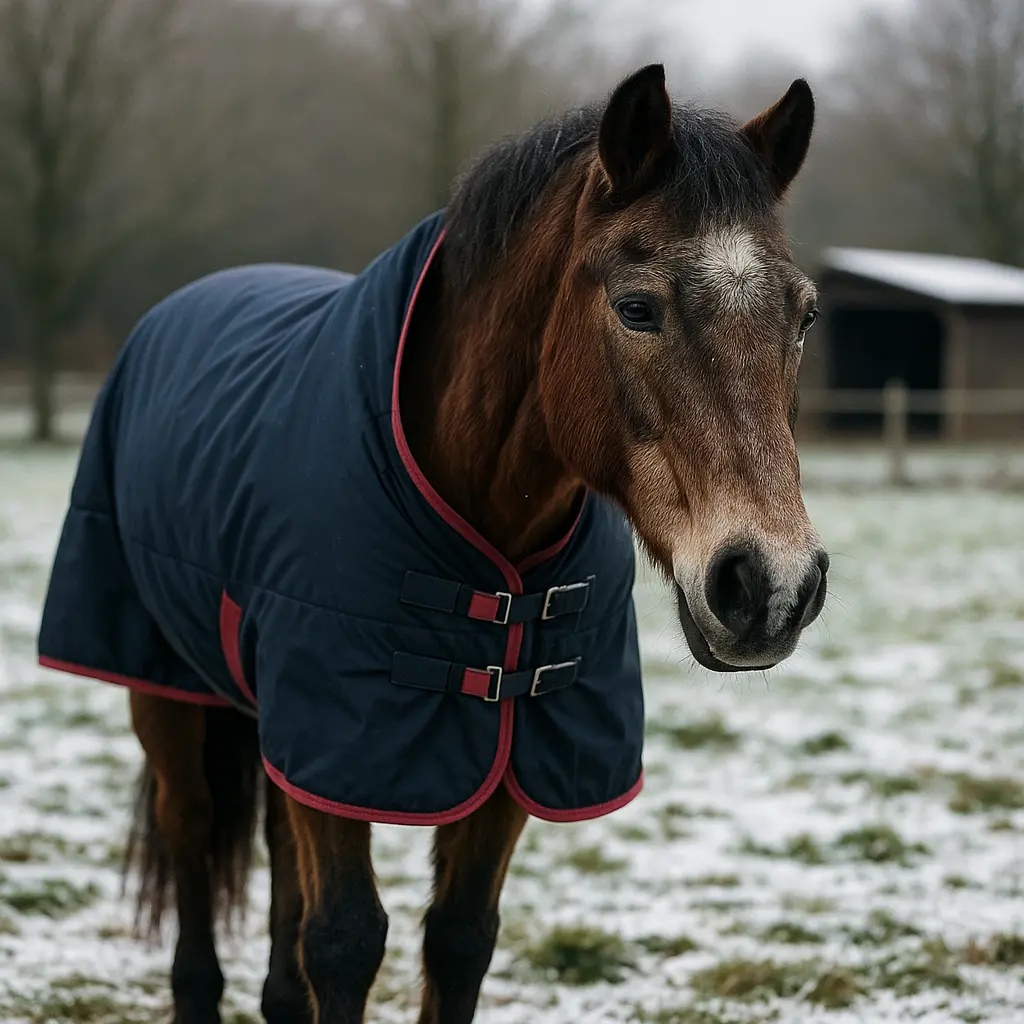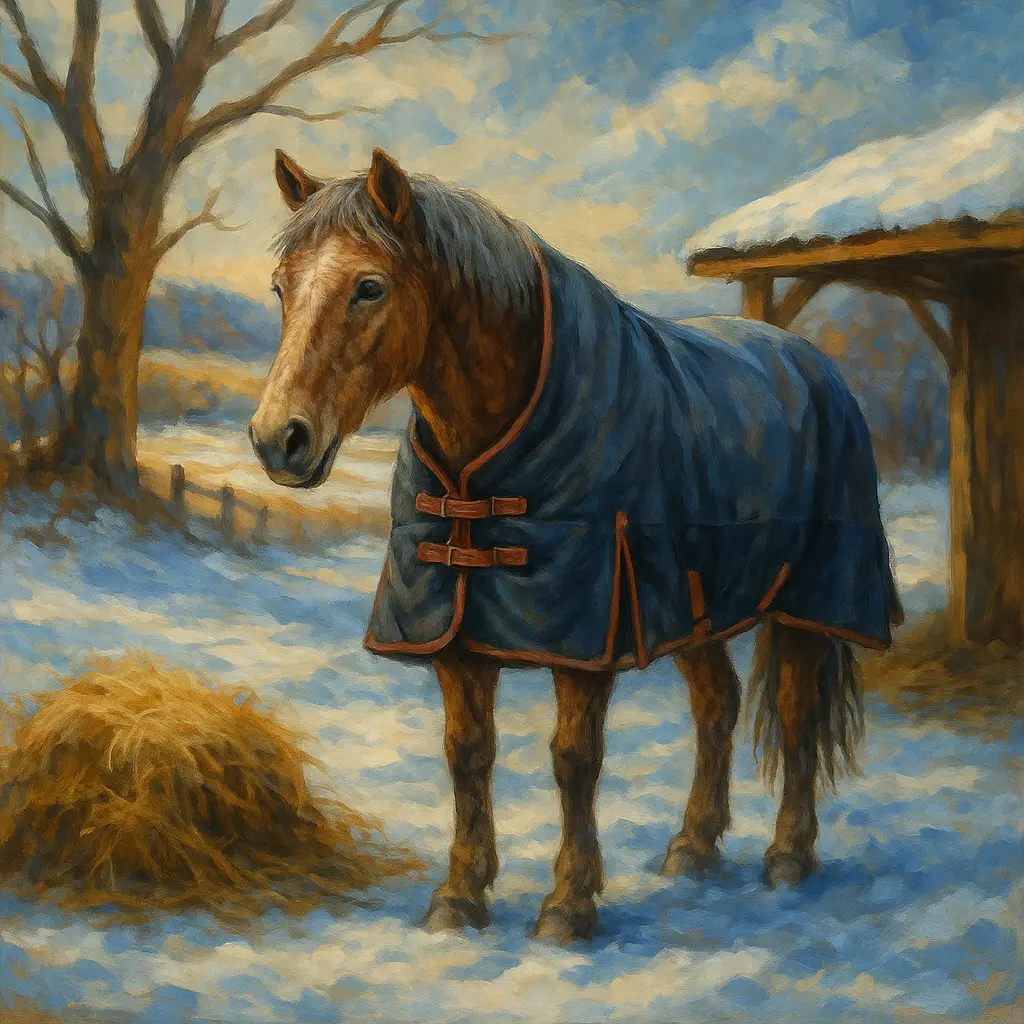
UK winters are damp, windy and changeable, and that makes rugging older horses feel tricky. The good news: most seniors cope brilliantly when you prioritise forage, shelter and smart, flexible rugging.
Key takeaway: Healthy, unclipped horses are comfortable down to around 5°C when dry thanks to their natural winter coat; add a well-fitted, breathable waterproof rug only when the weather (wet/wind), your horse’s condition, or clipping means they need help.
When does a senior horse need a rug in UK winter?
Rug a senior horse if they are shivering, losing weight, unhappy, clipped, or facing persistent wet and wind; many unclipped horses stay comfortable down to about 5°C when dry. Always judge by the horse and the weather, not how cold you feel.
Horses are superb thermoregulators. With a natural winter coat (roughly equivalent to a 4 Tog duvet), they typically stay comfortable between about 5°C and 25°C, far colder than most humans tolerate. They conserve heat via vasoconstriction (capillaries narrowing to reduce heat loss) and generate heat by shivering when needed. That’s why you’ll often see unmelted frost or snow on a comfortable horse’s back — the insulating coat traps warm air so well that surface ice doesn’t melt. It signals effective insulation, not necessarily cold.
“Horses don’t feel the cold like we do and will naturally grow a thick winter coat, so it’s important to assess whether rugging is necessary.” — British Horse Society
UK weather complicates things. Wet and wind strip heat fast: a horse that’s fine and unrugged at 6°C when dry may benefit from a waterproof turnout at 8°C in driving rain and strong wind. For seniors, add age-related considerations: reduced fat cover, dental issues affecting forage intake, or arthritis can all tip the scales towards rugging.
“If you have a horse who is shivering, losing weight and doesn’t seem very happy, it’s time to consider putting on a rug.” — Dr David Marlin, equine scientist (source)
“Knowing when horses need a rug is pretty obvious... If you remove that coat by clipping it off, you will need to replace that lost layer with a rug.” — Gillian Higgins, Horses Inside Out (source)
At Just Horse Riders, we recommend starting with your horse’s body condition and the hourly forecast. If they’re unclipped, in good weight, and have shelter, they may not need a rug until the weather is wet, windy or notably cold. If they’re clipped or dropping weight, build a simple layering system so you can respond quickly to changing conditions.
How do you choose the right rug type and fit for older horses?
Use a waterproof, breathable turnout for wet/windy days and a breathable stable rug indoors; layer lighter rugs for flexibility rather than relying on one heavyweight “duvet” rug.
For horses living out or turned out daily, a good waterproof turnout is non-negotiable during UK winters. Breathability and seam integrity matter as much as fill, because trapped moisture chills horses faster than being a little cool. Explore dependable, weatherproof options in our collection of winter turnout rugs, including designs that prioritise shoulder freedom and wither protection for older horses’ changing toplines.
Indoors, choose a stable rug that’s breathable and sits smoothly over the shoulder with adequate room at the chest to avoid pressure points. Our stable rugs range includes lightweight to warmer options you can layer if a cold snap hits. For quality and fit, many UK owners trust brands like WeatherBeeta and Shires for reliable cuts, robust hardware and solid waterproofing across seasons.
Fit is critical for seniors as their musculature and topline may have changed. Check that you can slide a flat hand under the neckline and chest without pinching; the rug should sit level, not pull back, and it must move with the shoulder without rubbing. Older horses are also more prone to rubs over the point of shoulder and hips — smooth, lining materials and well-placed darts can help.
Quick tip: when temperatures are changeable, multiple lighter layers outperform a single heavy rug. They trap air efficiently, are easier to dry if damp, and allow fine-tuning morning and evening as the UK weather swings.
How do you spot over-rugging and under-rugging fast?
Check daily by sliding your hand under the rug behind the elbow/shoulder — you want warm and dry, not hot and damp — and watch for shivering, weight loss or dullness.
This simple hand check is the best rapid indicator for comfort. However, research by Dr David Marlin shows we can easily miss moderate over-rugging: in tests, sweating was only detected by touch in one horse wearing four or five rugs, so don’t rely on feel alone. Combine the hand check with close observation of demeanour, appetite and droppings.
Under-rugging signs include shivering, stiffness, weight loss, poor appetite and a miserable demeanour. Over-rugging signs include sweating, damp skin/hair, lethargy or weight loss from chronic overheating. Remember, sweat under a rug chills quickly once temperatures drop — better to be slightly cool and dry than hot and damp.
“When you cover a horse with heavyweight duvet style rugs, you compromise his ability to regulate his own body temperature... be very vigilant – on a warm and sunny winter’s day, make sure he can sweat and cool down or a rug can have a debilitating effect and your horse even lose weight!” — Thunderbrook Equestrian (source)
Pro tip: frost on the back of an unrugged horse that’s bright, eating and moving well is a green flag for effective coat insulation — don’t rush to rug just to melt it.
What really keeps older horses warm in winter?
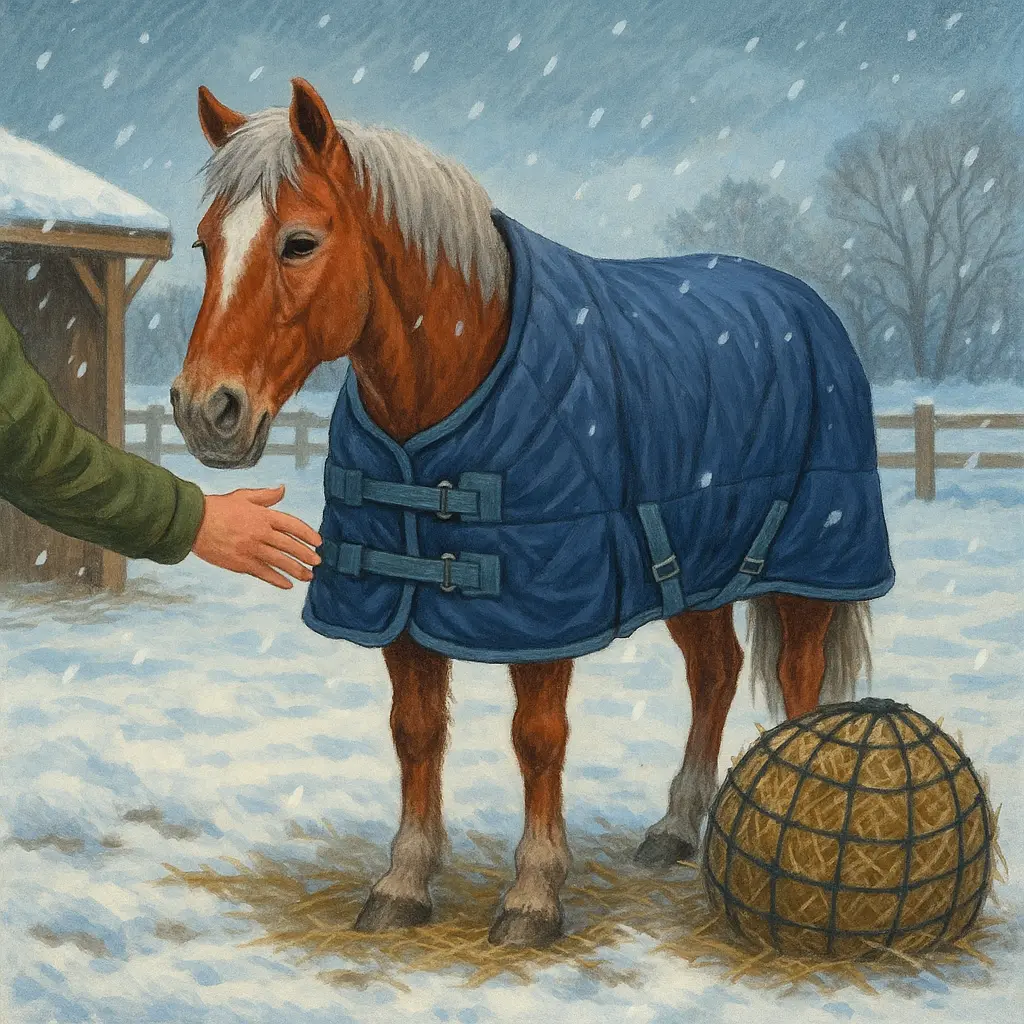
Forage, unfrozen water and shelter are your senior’s core heating system; rugging is a support act when weather or condition demands it.
Fibre fermentation in the hindgut produces heat — it’s your horse’s central heating. As temperatures fall, increase hay or haylage rather than piling on rugs. In extreme cold (around -15°C), horses without rugs may consume an entire small bale per day to meet heat demand. For most UK winters, simply ensure ad-lib forage or small, frequent nets to keep the gut working and your horse warm from the inside out.
Use slow feeders or well-tied nets to extend chewing time, support digestion and reduce boredom. If weight management is a concern, choose lower-calorie forage and slow-feed rather than restricting fibre. Many older horses also benefit from targeted nutritional support in winter; explore our range of supplements to help maintain condition, joints and overall wellbeing alongside veterinary advice.
Water is just as important. Check buckets and troughs at least twice daily (more in a freeze). Add warm water to make it palatable and reduce the risk of freezing overnight — seniors are especially vulnerable to reduced drinking and impaction risk when water is icy.
Provide a field shelter or natural windbreak to reduce wind-chill and give your horse choice. A horse that can move in and out of shelter will often need less rugging. If you’re transitioning from summer turnout to winter stabling, do it over 10–14 days as advised by the British Horse Society (BHS winter care guidance) to protect gut health and reduce the risk of colic. Indoors, keep ventilation high and forage available at all times.
Finally, coat care matters. Horses kept without rugs often show superior skin and coat condition through winter. Avoid over-grooming unrugged horses — natural oils are their waterproofing. Do remove mud where tack sits to prevent rubbing.
How should you manage clipped, arthritic or poor-doer seniors?
Clipped or weight-losing seniors generally need layered rugs and extra forage; arthritic horses benefit from staying warm and dry, steady routines and regular, gentle movement.
If you clip, you remove a vital insulating and waterproofing layer, so you’ll need to replace it. Rather than one heavy rug, layer lighter, breathable rugs and adjust to the day’s weather. Consider a light exercise sheet for warming up and cooling down after work; brands like LeMieux offer excellent options that sit well and won’t flap.
Arthritic horses often feel stiffer in cold, damp weather. Keep them dry with a good turnout and maintain daily movement — little and often is better than rare, long sessions. Warm up and cool down carefully, and if you use leg protection for work, choose breathable options from our horse boots & bandages collection to support limbs without trapping moisture.
Hoof care intensifies in a UK winter. Mud, persistent wet and reduced movement raise the risk of thrush, white line disease and mud fever. Pick out hooves more frequently, provide a dry standing area, and manage moisture with appropriate care products. Many owners turn to formulations from trusted brands like NAF, and keep winter-friendly brushes and tools to hand from our grooming range. If snow arrives, check for snowballing in the hooves and remove promptly.
Remember that seniors can lose weight quickly in cold snaps. Increase forage first and talk to your vet if you see appetite changes, poor dentition affecting hay intake, or weight loss despite good access to fibre.
What’s a simple, effective day-by-day winter routine for an older horse?
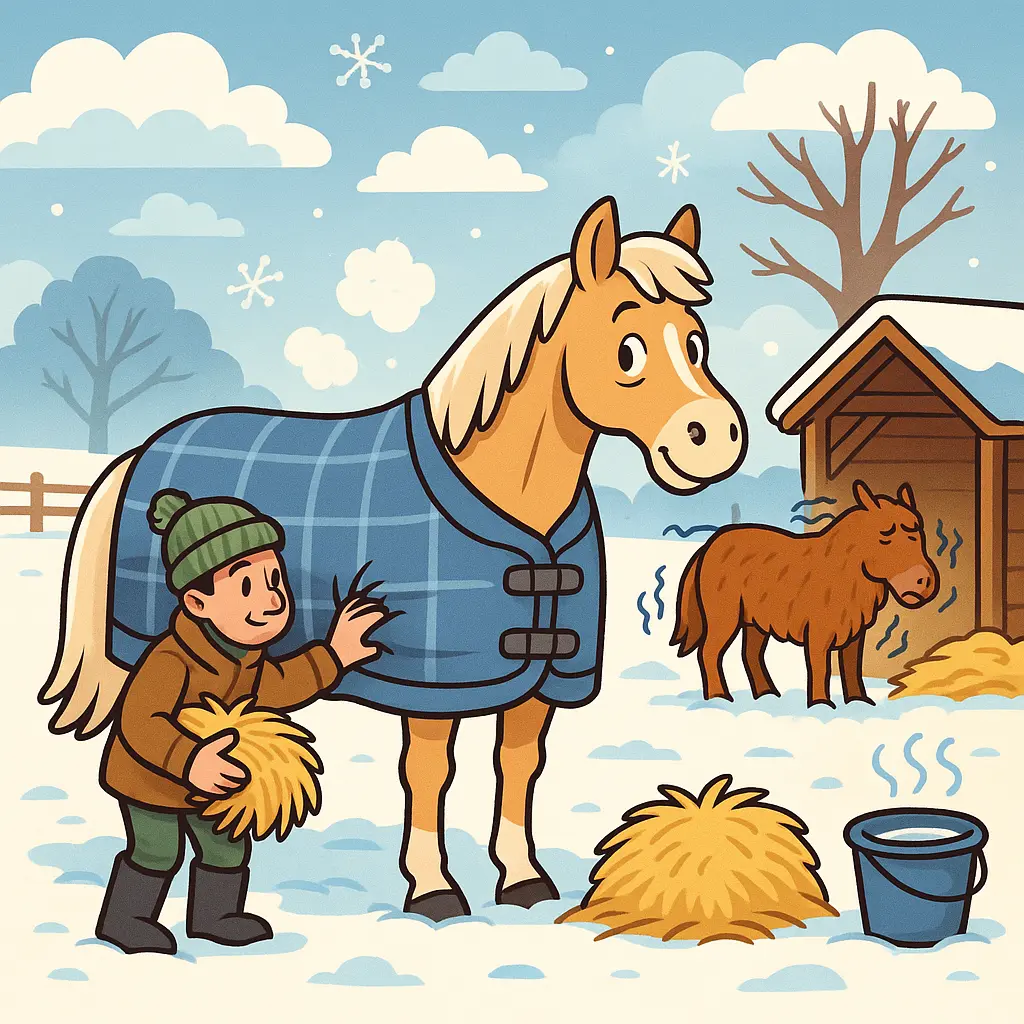
Check rugs and water twice daily, keep fibre available almost constantly, and adapt layers to wet/wind rather than the calendar.
- Morning: quick weather check; hand under the rug behind the elbow — aim for warm and dry; top up hay/haylage; confirm water is unfrozen and palatable; pick feet.
- Midday (if possible): remove or open rugs in sunny spells; close up again before dusk if temperature drops.
- Evening: repeat the rug hand check; refill forage; add warm water to buckets if freezing is forecast; check demeanour, droppings and appetite.
- Weekly: weigh-tape and body condition score; note changes and adjust forage/rugs accordingly; inspect high-rub areas (shoulders, withers, hips).
- When stabling more: ensure excellent ventilation and continuous fibre; follow the BHS 10–14 day transition rule for big routine changes.
Quick tip: trust your instinct. If your senior seems “a bit off” — quieter, not finishing hay, or stiffer than usual — adjust something (forage, layer, shelter access) and monitor, and call your vet early if concerns persist.
Which products make winter easier for seniors?
Build a kit around a waterproof turnout, breathable stable layers, flexible add-ons and daily care essentials.
- Waterproof outer: Choose from our proven turnout rugs for reliable weather protection in rain and wind.
- Indoor layers: Keep a couple of breathable options from our stable rugs range to mix and match as temperatures swing.
- Quality brands: UK riders rate WeatherBeeta for rugged waterproofing and Shires for fit and value across weights.
- Exercise/cooling: A neat sheet from LeMieux adds warmth for clipped seniors before and after work.
- Leg and hoof support: Breathable protection from our horse boots & bandages and targeted care from NAF help manage winter mud and moisture.
- Nutrition back-up: Keep condition and joints supported with options from our supplements collection (always alongside veterinary advice).
At Just Horse Riders, we recommend prioritising breathability and adjustability in everything you choose. A system you can tweak in minutes is far more effective — and kinder to your senior — than a single heavyweight rug that risks overheating.
Conclusion: Start with forage, water and shelter, add a breathable waterproof when the weather or condition calls for it, and layer lightly for fine control. Check daily, adjust quickly and you’ll keep your senior comfortable, healthy and happy through every twist of a UK winter.
FAQs
What age is a horse considered “senior” for winter management?
There’s no hard line, but many owners and vets treat 15+ as “senior”. Older horses often have reduced heat tolerance, changes in metabolism and a higher risk of arthritis flare-ups, so they deserve closer winter monitoring.
My unclipped senior isn’t rugged and has frost on their back — are they cold?
Not necessarily. Frost on top of a fluffed-up winter coat usually shows the coat’s insulating air layer is working. If your horse is bright, eating and moving well, and the skin under the coat is warm and dry, they’re likely comfortable.
Is one heavy rug better than layering for older horses?
Layering lighter rugs is usually better. It traps air efficiently, allows quick adjustments to wet/wind/temperature swings, and helps avoid the overheating risk that can come with a single heavy “duvet” rug.
How can I tell if I’ve over-rugged if I can’t feel sweat?
Use the hand-under-the-rug test daily and watch behaviour and appetite. Dr David Marlin’s work shows moderate over-rugging can be hard to detect by touch alone, so also monitor for lethargy, damp skin/hair and weight changes, and be ready to remove a layer on milder or sunny days.
What should my senior eat in very cold weather?
Forage first. Fibre fermentation in the hindgut generates heat, so increase hay/haylage as temperatures drop. In extreme cold, horses may eat dramatically more (e.g., up to a small bale/day around -15°C). Keep water unfrozen and palatable to maintain intake.
How long should I take to move my horse from turnout to stabling in winter?
Transition over 10–14 days. This BHS-recommended approach helps the gut adapt to diet and management changes, reduces colic risk and gives you time to calibrate forage and layers for comfort indoors.
Should I groom my unrugged senior as normal in winter?
Be gentle and avoid over-grooming, which strips the natural oils that waterproof the coat. Do remove mud where tack sits, and keep manes/tails manageable to prevent rubbing and sores.