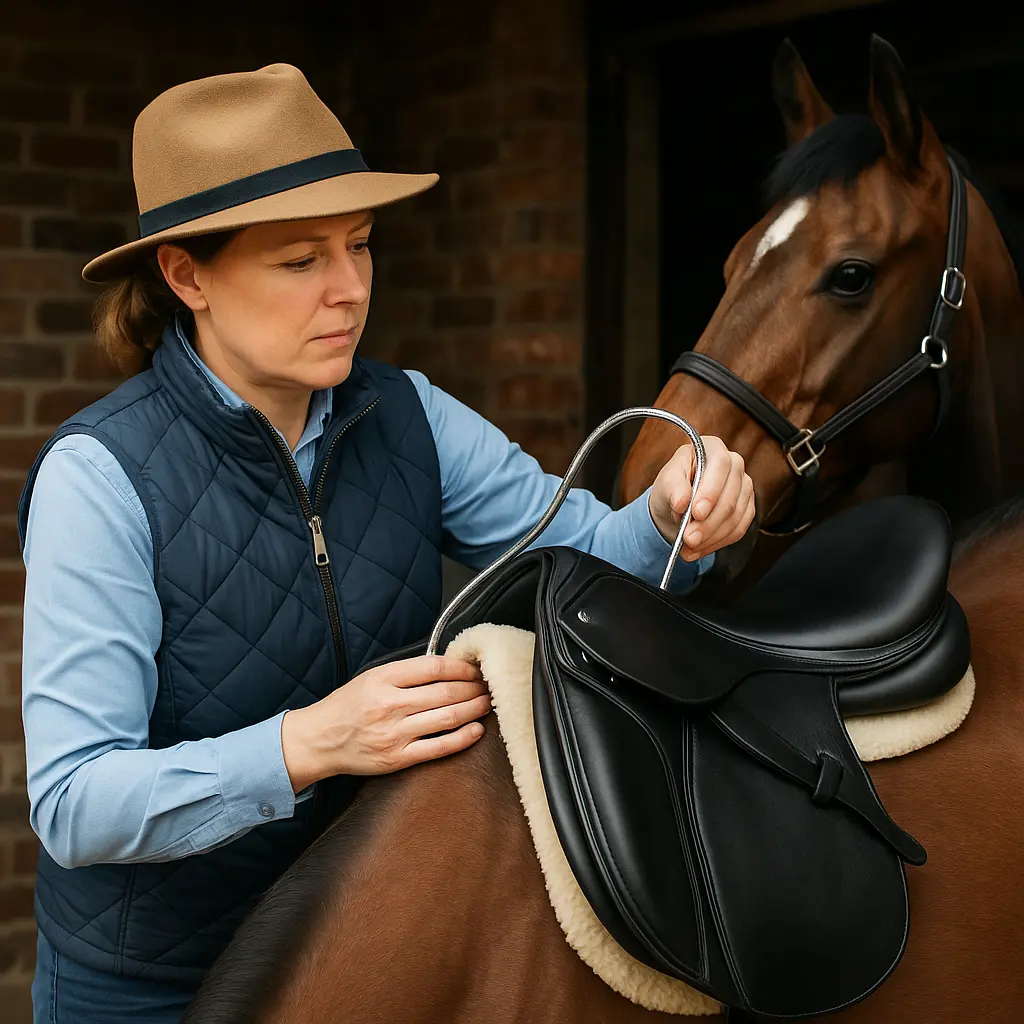
Choosing the right saddle fitter directly affects your horse’s comfort, soundness and performance — and in the UK there’s no legal requirement for anyone to be qualified. Here’s how to secure gold-standard fitting every time.
Key takeaway: Book an SMS Registered Qualified Saddle Fitter with the City & Guilds 4751-03 Certificate, 3+ years’ experience and ongoing CPD — then make sure they follow the SMS 15‑point process on the day.
What makes a saddle fitter truly qualified in the UK?
The UK benchmark is an SMS Registered Qualified Saddle Fitter who holds the City & Guilds Certificate in Saddle Fitting (4751-03) with at least three years’ supervised fitting experience and compulsory CPD. This pathway is endorsed by the British Horse Society and is the only industry-recognised qualification route.
The Society of Master Saddlers (SMS) sets the standards and, together with City & Guilds, assesses trainees across five units: saddle assessment and fault identification, horse conformation/movement/condition, template taking, saddle fitting, and flocking adjustments, plus a synoptic written exam. Candidates typically attend an SMS/BETA Introductory Saddle Fitting Course, log substantial supervised experience, gain the Society’s flocking qualification (or work with a Level 3 City & Guilds saddler for major adjustments), then sit the City & Guilds assessment to become Registered.
“Saddle fitters… will carry out static and dynamic assessments of horse and rider, measure a horse for the purpose of having a saddle made and assess, evaluate and advise horse owners on the fit of a saddle.” — British Horse Society
SMS training also instils the ‘Gold Standard 15 point process’ so qualified fitters evaluate your horse’s condition and conformation, assess the back, prepare templates, then fit and adjust the saddle methodically. Priority for some course places is given to those employed by UK trade/manufacturing members, which helps ensure regional needs — such as fitting wide-backed native breeds — are well served.
How do you check a fitter’s credentials today?
Use the Society of Master Saddlers directory to confirm Registered Qualified status and ask to see proof of the City & Guilds 4751-03 Certificate, flocking qualification/access to a Level 3 saddler, and current CPD. A reputable fitter will provide membership details, insurance and references on request.
Practical steps:
- Search the SMS website directory for “Registered Qualified Saddle Fitter” in your area (e.g. West Shropshire) and cross‑check contact details.
- Request evidence of City & Guilds 4751-03 and the SMS flocking qualification (or confirmation they work with a fully qualified Level 3 City & Guilds saddler for major adjustments).
- Confirm they conduct both static and dynamic assessments and take templates before recommending changes or new saddles.
- Ask about CPD and refresher courses — SMS fitters must keep skills current.
“Be able to work safely around the horse and handler… Check if the horse has any behavioural issues [or] symptoms of pain or contagious diseases… Carry out a visual risk assessment.” — City & Guilds / SMS Qualification Handbook
Red flags include: no template taking, no ridden assessment, reluctance to show credentials, or pressure to buy without a thorough horse evaluation.
What happens during an SMS-standard fitting?
An SMS-standard fitting follows a structured 15‑point process: static and dynamic assessment of horse (and rider), template taking, saddle assessment and adjustments (including flocking), and a risk‑managed ridden test. You’ll finish with clear advice and a follow‑up plan.
Expect your fitter to start with a welfare‑first check: observing behaviour, back palpation and general condition, then conformation and movement in-hand. They’ll take wither/back templates and evaluate your existing saddle for tree integrity, panel symmetry, and wear. A static fit follows — gullet clearance, balance, panel contact, girthing — then a ridden assessment to see how the saddle behaves in motion. Many fitters use arenas with mirrors, video, or treadmills for more complex rehab cases to analyse straightness and back use.
Minor flocking tweaks are common to fine‑tune balance; major adjustments or tree decisions are deferred to a fully qualified saddler where needed. A professional will explain findings, recommend next steps (e.g. different width, panel support, girthing), and schedule a recheck after your horse has adapted or condition changes seasonally.
Pro tip: Bring your normal pads, girths and bridle. The saddle must be assessed with the tack you actually ride in.
Seasonal saddle fit in West Shropshire: when should you book?
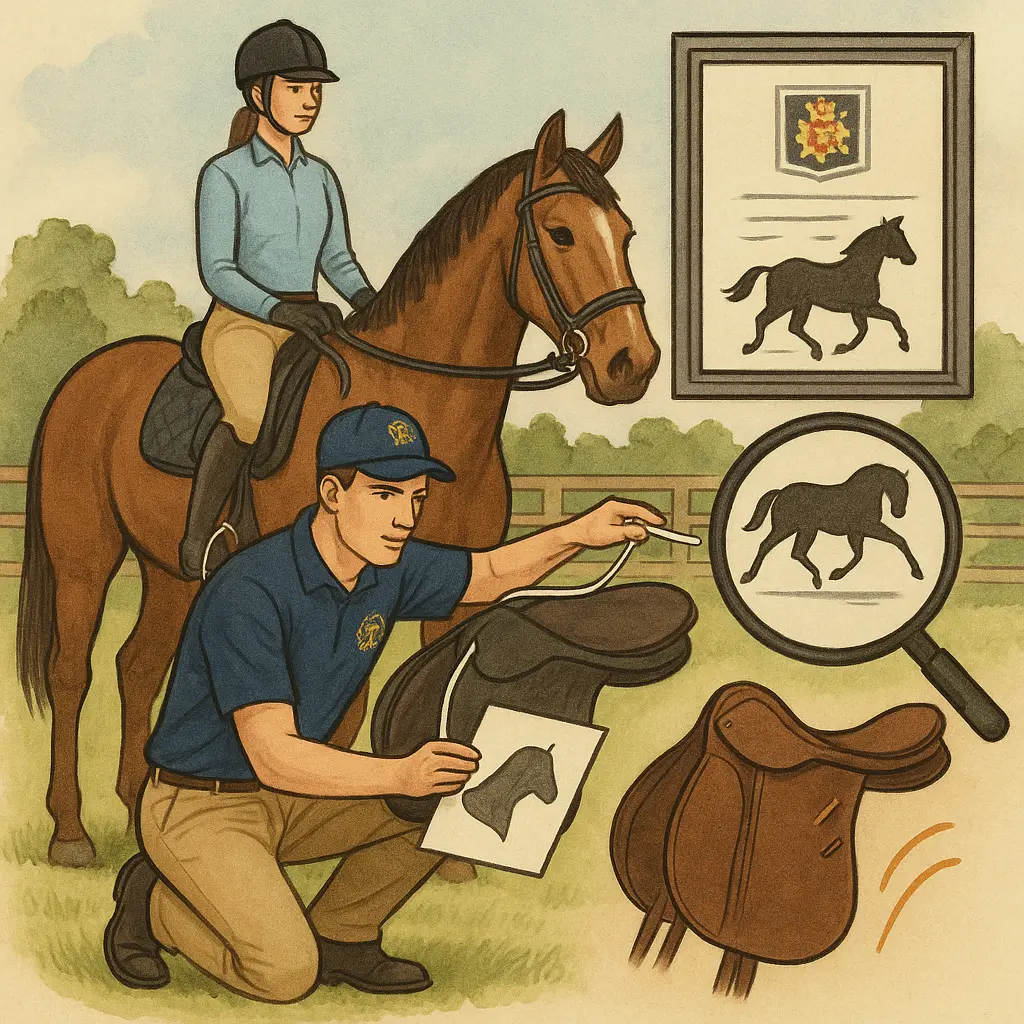
Book a fitting at least annually and again after winter, as West Shropshire’s damp, hilly winters (average lows 2–5°C Nov–Feb) and reduced turnout can change back shape, especially in flat‑backed and native types. Plan checks after notable weight loss, muscle atrophy or training changes, and before stepping up workload in spring.
Cold, wet months, more rugging and less movement often equal topline dips and saddle widening needs; equally, spring/summer fitness can build muscle, requiring rebalancing or narrower widths. A qualified fitter’s dynamic assessment accounts for these shifts and prevents pressure points that can spiral into behavioural or soft‑tissue issues.
At Just Horse Riders, we recommend managing seasonal variables proactively:
- Choose appropriate winter turnout rugs to keep muscles warm and reduce rain scald that affects comfort under the saddle.
- Use breathable stable rugs for consistent temperature overnight and to protect topline while stabled.
- Keep the back clean and supple with a regular grooming routine so your fitter can palpate accurately and the panels sit on a clean coat.
- Support recovery and conditioning with targeted supplements for muscle and joints where appropriate and vet‑approved.
Quick tip: Book your spring check at the same time you plan your competition calendar so fit is optimised for increased schooling, hacking and travel.
Which fitter is best for rehab, wide or flat‑backed horses?
Choose an SMS Registered Qualified Saddle Fitter who collaborates with a Level 3 City & Guilds saddler for major reflocking and has proven experience with rehab cases and wide‑backed natives. Their SMS training includes conformation, movement and fault identification units — vital for conditions like kissing spines.
Wide or flat‑backed horses (common among cobs and Shire types) often need wide tree saddles with broad panels and careful flocking to distribute pressure. For rehab horses, dynamic evaluation is non‑negotiable: your fitter should watch transitions, lateral work as appropriate, and how the horse uses the thoracolumbar region. Templates ensure the tree shape matches the back contours, and flocking adjustments finesse balance as musculature changes through the rehab timeline.
Pro tip: Ask how they’ll stage adjustments across your rehab plan. Small, regular flocking tweaks prevent over‑correction and help soft tissues adapt comfortably.
For comfort and protection alongside your programme, many owners pair fitting work with supportive ground gear like breathable horse boots and bandages for controlled exercise, always under professional guidance.
What should you do before and after the appointment?
Present a clean, sound horse in a safe, level area, bring all usual tack and be ready to ride; afterwards, follow your fitter’s guidance, ride for feel rather than time, and book the advised recheck. Small preparations maximise the quality of the assessment.
Before your appointment:
- Groom thoroughly and have the back clean and dry to ensure accurate palpation and panel contact.
- Have your normal numnah/pads, girth and bridle to hand (plus any risers/shims you use).
- Wear secure, tidy riding kit so the fitter can evaluate your position — a properly fitted riding helmet and grippy women’s jodhpurs and breeches help you ride effectively during the test.
- Choose a quiet arena or safe track for ridden assessment; if hacking is necessary, ensure visibility and safety for all.
Afterwards:
- Follow the fitter’s break‑in or adaptation advice, which may involve shorter, more frequent schools for a week while flocking settles.
- Monitor sweat patterns, behaviour and way of going; note changes and share feedback at the follow‑up.
- Schedule the recommended recheck, especially after significant training or condition changes.
Quick tip: Keep a simple fit log with wither tracings, photos and notes on performance — ideal for tracking seasonal change and speeding up future fits.

What are the warning signs and common mistakes to avoid?
Avoid fitters who skip horse health checks, don’t watch you ride, won’t take templates, or refuse to discuss flocking and panel support — these fall short of SMS standards. In the UK it’s legal for anyone to fit saddles without qualifications, so diligence is essential.
Common pitfalls:
- Buying “to size” without a ridden assessment — movement changes everything.
- Ignoring signs of pain or behavioural flags (ears back at girthing, cold‑backing, tail swishing) before fitting.
- Accepting a quick sale without tree, panel or symmetry checks.
- Skipping follow‑ups after notable weight/muscle changes or rehab milestones.
Remember, the SMS/City & Guilds route is the only industry‑recognised pathway; while anyone can legally sell or fit a saddle in the UK, the welfare‑first approach and standardised assessment come from SMS training (source).
What does it take to become an SMS saddle fitter?
Expect 2–3 years from first course to qualification: the SMS/BETA Introductory course, supervised work experience, the Society’s flocking qualification (or Level 3 saddlery partner), and the four‑day City & Guilds 4751‑03 assessment, followed by compulsory CPD. This ensures both technical and welfare competencies.
The City & Guilds/SMS assessment covers:
- Saddle assessment and fault identification
- Horse conformation, movement and condition
- Template taking
- Saddle fitting (static and dynamic)
- Flocking adjustments
- A synoptic written exam
“Candidates should… be, or have the services of, a fully qualified saddler holding Level 3 City & Guilds saddlery qualifications to carry out major saddle flocking and adjustments.” — Society of Master Saddlers
For those interested in the craft side, the Level 3 Bespoke Saddler apprenticeship culminates in the industry‑recognised Diploma (Bridle and Saddle Making) and leads to SMS membership progression after experience, reinforcing the link between expert saddlery and top‑tier fitting.
Conclusion: your next steps
Book an SMS Registered Qualified Saddle Fitter, ask to see City & Guilds 4751‑03, expect a full 15‑point assessment and a ridden check, and plan seasonal re‑fits around workload and weather. At Just Horse Riders, we’re here to help you prepare: keep your horse comfortable with the right turnout rug, a breathable stable rug, regular grooming kit care and supportive supplements so every fitting starts from the best possible baseline.
FAQs
What qualifications mark a truly rehab‑savvy saddle fitter in the UK?
An SMS Registered Qualified Saddle Fitter with the City & Guilds 4751‑03 Certificate, 3+ years’ experience and the flocking qualification (or Level 3 saddler partnership) is the gold standard for rehab cases, including kissing spines (SMS).
How do I check if a fitter near West Shropshire is properly trained?
Use the Society of Master Saddlers directory to confirm “Registered Qualified Saddle Fitter” status and verify City & Guilds 4751‑03; the BHS endorses this route (BHS).
Can an unqualified person fit saddles for horses with kissing spines?
Legally yes in the UK, but don’t risk it — choose an SMS‑trained fitter skilled in dynamic assessment and fault identification to protect welfare (source).
How often should a saddle be refitted for flat‑backed horses?
At least annually and after significant shape changes (e.g. post‑winter weight loss), with templates and flocking adjustments used to maintain balance (Nutwell Saddlery).
What exactly happens during the fitting — will my horse be ridden?
Yes. An SMS‑standard fitting includes static checks, template taking and a ridden assessment to evaluate balance and pressure under motion, adjusting flocking as needed (SMS/City & Guilds Handbook).
What should I have ready on the day?
A clean, dry horse; your usual pads, girth and bridle; a safe arena; and suitable riding kit such as a fitted helmet and comfortable breeches for accurate rider assessment.
Are there SMS fitters who specialise in wide horses in Shropshire?
Yes. Use the SMS finder tool; SMS training covers conformation for wide/flat backs, which is particularly relevant for local cobs and Shire types common in the region.