

The Unpredictable Weather and Its Impact on Equine Worm Burden
As equine enthusiasts convened at the Tack Room Forum recently, a surprising contender for the hottest topic emerged—unpredictable weather and its impact on equine worm burden. Horse owners shared startling stories of rising vet bills and struggling horses, particularly attributing these woes to erratic weather patterns. Mild winters and unusually wet summers have created conducive environments for parasites like redworms, triggering heavier infestations that defy even the most meticulous management strategies. What can horse owners do to mitigate these challenges?
Why Weather Is the Silent Driver of Worm Problems
Horses frequently encounter cyathostomins (small redworms), the quintessential equine parasites. These pests thrive under specific weather conditions, and in warm, moist environments, their lifecycle speeds up dramatically. A redworm egg, for instance, can hatch and become infective in as little as five days when moisture levels are optimal. Surprisingly, dry spells can exacerbate the problem too, as horses tend to graze closer to the ground and nearer to dung piles, thereby increasing their ingestion risk (source).
Real-world Impacts of Weather on Worm Burdens
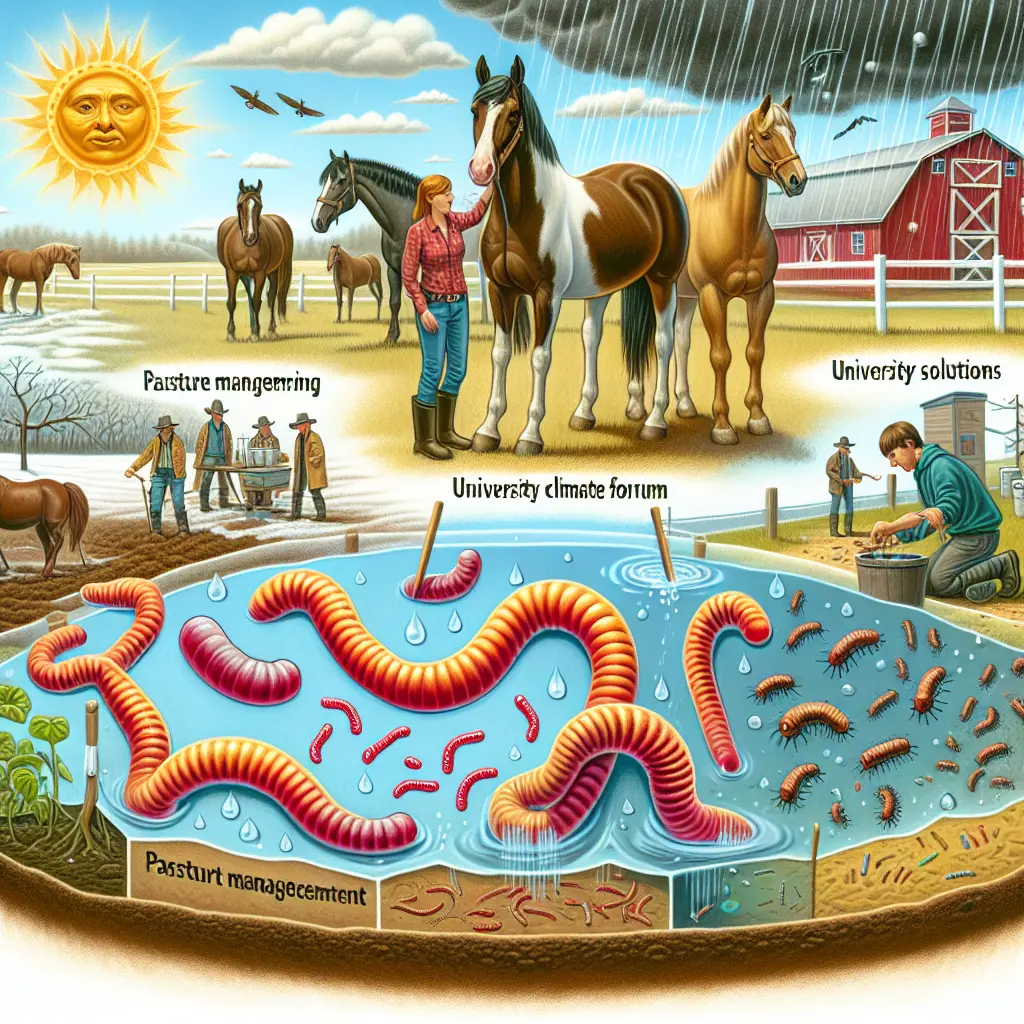
Consider this real-world account from a UK rider, whose shared experience from the forum noted a dramatic doubling in their herd's egg counts following a particularly soggy autumn. This echoes warnings from experts that spring and autumn are peak periods for parasites due to more moderate temperatures (source). In regions like New Zealand's Southland, predictive models indicate that climate shifts will extend the “suitable development period” for free-living larvae, resulting in swollen populations fueled by amplified egg hatching on pastures (source).
Climate Change: An Amplifier of the Threat
The erratic weather patterns aren’t a random occurrence—climate change plays a significant role in shifting these patterns, thereby hampering parasite control efforts. A collaborative study by Martin Nielsen from the University of Kentucky and New Zealand researchers foresees:
- Larger parasite burdens in areas that are warming from temperate climates.
- Faster dewormer resistance as extended warmer periods enable more resistant worms to survive and proliferate (source).
In cooler places such as Southland, milder winters result in fewer “cold days,” allowing larvae to linger on grass longer. This inevitably increases infective L3 larvae (EL3) uptake, while adult burdens remain constant—raising overall risk levels (source).
Case Study: Milder Winters and Worm Counts
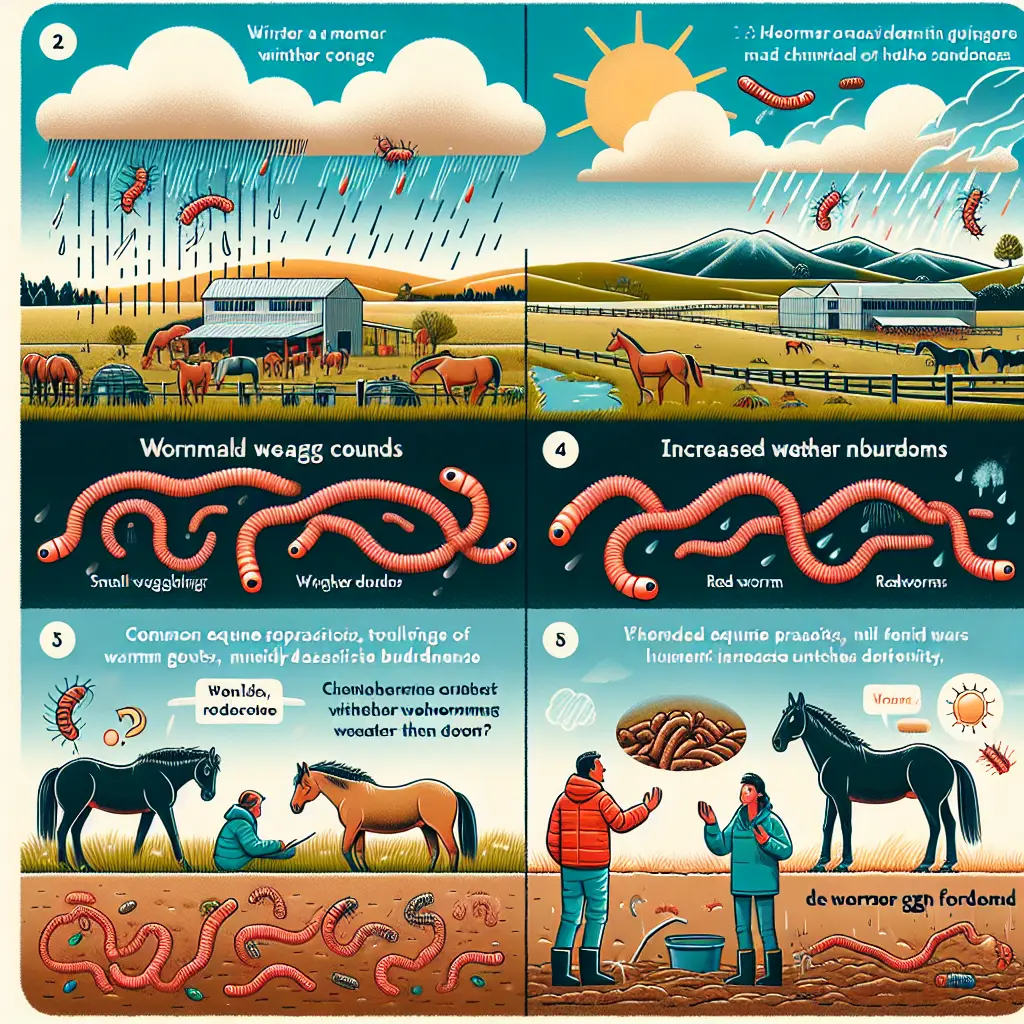
Forum users have noted, “Our mild winter last year resulted in no hard frost to kill larvae. Consequently, worm counts skyrocketed by the spring!” This statement aligns perfectly with predictions of disrupted seasonality (source).
Weather Conditions and Their Impact on Equine Worms
| Weather Condition | Impact on Worms | Example Effect |
|---|---|---|
| Mild, Wet Winters/Summers | Speeds up egg-to-larva cycle; boosts populations | Higher encysted redworm risk; recommend testing every 6-8 weeks (source) |
| Hot, Dry Summers | Horses graze near dung; infection risk increases | Overgrazed paddocks magnify exposure risks (source) |
| Cold, Hard Winters | Kills free-living stages; low risk | Optimal for control—pair with winter dosage (source) |
| Climate Shift (Warmer Averages) | Longer larval seasons; bigger burdens and resistance | Southland sees major EL3 rise; accelerates anthelmintic resistance (source) |
Vulnerable Horses and Associated Health Risks
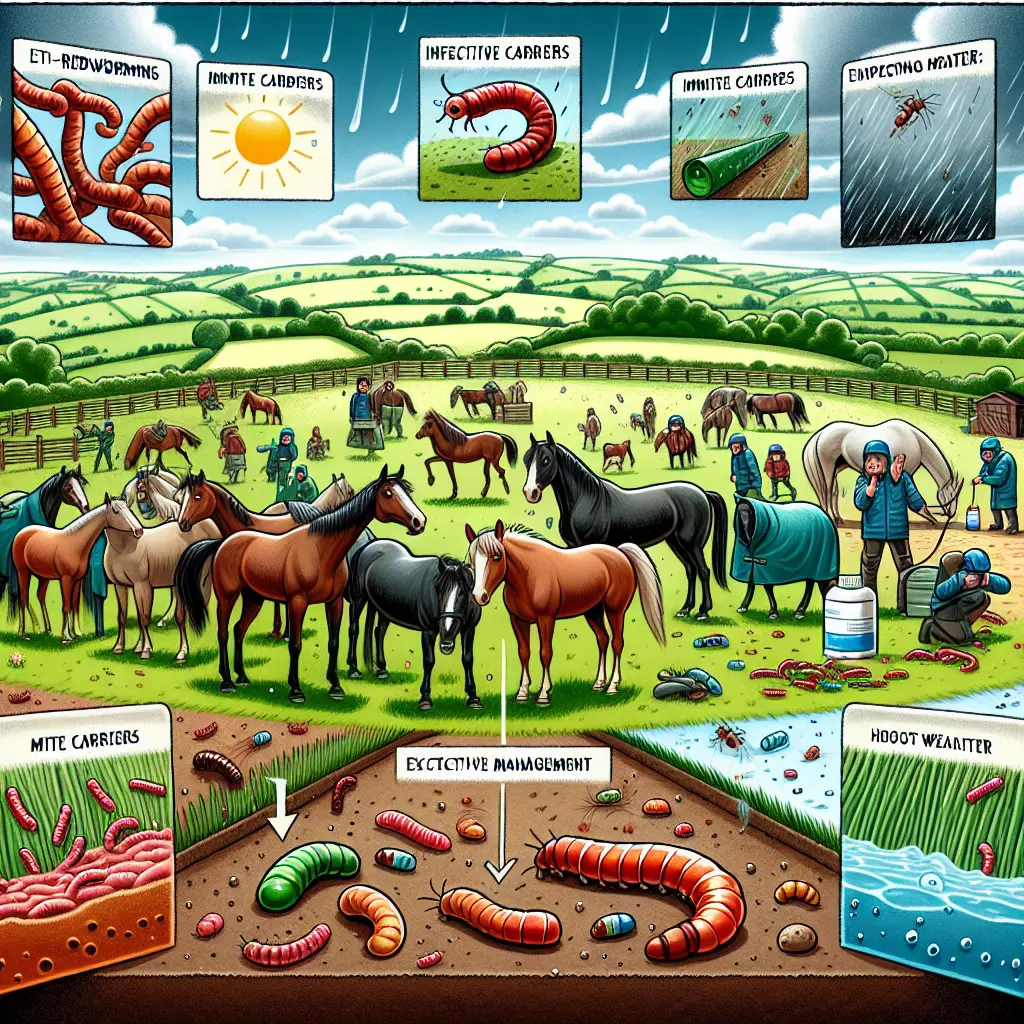
Young, elderly, or stressed horses are among those most vulnerable. Ascarids seriously affect foals under the age of one, whereas small strongyles present a threat to all age groups. Humid weather also provides ideal conditions for mites that bear tapeworm eggs, thriving in lush pastures but rare in arid environments (source).
Research shows links between weather and immune dips: summer heat and humidity reduce red blood cells and hemoglobin, weakening resistance (source). Pest outbreaks in the spring lead to an immune response elevation, as white cell counts rise to counter infections arising from parasites (source). Veterinarians from the forum recommend close monitoring of vulnerable horses during wet seasons since burdens can rapidly become dangerous (source).
Practical Steps: Beating Weather-Driven Worm Challenges
Moving beyond a traditional calendar-based dosing approach, targeted action is key. Strategies to outsmart weather-driven worm challenges include:
- Worm egg counts (FEC) carried out in spring, summer, and autumn—potentially every eight weeks in particularly risky weather conditions (source).
- Biannual tapeworm tests, with a proactive redworm treatment given during the winter months (source).
- Adopting pasture management practices such as daily poo-picking, rotating grazing areas, and resting fields (source).
UC Davis Guidelines for Targeted Treatment
The UC Davis guidelines offer pragmatic approaches, adjusting according to 'shedder' status (eggs per gram, EPG):
| Shedder Level | Spring Treatment | Fall Treatment |
|---|---|---|
| Low (<200 EPG) | Ivermectin or moxidectin | Ivermectin + praziquantel or moxidectin + praziquantel |
| Moderate (200-500 EPG) | Ivermectin or moxidectin; followed by a second dose in late summer | Ivermectin + praziquantel (September); moxidectin (November) |
| High (>500 EPG) | Similar to moderate, but with an additional June dose | Follows moderate regimen |
Given the increasing resistance, non-drug strategies are growing in importance. Climate models emphasize the necessity of robust pasture management strategies to ensure sustainable practices (source). The Tack Room consensus is clear: while weather may be unpredictable, testing and hygiene are controllable.
Final Thoughts from the Forum
The data from Tack Room Forum participants is compelling: Unpredictable weather amplifies worm burdens, yet by leveraging FEC, engaging in strategic dosing, and practicing diligent pasture management, horse owners can stay one step ahead (source). Share your weather-worm warfare tactics below—what’s working for you?
(Insights are based on the input of equine experts; always consult your veterinarian for tailored advice specific to your circumstances.)