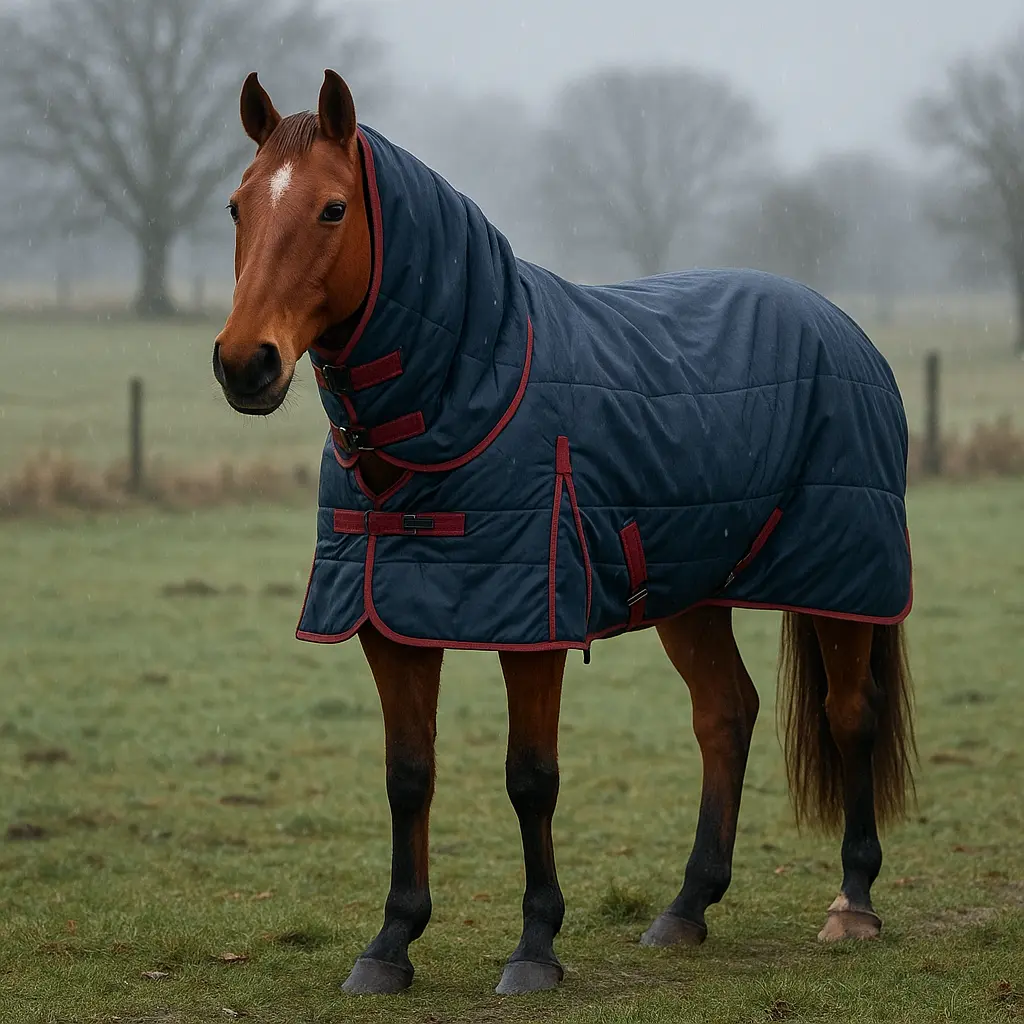
UK winters are wet, windy and changeable — and your horse’s comfort can swing with every cold front. The good news: most horses are far more cold-tolerant than we are, but the right rug at the right time makes all the difference in our climate.
Key takeaway: In the UK, start rugging when temperatures drop below 5°C or when it’s wet/windy, and always rug clipped, older, underweight or fine-coated horses. Use 150–250g at 0–4°C for most unclipped horses, 300g+ for clipped horses, and layer breathable turnouts with 100–200g liners for flexibility.
What temperature should you rug a horse in the UK?
Rug below 5°C, in wet/windy weather, and always for clipped, older, underweight or fine-coated horses. Horses with natural winter coats remain comfortable down to about 5°C without rugs, according to the British Horse Society (BHS).
This “5°C rule” aligns with UK field conditions: frequent wind chill and rain can strip warmth from even a hardy coat. As Just Horse Riders summarises from UK ISES research: rug when the air dips below 5°C, or if it’s wet/windy, and prioritise vulnerable horses (full guidance here). Crucially, that 5°C figure is for unclipped, healthy horses; once you clip a coat, you remove much of that natural insulation.
Start with lighter options and build up only if needed. For many UK days hovering around 8–14°C but damp and breezy, a waterproof 0g turnout keeps hardy horses dry without overheating. You’ll find a wide range of breathable, waterproof options in our curated selection of winter turnout rugs.
“Assess each individual horse based on their needs... Breeds with thinner coats (e.g., Thoroughbred), underweight, fully clipped, older or ill horses may need rugs to regulate body heat.” — British Horse Society
How much warmth does a rug really add?
Even light rugs add 4–16°C to coat surface temperature, and in sub-zero tests rugged horses held 24–30°C at the surface vs 12.5–18.5°C unrugged. In a UK study of 12 horses, light quilted rugs increased surface temperature by an average of 15.8°C, fleeces by 11.2°C, and sweet itch/fly rugs by 4.2°C (study summary).
During sub-zero UK weather (-0.5°C to 4.5°C), rugged horses’ surfaces stayed between 24–30°C versus 12.5–18.5°C for unrugged controls. That’s why even a seemingly “light” rug can be too much on a bright, cold day for hardy types, especially when they’re moving and generating heat.
“If a thick fill rug is used in inappropriate conditions, it will trap a lot of heat... placing stress on the horse, causing them to sweat. It’s much easier for a horse to warm themselves up than cool down.” — British Horse Society
Quick tip: Prioritise breathability and adjust daily. Modern designs from brands like WeatherBeeta balance waterproofing with airflow to reduce the risk of heat build-up in changeable UK conditions.
Which rug weight should I choose for today’s UK weather?
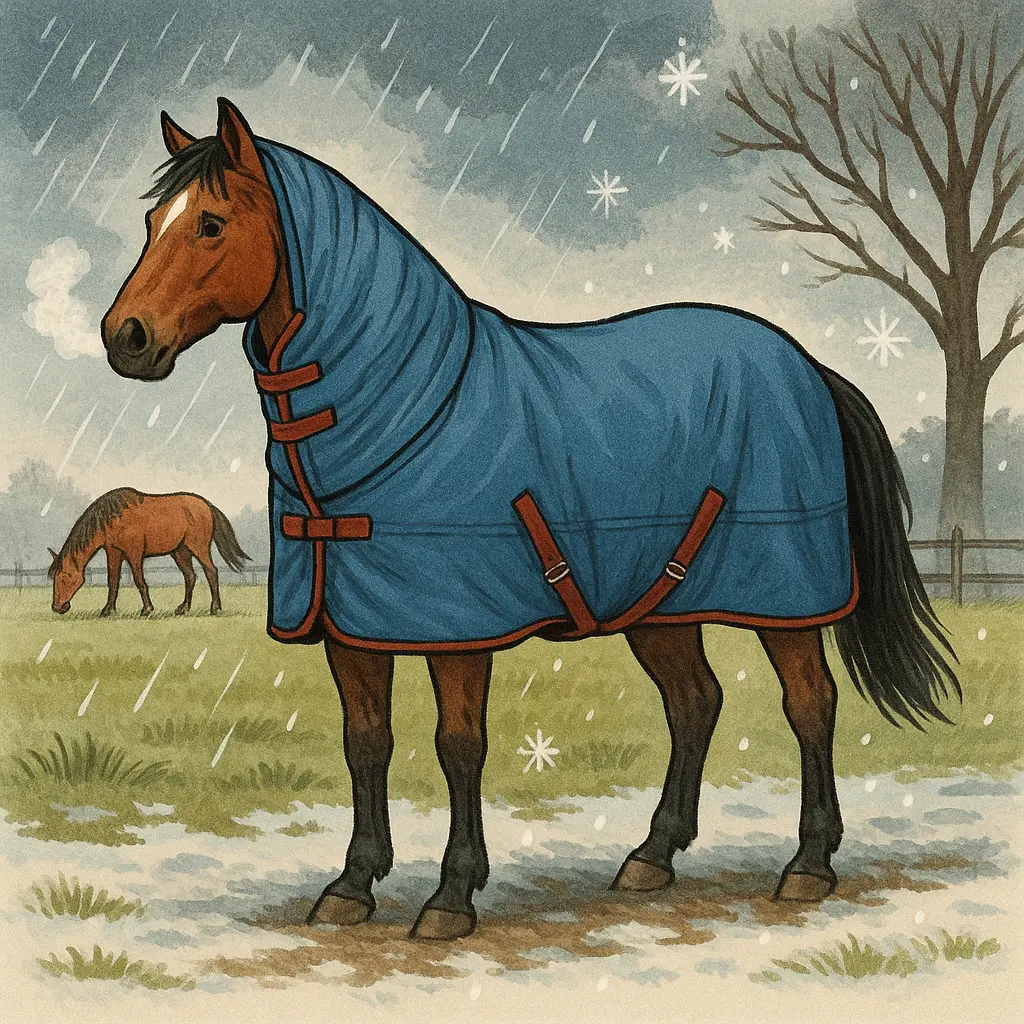
Use 150–250g (mediumweight) at 0–4°C for most unclipped horses and 300g+ (heavyweight) for clipped horses, adding neck covers in wind. At 8–14°C and damp/breezy, hardy or native types usually do best in a breathable 0g turnout to stay dry without overheating.
Here’s a practical UK-focused guide combining BHS advice and the BETA temperature framework:
- 8–14°C, damp/breezy: 0g waterproof turnout for hardy/unclipped; thin-coated/clipped may need 50–100g if exposed (guide).
- 5–8°C, unsettled: 0–100g turnout for hardy/unclipped; 100–150g for clipped or fine-coated.
- 0–4°C, typical UK winter: 150–250g for most unclipped; 300g+ for clipped, especially with wind chill (BETA rug temperature guide).
- Below 0°C or severe wind/rain: Hardy unclipped may step up to 200–250g; clipped often 300–400g and neck cover. Sheltered stables may allow you to reduce fill overnight.
Remember, wind and wet factor heavily. A 5°C still, bright day is not the same as 5°C with sleet and a northerly wind. For indoor management during cold snaps, have a couple of mediumweight stable rugs on rotation so you can adjust to stable temperature shifts without over-rugging.
How to adjust for breed, clip, age and condition
Native and hardy breeds often need less fill, while clipped, older, underweight and thin-coated horses generally need more. In the UK, thoroughbreds and similar fine-coated types typically benefit from earlier rugging and higher fills once temperatures sit below 5°C or conditions are wet/windy.
Unclipped native breeds (e.g., moorland ponies) have dense winter coats that trap air and shed rain; for them, a 0g waterproof turnout in damp 8–14°C weather preserves natural insulation. Conversely, a fully clipped horse can’t fluff up its coat; it loses heat more readily and is more vulnerable in wind and rain, especially after work.
Age and body condition also drive decisions. Seniors who feel the damp in joints or horses on the lean side will thank you for an earlier step-up in fill (or an extra liner overnight) when the forecast turns bleak. Always combine rugging with good nutrition and shelter to reduce the load on the rug itself. The BHS emphasises assessing each horse individually — that’s the smartest approach in our unpredictable climate.
“Assess each individual horse based on their needs... (thin-coated breeds, underweight, fully clipped, older or ill).” — British Horse Society
Layering vs single heavyweight: what works best?
Layering a breathable outer turnout with detachable 100–200g liners gives better control across UK temperature swings than jumping straight to a 450g. Research-backed guides suggest 300–400g covers most clipped horses below 0°C, while unclipped horses can usually go one weight lighter.
A flexible set-up might look like this: a waterproof outer (0–100g) plus a 100g liner for cool, breezy days, and swap to a 200g liner overnight or when the wind bites. This approach reduces the number of full rugs you need and helps prevent overheating on milder afternoons. At Just Horse Riders, we recommend a compatible system such as Shires Tempest liner options — explore the range via the Shires brand collection — matched with a quality outer from our turnout rugs selection.
Is a 450g necessary? Rarely. As UK guides note, 300–400g typically suffices for clipped horses below freezing (stable rugging advice; BETA guide). Layering lets you fine-tune warmth rather than overshooting with one very heavy fill.
Pro tip: Always choose breathable fabrics next to the skin. If you add a non-breathable layer under a turnout, you trap sweat and risk chills when your horse stops moving.
Spot the signs: too hot, too cold, or just right
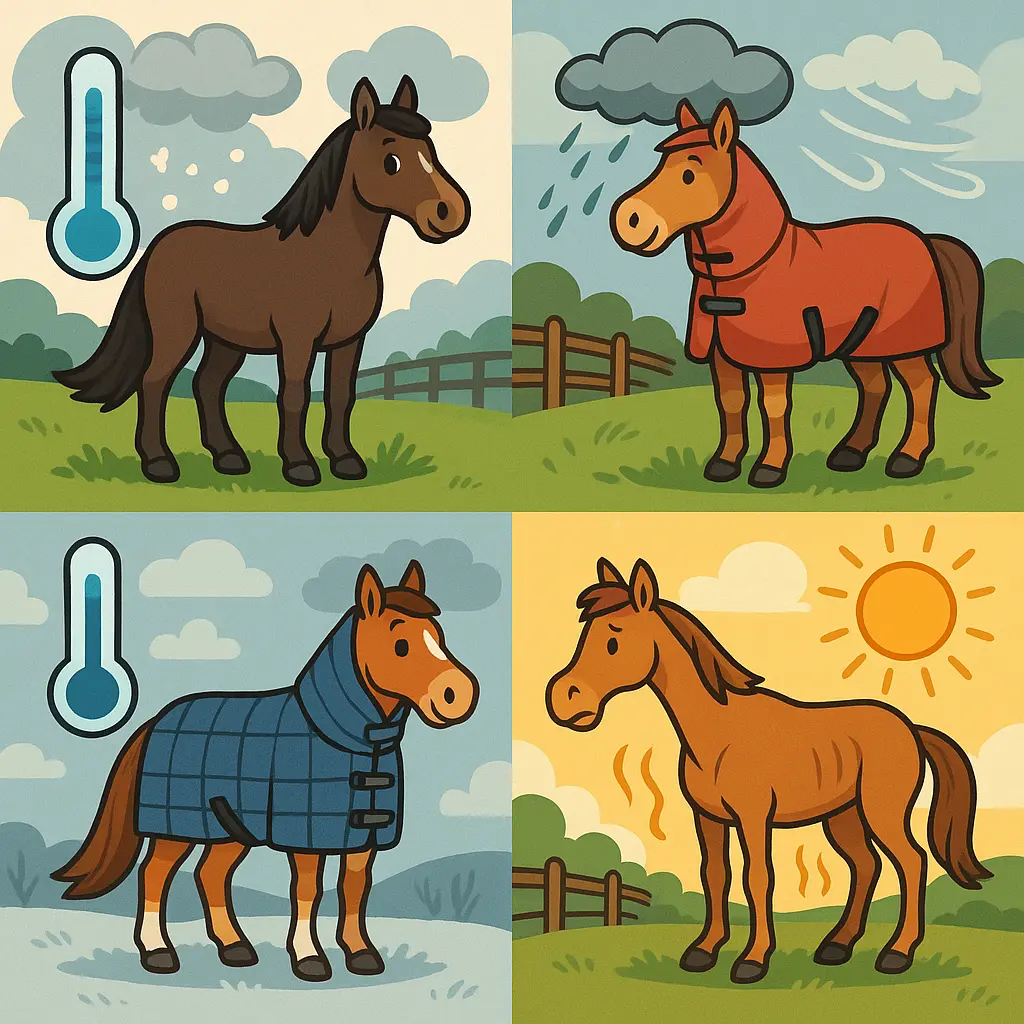
Overheating shows as sweating, rapid breathing, lethargy or irritability; cold shows as shivering, a tightly tucked posture, raised coat, or increased hay intake. Don’t rely on ear temperature or a quick hand under the rug — both are unreliable indicators of core comfort.
Instead, check your horse’s shoulder and girth areas for dampness, feel along the ribcage for warmth without sweat, and watch behaviour in the field: are they grazing contentedly, or standing tense with their tail clamped? UK research shows even a light rug can add 4–16°C to the coat surface; on bright, cold days that can turn “snug” into “stuffy” fast, especially in a sheltered paddock.
Quick tip: In typical UK winter swings (sun at 11am, sleet by 4pm), two checks a day is best practice. When you bring in for the evening, a quick brush to lift sweat and dander helps skin health — keep a dedicated kit to hand from our grooming range.
Turnout vs stable: choosing the right rug for the job
Use a waterproof, breathable turnout outdoors and a stable rug indoors, adjusting 100–400g by temperature, clip and shelter. Stable rugs aren’t waterproof; they’re designed for dry, draught-managed environments, while turnout rugs protect against wind-driven rain and mud.
For stabled horses, match fill to the indoor climate. A well-insulated UK yard can feel several degrees warmer than the field, so many clipped horses are comfortable overnight in a 200–300g stable rug even when the outside air reads close to zero (stepping to 300–400g only in true cold snaps). For field-kept horses on exposed livery yards, remember wind chill: a mediumweight turnout with a neck cover can easily outperform a heavier, neckless rug in terms of real-world warmth.
Whatever you choose, fit comes first. Poorly fitted rugs cause pressure points, shoulder rubs and restricted movement that waste energy and reduce comfort — the opposite of what you intended.
FAQs
When should I start rugging my unclipped horse in the UK?
Start below 5°C or sooner if it’s wet/windy; most healthy, unclipped horses cope well down to about 5°C without a rug, per the BHS. In damp, breezy 8–14°C weather, a 0g waterproof turnout keeps hardy types dry without overheating.
Is a 450g rug ever necessary?
Rarely in the UK. Most clipped horses are well covered at 300–400g below 0°C, with unclipped going one weight lighter (BETA guidance). Choose a breathable outer and add 100–200g liners as needed rather than jumping to the heaviest fill.
How do I tell if my horse is too hot under a rug?
Look for sweating (especially shoulders/girth), rapid breathing, lethargy or irritability. Don’t rely on ear temperature or a quick hand under the rug. UK research shows even light rugs add 4–16°C at the surface — adjust daily in changeable weather (study summary).
Do native UK breeds need heavy rugs?
Not usually. Hardy natives with full coats often do best with a 0g turnout in 8–14°C damp weather to stay dry while preserving natural insulation. Step up gradually only if they show signs of cold or conditions worsen.
What’s the difference between turnout and stable rugs?
Turnout rugs are waterproof and breathable for field use; stable rugs are for dry, indoor conditions. Use 100–400g stable rugs based on indoor temperature and clip status, and switch if the stable warms or cools significantly.
What else should I have ready for winter rugging?
A breathable turnout with neck option, a compatible 100–200g liner system, and at least one medium stable rug cover most UK scenarios. Add a fleece cooler for drying off after work and keep your brush kit handy (see our grooming collection) to manage sweat and skin health. For quality outers and systems, explore turnout rugs and trusted brands like Shires and WeatherBeeta.
At Just Horse Riders, we recommend you build a small, flexible rug wardrobe you can adjust quickly to the UK’s fast-changing forecasts. Start light, add warmth only when your horse shows they need it, and check twice daily — comfort, not heaviness, wins every winter.