When you see a thin or neglected horse, every hour counts. UK law gives you clear ways to act—and it sets out exactly what owners and keepers must do to keep horses safe, fed and comfortable, wherever they are.
Key takeaway: In the UK, anyone responsible for a horse has a legal, enforceable duty of care to meet its welfare needs at all times, and both owners and keepers can be held accountable for breaches—even if a horse is moved before inspection.
Your legal duty to your horse
UK law places a clear, enforceable duty of care on anyone responsible for a horse, requiring you to meet its welfare needs at all times. This duty applies whether you are the owner, the day-to-day keeper, or an exhibitor at a show.
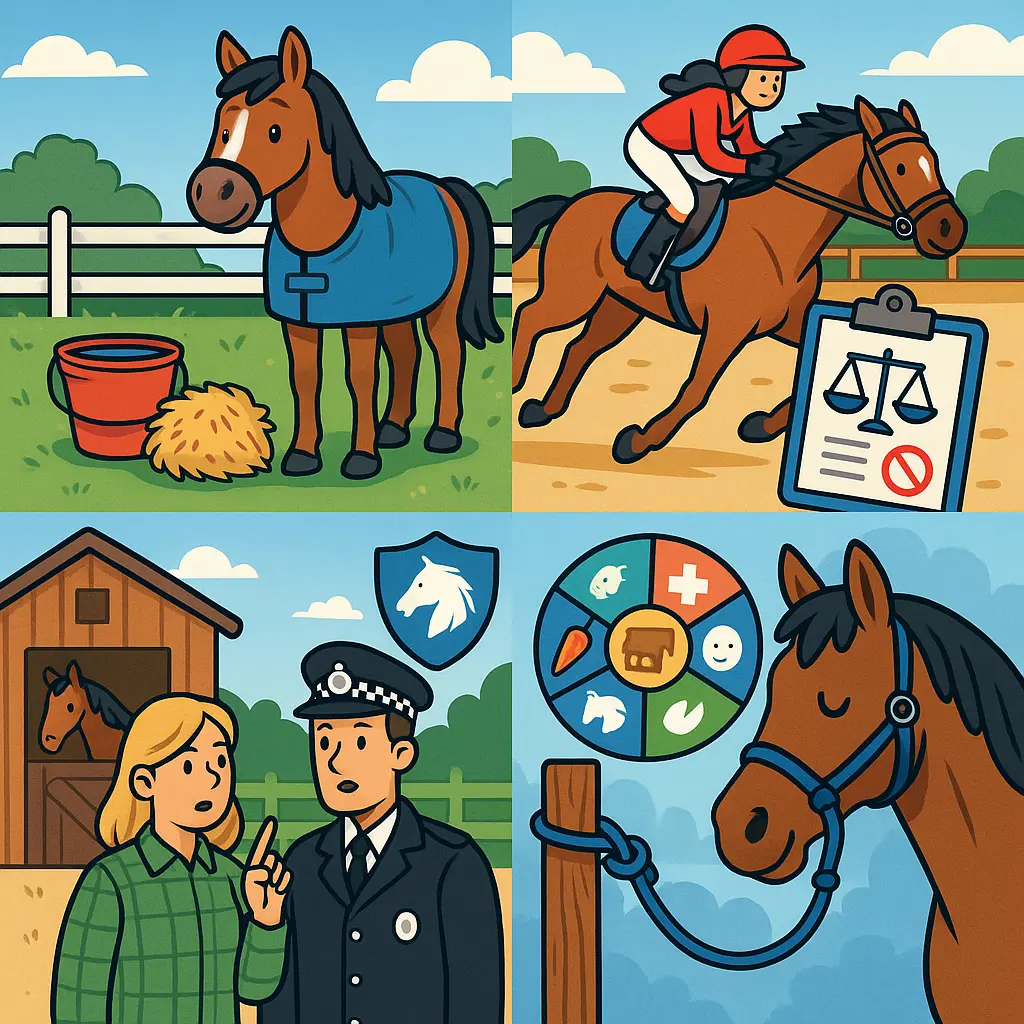
Current UK equestrian guidance is built around the internationally recognised Five Domains Model: nutrition, physical environment, health, behavioural interactions and mental state. In practice, that means your horse must have adequate forage and water, appropriate shelter and temperature management, timely veterinary and farriery care, the ability to express normal behaviours, and a life as free from fear, pain and distress as reasonably possible.
"All those responsible for horses have a duty of care in all circumstances to meet their horse's welfare needs." — The Showing Council Equine Welfare and General Best Practice Guidance (2026)
Transport is covered by specific legislation too: the Protection of Animals During Transport (EC) Regulation 1/2005, implemented in England via The Welfare of Animals (Transport) Order 2006 (with equivalent rules in devolved nations). These rules set out enforceable standards for fitness to travel, journey times, rest, hydration and handling.
Crucially, welfare must never be subordinated to commercial or competitive interests. If conditions or weather change, care must change with it—more forage, different rug weights, extra shelter, or fewer demands on the horse that day. Owners remain responsible in law even when not physically present; the person in charge on the day also shares this duty.
Who enforces welfare—and how
Local authorities, the RSPCA and industry bodies such as the British Horseracing Authority (BHA) and the Showing Council enforce equine welfare, investigating and prosecuting where standards are breached. Each has a defined role: local authorities lead statutory enforcement, the RSPCA investigates welfare complaints, and sport governing bodies set and police rules for their participants.
On racecourses, for example, there is independent veterinary oversight at every fixture and a judicial framework to hold people accountable.
"The BHA is responsible for setting and enforcing the welfare standards that all participants must adhere to... enforced by teams of vets, racecourse inspectors, stable inspecting officers and raceday officials." — British Horseracing Authority
Across the wider sector, the National Equine Welfare Protocol brings together the BHA, RSPCA, World Horse Welfare, government and police to coordinate responses to welfare issues. The government’s Animal Welfare Strategy for England (2025–2026) also reaffirms high welfare standards and effective enforcement through partnerships with industry bodies.
For showing, the Showing Council’s unified rules require exhibitors to report unacceptable practices promptly and set clear expectations around riding, bitting, topical products and horse presentation. These standards sit alongside the Five Domains Model, giving organisers and stewards criteria to act on concerns at events.
Can moving a horse avoid inspection?
No. Moving a horse does not remove your legal duty of care or prevent investigation; owners and keepers can still be held accountable for neglect that has occurred. If there is evidence a horse’s needs were not met in one location, the fact it was moved is not a defence.
If you’re concerned about a horse being relocated to evade scrutiny, the most helpful action is to report the situation immediately and provide clear, time-stamped information that links the horse to the original location and condition. This can include dates, times, precise locations (what3words or postcode), a description of the horse (colour, markings, approximate height, any distinctive features), details of the keeper, and photographs or video taken safely and lawfully.
Report urgent welfare risks to your local authority animal health team or the RSPCA. At events, also alert the show organiser or member body steward on the day. Swift, well-documented reports help authorities act quickly and maintain continuity of evidence even if the horse is moved.
Recognising neglect and emaciation
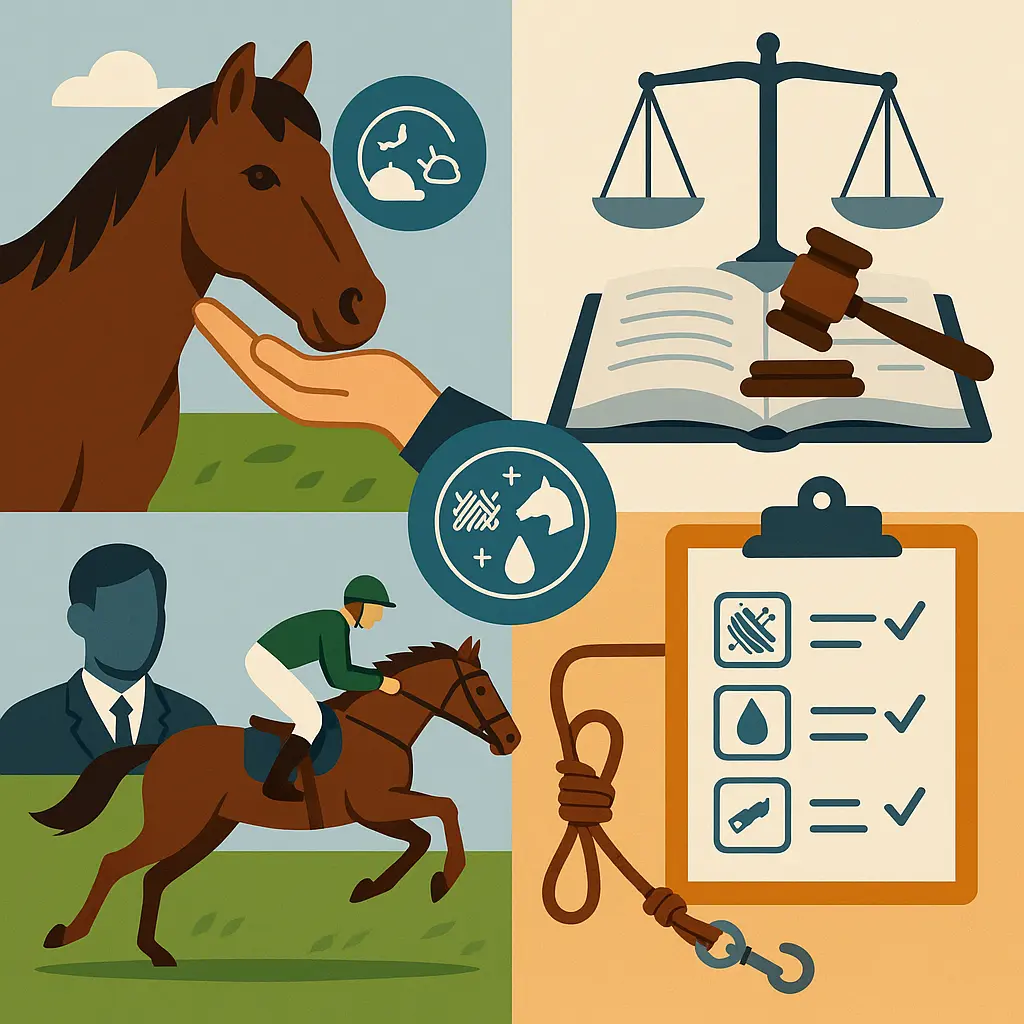
Clear warning signs include visible ribs and hip bones, a persistently dull or scurfy coat, lethargy, and lack of access to forage or water. Consider the whole picture: the Five Domains ask you to look at nutrition, environment, health, behaviour and mental state together.
Practical red flags you can note and document include:
- Body condition so low that ribs, spine and pelvis are obvious, with little fat cover
- Sunken flanks or a “hollow” look; poor neck muscling in mature horses
- Prolonged lack of forage or water within reach; dirty or frozen water; contaminated or mouldy hay
- Prolonged exposure to cold, wet or heat without adequate shelter or rugging
- Untreated wounds, lameness, overgrown or cracked hooves
- Abnormal behaviours associated with stress, frustration or pain
Quick tip: Keep your observations objective and time-stamped. “No hay visible from 7:30–10:45, horse pawing and eating bedding; water bucket empty at 10:45” is more useful than “looked hungry”.
Routine care will prevent most issues. Regular grooming supports skin and coat health and is a daily welfare check—stock up with dependable tools from our curated grooming collection. When summer flies arrive, reduce irritation and stress with breathable coverage from our fly rugs range.
How to report welfare concerns effectively
Report concerns immediately to your local authority or the RSPCA, and to show organisers or member bodies where relevant, supplying clear, time-stamped evidence. Early reporting helps authorities intervene before a horse can be moved or conditions worsen.
What to include in your report:
- Exact location (address, postcode or what3words), date and time
- Description of the horse(s): colour, markings, size, distinguishing features
- The concern observed: lack of forage/water, no shelter, injury, unsafe transport, etc.
- Condition details: visible ribs/hips, dull coat, lameness, wounds
- People or vehicles present (number plates if safe and lawful to note)
- Photos or short video taken without trespassing or putting yourself at risk
At shows, immediately find the secretary or welfare officer and provide written notes. The Showing Council requires exhibitors to report unacceptable practices as soon as possible, which allows stewards and vets to assess on the day.
Pro tip: Keep a simple welfare log on your phone. Short, factual entries with times, plus a few clear photos, are powerful. If the horse is moved, your log helps establish the timeline and original condition.
Your responsibilities at shows, yards and in transport
Exhibitors and keepers must provide continuous access to forage and water, weather-appropriate care, and safe handling and tying, including quick-release methods. These aren’t “best practice” extras—they’re part of your legal duty of care.
At shows and on the yard:
- Ensure regular access to clean water and appropriate forage at all times
- Adjust for weather: rugs, shade, shelter, and workload changes as needed
- Use only well-fitted tack; check for rubs or pressure marks before and after work
- Fit-for-purpose footing in warm-up and stabling areas; avoid prolonged standing on hard ground
Safe tying and handling:
- Tie horses at a safe height using a quick-release knot or device
- Never tie a horse directly to a hay net (risk of entanglement, panic and injury)
- Position hay and water so they are easily reachable without strain or risk of getting caught
Transport standards:
- Only travel fit, healthy horses in sound vehicles with secure flooring and partitions
- Provide forage and water at suitable intervals; plan rest breaks per journey length
- Load and unload calmly with competent handling to minimise stress
For safer journeys, protect legs and tails appropriately and ensure your loading routine is calm and consistent. You’ll find supportive kit in our horse boots and bandages selection. For handlers, a correctly fitted riding helmet adds extra protection in close quarters with anxious or inexperienced horses.
Everyday management to stay compliant
Routine, well-documented care—nutrition, shelter, hoof and tack management—keeps horses well and demonstrates compliance. Aim for consistency, regular checks and quick adjustments when the weather turns.
Rugging and shelter: In the UK, temperatures and rainfall swing quickly. Provide field shelter and the right rug weight for the day’s conditions; switch promptly if the horse runs hot or cold. Our customers trust established brands for reliability in rough weather—browse proven options in WeatherBeeta turnout and stable ranges and the versatile lines from Shires. You can build a layering system from our turnout rugs for wet, windy days and our stable rugs for dry, colder nights.
Nutrition and hydration: Horses are trickle feeders. Provide ad‑lib forage where possible and ensure clean water is always available. During hot spells or travel, discuss electrolyte and salt strategies with your vet or nutritionist; you can support daily routines with options from our curated supplements collection.
Hoof and tack management: Welfare guidance explicitly includes proper farriery and safe tack fitting. Keep to a farrier schedule appropriate for your horse and riding surface, and check tack contact points daily for rubs, heat or swelling after work. Smart grooming is not only cosmetic; it’s an early-warning system for weight loss, skin changes and soreness—stock up with essentials from our grooming collection.
Seasonal pests and stress: Summer flies can trigger rubs, headshaking and behavioural stress. Reduce irritation and disease risk with well-fitted protection from our breathable fly rugs. In winter, prevent cold stress with weatherproof layers and adequate calories from forage.
At Just Horse Riders, we recommend keeping a simple yard diary for each horse—feed changes, farrier dates, rug weights used, travel days and any veterinary notes. Good records prove proactive care and make it easier for a vet or welfare officer to understand your management if they ever need to visit.
In summary: UK welfare law is practical and enforceable. Meet the Five Domains every day, document your care, and report concerns quickly and clearly. That protects horses—and it protects responsible owners and keepers too.
FAQs
Who should I contact first if I’m worried about a neglected horse?
For urgent or serious welfare concerns, contact your local authority animal health team or the RSPCA immediately. If the issue arises at a show, also inform the organiser or welfare officer on the day so stewards and vets can assess promptly.
Can I be held responsible if someone else was looking after my horse?
Yes. Owners retain legal responsibility for their horse’s welfare even when not present. The day-to-day keeper or person in charge also shares the duty of care, so both parties may be accountable if standards are not met.
Does moving a horse stop an investigation?
No. Moving a horse does not remove your legal duty of care or halt enquiries. Clear, time-stamped evidence (notes, photos, locations) helps authorities establish the horse’s original condition and act accordingly.
What does “adequate shelter” look like in the UK?
Horses must be protected from wind, rain, cold and sun. That can be a well-sited field shelter, natural shelter with sufficient cover, or appropriate rugging alongside stable access during severe weather. Adjust quickly as conditions change.
What are the minimum standards for shows and travel?
Horses must have regular access to forage and water, safe footing, and appropriate rest. Use quick-release tying methods, never tie to a hay net, and only transport fit horses in sound, well-maintained vehicles that meet welfare transport rules.
What practical steps help me prove good welfare on my yard?
Keep a yard diary (feed, rugs, farrier, vet notes), label water checks, and photograph body condition monthly in good light. Use reliable kit—layer with quality turnout rugs and stable rugs, and maintain daily checks with our grooming essentials.
Which industry bodies set and enforce welfare standards in sport?
The British Horseracing Authority enforces rules with independent veterinary oversight and a judicial panel. For showing, the Showing Council and member bodies set standards and require exhibitors to report unacceptable practices promptly.