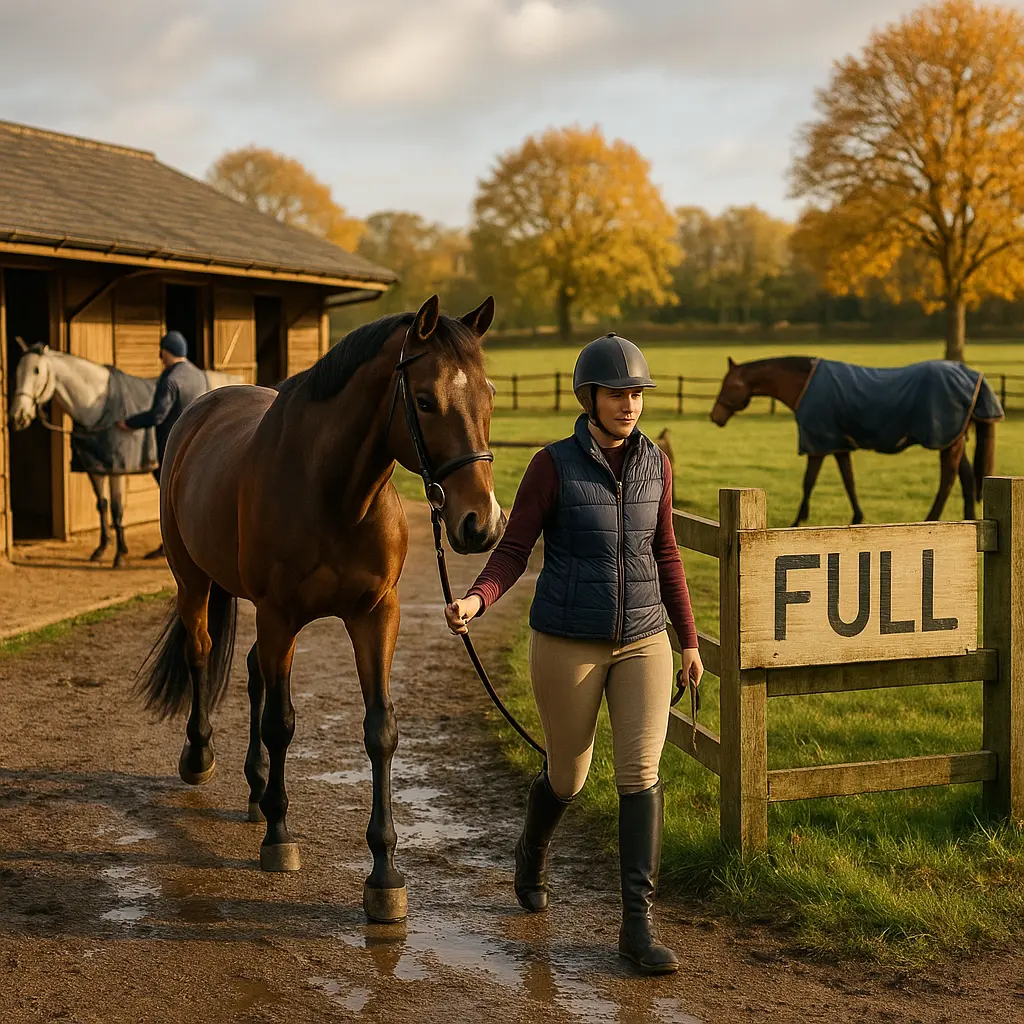
When a yard closes or puts you on a waitlist, the clock starts. Spaces are tight, winter bills are rising, and the best-run yards are snapped up fast — especially in the South East and South West.
Key takeaway: Start contacting yards within 24–48 hours, build a shortlist of 3–5 within 50 miles, and aim to secure a place within 2–4 weeks — half of centres hold waitlists averaging 20 names, and 70% report capacity issues.
What’s happening across UK livery yards right now?
Across Great Britain, 70% of equestrian centres report capacity constraints, with the squeeze most acute in the South East and South West. Rising operational costs and workforce shortages are the main drivers.
The UK’s equine sector supports around 1.82 million regular riders and contributes £5 billion annually to the economy, so when yards struggle, owners feel it fast. British Equestrian’s research highlights a significant capacity crunch, worsened by insurance, feed, and energy costs — and compounded by staffing gaps.
“A significant shortfall of workforce – including coaches, volunteers and horses – across the sector is the major factor impacting the ability to deliver to customers.” — British Equestrian Research and Insights
Cost pressures are biting owners too. In 2024, 81% of equine owners reported ongoing cost concerns and 39% said it was affecting their ability to maintain horses, according to analysis by ICAEW drawing on National Equine Welfare Council data. That combination — owner budgets tightening and centres facing higher costs — explains why many yards reduce services or close, and why waitlists lengthen.
“81% of equine owners responding to a 2024 National Equine Welfare Council survey reported concerns about ongoing cost pressures, with 39% stating that the situation was affecting their ability to maintain horses.” — ICAEW Equine Industry Profile
Despite the pressure, participation is rising: federation memberships across British Equestrian’s 19 member bodies increased by 11.7% from 2023 to 2024. That’s encouraging for the sport — and a signal to act quickly when you need a new yard.
How fast should you act after a closure notice?
Start phoning and emailing yards within 24–48 hours, and plan to secure a place within 2–4 weeks to beat average waitlists of around 20 names. Momentum matters: the first to call and follow up politely often gets the viewing.
With 70% of centres at or near capacity and many holding lists, your first 72 hours are critical. Draft a single message with your horse’s essentials (age, size, temperament, turnout needs, grazing/arena requirements, and your budget). Then:
- Contact 8–12 yards immediately; expect 30–50% to be full or unresponsive at first pass.
- Ask to join waitlists and request a realistic timeframe. If you hear “we can’t say,” ask for permission to check back weekly.
- Line up two provisional transport dates in the next fortnight; popular horse transporters fill quickly in winter.
- If you must hack to a temporary yard, wear a certified hat and high-vis on the road. See our curated riding helmets and hi-vis rider gear.
British Equestrian reports that half of centres have waitlists averaging 20 names, and 55% say the cost-of-living crisis has worsened capacity issues. You’re not competing alone — so be the most prepared applicant they speak to.
Where to find available spaces quickly
Check British Equestrian member bodies, local riding clubs, and Horse & Hound classifieds daily; then ring yards directly for seasonal changes, as spaces often appear when owners downsize or relocate.
New openings don’t always hit social media. Use a mixed approach:
- British Equestrian networks: Their Research and Insights hub shows macro trends; local member bodies and riding clubs are the fastest to hear of changes. Ask for priority on any “quiet” lists.
- Direct calls: Capacity swings weekly. Labour shortages (including a widely cited shortfall in racing and breeding) mean some yards open spaces suddenly if staff return or schedules change.
- Classifieds and community boards: Horse & Hound online, tack shop boards, and local Facebook groups often post yard notices same-day.
- Professional network: Farriers, physiotherapists, coaches, and vets often know which yards have a box becoming free next week.
Regional flexibility helps. Yard Owner Hub’s 2026 data (as summarised in our winter livery guide) shows Wales averaging about 17% lower livery costs than other areas — valuable if you’re near the border and cost-sensitive. The South East and South West are tightest for capacity; get on more than one waitlist there.
Quick tip: Phone during 8–9am or 2–3pm when managers are between yard runs — your call is more likely to be answered.

What should you verify before you commit to a new yard?
Confirm the yard holds the required local authority licence under the Riding Establishments Act and check BHS accreditation; then review staffing levels, turnout, facilities, and contracts before paying a deposit.
Speed is vital, but so is due diligence. Before you say yes:
- Licensing and accreditation: UK riding establishments require a local authority licence under the Riding Establishments Act 1970 (as amended). Check via the council. Use the British Horse Society directory to verify BHS accreditation and standards.
- Staffing: Ask who is on duty mornings/evenings, weekend cover, and holiday plans. Unstaffed facilities are a known closure risk.
- Facilities fit: In wet UK winters, reliable drainage, winter turnout management, and an arena with lighting make a big difference.
- Welfare policies: Vaccination, worming (FWEC or yard programme), farrier/vet arrangements, and biosecurity protocols.
- Paperwork: Written contract, notice period, included services (hay, bedding, turnout), and any surcharge triggers (e.g., extreme weather).
- References: Two existing liveries are ideal; ask about communication, billing accuracy, and how issues are handled.
“55% of centres say the cost-of-living crisis has worsened the capacity issues they face, due to increasing operational costs such as insurance, feed and energy.” — British Equestrian Research Team
Pro tip: Visit during or after heavy rain. Mud management and safe access routes are the fastest way to spot a well-run winter yard in the UK.
What will it cost — and where can you save?
Livery costs vary by region; Wales averages around 17% lower than other areas, while full livery prices are rising due to feed and energy costs. Budget realistically for winter, when turnout and forage demands increase.
Expect regional differences and seasonal uplift. Our analysis of winter livery costs (2024/25) shows a consistent premium in higher-cost regions and in yards offering indoor arenas or exceptional drainage — precisely what fills fastest from October to March. Wales’ ~17% lower pricing (per Yard Owner Hub 2026 data) can be a lifeline if you’re able to travel or relocate within reason. Scotland has seen modest increases, while the South East and South West typically sit at the higher end due to demand.
Build your budget around:
- Base livery fee (grass, assisted, part, or full)
- Forage and bedding (often variable in winter)
- Feed and supplements
- Routine care (farrier, worming programme, vaccinations)
- Transport costs for the move and potential follow-ups
At Just Horse Riders, we recommend ringfencing a winter contingency for feed and rugging. Investing in durable, fit-for-purpose rugs can cut replacements and vet visits from chills or rubs. Explore proven-value brands in our winter turnout rugs and stable rugs, including reliable options from WeatherBeeta. For horses needing support through a yard change, browse targeted supplements for stress, digestion, and hoof health.
What should you pack and prep for a same-week move?
Protect legs with travel boots or bandages, rug for the weather, and bring your own forage, water, and grooming kit; have documents, headcollar, and yard contact details ready at loading time.
A last-minute move is smoother with a standard kit packed the night before:
- Transport protection: Fit well-secured travel boots or bandages. Our curated horse travel boots and bandages protect against knocks on ramps and in trailers.
- Weatherproofing: Rug to the conditions at loading and expected temperature at arrival. See our hard-wearing turnout rugs for wet, windy days and stable rugs for overnight stabling.
- Forage and water: Bring your own hay/haylage netted for the journey, plus water from home for fussy drinkers.
- Grooming and checks: Keep a compact grooming kit to assess for rubs or sweats post-travel.
- Essentials: Passport, headcollar and leadrope (spare if possible), first-aid basics, reflective gear if you need to hand-walk.
- Budget savers: If you need last-minute kit, our clearance in The Secret Tack Room often has rug and yard essentials at reduced prices.
Quick tip: Take clear phone photos of your horse’s legs and body pre-load. If you spot a mark post-travel, you can confirm whether it’s new or old quickly and calmly.

Your 14‑day action plan to secure a yard
Make first contact in 24–48 hours, view 2–3 yards in days 3–7, and confirm a deposit by day 10–14; keep a backup space on a second waitlist.
- Day 1: Draft your one‑page horse profile (age, height, weight, temperament, turnout, facilities needed, budget, ideal distance).
- Days 1–2: Phone 8–12 yards; join waitlists; ask for realistic timelines and viewings. Keep notes (capacity, costs, included services, gut feel).
- Days 3–5: View 2–3 front-runners. Visit during wet weather if possible to assess mud management and lighting.
- Day 5: Verify licensing and BHS accreditation; request the draft contract and house rules by email.
- Day 6: Book transport for two possible dates. If you must hack on roads, wear an approved hat and visible kit (shortlist from our helmet range and hi‑vis essentials).
- Day 7: Price your add‑ons (forage, bedding, assisted services). Consider a temporary diet support plan using targeted supplements to smooth the transition.
- Days 8–9: Negotiate and reserve. Ask about bundled rates for winter turnout or shared services; confirm deposit and start date in writing.
- Day 10: Pack your move kit — travel protection, rugs, forage, water, grooming, passport, first aid. Our travel boots and durable stable rugs are proven move‑day staples.
- Day 11–12: Confirm insurance and emergency contacts with the yard; share vaccination/worming history to align with their programme.
- Day 13–14: Move and settle. Keep work light for 3–5 days; monitor hydration, droppings, and appetite; adjust rugging to microclimate on site.
At Just Horse Riders, we see smoother moves when riders also pack for themselves: supportive yard footwear and weatherproof layers reduce stress on long days. If you need to upgrade, browse durable options across our collections when you have a moment.
Common mistakes to avoid
Rushing the decision without checking licensing and staffing is the most expensive mistake; underestimating winter costs and turnout needs comes a close second.
- Skipping verification: Always confirm local authority licensing and check BHS accreditation to protect welfare and your contract rights.
- Ignoring winter reality: In the UK’s October–March season, poorly drained fields and limited daylight demand more facilities — budget and plan accordingly.
- Assuming feed is included: Forage and bedding are often separate and fluctuate with weather; ask what’s fixed-price and what’s variable.
- Delaying the first calls: With average waitlists around 20 names, a 72‑hour delay can push you back weeks.
- Under‑prepping your horse: No travel protection, wrong rug weight, or no grooming kit can turn a simple move into an avoidable vet visit.
Pro tip: Take a calm, businesslike tone. Yard managers are fielding many calls; concise information and punctual viewings set you apart immediately.
FAQs
How common are livery yard closures or capacity shortages in the UK?
Capacity pressure is widespread: 70% of centres struggle with capacity, and half hold waitlists averaging 20 names, with the tightest squeeze in the South East and South West. This sits alongside a wider workforce shortfall identified by British Equestrian’s research. Source: British Equestrian Research and Insights.
What are typical livery costs after a yard closure?
Costs vary by region and service level. Wales averages about 17% lower than other UK areas (per Yard Owner Hub 2026 data), while full livery has risen due to feed and energy costs in the cost‑of‑living crisis. See our breakdown in UK Winter Livery Costs 2024/25.
How quickly can I find a new yard?
Act within 24–48 hours and aim to secure a space in 2–4 weeks. Rising participation (11.7% membership growth across British Equestrian’s member bodies from 2023–2024) means places go fast, but new openings do arise as owners relocate or downsize. Source: British Equestrian.
Are cost pressures forcing more yard closures?
Cost pressures are a significant factor. In 2024, 81% of owners reported concerns and 39% said it affected their ability to maintain horses, while yards cite feed, insurance, and energy increases as key operational pressures. Sources: ICAEW Equine Industry Profile; British Equestrian research.
What UK regulations apply to new livery yards?
Riding establishments must hold a local authority licence under the Riding Establishments Act (as amended). BHS accreditation is strongly recommended to assure welfare and management standards; verify via the British Horse Society directory and your local council.
Does winter weather affect livery moves?
Yes. Wet UK winters increase demand for full livery and facilities with good drainage and lighting, as grass livery capacity is hit by mud and limited turnout. British Equestrian’s capacity data shows this seasonal pinch most in the South East and South West.
What kit should I prioritise for a sudden move?
Essential move-day kit includes travel boots or bandages, weather-appropriate rugs, forage/water, and a compact grooming kit. If you need to upgrade quickly, see our travel boots and bandages, cold‑season turnout rugs, and practical grooming sets to keep your horse comfortable and protected.
Need tailored suggestions for your horse’s move? Get in touch — at Just Horse Riders we help owners daily with fast, practical kit lists and reliable gear that stands up to UK winters.