

Exploring the Complexities of Managing Aggressive Behavior in Horses: A Solution-Focused Approach

Horses are majestic creatures whose behavior can be as unpredictable as the weather. One significant challenge facing horse owners is managing aggressive behavior in horses. A horse's aggression can be due to a variety of reasons—such as discomfort, unfamiliar surroundings, or the need to establish dominance—and handling these situations requires a delicate and informed approach.
Understanding Horse Aggression
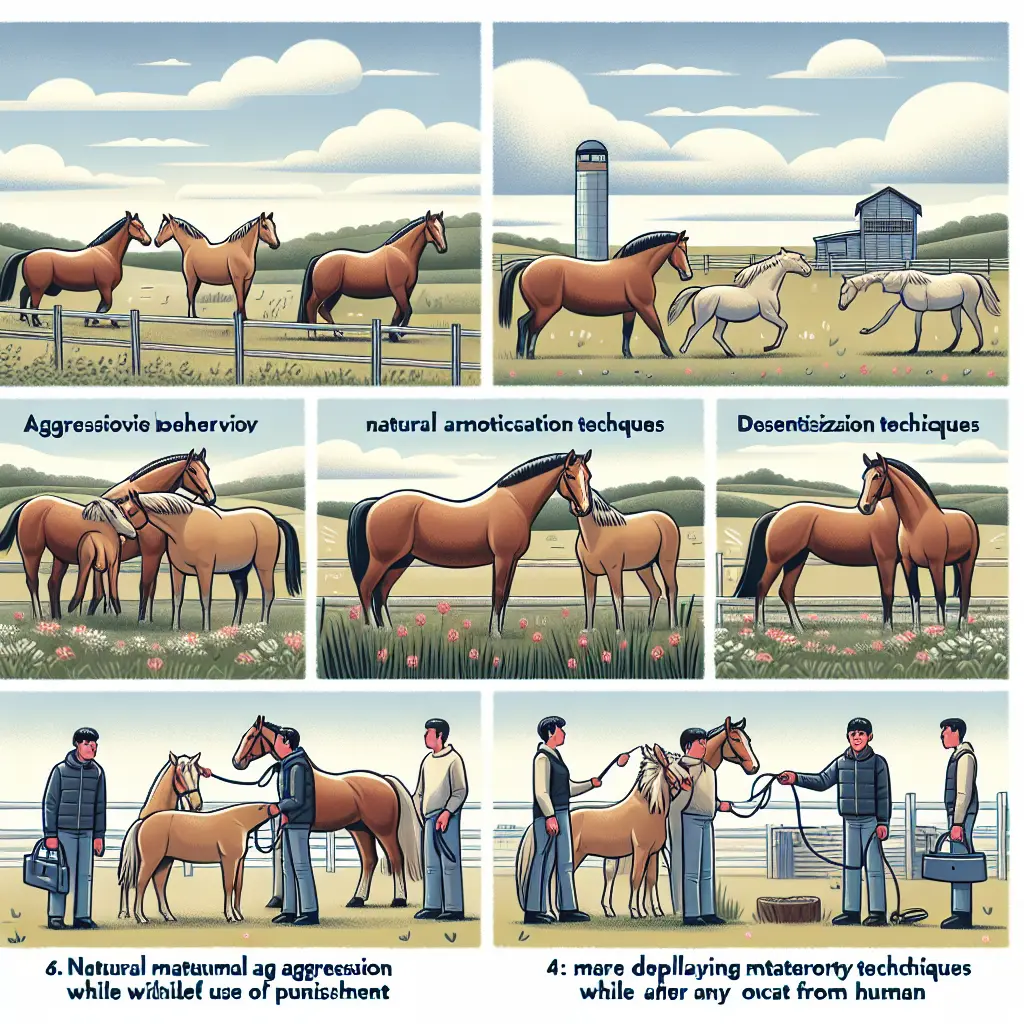
Horses are naturally social animals. They often communicate through subtle signs and behaviors to maintain social hierarchies within a group. Aggression is sometimes a part of this communication, primarily when their social structure gets disrupted, such as when unfamiliar horses are introduced to their territory. Studies have shown that while dominance hierarchies help maintain order, improper introductions can lead to heightened aggression.
Key Triggers of Aggression
Research indicates certain scenarios tend to trigger aggression in horses. For example, more than 46% of horses show aggression during close contact actions like fastening the girth and 53% when receiving leg or whip cues while riding (McDonnell et al.). These reactions are often because the horse feels discomfort or fear.
Dominance and Social Status
Dominance-related aggression is often observed when new horses are introduced into a group, as they need to establish social rankings. Particularly, younger mares exhibit more aggression until their rank stabilizes with time (Fureix et al.).
Effective Management Strategies

Addressing aggressive behavior often necessitates blending knowledge of horse psychology with practical management tactics. Here's how horse owners can improve the situation:
Gradual Introduction to Newcomers
Whenever new horses are introduced to a group, it is critical they are introduced gradually. Owners should allow horses time to see, hear, and smell each other before any direct contact, separated by solid fencing. This method limits the risk of injuries from aggressive acts.
Maintaining Stable Group Dynamics
Having a consistent herd composition is vital in maintaining the herd's social pecking order, allowing peaceful hierarchies to be established and maintained (Fureix et al.).
Environmental Strategies for Reducing Aggression

Environmental management can significantly influence horse behavior. Here are some strategies that help:
Distributing Resources Evenly
One technique to reduce competition-induced aggression is to distribute feed widely throughout the pasture, ensuring dominant horses do not monopolize the resources (Olczak et al.).
Optimal Housing Conditions
Keeping horses out to pasture allows them to engage in natural behaviors and reduces the incidence of stress-related problems common in confined environments, such as stall vices.
Behavioral Interventions
Sometimes, issues with aggression call for behavioral interventions:
Desensitization Techniques
By allowing limited sensory interaction without physical contact, desensitization helps reduce hostility over time and promotes positive associations.
Avoiding Punishment
Punishment may seem like a quick fix but can often fuel fear and worsen aggressive responses. Instead, focusing on preventative strategies and positive reinforcement are much more effective.
Pharmacological Interventions
In certain cases, medication might support behavior change. SSRIs and hormone therapies are sometimes successful but require veterinary supervision to prevent adverse side effects. Owners should consult a vet before considering this route.
Maternal Aggression
Mares may exhibit aggressive behaviors after foaling, primarily driven by hormonal changes. Understanding and safely managing these behaviors requires attention and limits interaction with strangers to safeguard both mare and foal.
Conclusion
Understanding horse aggression involves aligning a thorough knowledge of equine psychology with practical management. Techniques like gradual introductions, stable social structures, and desensitization, among others, offer a promising solution-focused approach. These strategies not only improve behavior but enhance handler safety and horse welfare. For horse owners, continual learning and adapting strategies based on each horse's needs can lead to happier, healthier horses and stronger owner-equine bonds.