

Who is Responsible for Maintaining Safe Bridleways?
Ensuring that bridleways remain safe and accessible is crucial for horse riders, walkers, and cyclists who use these designated paths for recreation and transportation. The responsibility for maintaining bridleways is shared amongst various parties, including local highway authorities, landowners, and users themselves. This article delves into each party's role, shedding light on how these pathways are kept in good condition.
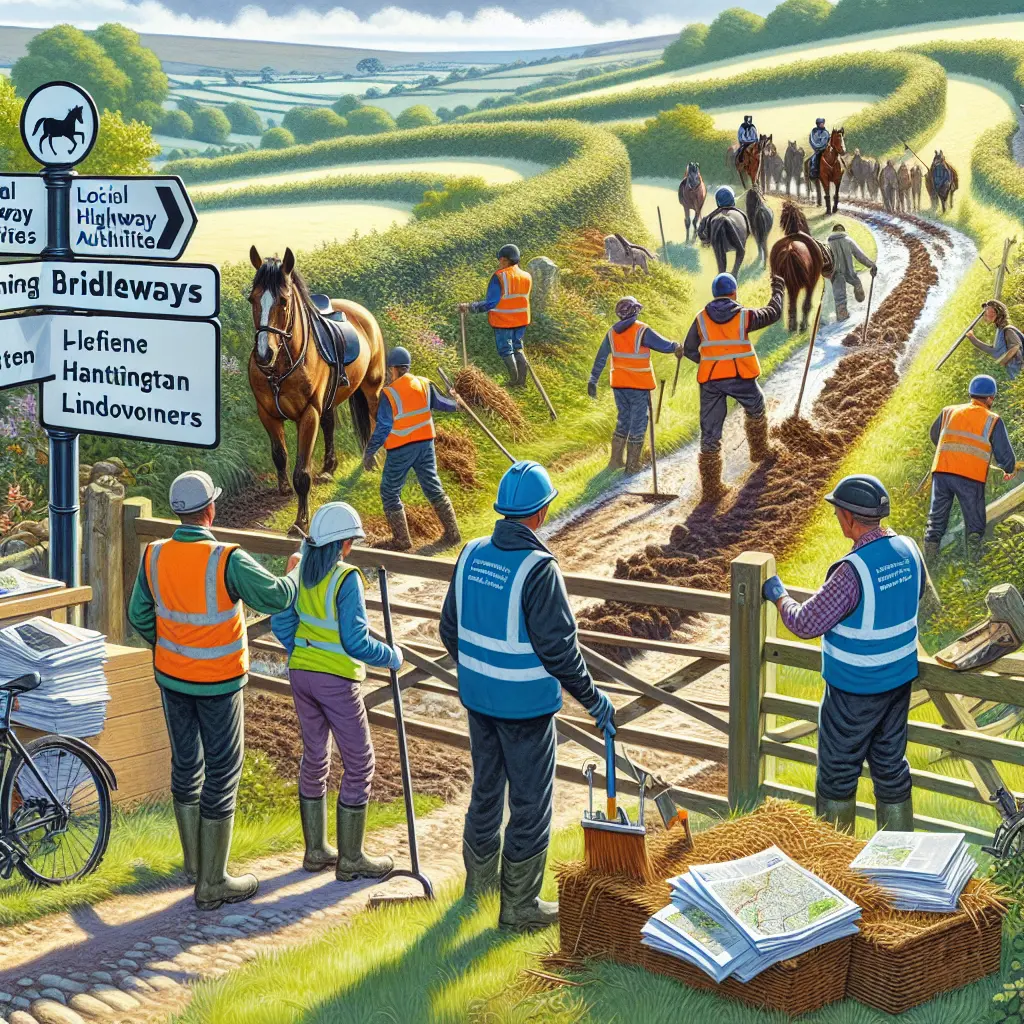
The Role of Local Highway Authorities
Local highway authorities, such as county or unitary councils, are primarily tasked with the upkeep of these public rights of way under laws like the Highways Act 1980. Their responsibilities include:
- Maintaining the bridleway surface and managing natural vegetation through scheduled cutting programs, typically between April and October [1].
- Repairing and maintaining bridges, which can involve specialized engineering work depending on the size [1].
- Ensuring signposts and waymarks are clear for user navigation and safety [3].
- Updating Definitive Maps for path legality and access [3].
- Enforcing laws to keep paths unobstructed [4].
Landowners' Responsibilities
Landowners whose land houses these bridleways have legal obligations to ensure safe access. Their duties include:
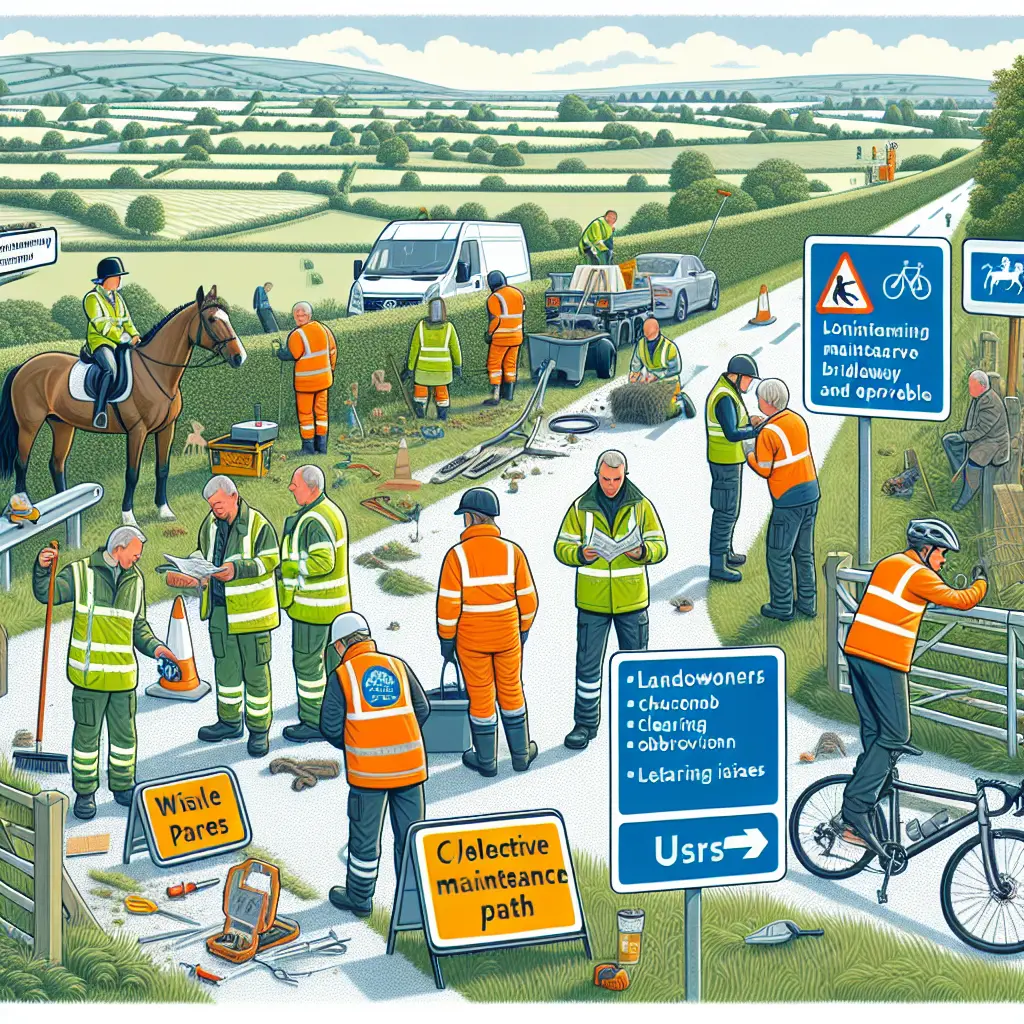
- Keeping the route unobstructed by fences or overgrown vegetation [5].
- Avoiding unnecessary disturbance of the path’s surface and reinstating any disturbed land within a set timeframe [3].
- Maintaining gates and stiles critical for access [3].
The Role of Users and Equestrian Access Groups
Users, from horse riders to carriage drivers, have a proactive role in maintaining bridleways. Their efforts help preserve the path’s condition and prevent extensive damage:
- Forming groups like the British Horse Society’s Equestrian Access Groups to assist with minor maintenance [2].
- Following the Countryside Code, respecting boundaries, and avoiding damage to the path’s surface [3].
By taking these steps, users ensure a collaborative effort in keeping bridleways functional and safe for everyone.
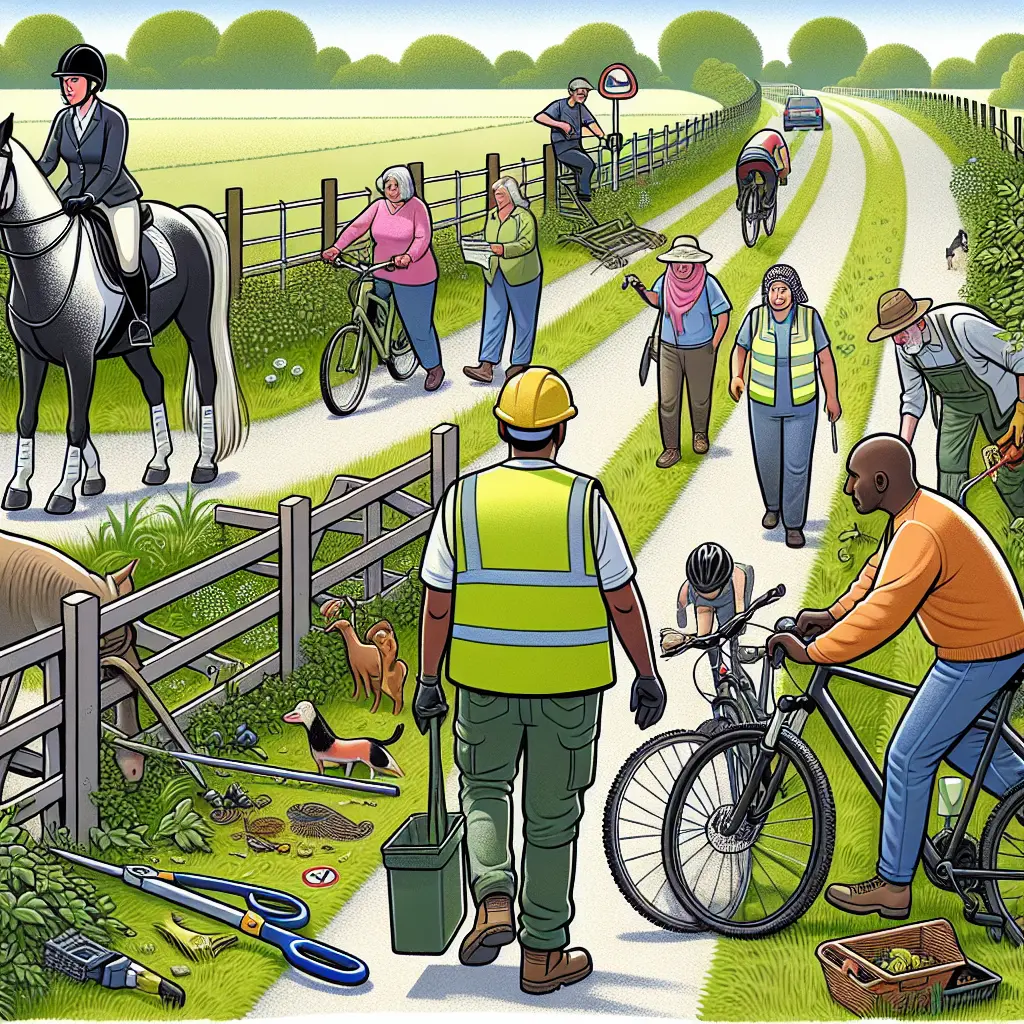
Summary Table: Who Does What?
| Responsible Party | Key Maintenance and Safety Duties |
|---|---|
| Local Highway Authorities | Surface and vegetation maintenance; repair bridges; manage signage; enforce law; update Definitive Maps; coordinate maintenance programs. |
| Landowners/Occupiers | Keep bridleway clear; maintain gates/stiles; reinstate disturbed paths; avoid obstructions. |
| Users & Equestrian Groups | Report problems; assist with minor maintenance; follow the Countryside Code. |
Facts and Figures Highlighting Maintenance Needs
- Vegetation is generally cut during the growing season from April to October [1].
- Bridge repairs can take from a few weeks to several months, depending on size [1].
- Laws oblige highway authorities to ensure public paths remain unobstructed for safety [4].
Conclusion
Maintaining bridleways is a concerted effort involving statutory duties, land stewardship, and community involvement. Local authorities are at the forefront, but the cooperation of landowners and users is essential for smooth and safe bridleway experiences. Collaborative efforts ensure these vital pathways remain a resource for health, recreation, and connectivity. Whether you're looking for the perfect jodhpur collection or in need of horse treats and gifts, keeping our bridleways well-maintained is crucial for every horse rider.