

Understanding Wolf Teeth in Horses: When and Why Should They Be Removed?
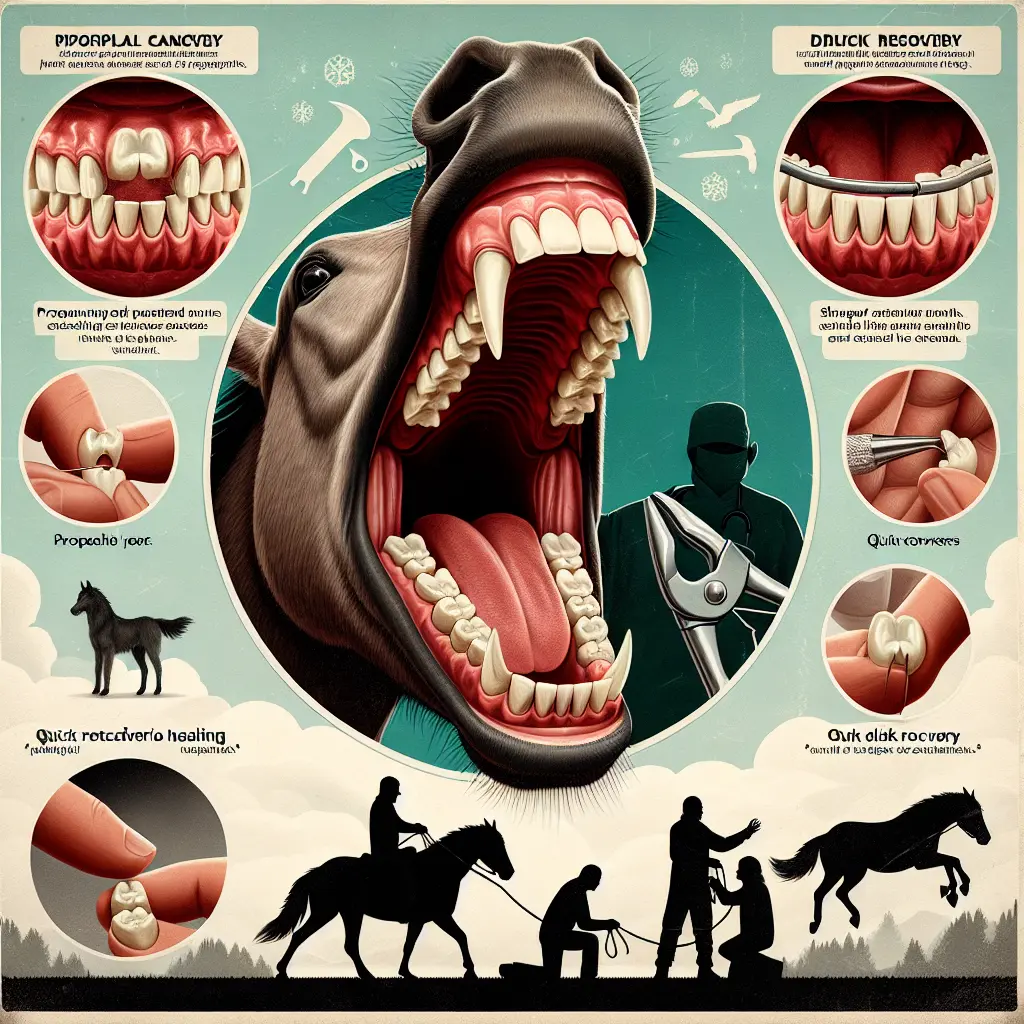
Horse owners are no strangers to wolf teeth, those small, pesky remnants in equine mouths. For some, mere mention sparks curiosity, while others break into heated debates regarding their necessity and removal. This article uncovers what wolf teeth are, the problems they may cause, and importantly, whether and when their removal should be considered in your equine care routine.
What Are Wolf Teeth?
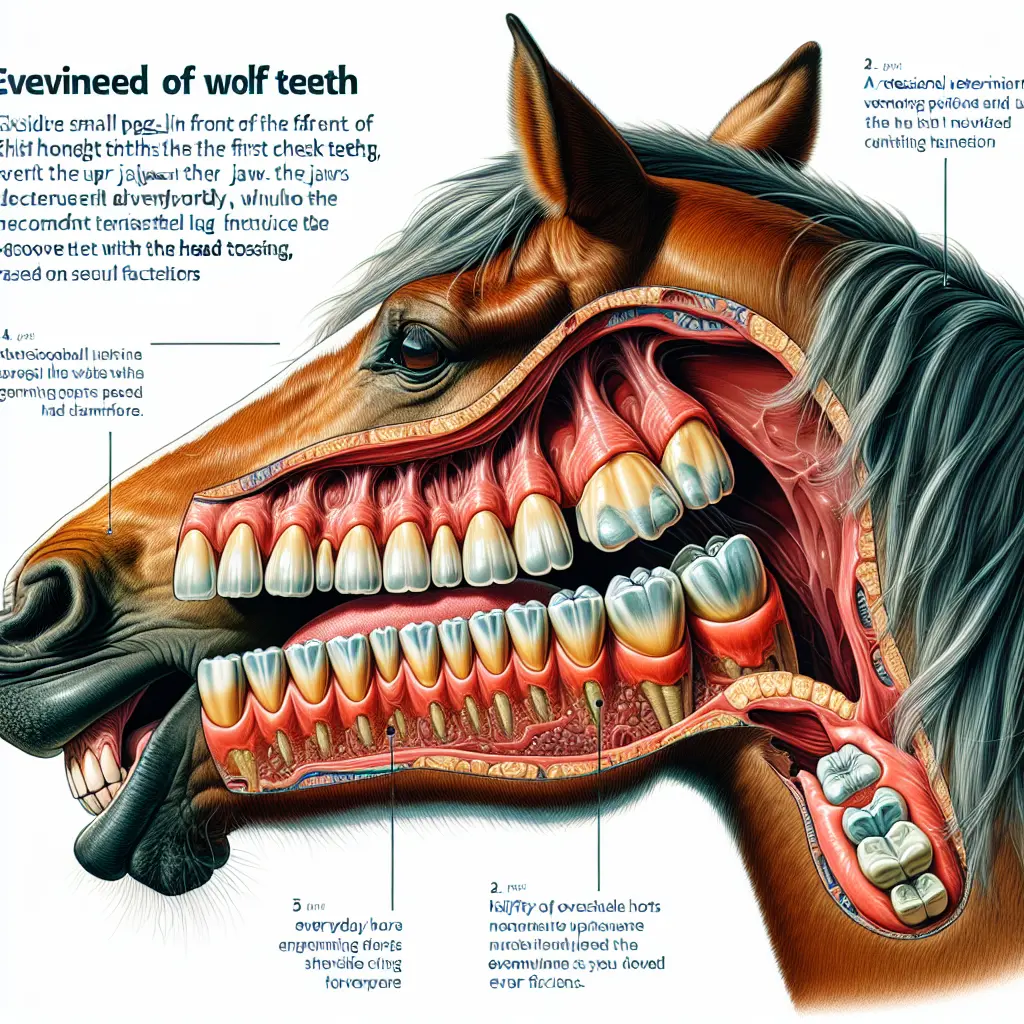
Wolf teeth are diminutive, peg-like structures sitting just in front of a horse's first cheek, or chewing teeth. Technically recognized as the first premolar, they are more of an evolutionary relic than crucial participants in equine munching habits. Generally found in the upper jaw, it's rare but possible for them to appear in the lower jaw, or even symmetrically on both sides, though some horses escape them altogether [Wikipedia].
Prevalence and Development
About 70% of horses have wolf teeth, though a Swedish study on 25,000 subjects reported a count closer to 45-50%. Agnostic of gender, both mares and studs have equal opportunities to flaunt these teeth [Wikipedia]. Wolf teeth habitually erupt between 5–18 months of age, with most budding between months 6–12. These not-so-innocent-looking teeth may naturally fall out as the horse loses baby teeth but often stay put, making their presence known at inconvenient times [PetMD].
Evolutionary Tidbits
Rewind the clock to see wolf teeth larger and necessary for ancestral horses, which were sooner twigs and leaf munchers. As horses moved to tastier, leaner grasses, these teeth no longer needed their once-formidable presence and gradually shriveled to mere relics of divine dining [BW Equine Vets].
Do Wolf Teeth Cause Problems?
Chasing Problems or Myths?
Good news first: most wolf teeth are harmless, innocuous relics squatting in equine mouths without wreaking havoc. Labeled "vestigial," they have no clear function. However, in horses who don riding gear regularly, these innocuous teeth may cause discomfort if found awry [The Horse].
Common Concerns
The main specter haunting bit-wearing horses is that wolf teeth may rub or compress sensitive gum tissue. This can cause outright discomfort, leading to an equine symphony of head tossing, resistance, and various signs of refusal. Larger or awkwardly positioned wolf teeth compound the hardship, potentially turning a sweet ride into a spontaneous rodeo [SmartPak Equine].
The Myth Challenge
But be not hasty! The association between wolf teeth and bit discomfort doesn't fit every equine tale. Actual problems arise in a small fraction of the horse population. Often unruly behavior during bitting is wrongly chalked up to wolf teeth when the culprit may just be faulty bit-fitting or training issues [The Horse].
When Should Wolf Teeth Be Removed?
Save the enthusiasm for making hasty removals. Wolf teeth should not be yanked out routinely like unwanted relatives at a holiday dinner. Proper judgment comes from professional equine examiners, preferably a qualified vet or dentist, who can evaluate the tooth's size, position, and overall relevance.
Signs Pointing to Extraction
- Bit discomfort: If your horse shows signs of pain or resistance when using a bit—especially when that wolf tooth is large or rides too far forward.
- Anomalies: A tooth growing sideways or in peculiar positions is begging for attention.
- Performance Reasons: For sport horses tangled in prestigious leagues, some opt for preventive removal to side-step potential problems before they can manifest [The Horse].
Routine Removal: Not the Answer
Contrary to some lingering myths, routine extraction can cause unnecessary harm, and for many horses, especially those sans bit-riding roles, leaving wolf teeth is perfectly fine.
How Is Wolf Tooth Removal Performed?
An Experts' Job
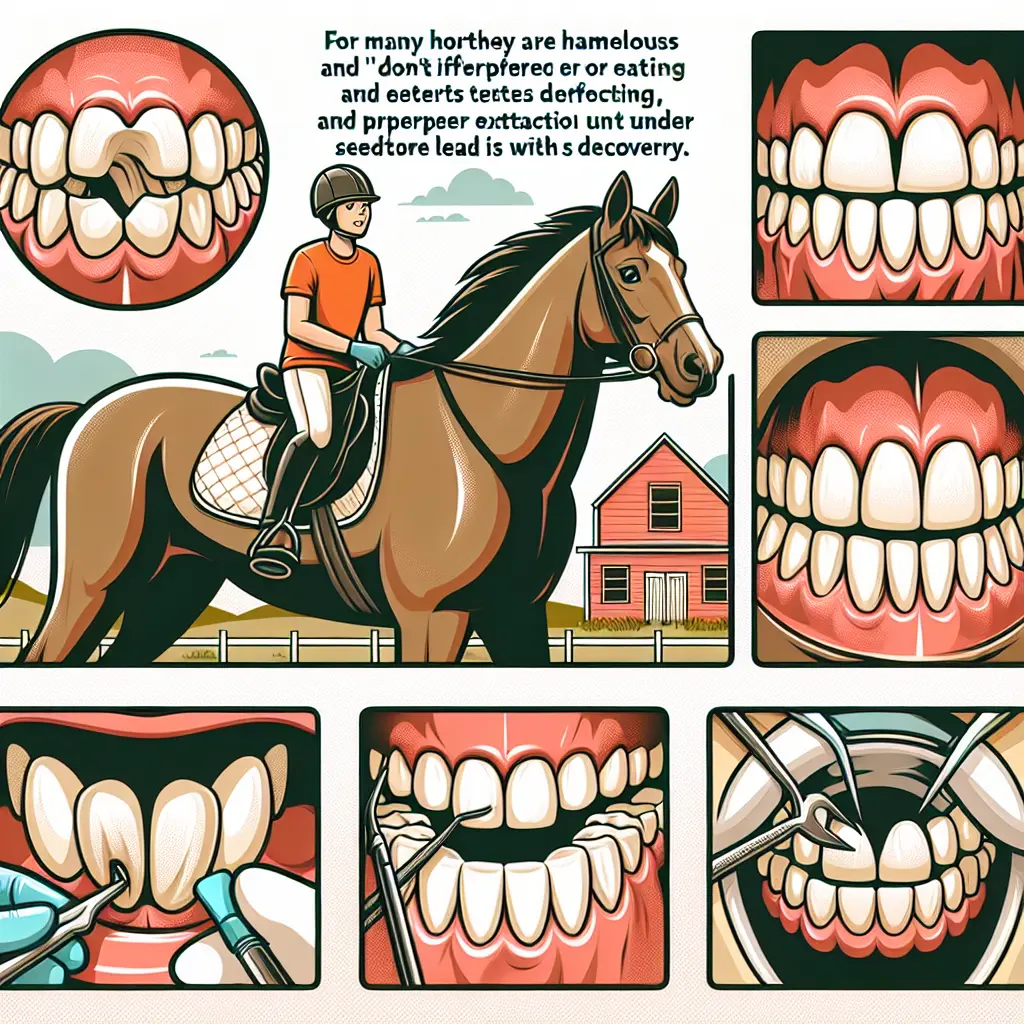
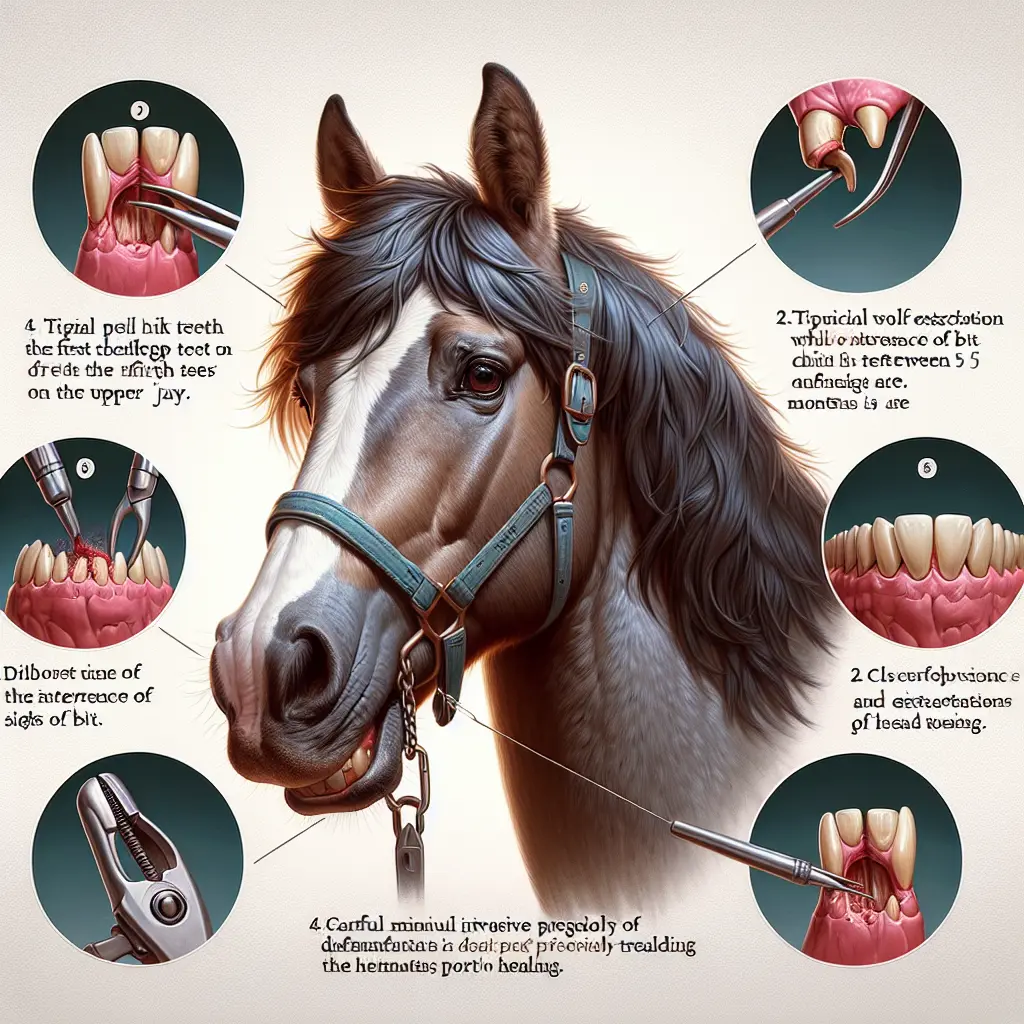
Removal is not a simple matter of tug-based enthusiasm. It requires a trained vet, armed with sedation and local anesthesia, to carry out the operation. Ensuring the entire tooth is safely extracted without unnecessary damage is paramount, minimizing pain and trauma during the procedure [Merck Veterinary Manual].
Recovery and Return
For most, healing flaunts brevity and simplicity, with horses typically resuming normal activities within days, barring complications. Removing wolf teeth shouldn't mean a prolonged vacation from paddock parties [Merck Veterinary Manual].
Myths and Misconceptions
Challenging Myths
- Myth: All wolf teeth necessitate removal. Fact: Only teeth verified to cause or predict problems demand action [The Horse].
- Myth: Every wolf tooth is a harbinger of bit pain. Fact: Only a minority endure issues, and other causes should also be explored [SmartPak Equine].
- Myth: Wolf teeth are like other cheek teeth. Fact: Vestigial and minor, wolf teeth don't partake in the essential duties of chewing or digestion in modern horses [BW Equine Vets].
Frequently Asked Questions
Q: What happens if a wolf tooth is not removed when it should be?
A: This may lead to continued discomfort during bitted activities, sealing a deal with performance setbacks. In lounges of rarity, awkwardly placed teeth induce gum ulceration or infection [SmartPak Equine].
Q: How old should the horse be before removing wolf teeth?
A: Optimal timing aligns with the horse's maturity, generally aligning with deciduous teeth removal at about 2.5 years, ensuring smooth sedation and manageable examination [Belmont Farm and Equine Vets].
Q: Can wolf teeth grow back after removal?
A: Happily, once fully removed, these teeth refuse to rise again, letting horses chew onward into their grazing days [Belmont Farm and Equine Vets].
Key Takeaways
- Wolf teeth appear in approximately 50–70% of horses, primarily in the upper jaw, standing as relics lacking present function.
- Generally harmless, only a fractional equine population encounters bit-related discomfort.
- Removal pivots on discomfort evidence and should be professionally managed.
- Avoiding unnecessary procedures preserves more harm than it prevents.
Conclusion
In sum, the saga of wolf teeth is storied with rich pasts but seldom critical presents. For most horses, these stubborn leftovers stand harmless. If your horse glories in comfort and performance with them intact, there's no rush for extraction. Should questions or suspicions arise, consult a learned equine vet to secure well-informed decisions.
Need extra gear for riding comfort? Dive into the finest collections like Jodhpur Collection, discover your perfect fit with Horse Riding Boots, or snug into premium hand protection with Riding Gloves. Explore more equestrian wonders from Just Horse Riders.