

Is Boswellia the Miracle Solution for Equine Joint Discomfort?
For horse owners and caregivers, ensuring the well-being of equine companions is a top priority. Joint discomfort is a common issue among horses, leading to a constant search for effective solutions. Recently, an ancient herb known as Boswellia has captured the spotlight. But can it truly be the miraculous solution that equestrians have been waiting for? Dive into the science and history of Boswellia to uncover its potential benefits.

What is Boswellia?
Originating from the dry, mountainous terrains of India, North Africa, and the Middle East, Boswellia serrata is a plant with a storied past. For centuries, the resin derived from this plant has been utilized in traditional medicine to treat a myriad of ailments, with joint-related conditions being a major focus.[5]
Anti-Inflammatory and Antioxidant Properties
The magic of Boswellia resides in its active compounds, especially Boswellic acids. Among these, AKBA (3-O-acetyl-11-keto-beta-boswellic acid) has garnered attention for its potent anti-inflammatory and antioxidant capabilities. These acids work by inhibiting cytokine production, chemicals that spark inflammation, thus aiding in cartilage preservation.[5]
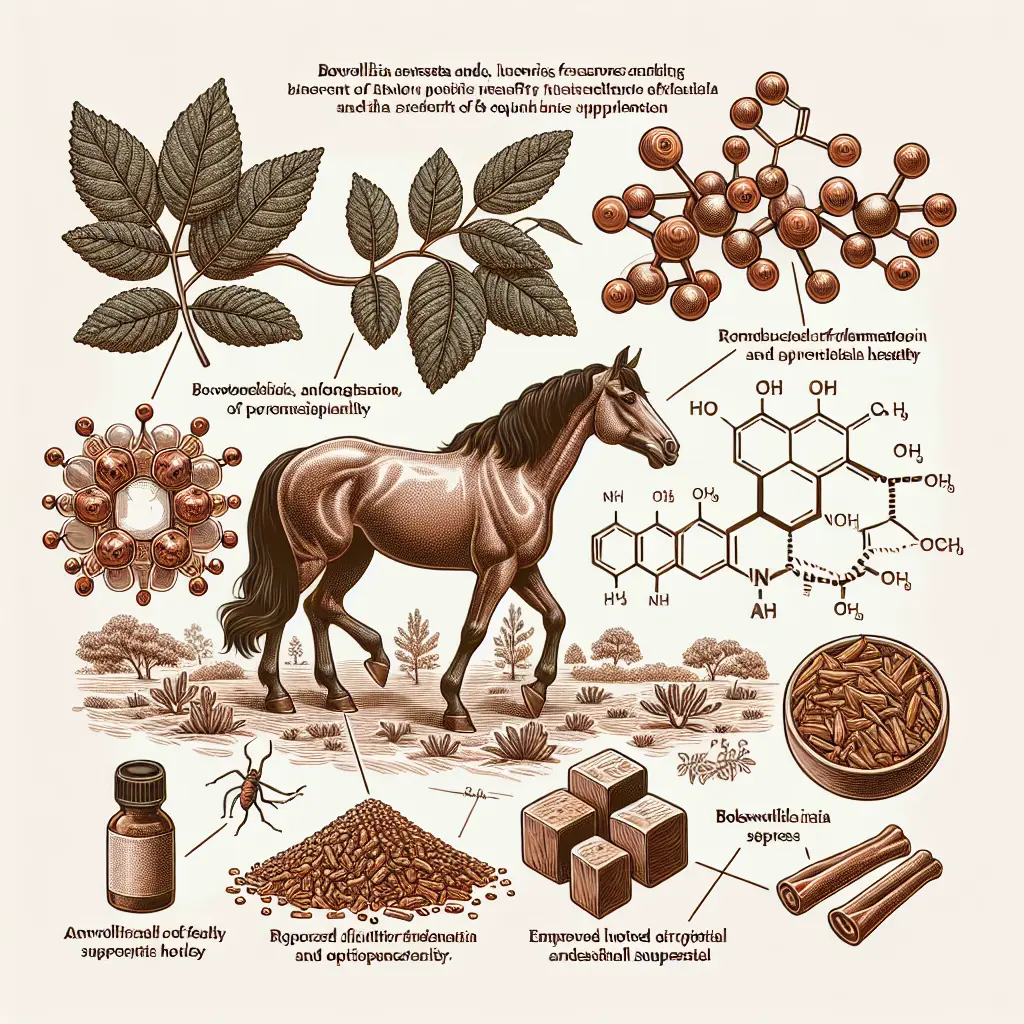
Effects on Joint Health
Reduction in Inflammation and Swelling
Boswellia has demonstrated its prowess in moderating enzymes responsible for inflammation, leading to a remarkable reduction in swelling and discomfort. Research on dogs with persistent joint conditions revealed that 71% of the participants improved within two weeks.[2]
Protection of Joint Tissues
By virtue of its unique properties, Boswellia aids in preserving joint health. It achieves this by reducing the degradation of glycosaminoglycans, essential nutrients for maintaining robust joint structures. This protective effect is especially beneficial for horses worn down by intensive training or age-related joint wear.[5]
Improved Mobility and Comfort
Studies highlight Boswellia's potential in enhancing mobility and easing stiffness among horses. For instance, research on show jumping horses indicated that Boswellia supplementation could bolster immunity and mitigate exercise-induced inflammation.[4]

Safety and Tolerability
A significant advantage of Boswellia is its gentleness on the body. It's not only safe for equine consumption but also beneficial for gastrointestinal health, aiding in resolving digestive issues like firming up droppings and ensuring normal colon function.[2]
Additional Benefits
Respiratory Health
Boswellia offers more than just joint health benefits. It also supports respiratory health by naturally reducing leukotriene production, which can constrict the bronchi in the lower airways.[2]
Overall Well-being
By curbing inflammation and bolstering joint health, Boswellia contributes to the overall well-being and performance of horses. This is particularly crucial for those in rigorous training or competitive environments.[5]

Practical Considerations for Feeding Boswellia
Thinking of integrating Boswellia into your horse's diet? Here are essential pointers:
Choose a High-Quality Supplement
Ensure your chosen supplement boasts high Boswellic acid levels, especially AKBA, the most active compound.[5]
Consult with a Veterinarian
Before embarking on any dietary changes, it's prudent to consult a veterinarian. They can offer guidance tailored to your horse's specific needs.
Combine with Other Joint Support Nutrients
Boswellia can be more effective when paired with other joint support nutrients. Products like Best-Flex HA® incorporate Boswellia alongside other components for optimal results.[2]
Explore More Equestrian Solutions
Dive into our extensive collection of horse riding gear and accessories. Whether you're searching for the perfect jodhpur, durable horse riding boots, practical riding gloves, or cozy riding socks, we've got you covered. Discover even more essentials like horse treats and gifts or protective fly protection solutions.
Conclusion
While not a magic cure, Boswellia stands out as a promising solution for equine joint discomfort. The herb, with its potent anti-inflammatory and antioxidant properties, offers significant benefits by reducing swelling, protecting joint tissues, and enhancing mobility. Furthermore, its positive effects on respiratory and digestive health make it a worthy addition to any horse's diet. As always, for the best care for your equine friend, consult with a veterinarian and choose high-quality supplements.